The End of the Great Sioux War
While General Terry picked up the pieces following the disaster at the Little Bighorn, the reaction in the East was sharp. The defeat shocked a nation preparing to celebrate its centennial, with the loss of nearly an entire regiment, along with its popular commander, steeling the public against the Sioux. Congressional approval soon followed: the Army was to mobilize whatever resources required to bring Sitting Bull and Crazy Horse to heel.
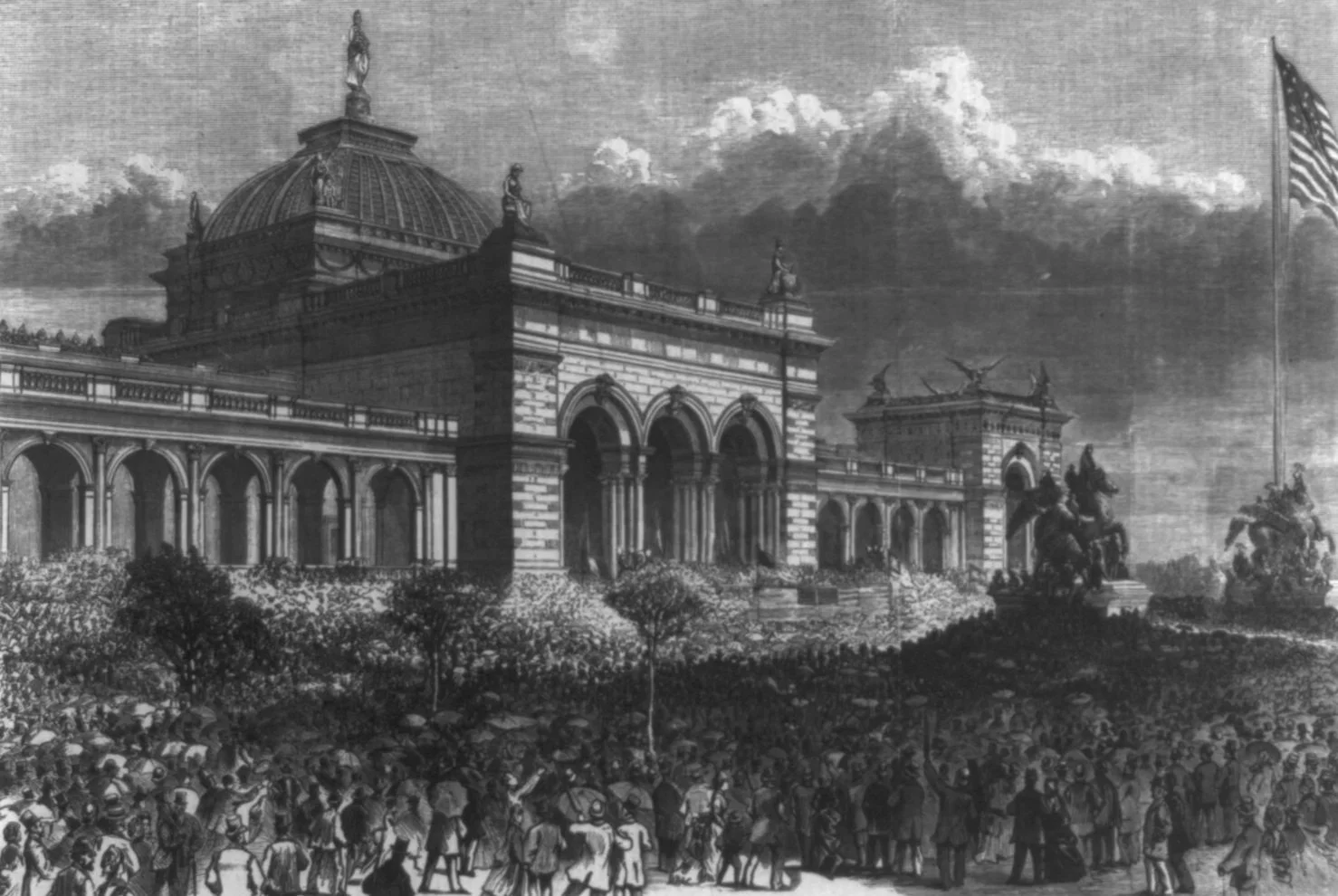
President Grant opens the Centennial Exhibition in Philadelphia
Sheridan promptly moved to reinforce his men and prepare for a new campaign. The 4th Cavalry, under the command of Colonel Ranald MacKenzie, a man well known to be an expert indian fighter with long experience since the Civil War, having led victorious campaigns against the Kiowas and Comanches. Stationed at Camp Robinson, he was prone to bouts of mental instability, but was a ruthless and efficient officer known to the tribes as “Bad Hand” due to wounds received in the Civil War.
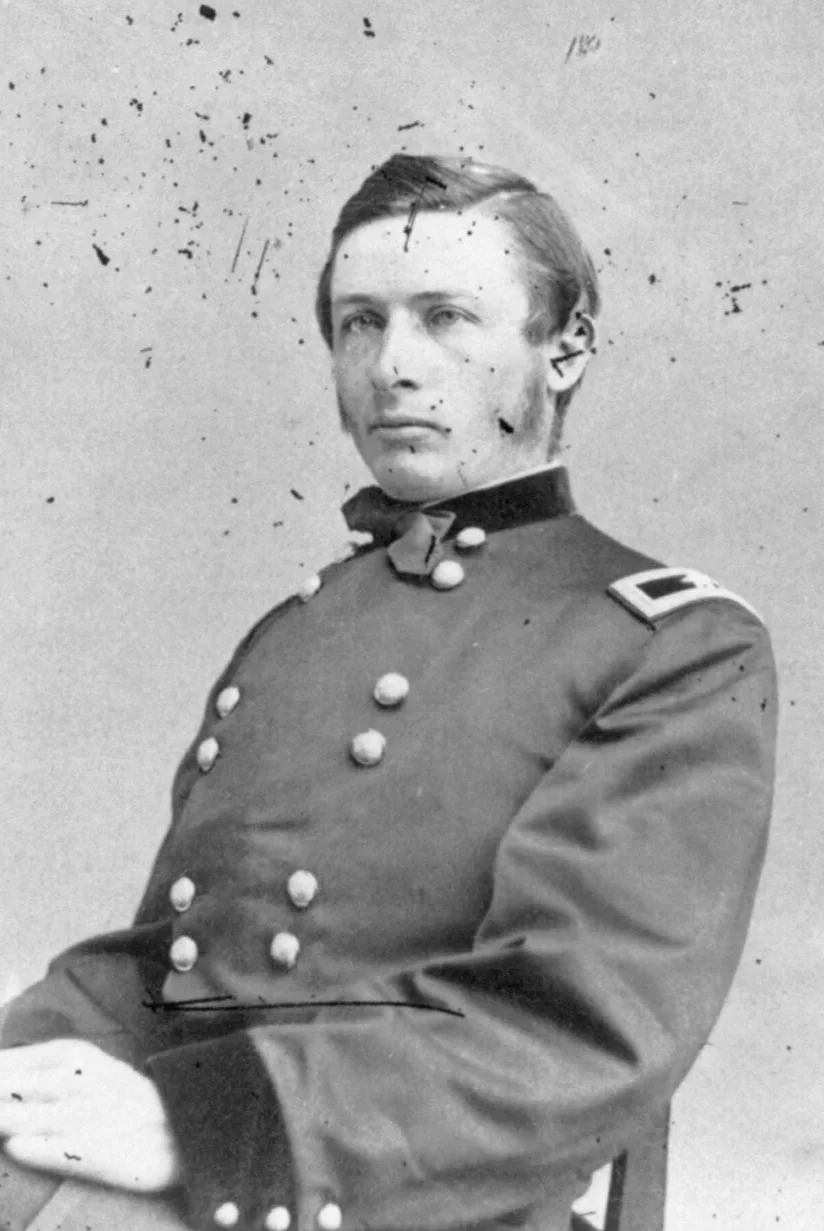
Colonel Ranald MacKenzie in the Civil War
Crook and his men from the Wyoming Column remained in camp for the next months, licking their wounds from the Rosebud and building their forces. A punitive campaign was launched in August, marching north along the Rosebud to the Yellowstone before cutting south along the Powder River and diverting eastward into the Dakota Badlands. As the march continued, Crook’s men and horses began to feel the strain; by September they were subsisting on their own fallen horses.
Growing desperate, Crook dispatched some of his most healthy remaining men under the command of Captain Anson Mills to strike out for Deadwood in search of provisions on 7 September. After a brisk night march, they halted as they encountered signs of nearby hostiles. The following afternoon they sighted an Oglala hunting party returning to a nearby village. The soldiers attacked the village the next day, located at a place called Slim Buttes, charging into the camp after stampeding the pony herd. As the defenders regrouped the situation looked serious for the soldiers, but when a runner was sent to fetch Crook the General was only ten miles distant. Reinforced, the village was captured, with stores of provisions taken. Also found was a 7th Cavalry guidon and various items of equipment, including Myles Keogh’s gauntlets.
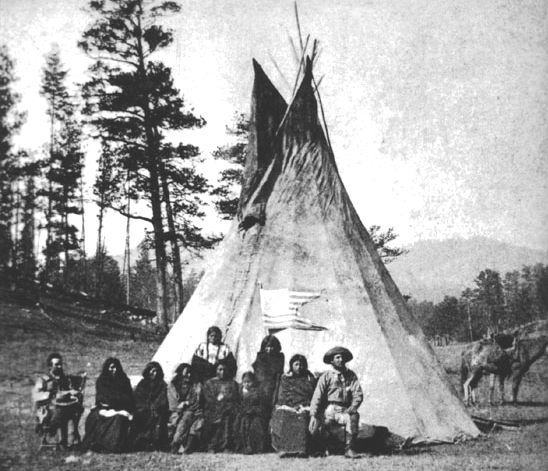
A 7th Cavalry flag recovered at Slim Buttes
After the victory at Slim Buttes Crook’s forces were too exhausted to pursue the Oglalas, who were fleeing with Crazy Horse back westward. The soldiers trudged onward toward Deadwood, shadowed by Sioux scouts who picked off stragglers. The starvation march ended on 13 September, while the indians moved west. Their own march was possibly worse than that of Crook’s column, marching over the prairies they had burned to slow the Army earlier in the year, encountering no food or forage.
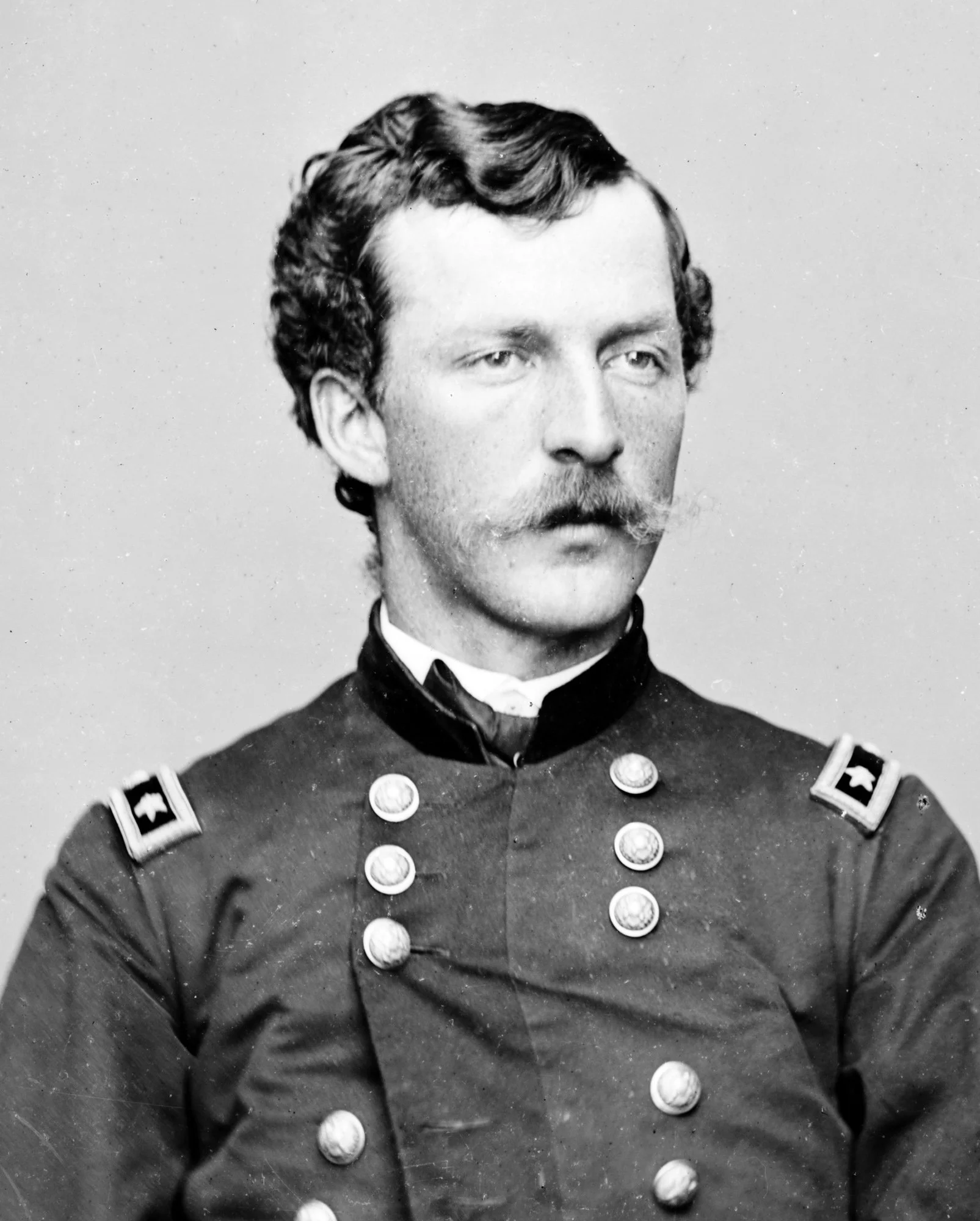
Colonel Nelson Miles
The next move came in October, as troops under the command of Colonel Nelson Miles began a fast moving campaign in Montana from a forward base along the Yellowstone. Informed that Sitting Bull was heading north, Army troops took command of a recently ambushed civilian wagon train and went into Hunkpapa territory, engaging in a running battle that culminated in Sitting Bull requesting a parley with Colonel Miles. This came to nothing, as Sitting Bull requested the withdrawal of all whites from the area, while Miles was set on bringing the hostiles to heel. Fighting resumed, but regardless while the Hunkpapas retreated the Minneconjous and Sans Arcs left Sitting Bull and surrendered to Miles, marching off to the Cheyenne Agency. At the end of October a large group of Hunkpapas reported to the Fort Peck Agency to surrender, but they returned to Sitting Bull after hearing that Army reinforcements were inbound to the agency.
Then came “Bad Hand” (Mackenzie), who began to move against the Cheyenne along the Powder River in late November. The encampment of over 200 lodges under the leadership of Dull Knife and Wild Hog, with the Little Bighorn veteran Two Moons also present. As Mackenzie set out from Cantonment Reno (a smaller camp established southwest of For Phil Kearney) the movement of the soldiers was detected and scouts were sent to ascertain the movement. Infiltrating the camp, the scouts observed a strong force of soldiers and scouts and their return sparked debate in the Cheyenne camp as to whether to stand and fight or attempt to escape. The decision was made to make a stand, and the Cheyenne danced through the night, imploring the Great Spirit to see them through.
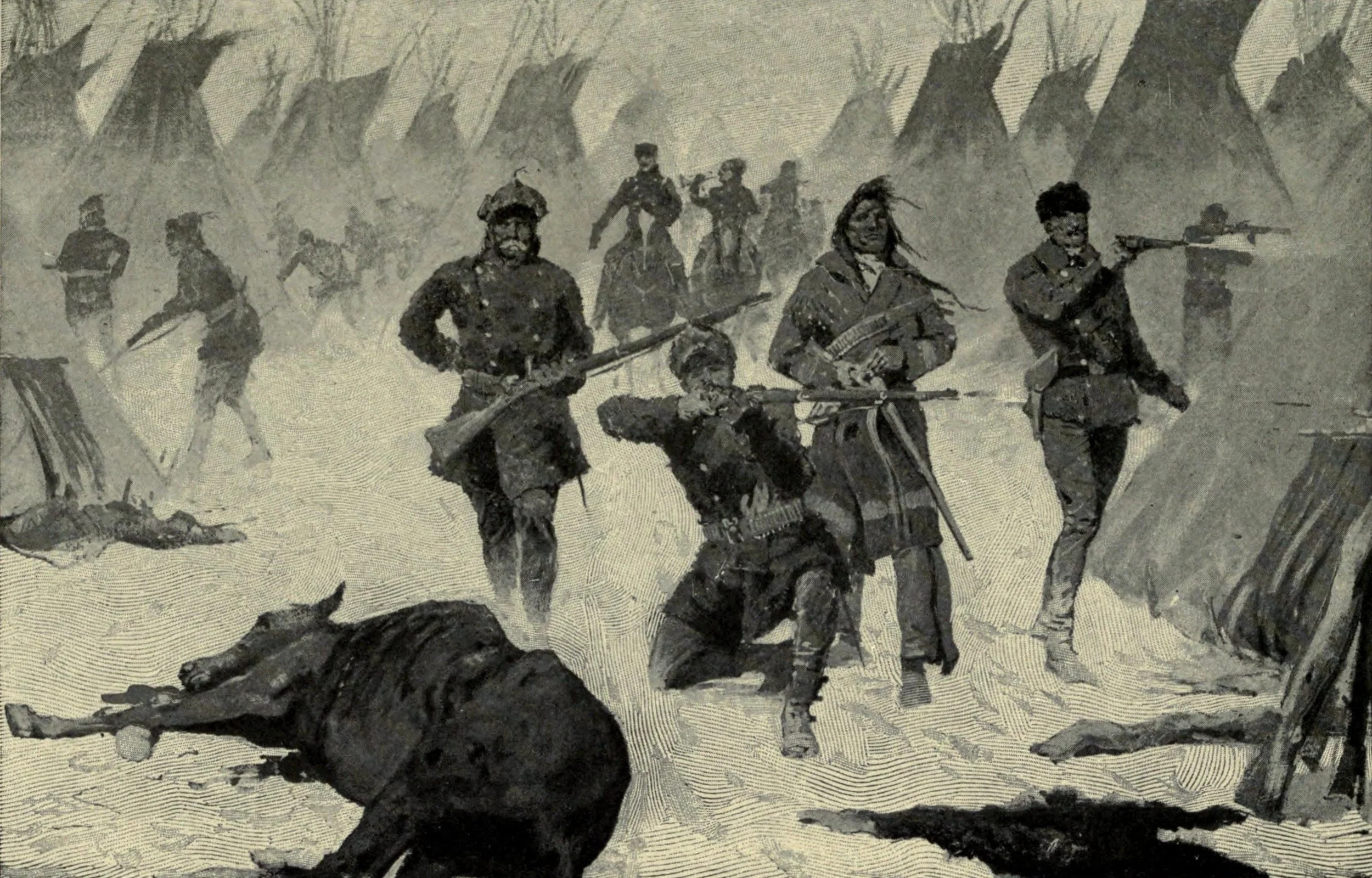
An artist’s impression of the Dull Knife Fight
At dawn MacKenzie struck the Cheyenne camp, with his scouts (consisting of Lakota, Cheyenne, Shoshone, Pawnee and Arapaho) in the lead. Charging the camp, the scouts drew the fire of the defending warriors as the soldiers charged the tipis themselves. Quickly securing the camp, the defenders retreating to the rocky promontories above the it. The village was burned at MacKenzie’s order, and after camping in the camp that night the Army detachment began to return to Cantonment Reno, leaving the Cheyenne survivors to contend with the bitter cold of the winter as they tried to reach Crazy Horse’s Oglalas, while others made for Camp Robinson in Nebraska to capitulate. What would become known as the Dull Knife Fight had broken the Northern Cheyenne militarily.
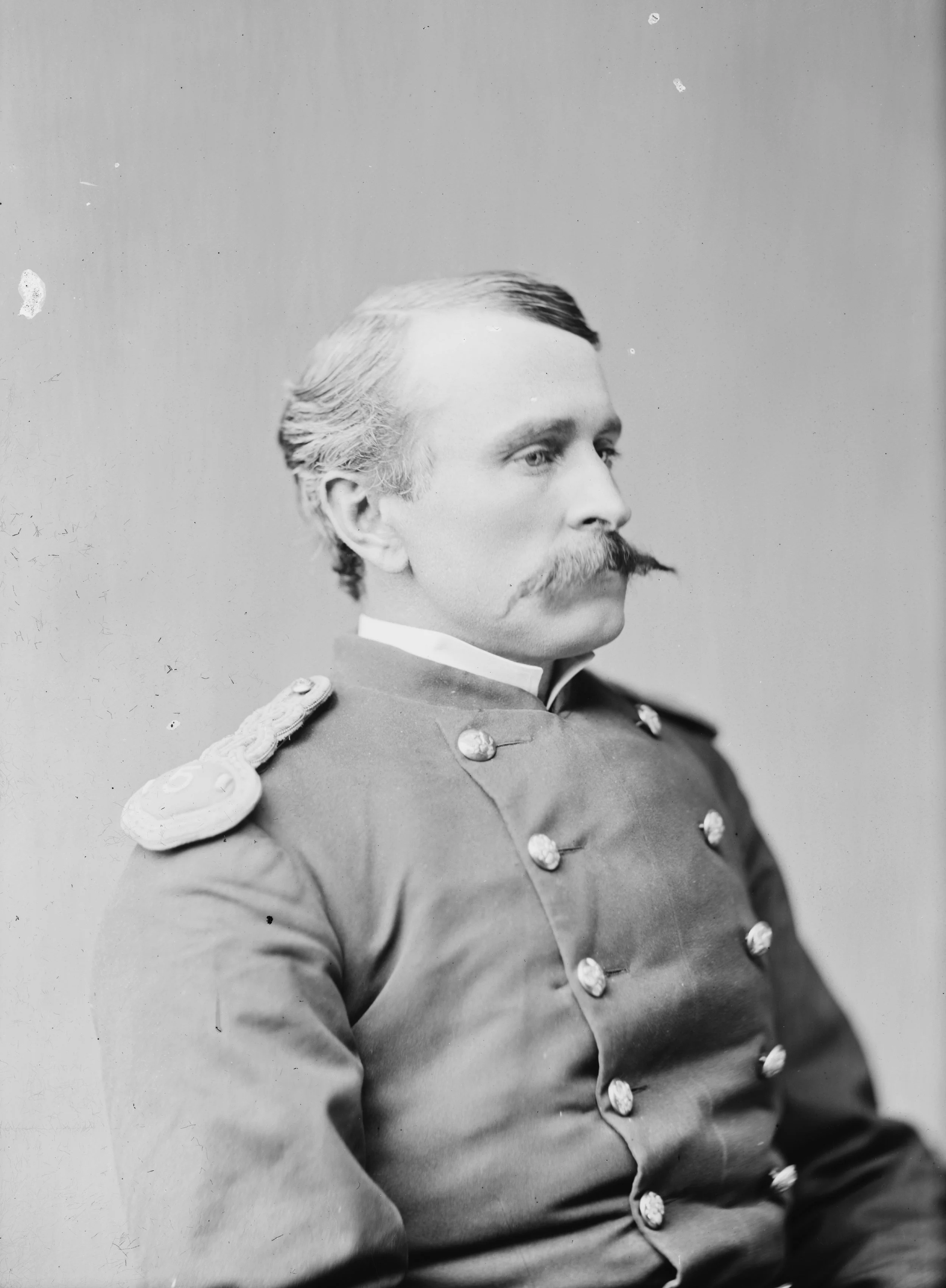
Lt. Frank Baldwin
In the north, Miles was eager to move across the Missouri River and knock Sitting Bull out of the war. The chief objective now was to prevent him from linking with the Oglalas to the south or escaping over the Canadian border, and to that end Miles dispatched a force under Lt. Frank Baldwin to Fort Peck at the start of December. A week later the Hunkpapas were engaged along the Missouri near the Milk River, fighting over a frozen river crossing, but the result was inconclusive. On 16 December a group of Minneconjous from Crazy Horse’s camp approached to surrender, but were ambushed and slaughtered by Crow scouts. This action steeled the resolve of the remaining hostiles to continue the fight.
Miles’ main force, meanwhile, began to advance against Crazy Horse after a raid on the cattle heard at the Tongue River Cantonment, with artillery pieces concealed within wagons and mounted infantry marching through the bitter cold of the first days of 1877. Pursing their enemy toward the Wolf Mountains, the Army detachment remained together, foiling Crazy Horse’s plan to divide and conquer the soldiers. Running low on supplies, plans were made to break up the larger encampment and scatter to the winds, but news that Miles was nearly upon them changed the plans once again. The soldiers came upon and captured a small group of Cheyennes that evening, a rescue force being turned back by infantrymen supported by a 3 inch gun on one of the wagons.
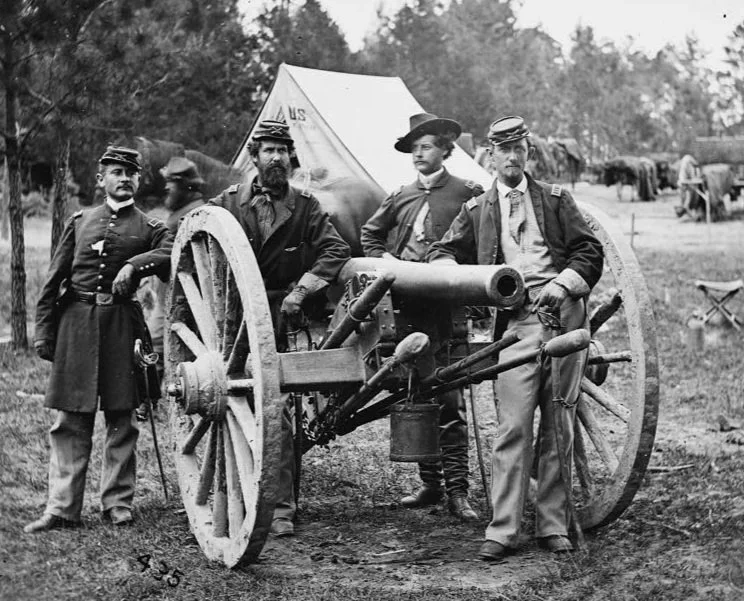
A 3 inch gun during the Civil War (possibly the same type used at Wolf Mountain, records are unclear)
On the morning of 8 January Crazy Horse struck first, attempting to charge the Army camp, but they were driven off by supporting artillery fire from nearby bluffs with shrapnel shells. The warriors attacked as mounted infantry, riding up before dismounting to fight on foot. At midday a blizzard came in as the soldiers reached the indian positions on the high ground near the camp, engaging in hand to hand combat in whiteout conditions. Eventually, the warriors broke off their attacks and retreated. The small engagement was a tactical draw, but a strategic victory for the Army. The campaign had impressed upon the hostiles that the winter weather could not save them from pursuit and engagement, and the retreat that followed deprived Crazy Horse of most of his supplies. His group splintered, with the main group making for the Bighorn Mountains where Crazy Horse finally met Sitting Bull and the Hunkpapas.
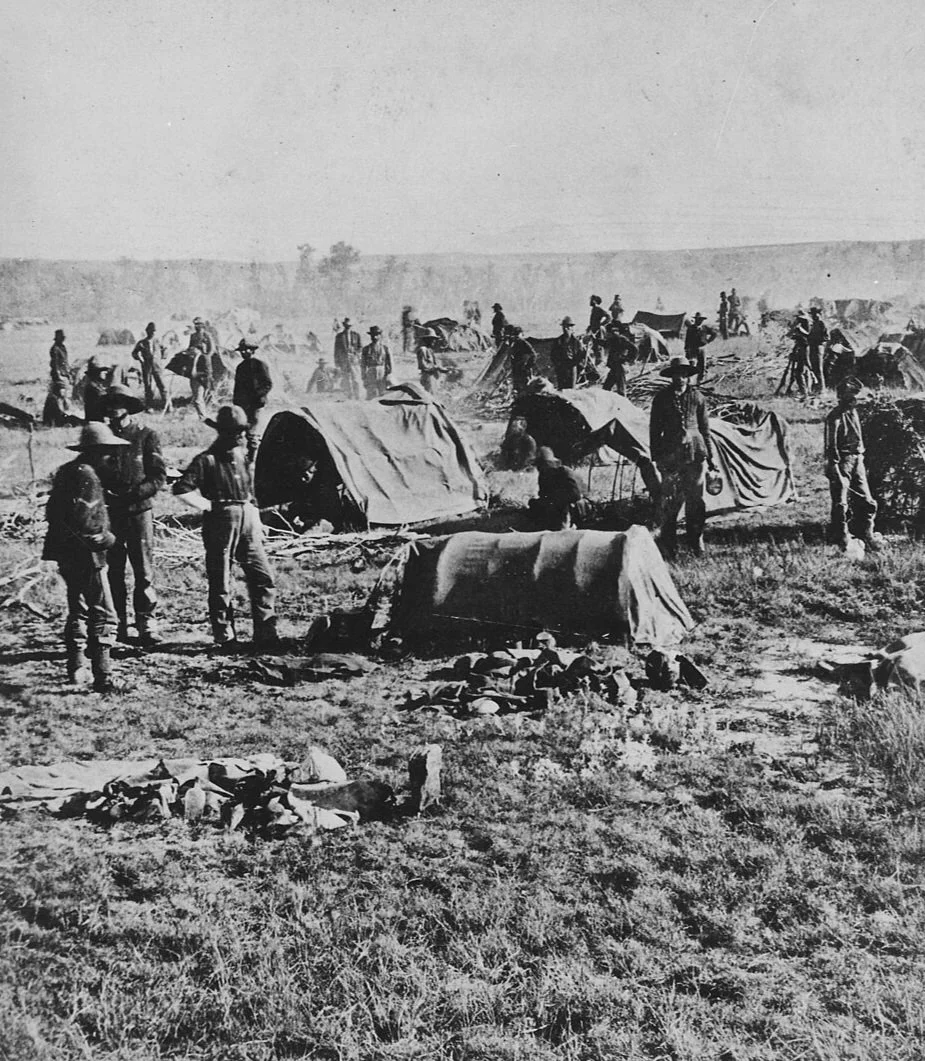
US troops in the field during the Great Sioux War
In early February this group broke up. The Minneconjous and Sans Arcs made their way to the agencies to surrender, while the Hunkpapas and some hardliners set out toward Canada with Sitting Bull. The Oglalas and the remnants of the Cheyenne remained encamped along the Little Bighorn, and it was here that emissaries came to offer an ultimatum of surrender to them. A group of Cheyenne chiefs went ahead to the Tongue River Cantonment, where Miles ordered his men into formation to salute their enemy. Thus began their surrender, including Two Moons, while others made for General Crook, hoping for better terms. These capitulations continued through late April.
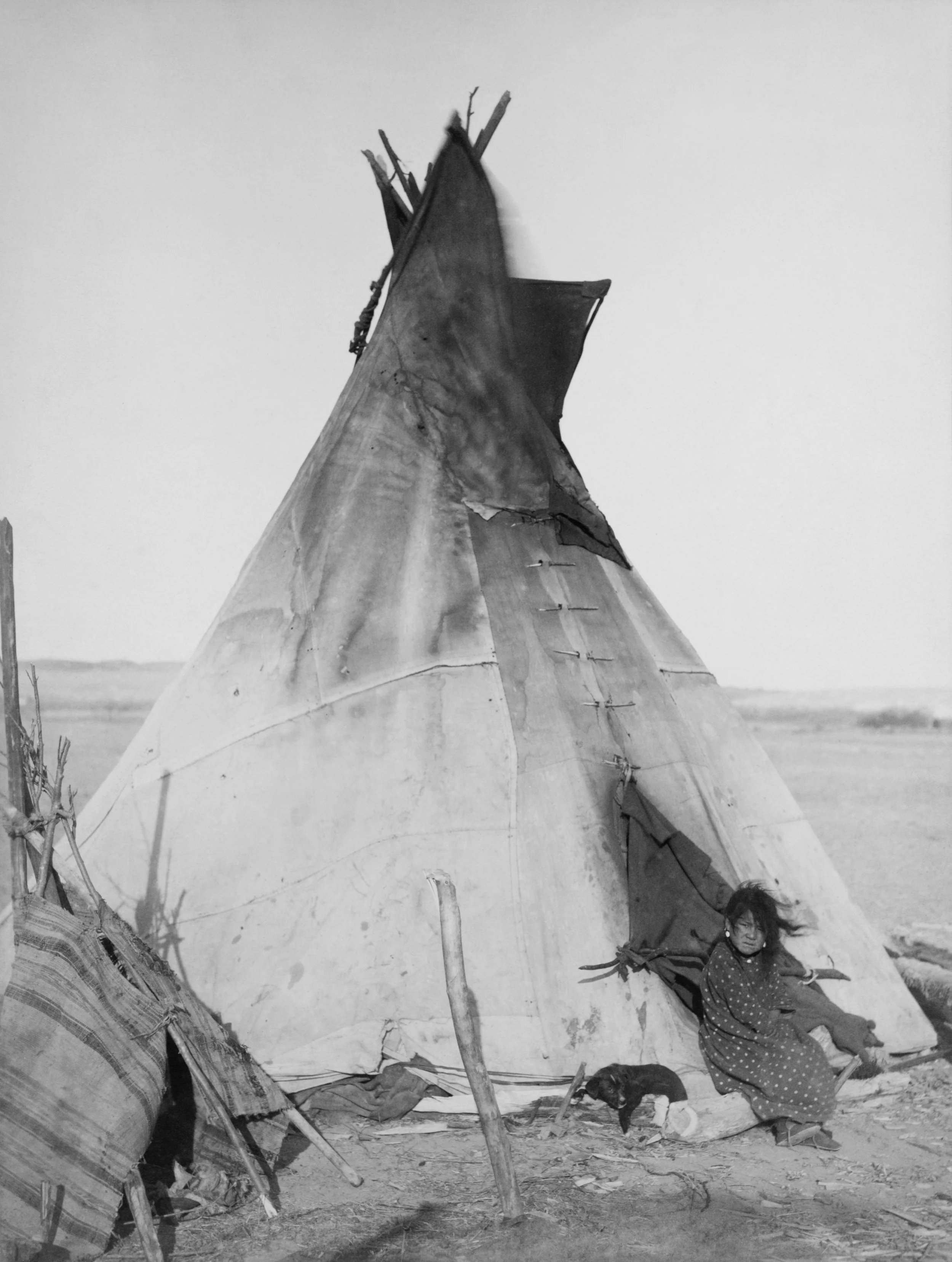
An Oglala Lakota girl at a tipi
Crazy Horse himself, along with his remaining Oglalas, realized that further resistance was pointless as the last of his allies capitulated. On 6 May he arrived at Camp Robinson with nearly 900 Oglalas and a large herd of ponies, extending his left hand to Lt. Philo Clark, expressing a hope for a heartfelt and permanent peace. On the same day, far to the north, Sitting Bull and his band entered exile in Canada. The last notable engagement came in May of 1877, as Miles’ troops engaged a group of Minneconjous under Lame Deer, killing the Chief along with many of his band. The Great Sioux War was over.
The Battle of the Little Bighorn, commonly known as Custer’s Last Stand, was in many ways also the last stand of the Plains Indian. This great victory heralded the marshalling of the full force of the Federal Government in the interest of bringing the tribes to heel and finally conquering the “Wild West”. Never again would a significant victory be had, and within a year the Sioux and their allies had been military defeated and confined to new reservations. The Black Hills would be free to be prospected by whites, while conditions at the reservations deteriorated.
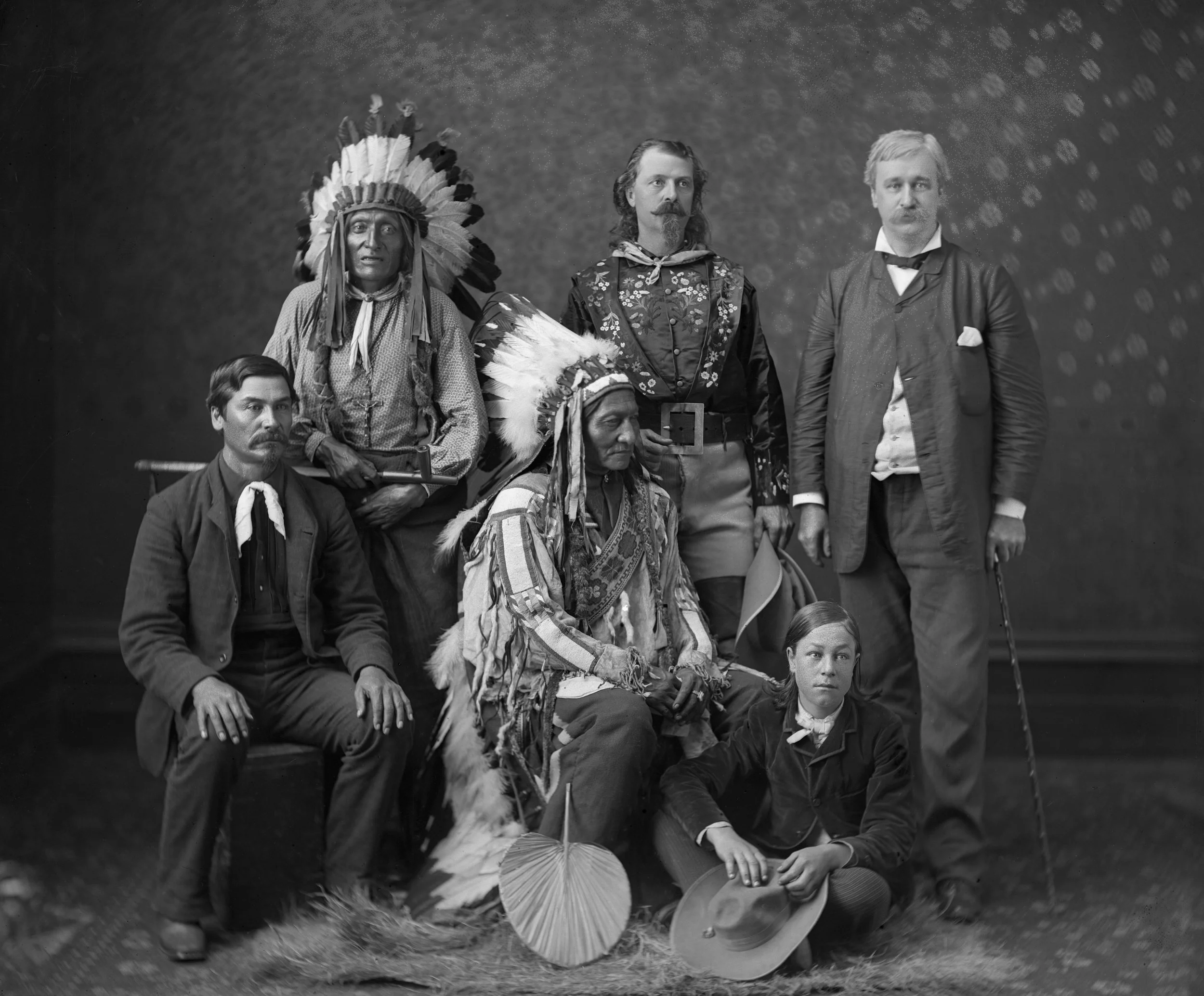
Sitting Bull along with Buffalo Bill and other members of his Wild West Show
Sitting Bull remained in Canada for four years, monitored but unmolested by Canadian forces, until lack of food forces him to return with what remained of his band to US territory, surrendering at Fort Buford in the Dakota Territory on 19 July of 1881. He would later tour with Buffalo Bill’s Wild West Show as a headlining attraction for a short period before settling at the Standing Rock Agency. He was killed by Indian Police at his home in 1890 as they attempted to arrest him, believing that he intended to lead another uprising as the Ghost Dance Movement reached the reservation.
Crazy Horse remained at the Red Cloud Agency until internal politics and a fear of his military prowess led to an attempt to arrest him. After a brief flight to the Spotted Tail Agency he agreed to return to Fort Robinson for a hearing, but when he arrived it became apparent that he was instead to be shipped away to a government prison. The warrior attempted to break free of the men holding him, and was bayoneted by a nearby soldier. Crazy Horse died shortly afterward, on 6 September of 1877.
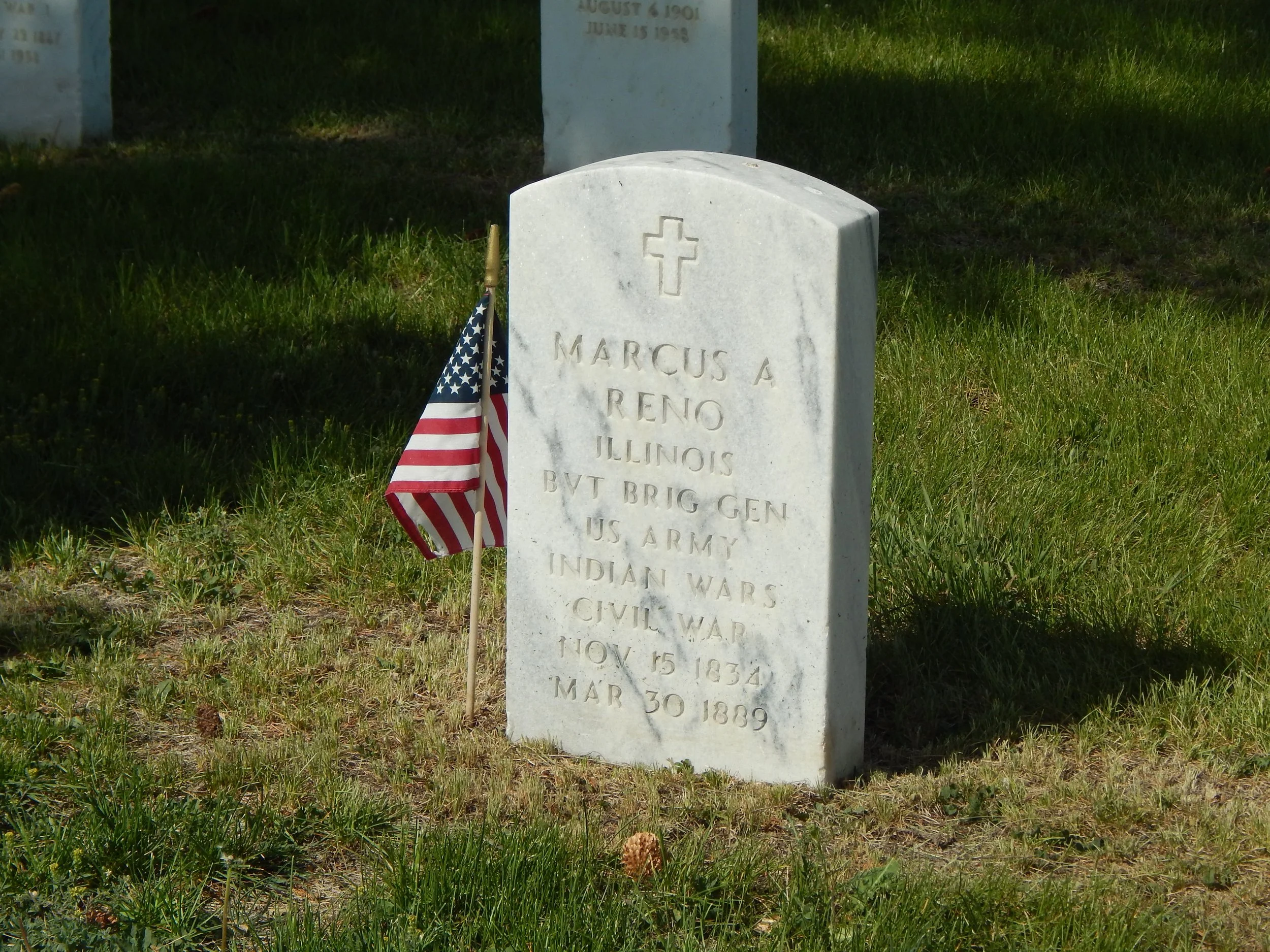
Marcus Reno’s grave, in the Custer National Cemetery located adjacent to Last Stand Hill on the Little Bighorn Battlefield
For the Army, Custer’s reputation remains a source of controversy to this day. His wife and some of his subordinates took pains to frame him as betrayed by incompetent subordinates, chiefly Marcus Reno and Frederick Benteen. In 1879 an inquiry was held in Chicago, in which Reno was exonerated, although this too remains controversial. Reno’s subsequent career was plagued by misconduct allocations, and he was relieved of duty in 1880, dying of cancer in 1889. Benteen likewise continued to serve for over a decade after the Little Bighorn, winning accolades in the Nez Perce War. Like Reno, Benteen had difficulties with alcoholism, and was court marshalled. He retired from the Army in 1888, and died ten years later. Custer himself, though killed on that hill in June of 1876, has achieved immortality as one of the most famous figures of the “Old West” era, both beloved and damned by different elements of historical memory.
The end of the Great Sioux War was not the end of the Indian Wars as a whole, but did represent the start of the final decline of the independence of indigenous tribes of the United States. Decades later, a new revival movement began to sweep the reservations, preaching that a divine deliverance from the white man was soon at hand. This “Ghost Dance” movement startled the Indian Agents, and additional troops were brought in to forestall a potential uprising in 1890. In response, many indians began to flood into the Badlands near Pine Ridge in modern South Dakota, and one large group of Lakota under the leadership of Chief Big Foot was intercepted by the 7th Cavalry and brought under guard to a creek known as Wounded Knee to be disarmed. Who shot first is lost to history, but the troopers, supported by rapid firing artillery on a nearby hill, slaughtered the entire band, including the women and children. The survivors ran for cover in a nearby ravine, but were torn apart by shrapnel shells. The dead were later buried in a mass grave atop the hill where the cannons had been emplaced.
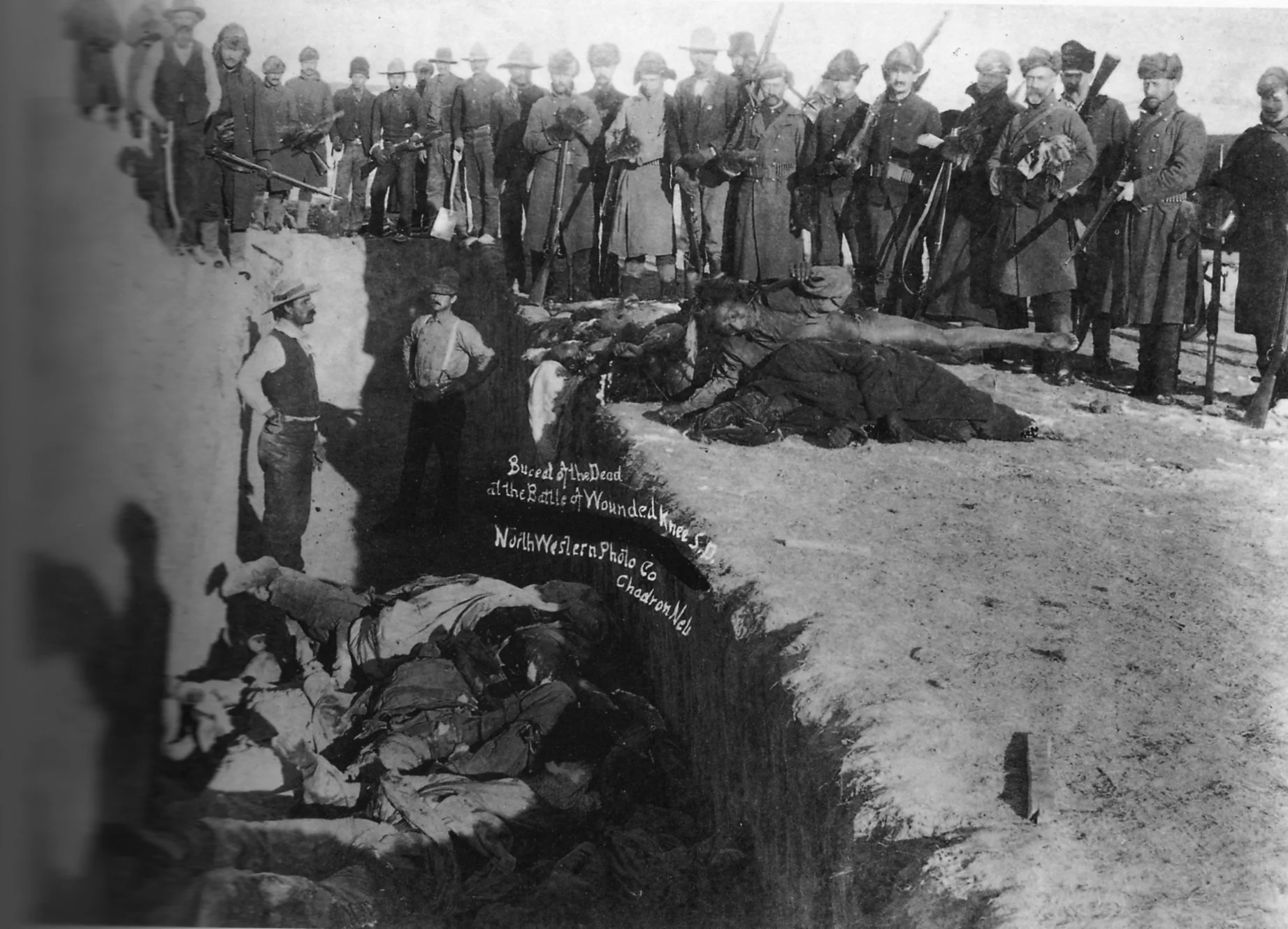
Burial of victims of the Wounded Knee Massacre in a mass grave
A monument now stands in the center of the cemetery that has grown around the gravesite. Nineteen Medals of Honor were awarded to soldiers who took part in the massacre, and remain their own source of controversy. The same year that the massacre took place on that frozen creek in South Dakota, the US Government finally declared the frontier question to be settled.
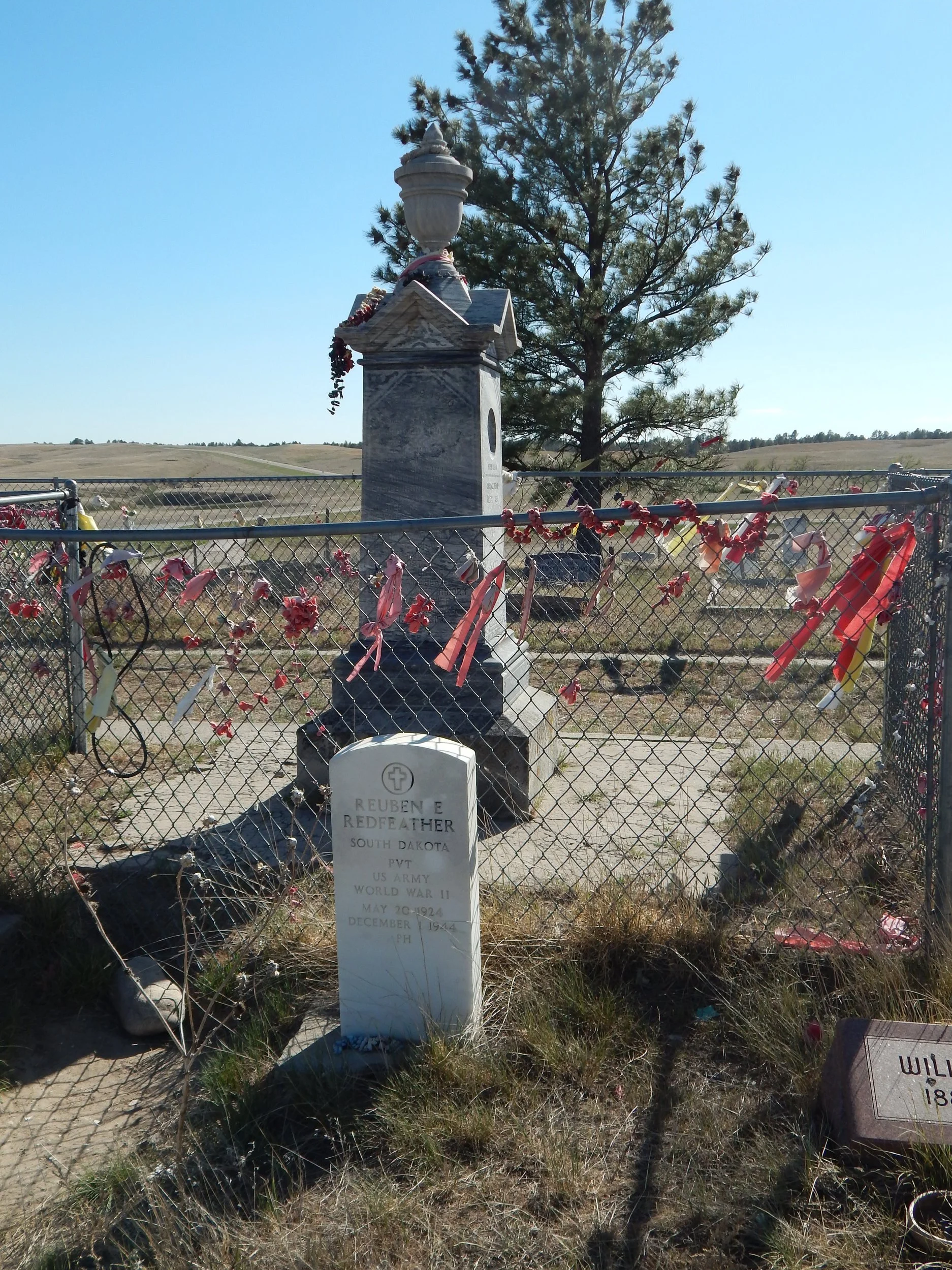
The monument at Wounded Knee, and directly adjacent to it the grave of Pvt. Reuben Redfeather, who was killed in action during the Second World War.