Friday, June 23
Todays advance along the Rosebud was a slogging affair through the rough country, sweltering heat and with the dark mood to match as the column moved in near silence. The column began to stretch out as the mule train following the troopers fell farther and farther behind the leaders of the force. Custer and his command identified the remains of a large encampment, possibly numbering 400 lodges, that had been noted by Reno during his earlier scout. Two additional abandoned campsites were noted throughout the day, and when the command halted for the evening they had made over thirty miles. Some of the weary troopers took the opportunity to swim in the Rosebud, much to the irritation of Benteen, who had been attempting to fish¹.
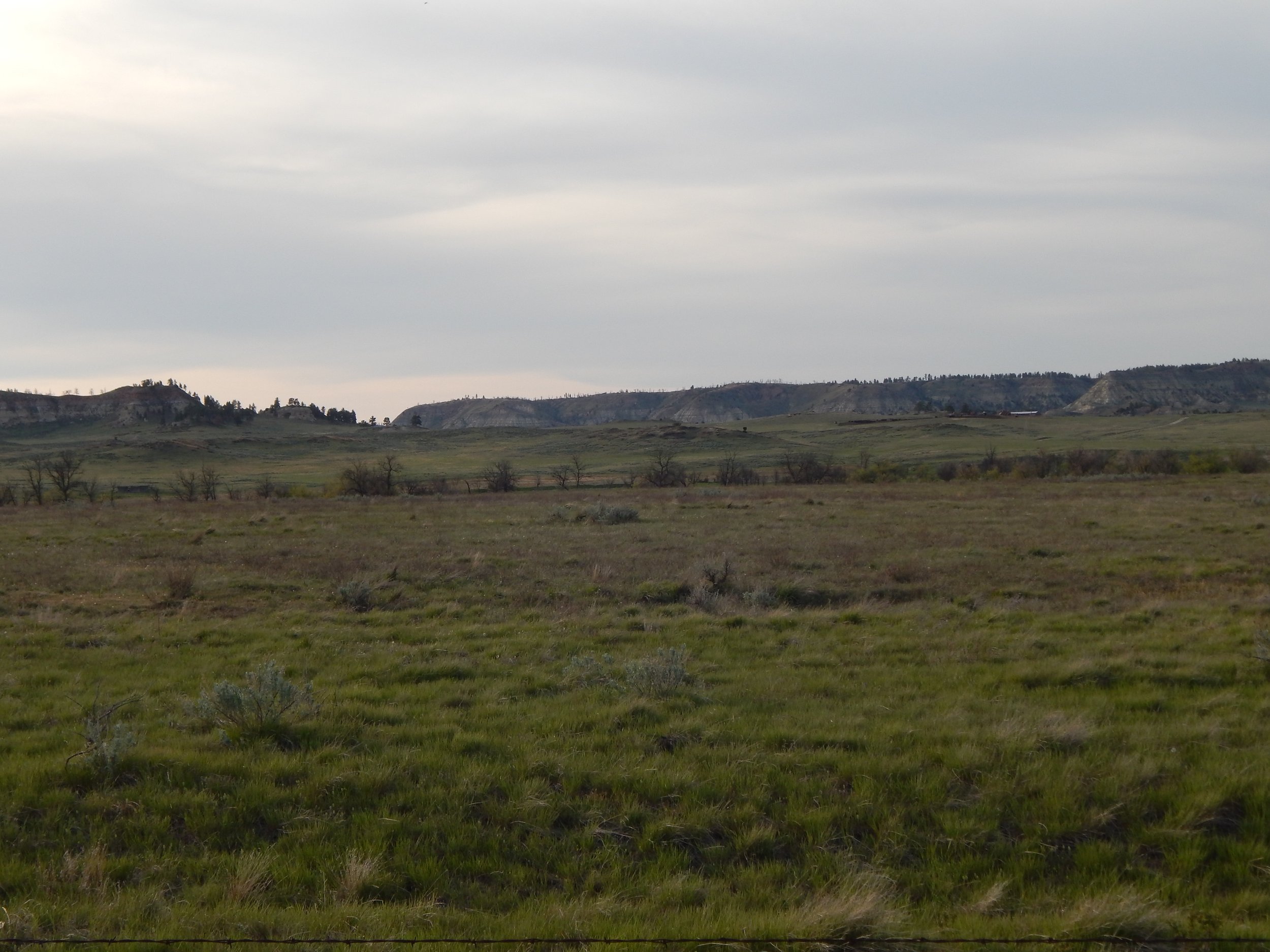
The open fields where the 7th Cavalry made camp in 23 June, 1876
The Montana Column likewise made a difficult march in the severe heat, choked out with dust as they trudged westward. The cavalry detachment, well ahead of the Infantry, made a stop to hunt a large buffalo herd, leaving some of their bountiful harvest for the infantrymen, but their quartermaster refused to stop and take it on, leaving the men to have a grumbling supper of bacon and hardtack once they made camp near the abandoned Fort Pease.
Research Trip
Marching Through History
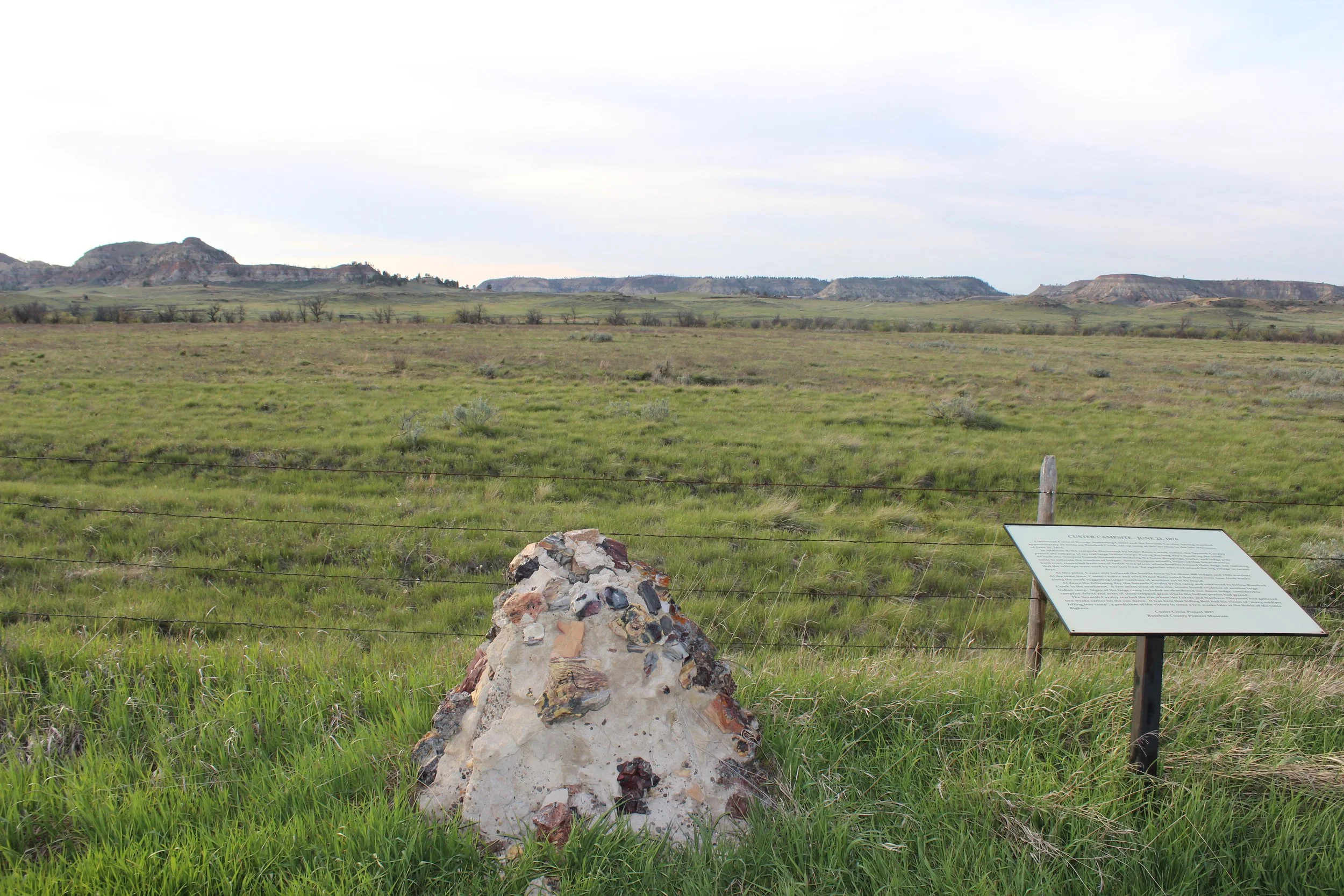
Late on the second day of the May 2026 research trip the author made a drive to Colstrip (in a rather desperate jaunt to refuel), and on the return trip down Montana State Highway 39 made a stop at a small roadside marker for the 26th camp of General Custer and his men. This is marked by a simple cairn and an interpretive plaque.
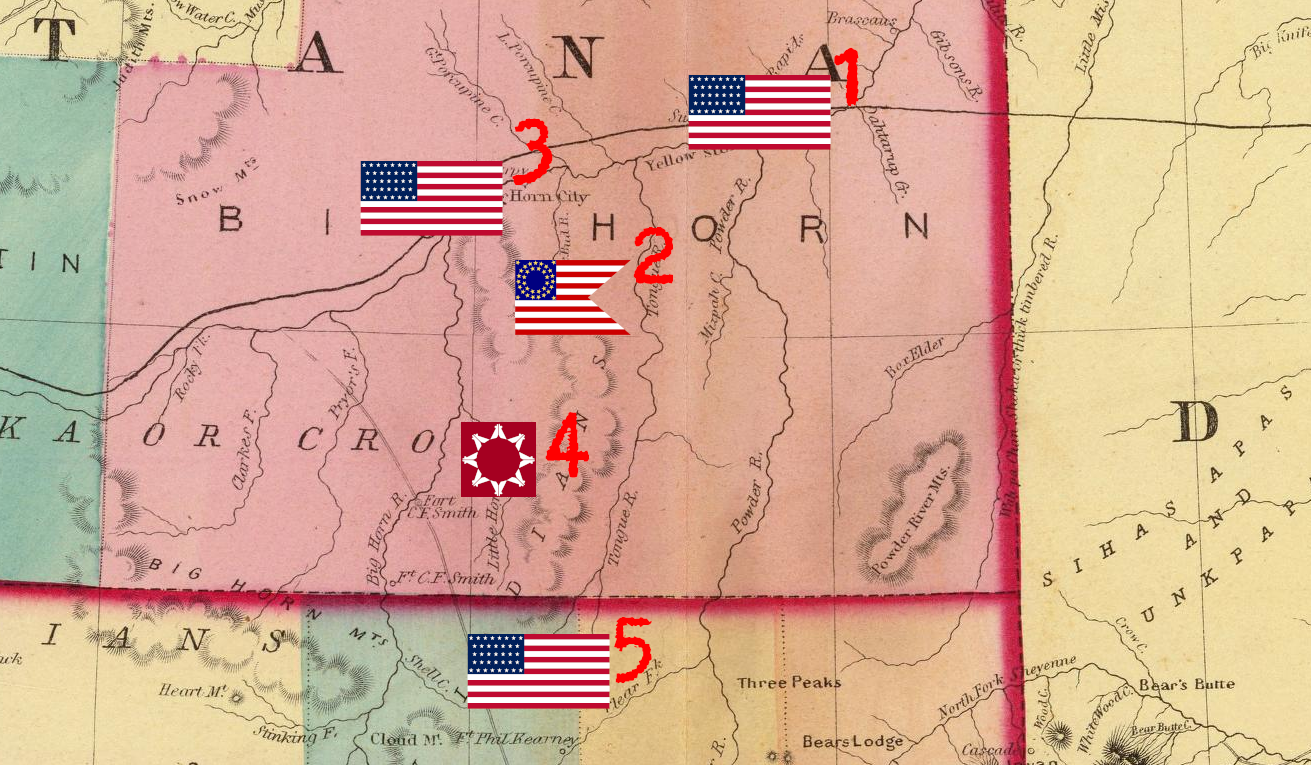
1. Powder River Depot
2. 7th Cavalry - Custer - Rosebud Creek
3. Montana Column - GIBBON - Fort Pease
4. Sioux Encampment - SITTING BULL - Little Bighorn River
5. Wyoming Column - CROOK - Goose Creek
-
Monaghan, p.380