Friday, May 19
On the third day of the march, the Dakota column made it ten miles westward, camping on the dry Cut Bank Creek just outside of modern New Salem. The lack of water made for a rough night, with most troopers skipping dinner tonight before turning in.
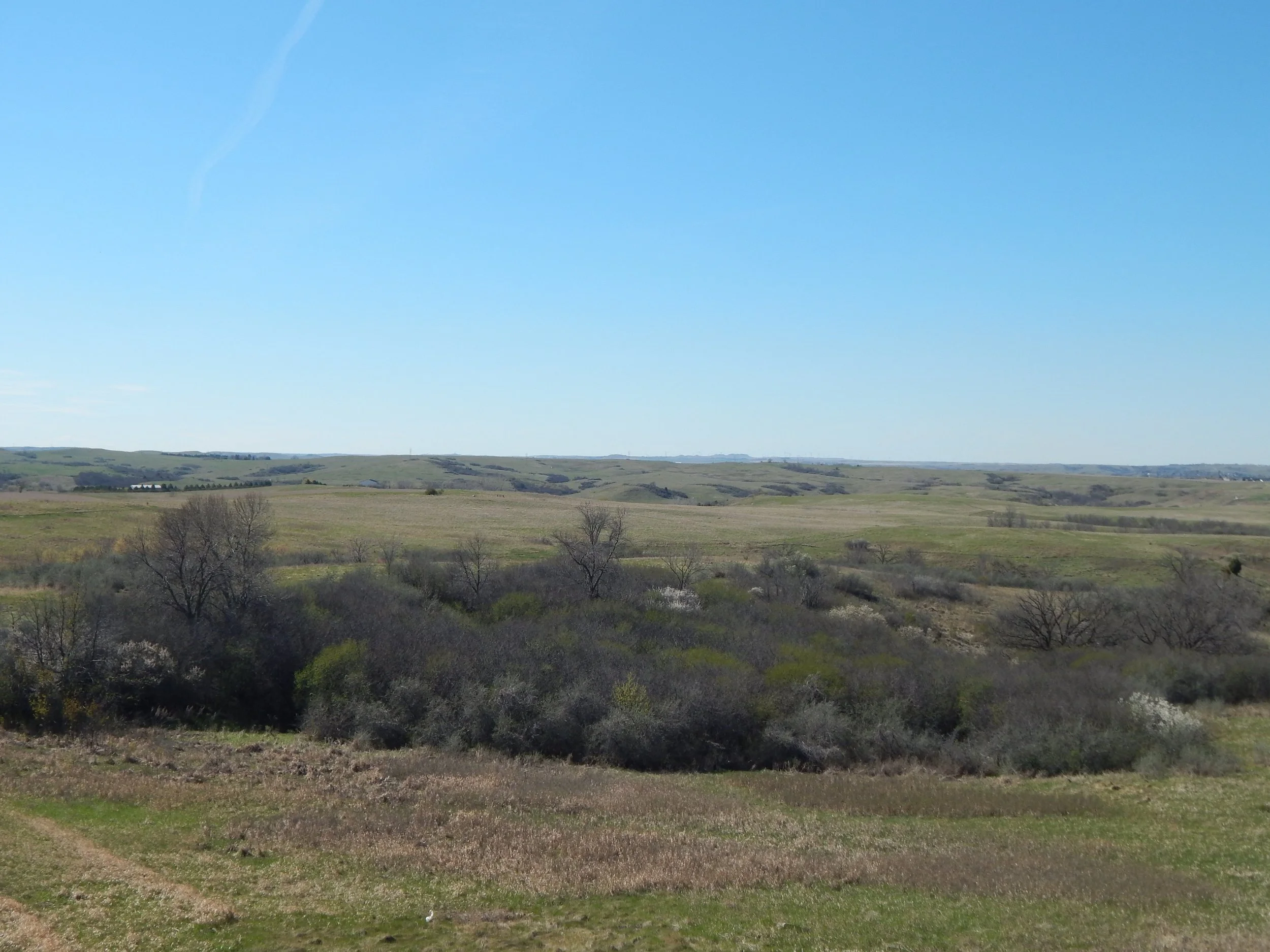
The North Dakota Prairie
The same day word reached the Montana Column that the government had contracted with civilian riverboats to facilitate transportation and resupply. This was welcome news to Colonel Gibbon, who had located a hostile village some days prior but had encountered great difficulty crossing the swollen Yellowstone River. After locating a large encampment on 16 May Gibbon had attempted to cross the river with his command to attack it, but after a wasted day and several drowned horses had aborted the maneuver, and set into a holding pattern. The Montana Column would remain on the northern bank of the river, hoping to cut off the indians’ retreat before they were lost to the north along the Canadian border.
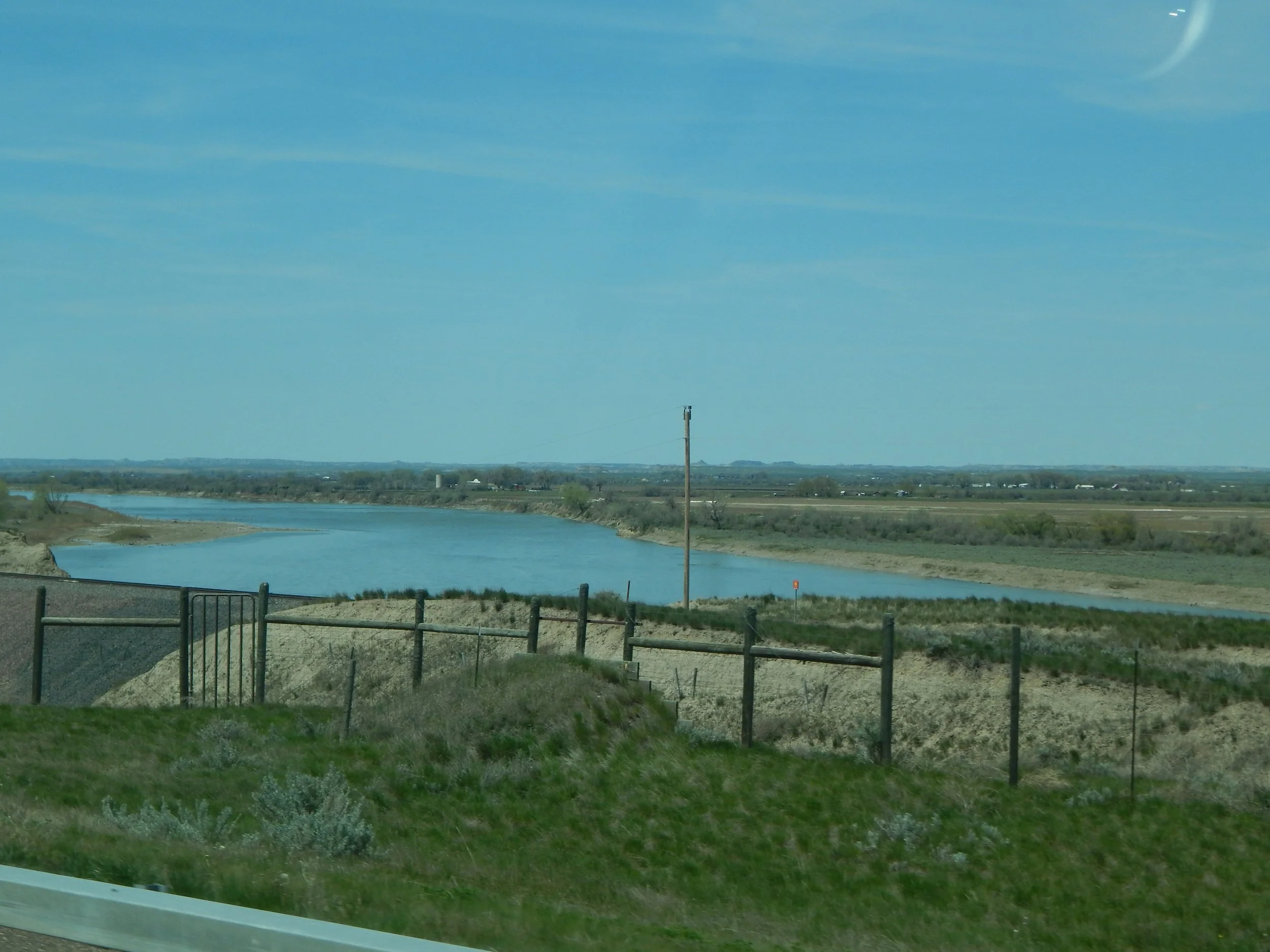
The Yellowstone River in Montana
In southern Montana, the Hunkpapa band under the leadership of Sitting Bull arrived at Rosebud Creek today¹, setting up their village in a valley near the junction with the Elk River. Here the Sioux were gathering were for the annual Sun Dance, a major spiritual event where the most respected chiefs and their bands would gather to welcome the summer with a grand council as well as religious observances and social events. It was hoped that such a large gathering would serve also as a show of force to the government, as well as solidarity among the ever-increasing numbers of indians gathering outside of the reservations.
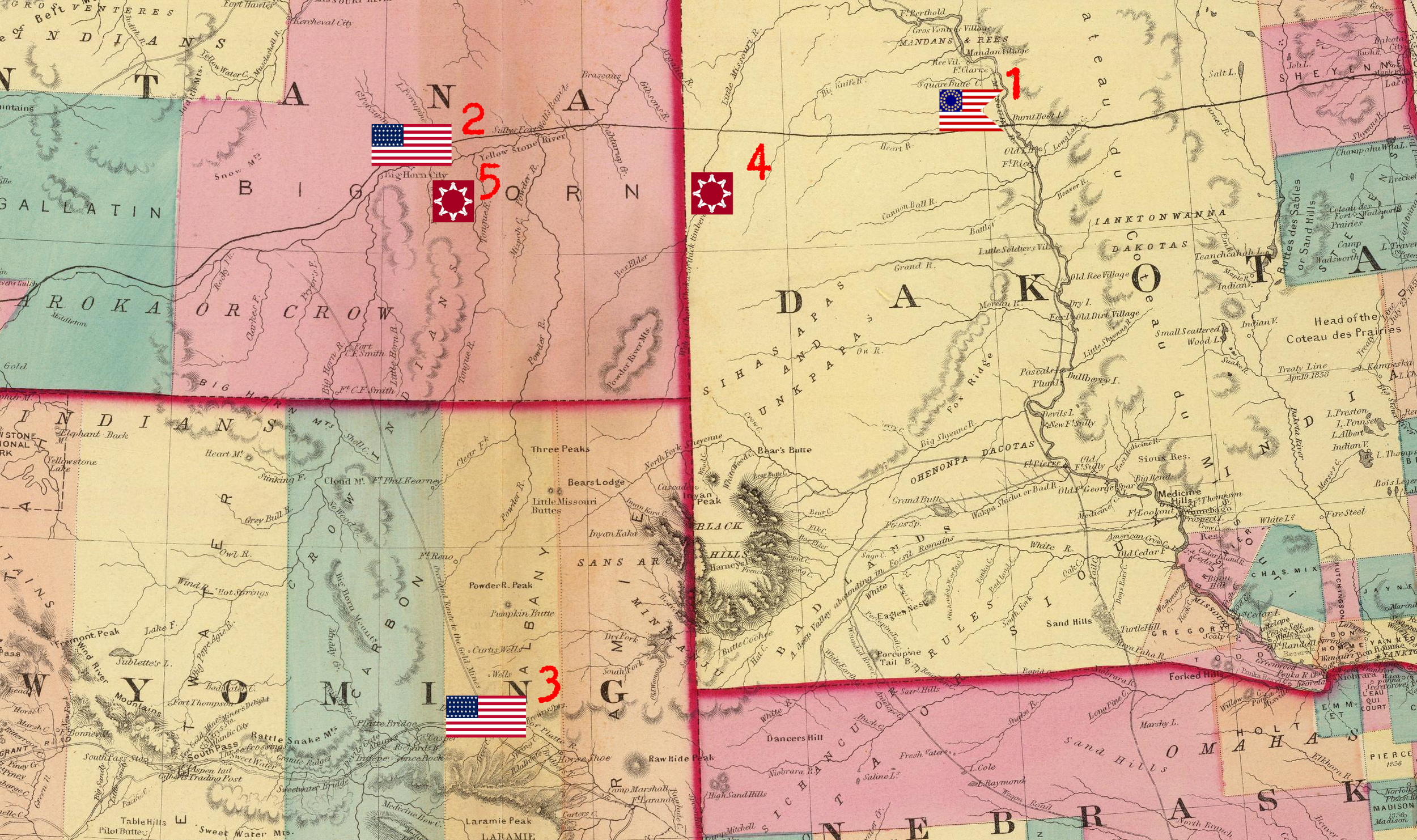
1. Dakota Column - CUSTER/TERRY
2. Wyoming Column - CROOK - Fort Fetterman
3. Montana Column - GIBBON - Yellowstone River/Rosebud Creek
4. Sioux Encampment - US Intelligence position
5. Sioux Encampment - Actual position
-
Robinson, p.122