Monday, May 29
Today the Dakota Column finally reached the Little Missouri River, where intelligence had positioned the encampment of Sitting Bull. Unfortunately, they located neither the tribes nor signs that they had been in the area recently, much to the consternation of the men after a difficult six mile march through the badlands. Still, concerned that the enemy may be in the area, Terry issued orders against unnecessary discharging of firearms as the column made camp on the eastern bank of the river. Meanwhile, Terry authorized Custer to lead a small reconnaissance the following morning, swinging southward and returning on the 31st, while the main column would remain in place for the next two nights.
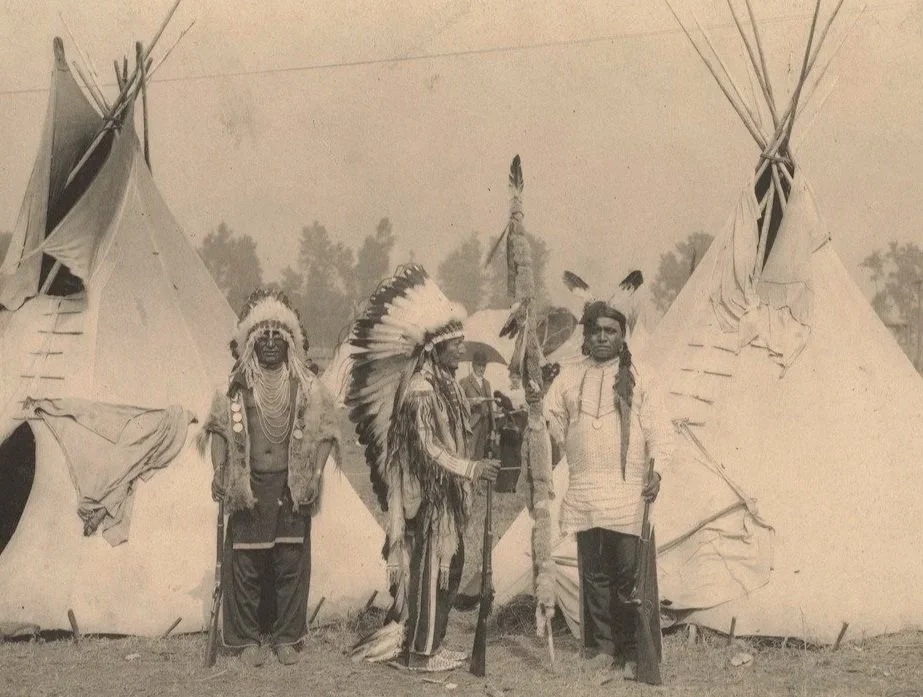
Sioux in camp (later photo, c.1898)
On the Yellowstone little occurred today, as the force remained in place, the only excitement being the arrival of a trader with a quantity of whiskey. The large camp discovered, meanwhile, had begun to shift slowly southward, as the pony herds depleted the local grass.
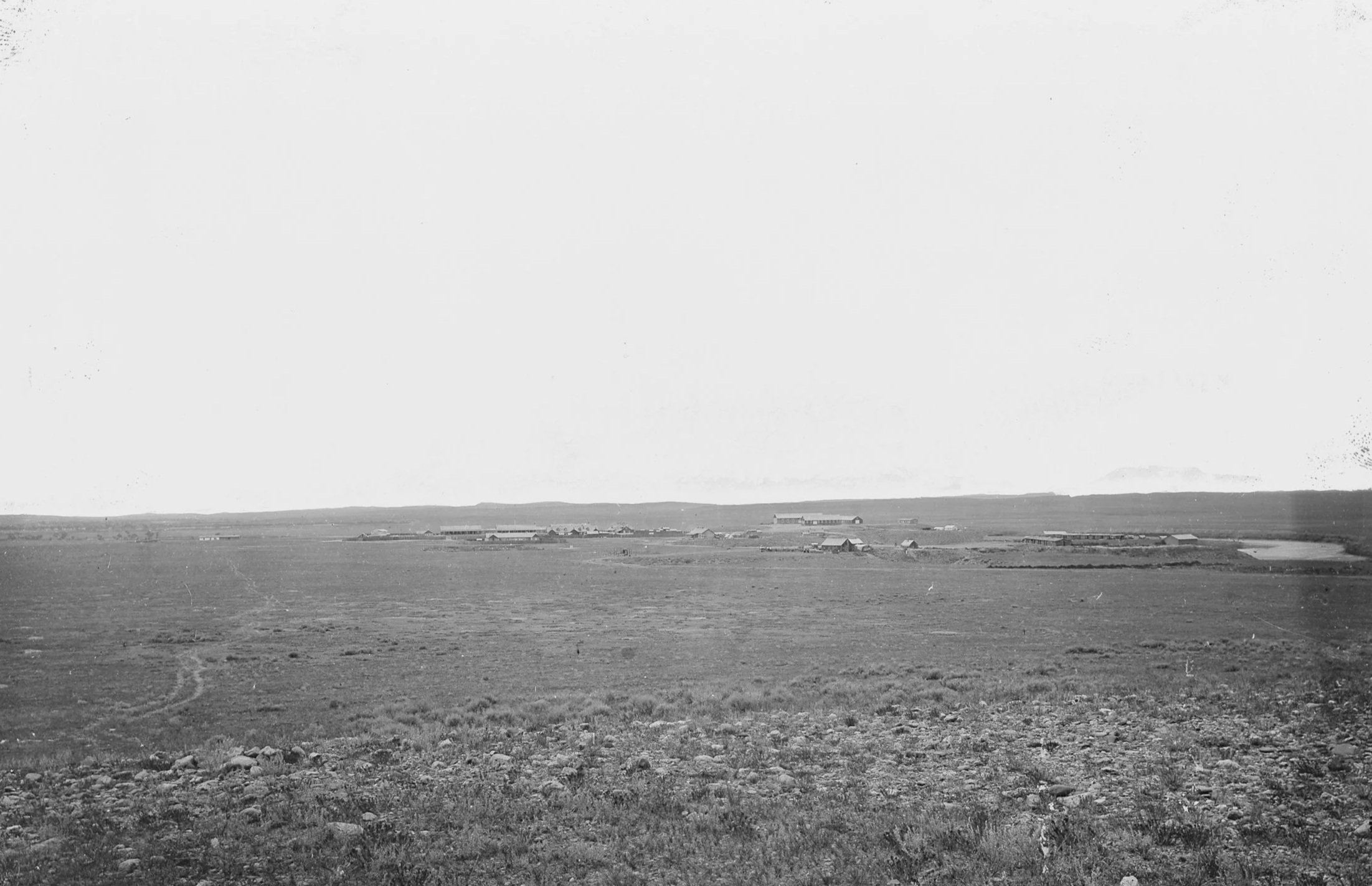
Fort Fetterman in the 1870s
In Wyoming General Crook’s column was finally ready to move out again after several weeks of reorganization at Fort Fetterman, setting out at 1300hrs toward the abandoned Fort Reno to the north. The column set out northward fith just under one thousand men, including fifteen companies of cavalry and two infantry companies. Along with contracted civilians and scouts, the column was over a mile in length as it set out along the Platte River, setting up camp for the night along Sage Creek after a ten mile march.
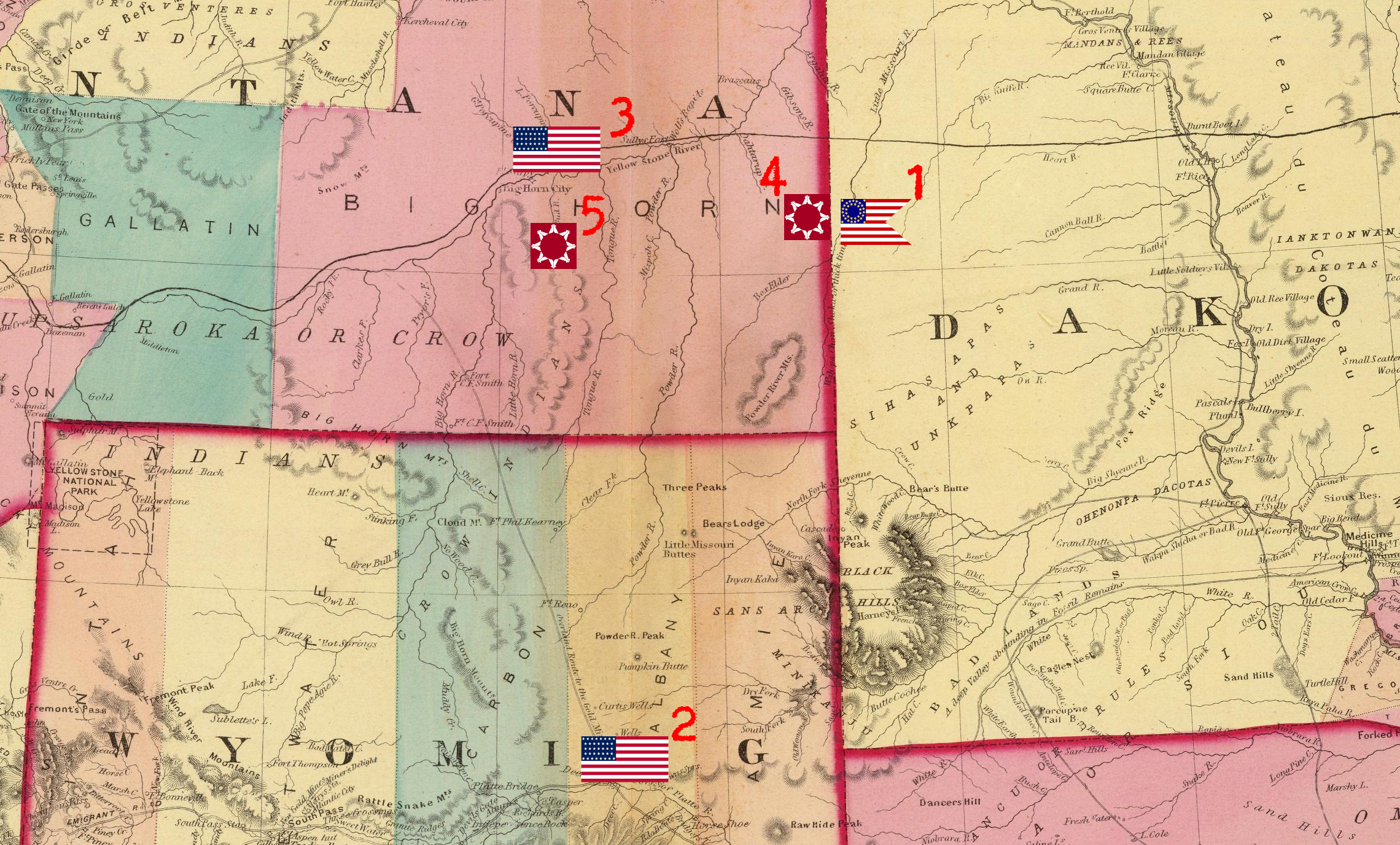
1. Dakota Column - CUSTER/TERRY - North Dakota Badlands/Little Missouri River
2. Wyoming Column - CROOK - Sage Creek
3. Montana Column - GIBBON - Yellowstone River/Rosebud Creek
4. Sioux Encampment - US Intelligence position - Little Missouri River
5. Sioux Encampment - Actual position - Rosebud Creek