Saturday, June 3
With the snow melted away and the ground firming, the Dakota Column finally departed their camp on Andrews Creek and resumed the march westward. The command moved out at 0515hrs, angling northward toward the stockade post on the Yellowstone established near modern day Glendive, until he encountered couriers with news from both that post and from Gibbon, reporting no hostile indians in the country north to the Yellowstone but rather the huge concentration near the Rosebud that Gibbon was positioned to contain.
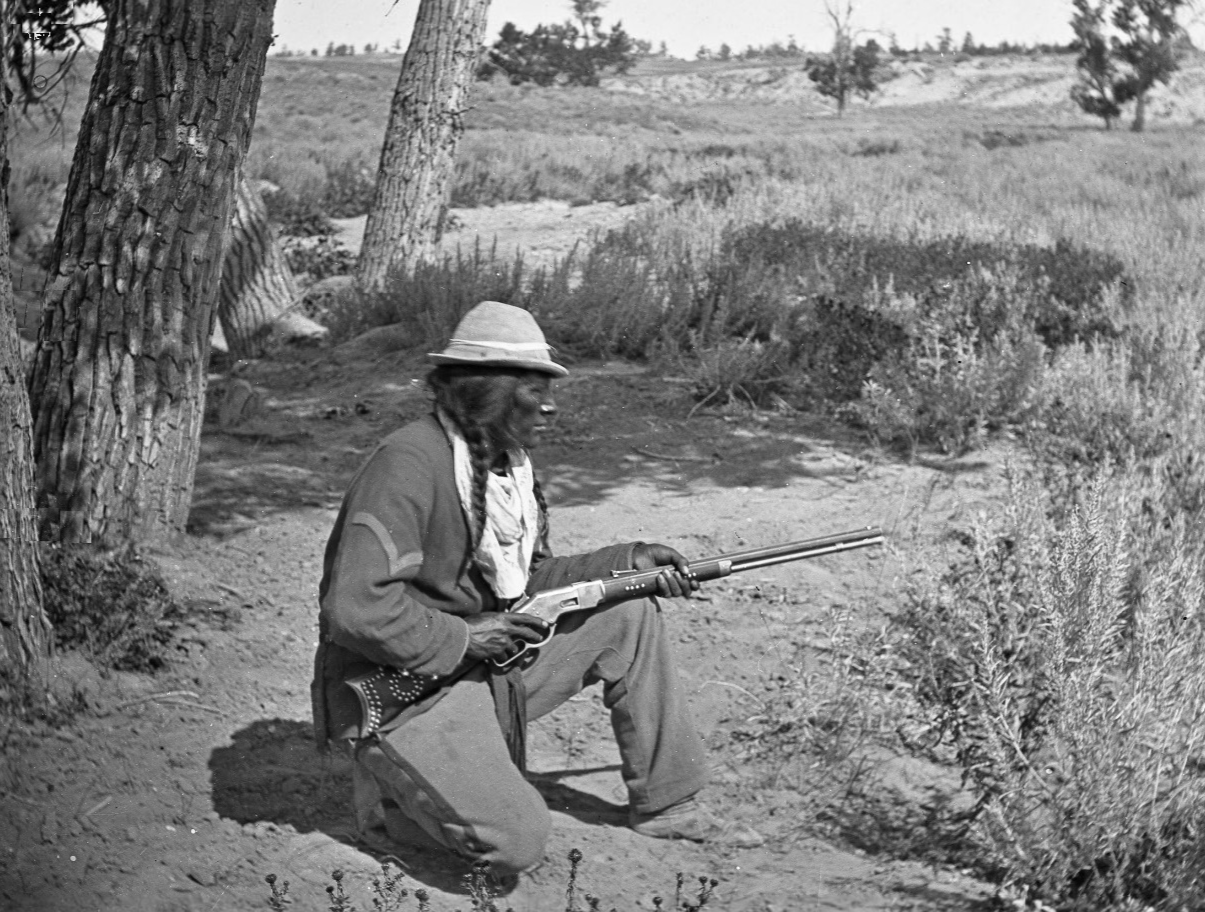
The Arikara scout Bloody Knife, a favorite of Custer and a member of the Dakota Column, on the 1873 expedition
This information in hand, Terry issued new orders for Gibbon and redirected his column to make for the Yellowstone farther west, to link forces with the Montana Column and move against Sitting Bull in the Rosebud area. Now it was finally accepted that the intelligence estimates of a presence along the Little Missouri were hopelessly outdated. Gibbon was to continue his holding pattern, and to send a steamer with supplies up the Yellowstone to meet Terry near the junction with the Powder. The Dakota Column today made 25 miles, setting up camp along Beaver Creek in Montana.
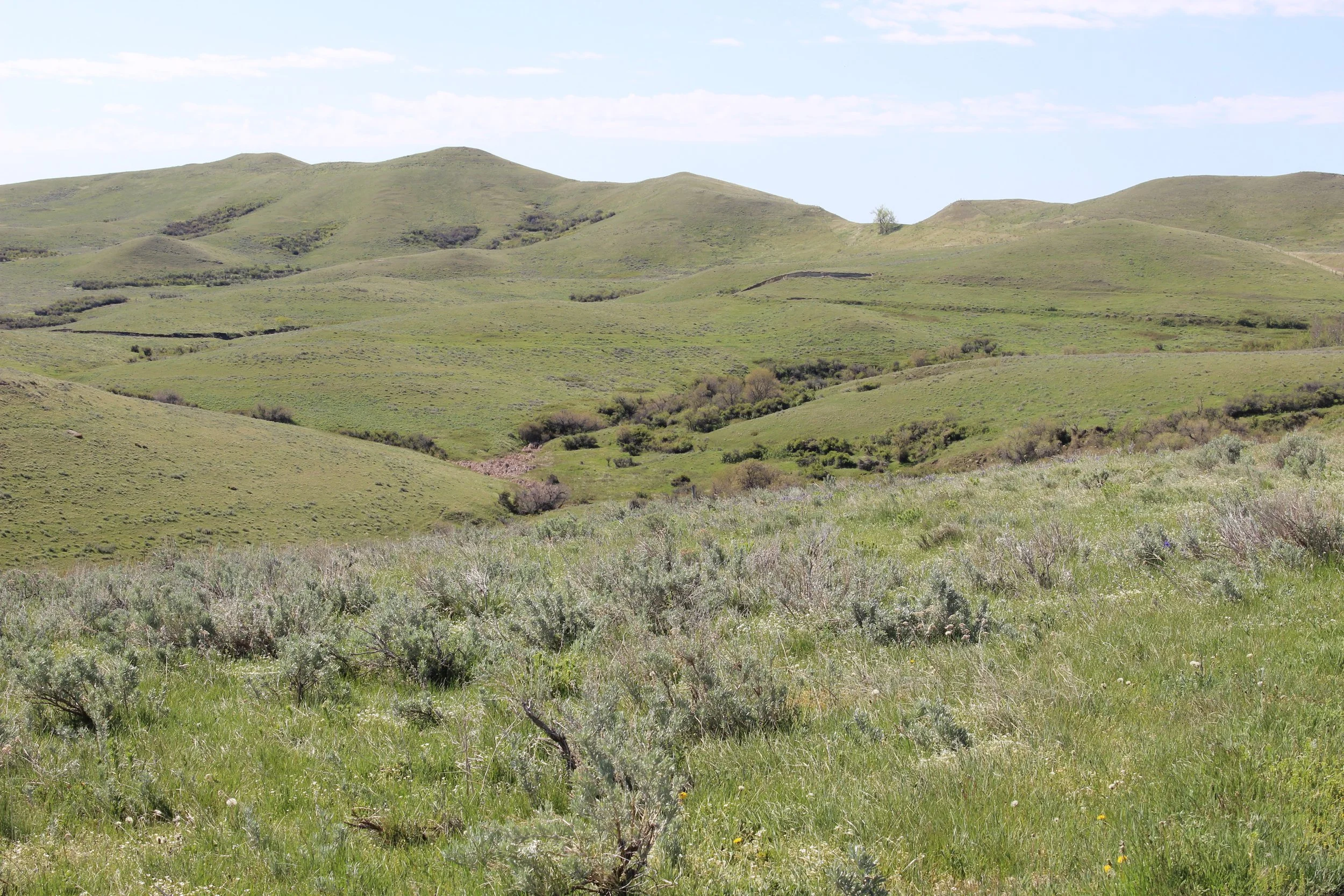
The northern Wyoming countryside
Crook’s men broke camp at Fort Reno at 0400hrs, setting out northwest toward the peaks of the Bighorn Mountains after a frosty departure. The advance today was 27 miles, with camp being made along Crazy Woman Creek. Fresh tracks from indian ponies were noted today along with distant smoke signals¹. Some indians were also seen in the distance, judged to be pickets by the advancing soldiers. These retreated quickly and the soldiers were unable to engage them today.
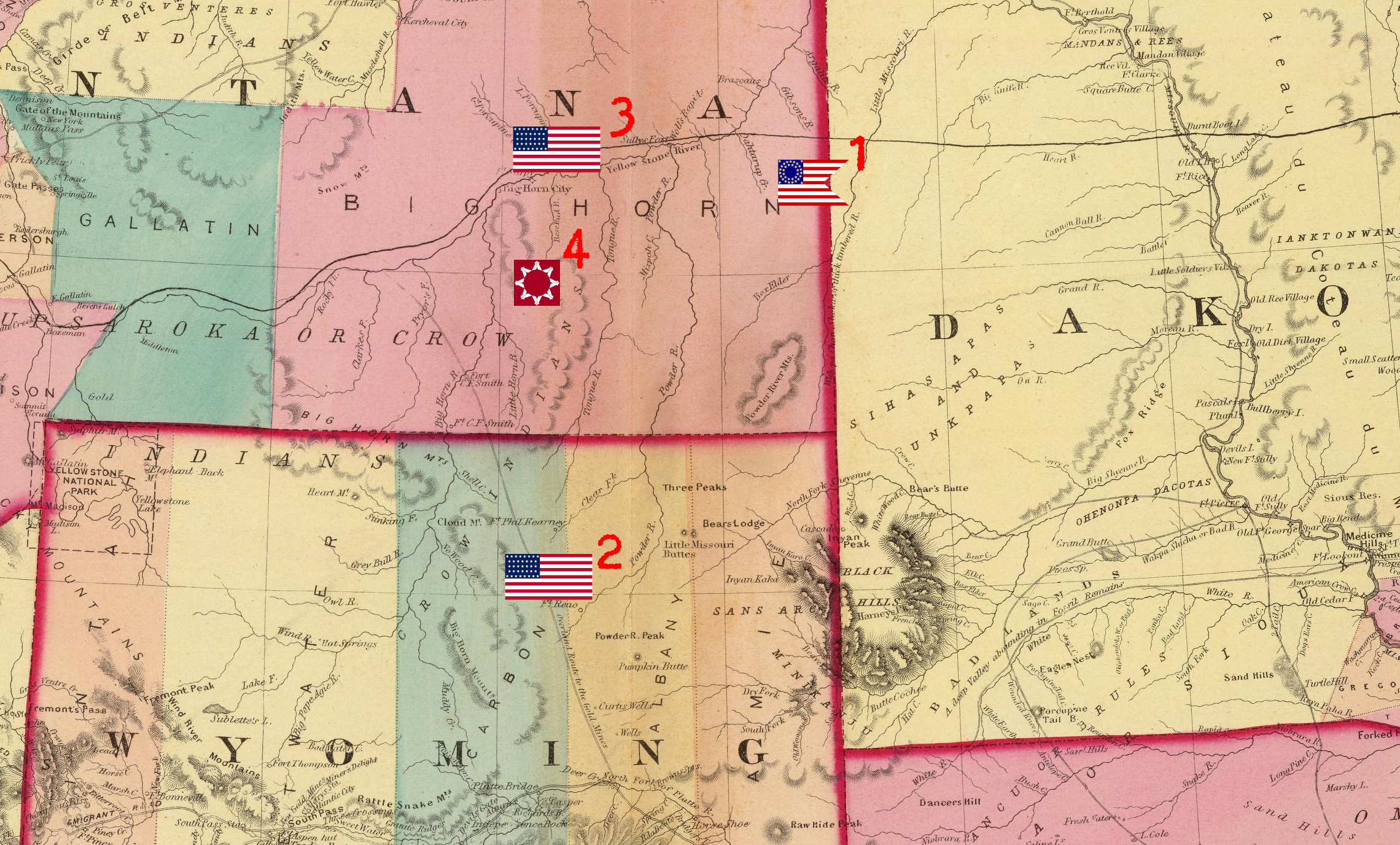
1. Dakota Column - CUSTER/TERRY - Beaver Creek
2. Wyoming Column - CROOK - Crazy Woman Creek
3. Montana Column - GIBBON - Yellowstone River/Rosebud Creek
4. Sioux Encampment - SITTING BULL - Rosebud Creek
-
Robinson, p.125