Tuesday, June 6
Starting before dawn, the Dakota Column began to march westward, hoping to meet the Powder River and then turn northward to meet Gibbon at the Yellowstone. Despite this plan, navigational errors saw the column making a detour of almost twenty miles to the south-southwest, much to the irritation of General Terry. There was some consideration of following O’Fallon Creek to the Yellowstone, but after consulting with both Custer and Reno Terry elected to continue to the Powder. As they set up camp on the western bank of O’Fallon Creek a thunderstorm struck the area, with the heavy rains swelling the creek¹.
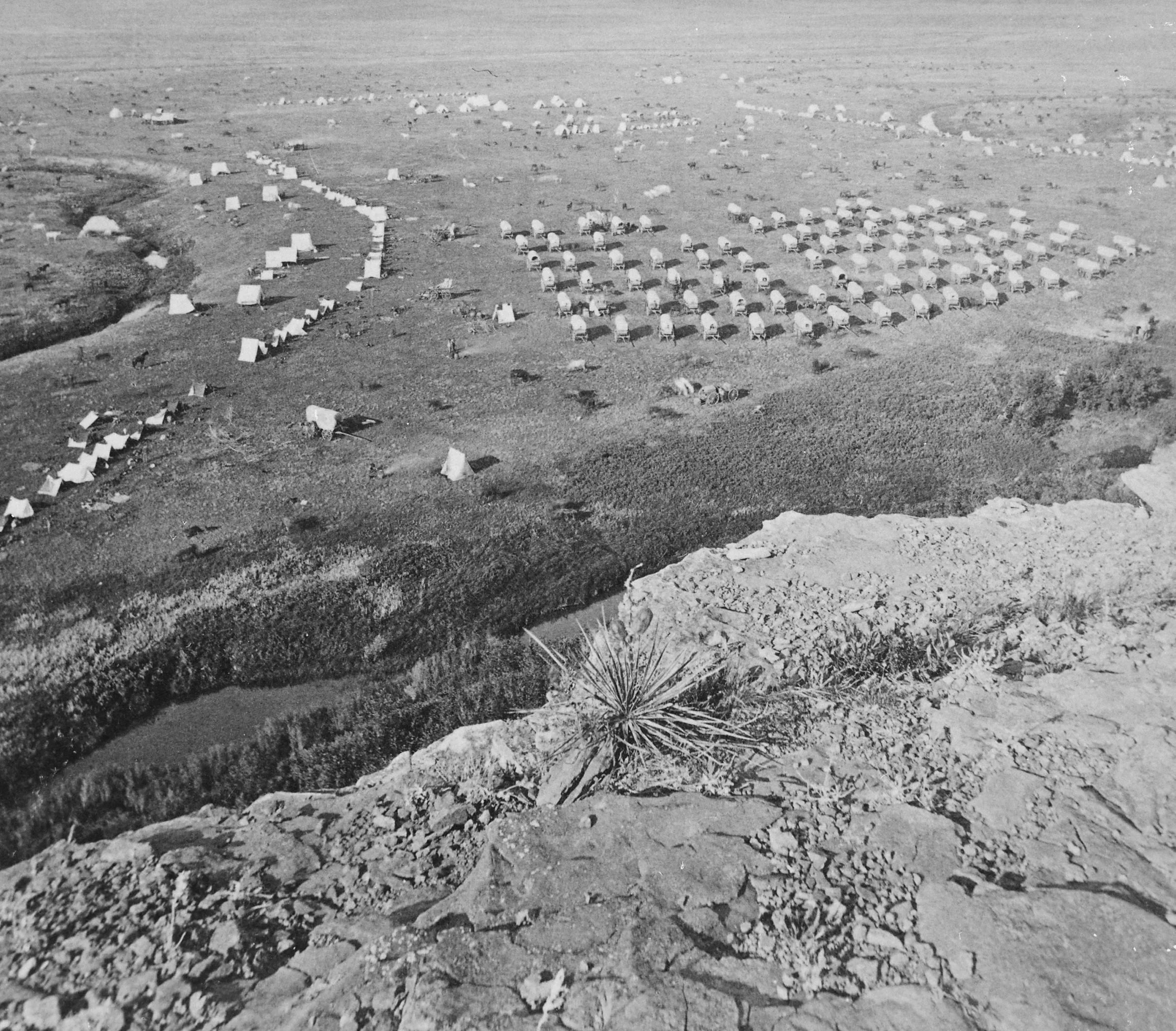
The 7th Cavalry’s encampment during the Black Hills Expedition, shong the size and layout of a typical campaign camp of the period
The Montana Column set out at 0900hrs, an hour after Lt. Bradley and his scouts dpearted camp. The day’s march covered another ten miles eastward, pitching camp in a grove of cottonwoods. The same storm that struck the Dakota Column also effected them, with winds throwing hot coals from the cookfires about and threatening to take down tents.
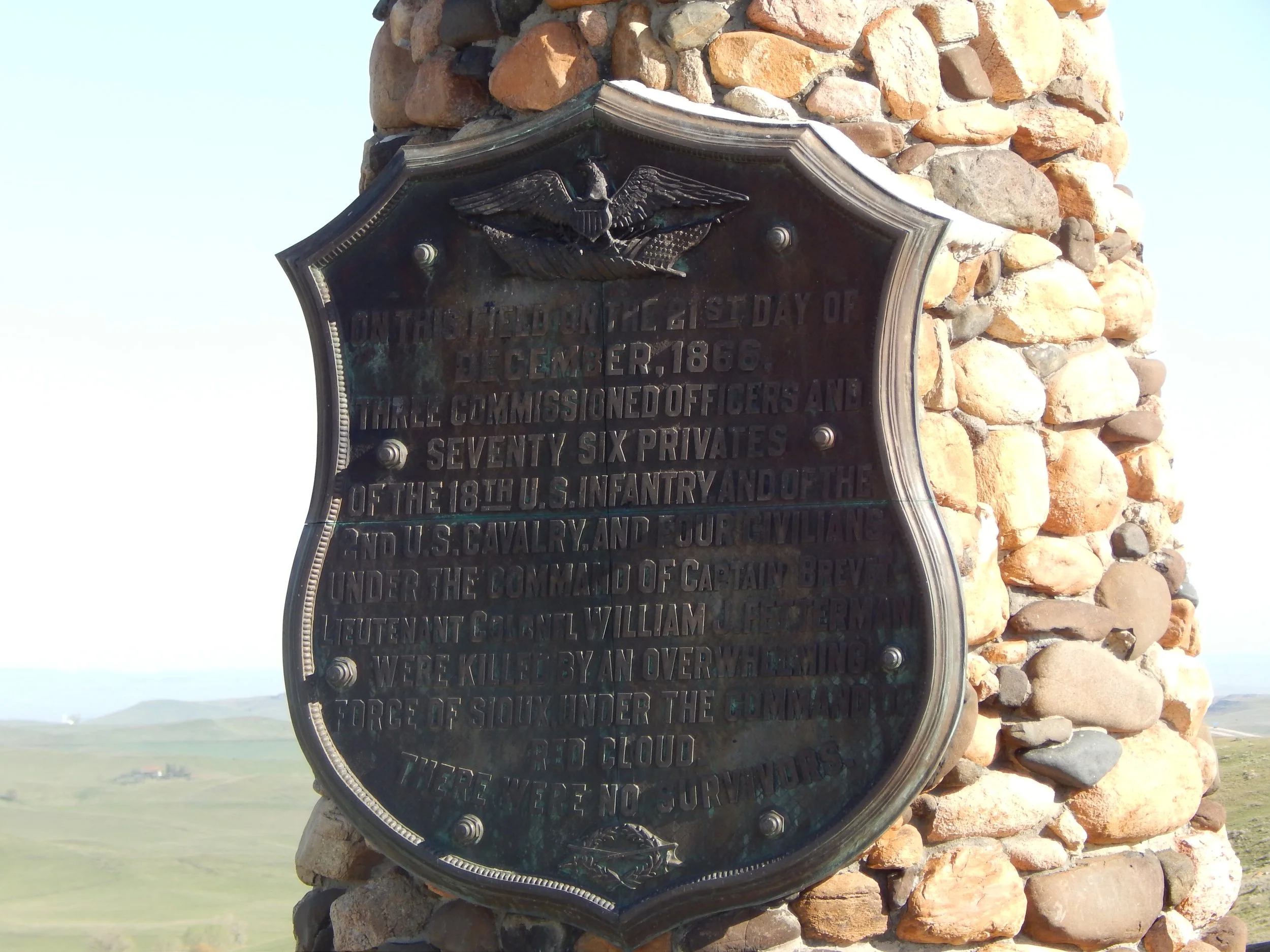
The monument at the site of the Fetterman Massacre
Crook’s column started out this morning with passing the somber sight of the Fetterman Massacre of 1866 near Fort Phil Kearney. As the column made their march, the terrain became increasingly rough, and the good grasslands began to deteriorate, causing hardships for the men and their animals. The storms were visible in the distance as camp was made along Goose Creek, the day’s march making just under eighteen miles.
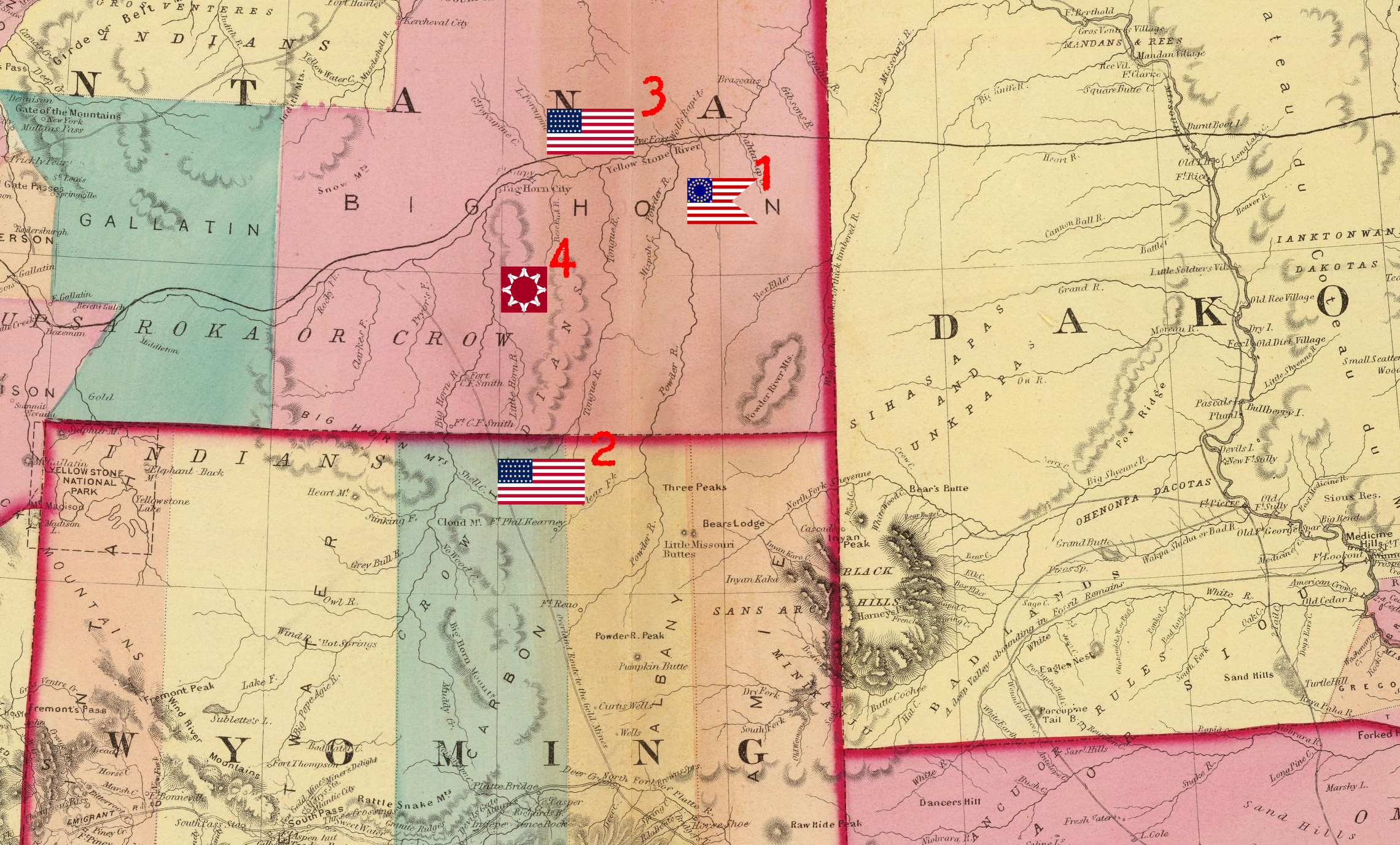
1. Dakota Column - CUSTER/TERRY - O’Fallon Creek
2. Wyoming Column - CROOK -Goose Creek
3. Montana Column - GIBBON - Yellowstone River
4. Sioux Encampment - SITTING BULL - Rosebud Creek
-
Weinell, p.74