Chapter 49
“Berlin Bleibt Deutsch”
16 April - 2 May, 1945
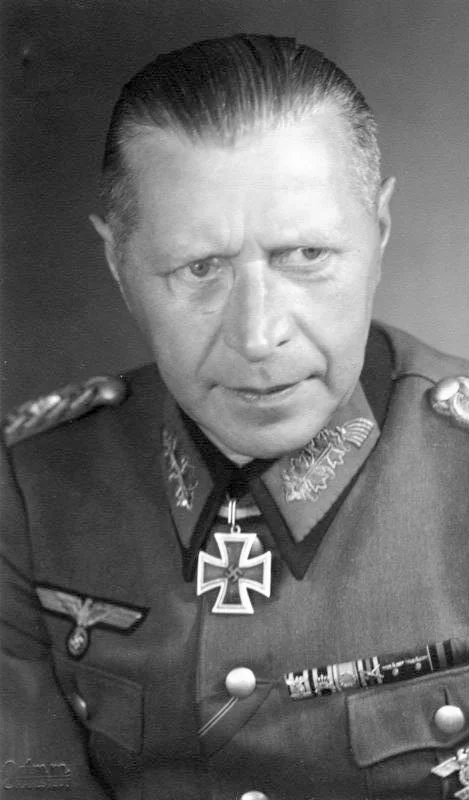
On the evening of 15 April, 1945 General Gotthard Heinrici found himself in command of Army Group Vistula, stationed along the Oder River with a front spanning from the Baltic Coast to the junction with the Neisse River. The task ahead of the two battered field armies (the 9th and the 3rd Panzer) under his command was nothing more or less than to top the Red Army at the gates of the Reich’s capitol.
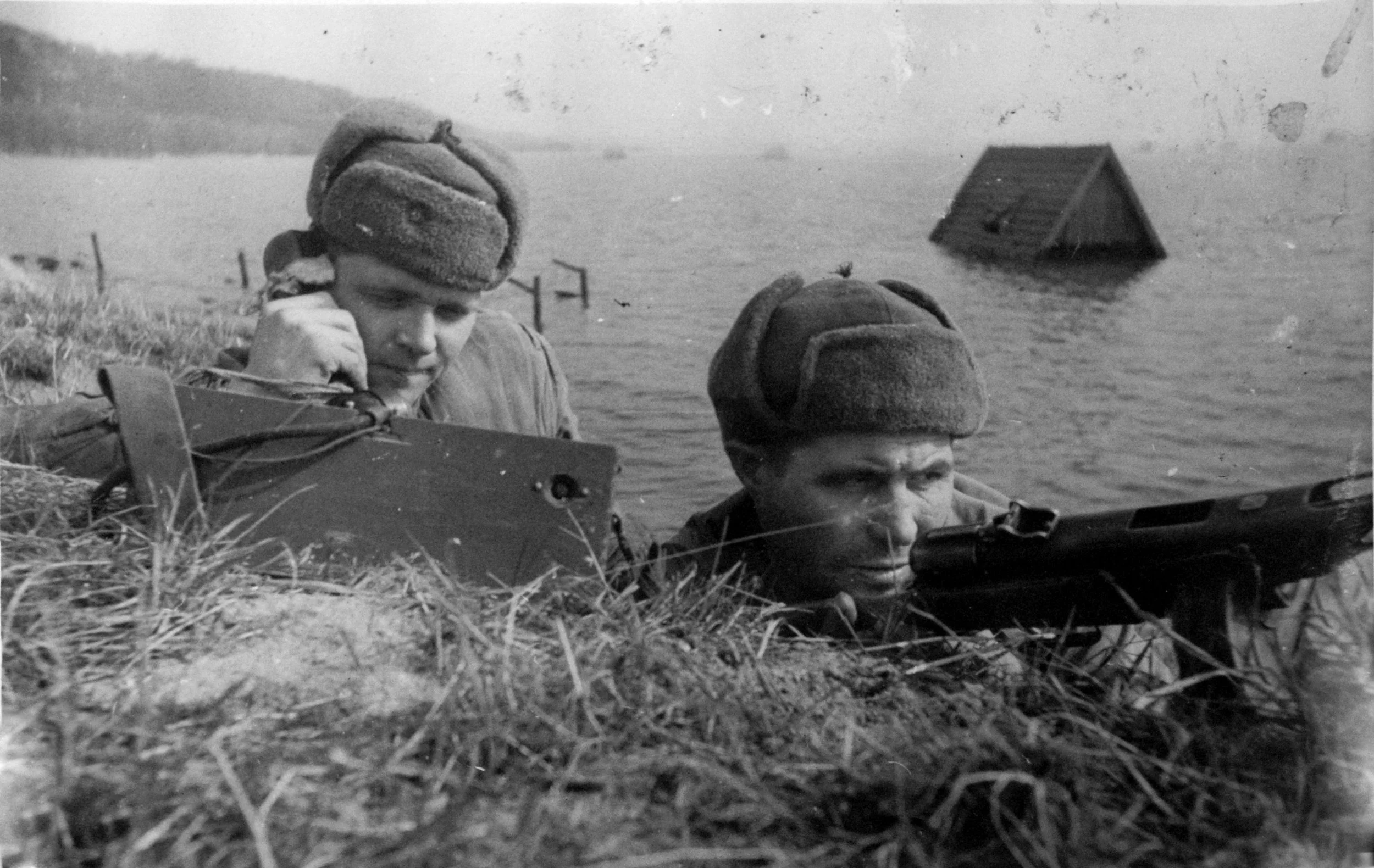
Soviet troops along the flooded banks of the Oder
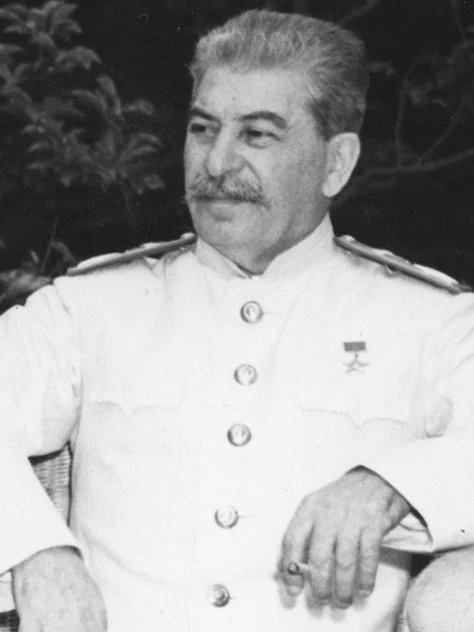
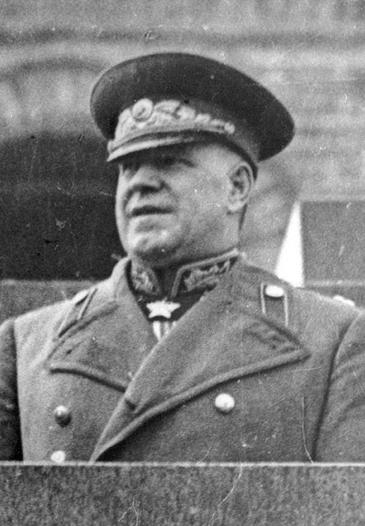
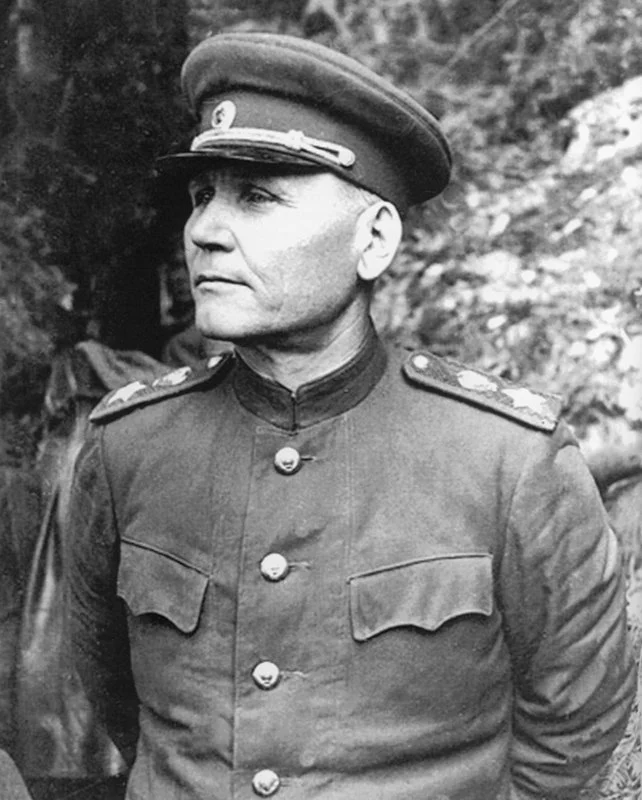
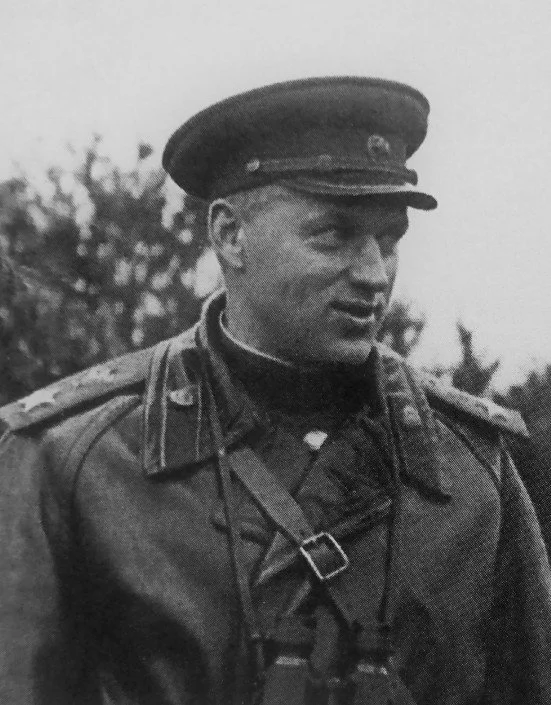
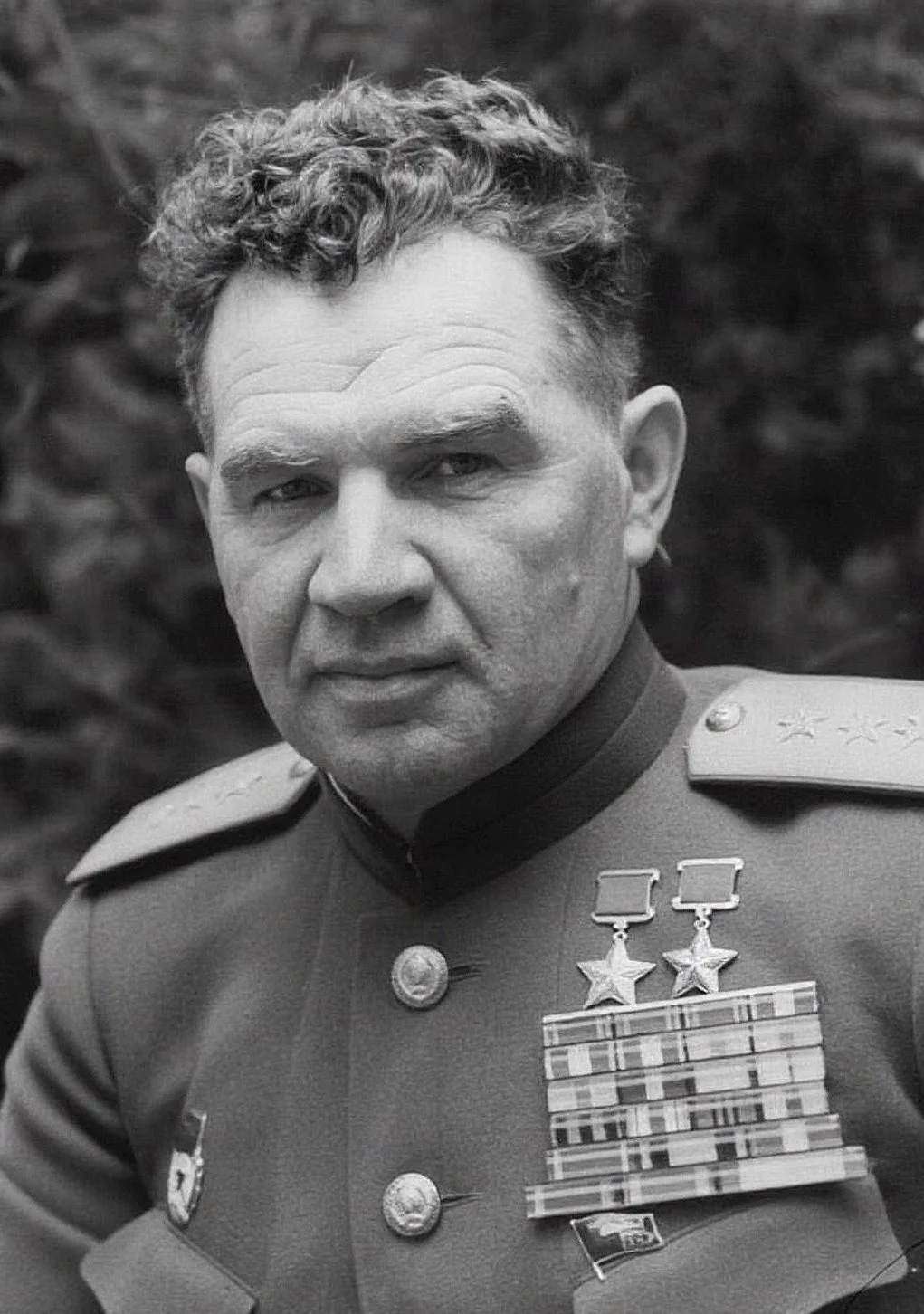
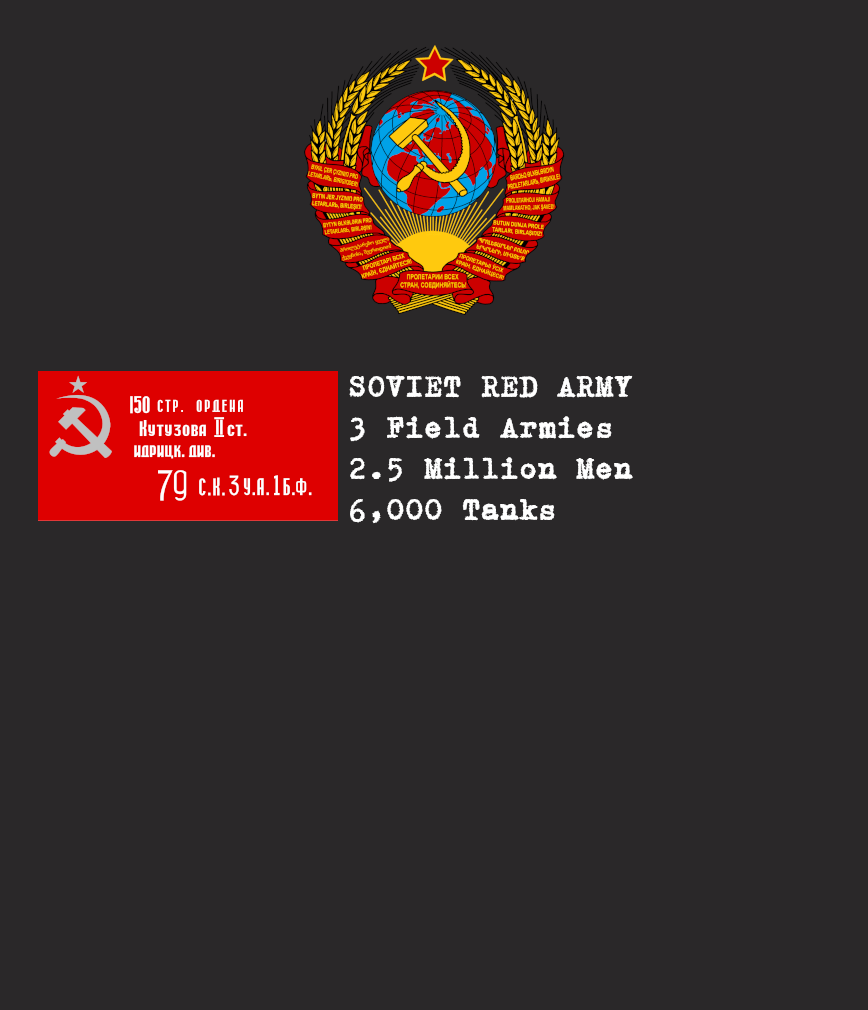
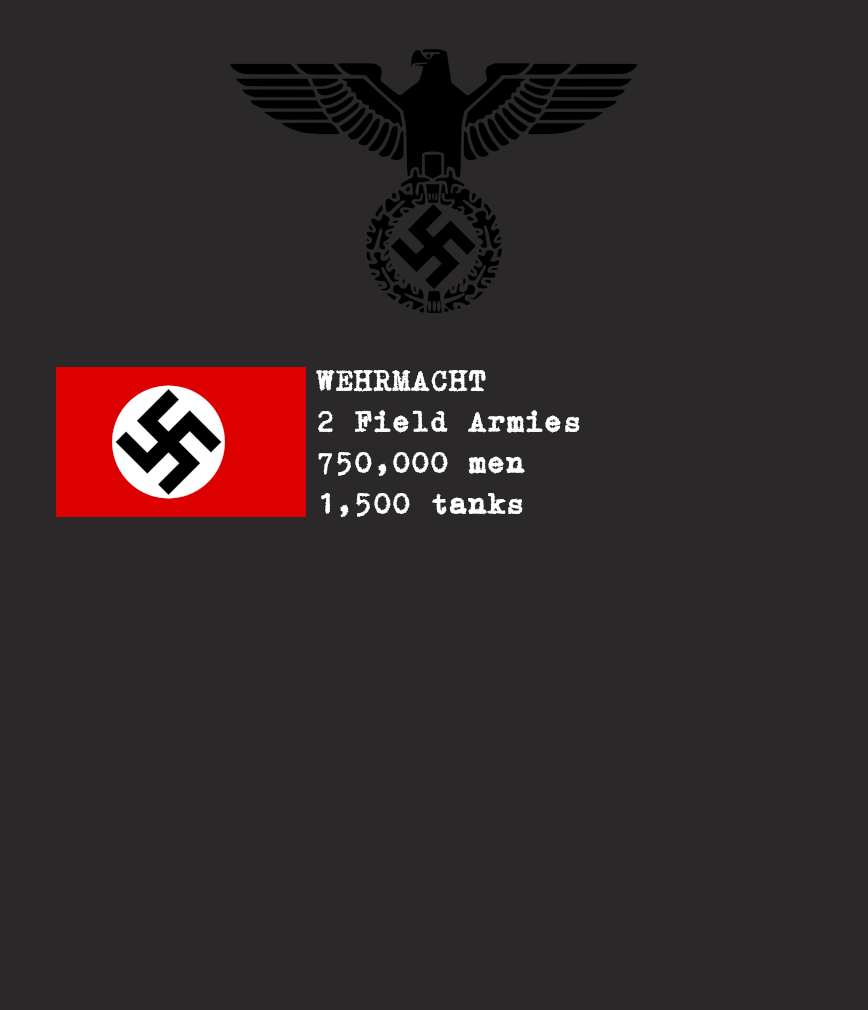
To the east, Marshal Georgy Zhukov had been selected by Stalin to lead the 1st Belorussian Front as the spearhead of the killing blow to National Socialism. On the Soviet right flank, extending to the Baltic Sea, was the 2nd Belorussian Front, commanded by Marshal Konstantin Rokossovsky, while the Soviet left was manned by Marshal Ivan Konev’s 1st Ukrainian Front. In total, Heinrici’s two armies would each face a full Soviet army group when the hammer fell, while Konev would slam into Field Marshal Ferdinand Schörner’s Army Group Center and push it aside to the south. In total, the Red Army had been massing a force of over 2.5 million men, over 6,000 tanks, nearly 10,000 artillery pieces, and millions of rounds of ammunition. The Germans could muster only only about 750,000 men, with 1,500 tanks and a smattering of artillery and anti-aircraft weapons. In the area around the 9th Army’s front facing the Soviet bridgehead at Kustrin the Red Army enjoyed a near ten to one numerical advantage.
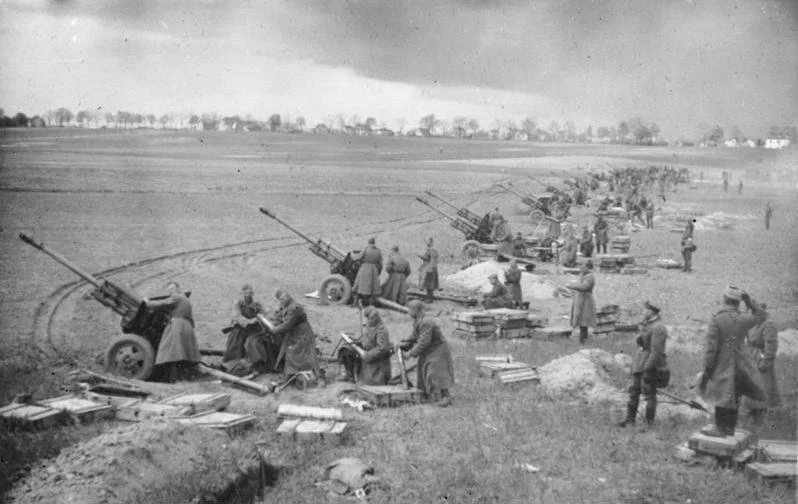
Soviet batteries arrayed along the Oder front during the bombardment of the Seelow Heights
The blow fell just before dawn on 16 April, as 9,000 Soviet guns open fire on the German positions along the Seelow Heights, with almost 1,000 guns per kilometer of front. The massive bombardment sent literal shockwaves, collapsing buildings behind the front, and creating what was described as a “hot wind” by German soldiers on the heights. These, the Seelow Heights, were roughly a horseshoe shaped position of elevated ground that surrounded the Oder floodplain, with the Soviet bridgehead located near the center of the far end of the flat, marshy plain. This was a textbook defensive position, and the fact that Zhukov elected to strike directly through it was indicative of the imbalance of the Soviet and German armies by this stage of the war.
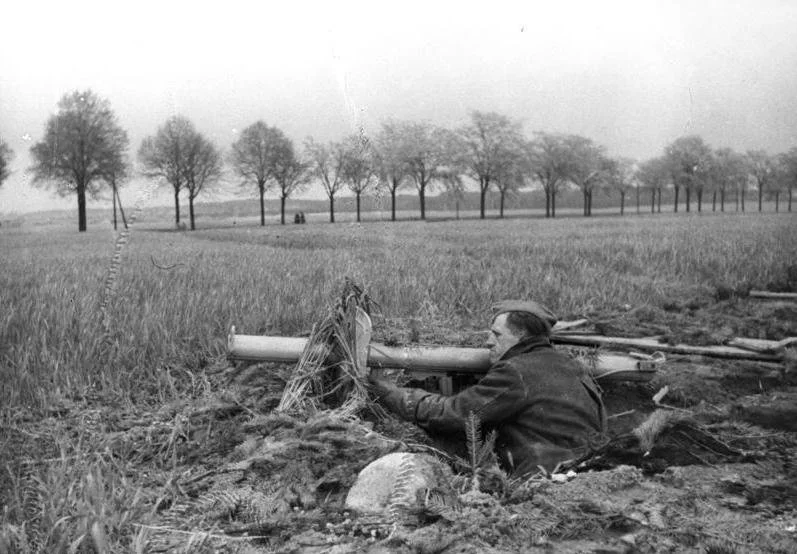
A German soldier armed with an 88mm Panzerschreck rocket launcher at Seelow
As the shells began to slow, Zhukov ordered the activation of hundreds of anti-aircraft searchlights that had been arrayed along the line, intended to blind the Germans on the heights while illuminating them for the attacking Soviets. This proved to be a serious miscalculation, however, as the smoke and dust from the bombardment mixed with the spring mists to make an impenetrable veil, with the lights instead silhouetting the Soviets for the German guns atop the heights. Tanks bogged down in the morass, while the remnants of the Luftwaffe made their own last stand overhead, attempting kamikaze style attacks on the Oder bridges. The losses of the Red Army mounted rapidly, and by the end of the first day the heights were still in German hands. The Stavka, for its part, callously referred to the dead as “burnt matches”.
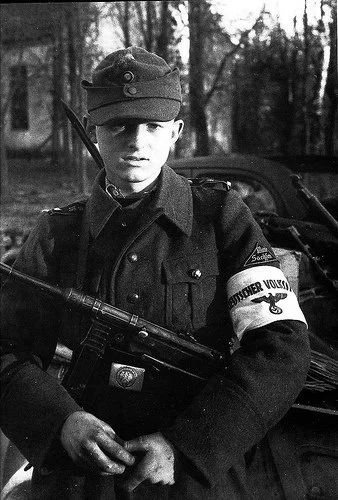
A young Volkssturm child soldier at Seelow
To the south, Konev had smashed through Schörner’s lines and was now making rapid advances south of Berlin. under orders to meet the Americans on the Elbe as well as to close off the avenue of escape for the Nazi leadership in the capitol, Stalin issued new orders for Konev to veer northward and take the capitol if Zhukov could not. The result was a race to see who could capture the city first, and there was very little that the Germans could do to stop them. On 20 April Konev’s forces arrived at the village of Zossen just south of Berlin, and there they encountered the massive Maybach bunker complexes that served as the headquarters of the OKW. Hastily abandoned, the bunkers were empty aside from a few communications operators, and when they were taken the Wehrmacht lost its primary communications center, isolating the various forces still fighting on fronts out of radio range from the capitol.
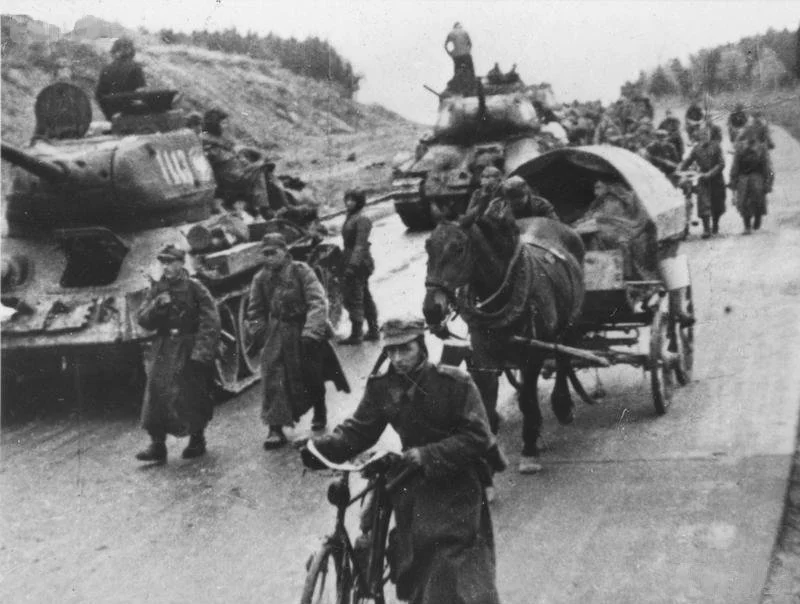
Polish troops advance toward Berlin along the Autobahn
That same day, after four days of hard fighting, the Soviets finally reached the top of the Seelow Heights as the 9th Fallschirmjager Division (despite its impressive name, these “paratroopers” were mostly Luftwaffe ground crews impressed as infantry) collapsed, as well as the success of Konev causing the 9th Army’s right flank to disintegrate. Ordered by Hitler to not retreat even to defend Berlin itself, General Theodor Busse found his army being corralled into a pocket near Halbe as the Red Army swarmed down the forest roads toward Berlin. Small skirmishes with infantry and scattered panzers were swiftly overrun, and with them the last defenses before the city itself.
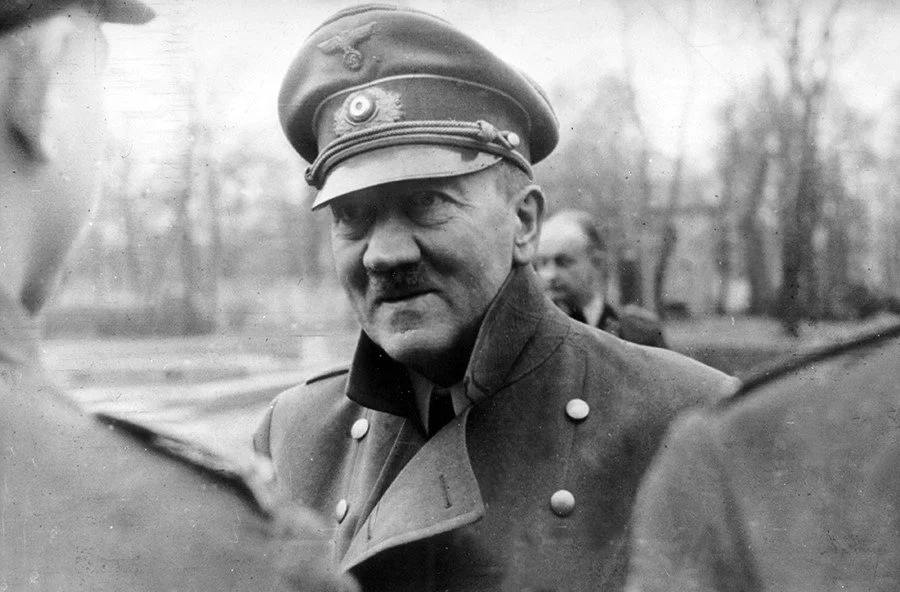
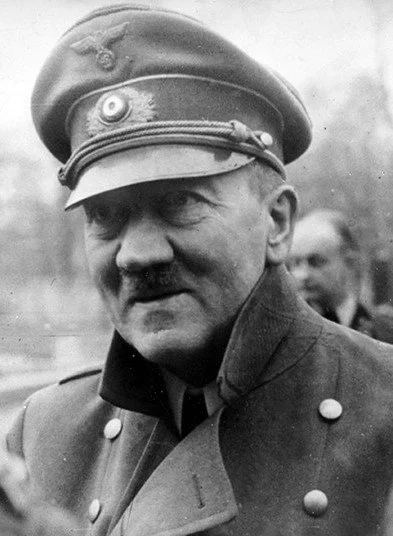
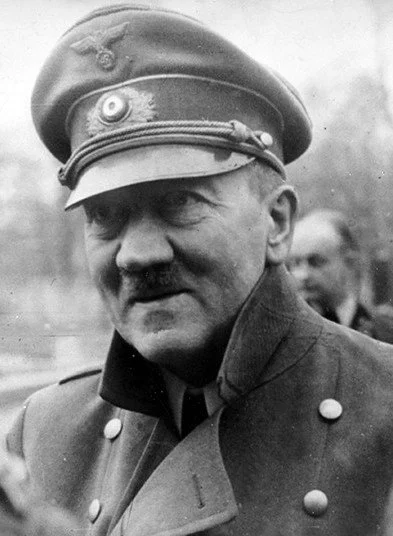
One of the last known photographs of Adolf Hitler, taken as he decorated Hitler Youth in the Chancellery Garden in March of 1945
20 April, 1945 was the 56th birthday of Adolf Hitler, and even as the capitol of the Thousand Year Reich came into range of Soviet groundfire, the Nazi pantheon gathered one last time in an intact portion of the Reichs Chancellery to offer congratulations to the Fuhrer. Shortly afterward the stooped, aged Fuhrer shuffled outside to decorate Hitler Youth child soldiers for bravery in the fighting at Seelow before retiring to the Fuhrerbunker below the gardens. It would be the last time he saw daylight.
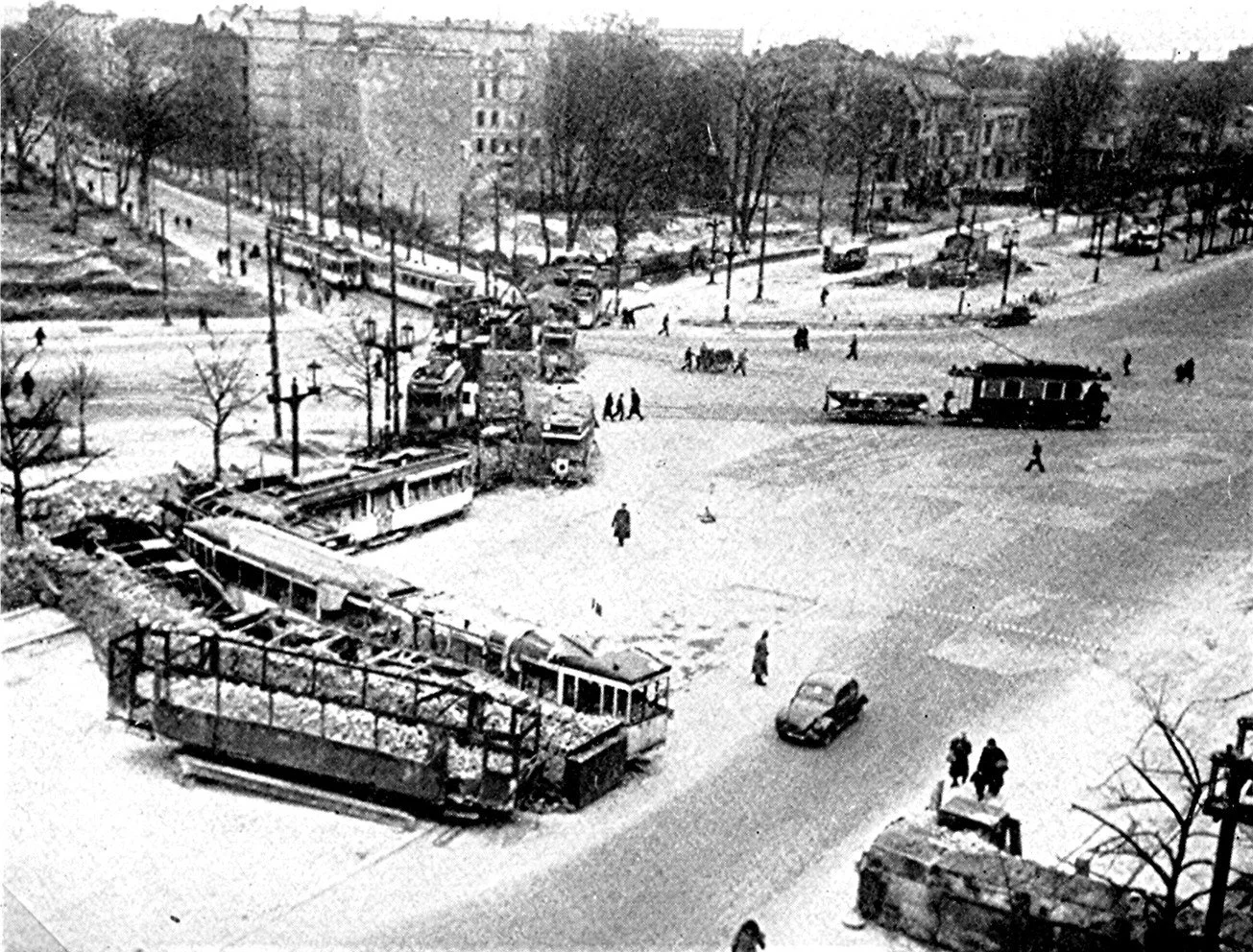
Barricades built on Berlin streets
Although some Soviet troops were by now probing the outer suburbs, the bulk of the Red Army forces were concentrating on moving through the countryside, enveloping Berlin to prevent the escape of Hitler and the Nazi leaders. And escape many of them did, with Herman Goring and Heinrich Himmler among the first to flee as soon as the birthday party ended at the Chancellery. No such luck was to be found for most of the civilians living inside the city, as the Nazis refused to allow any evacuations. By now well used to high level air raids, casualties were severe from the new threats of artillery and strafing by low level aircraft. Utilities such as water and power began to fail, while one by one the status lights on the city’s telephone exchange switchboards went out as they were overrun.
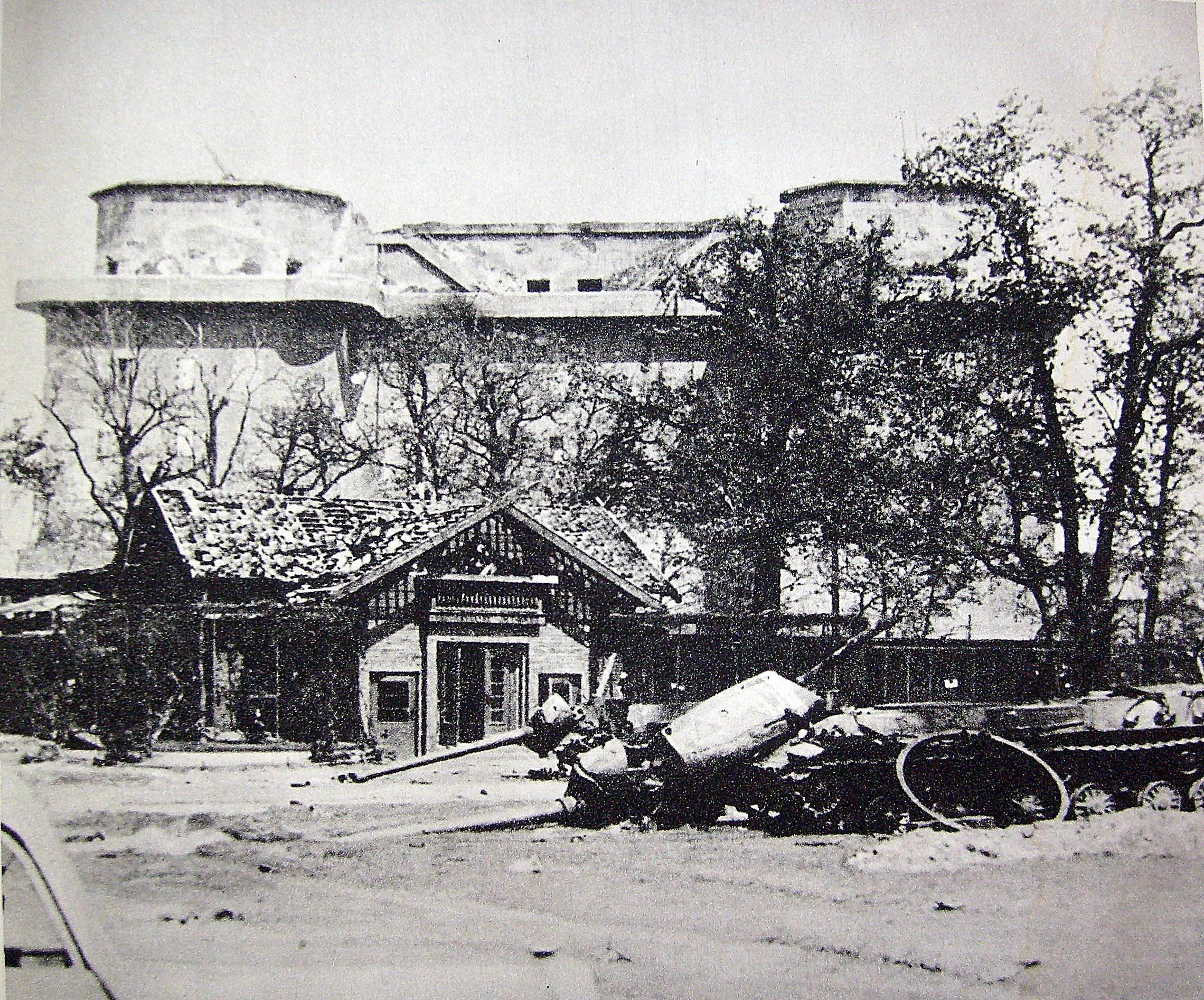
The massive Tiergarten Flak Tower, with a knocked out Soviet tank in the foreground
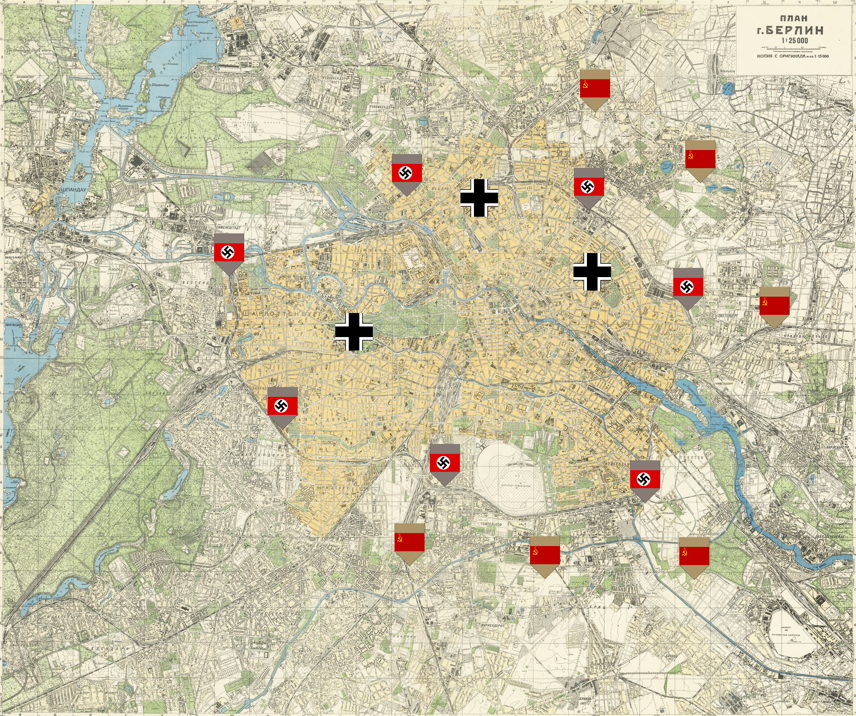
Just before going up to the gardens, Hitler had ordered the initiation of Operation Clausewitz, which had declared Berlin a frontline city and instituted martial law. Government ministries were frantically evacuated to ward Bavaria or Flensburg in the north, while documents and archives were burned. Efforts to fortify the city had been ongoing for months, but even now only crude barricades of rubble and destroyed streetcars were available. The other defenses were built around the outer ring of railroads surrounding the city, and were under the command of General Helmuth Weidling, and artilleryman whom Hitler had orderd executed for retreating from Seelow. Weidling, who was heavily engaged in the suburbs when he was informed of this, had travelled to the Fuhrerbunker personally, and had been instead named commander of the garrison. With his headquarters in an air raid shelter under the OKW building on the Bendlerstrasse, Weidling was all to aware of the impossible nature of the task ahead of him.
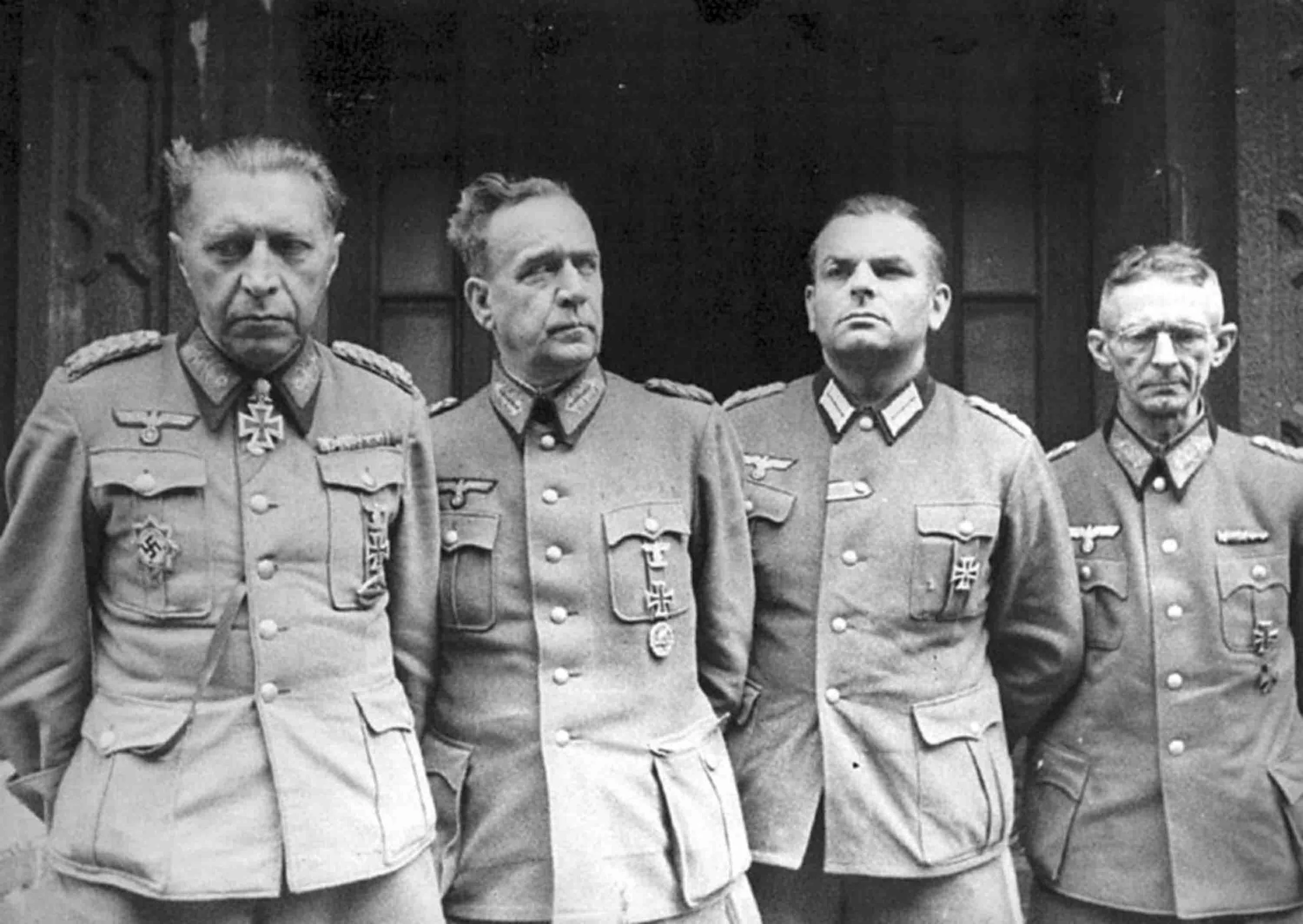
Helmuth Weidling and his staff during the Battle of Berlin
The city center, including the government district, had been designated the Citadel, and would be defended by SS units under the command of SS Brigadefuhrer Wilhelm Mohnke from the bunkers just above the Fuhrerbunker. In addition to Hitler’s security forces, foreign SS volunteer units from France, Norway and Denmark made up the defenders here, along with what remained of an SS heavy tank unit. With no fuel, these king tiger tanks were positioned in squares such as the Potsdammer Platz to serve as pillboxes, alongside the local flak batteries. Anchoring the Citadel defenses were the three massive flak towers in Humboldthain, Friedrichshain and the Tiergarten, the latter overlooking the Kongisplatz, the Reichstag and the Brandenburg Gate. Towering over the streets, these massive ferroconcrete fortresses were capable of depressing their 128mm and 20mm flak guns to fire into the streets, while their meter thick walls made them near impervious to even the largest Soviet guns, with internal generators and even hospitals.
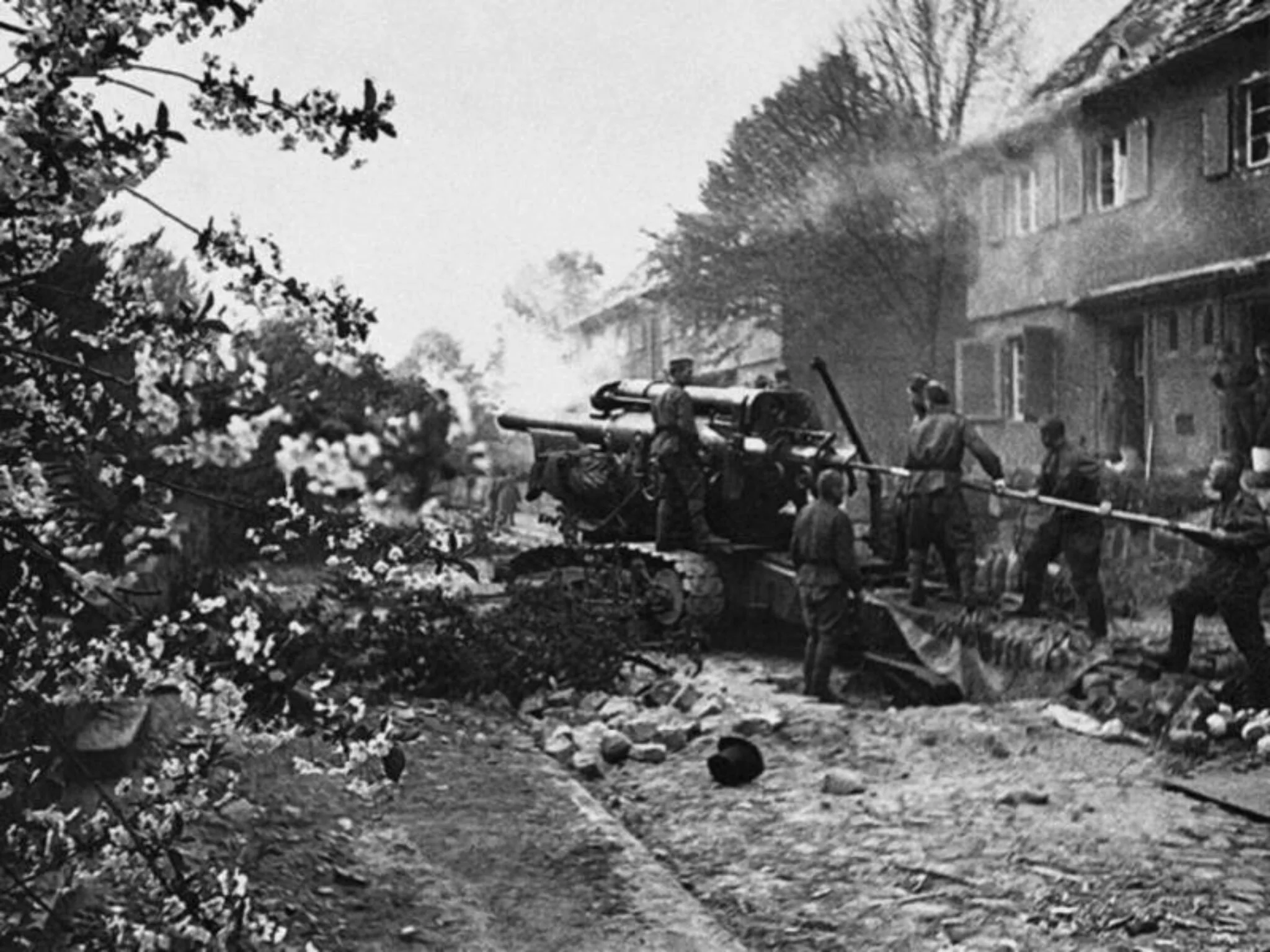
A Soviet heavy howitzer being used for direct fire in the Berlin suburbs
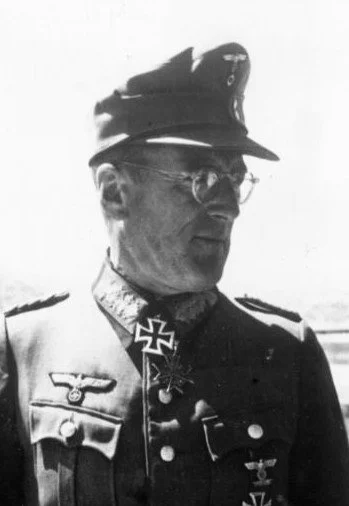
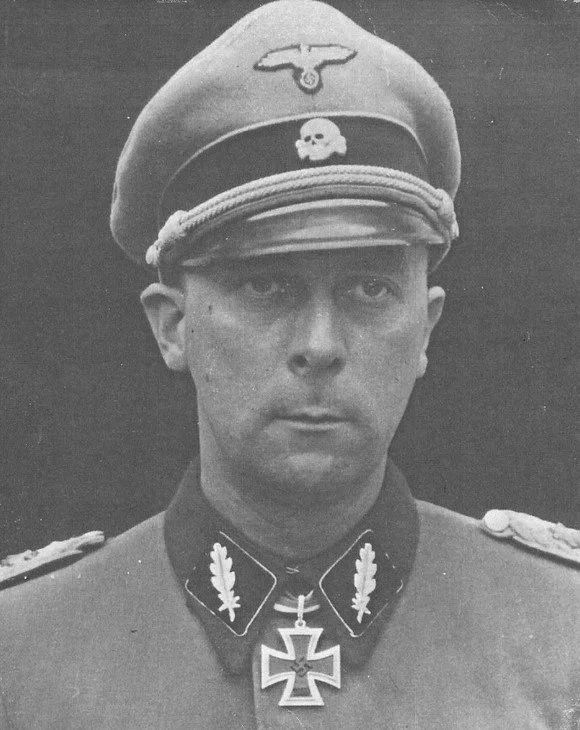
As junior members of Hitler’s entourage began to fly out of the city the Soviets began to squeeze the defenses, with Konev’s men reaching the Teltow Canal by 24 April, considered the southern boundary of the city. The same day the remnants of the 9th Army are fully enveloped at Halbe, cut off from Berlin and desperately fighting to escape to the west. Hitler has by now laid his hopes on Kampfgruppe Steiner, an ad-hoc SS formation to the north of the city under the command of SS Gruppenfuhrer Felix Steiner. Steiner was to envelop and destroy the Soviet forces thrusting into Berlin in a coup de main that would not only save the city but effectively knock the USSR out of the war, all with a handful of men and twelve tanks stalled due to lack of fuel. When Steiner was not able to comply with these orders, Hitler flew into a rage in his conference room, breaking down and admitting that the war was lost for the first time.
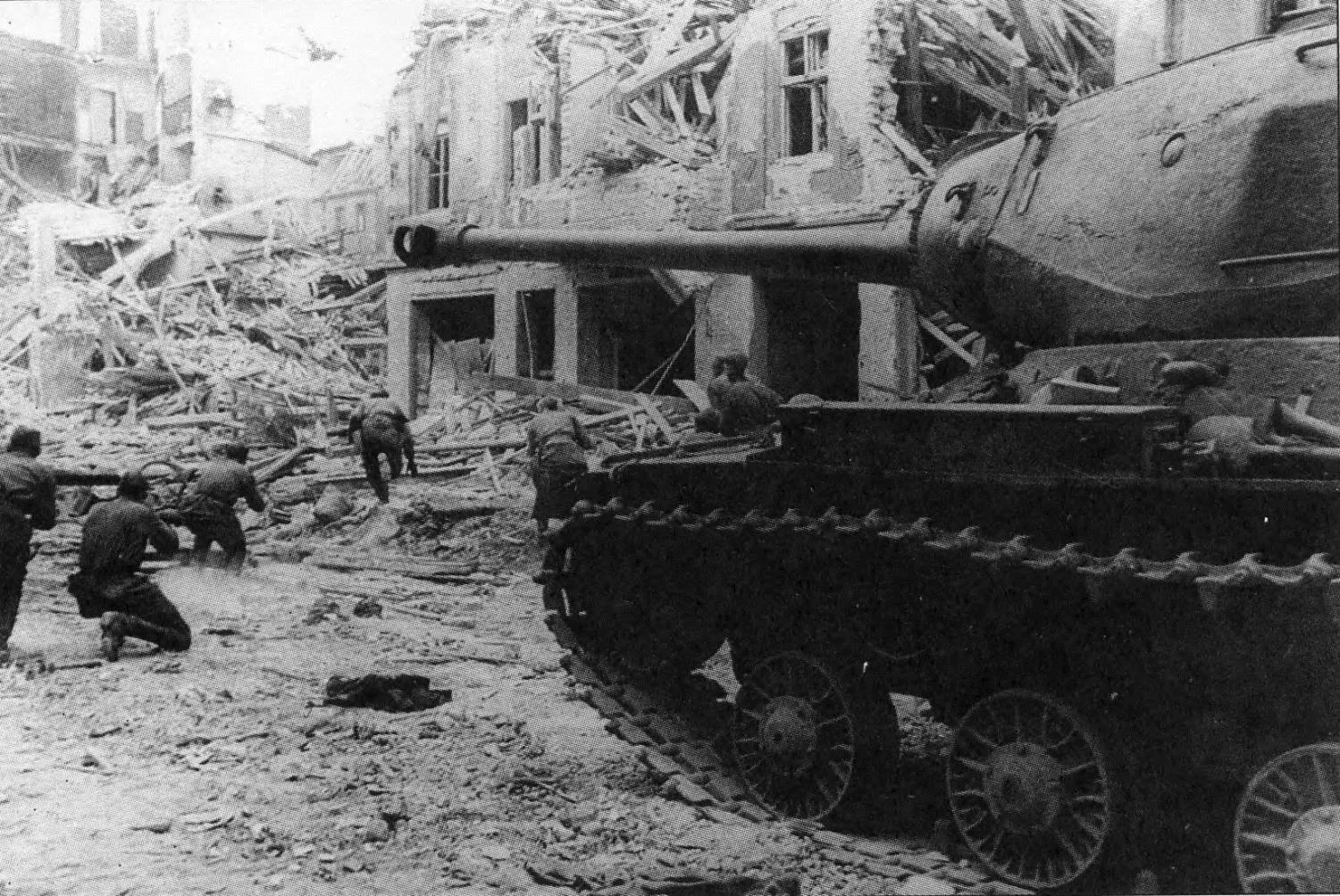
Soviet soldiers supported by armor clear ruined buildings in Berlin
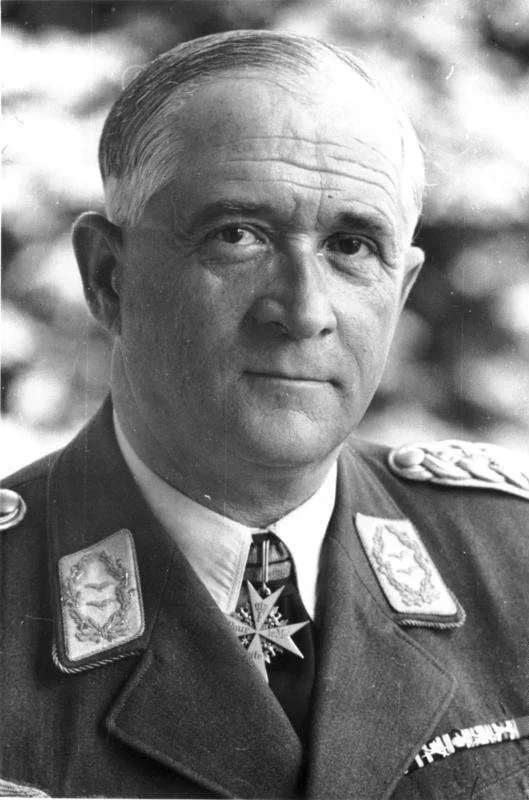
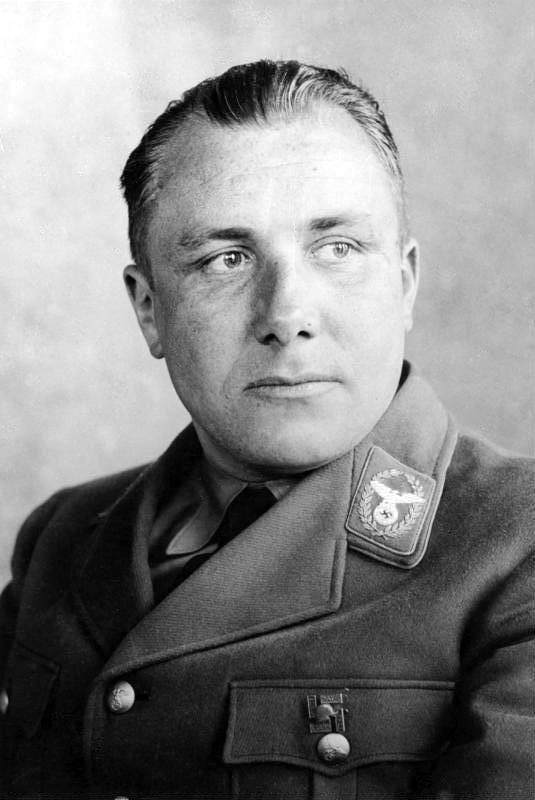
On 23 April the bunker received a telegram from Goring in Bavaria, stating that if communications were lost the Reichsmarschall would assume leadership of Germany in accordance with a succession order Hitler had signed in 1941. Intercepted by Party Secretary Martin Bormann, a rival of Goring, the telegram was read to Hitler as an attempt to seize power. Hitler flew into another rage, ordering Goring arrested and removed from his offices. Luftwaffe General Robert Ritter von Greim, who had made a dangerous flight into the city over Soviet lines to land at the Tiergarten, was named the new leader of the air forces, and sent out of the city by Hitler’s order.
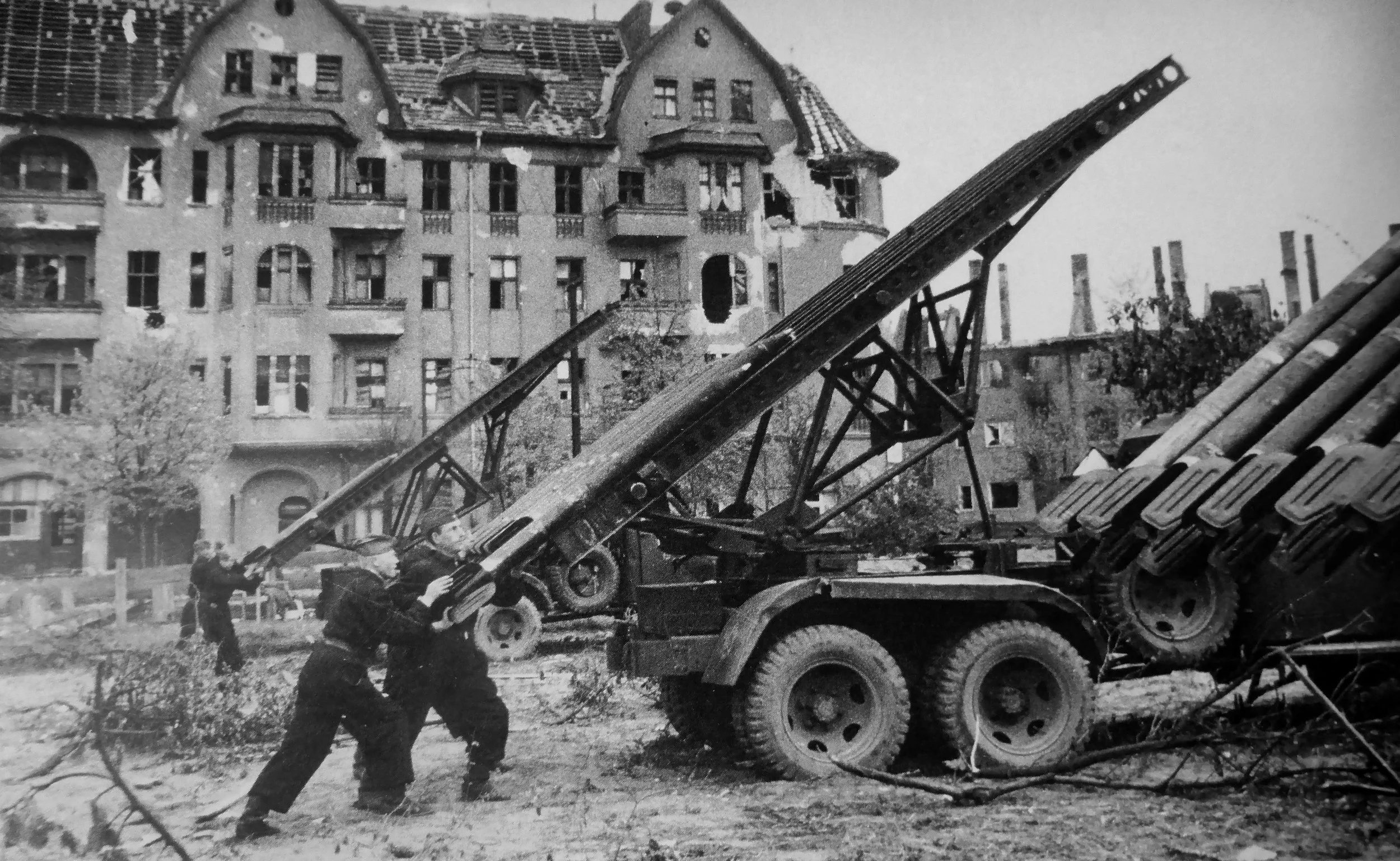
Artillerymen load Katyusha rocket launchers in a Berlin backyard
Now completely surrounded, fighting raged in the streets of Berlin. Veterans of Stalingrad, specifically chosen to lead the assault, engaged in close quarters combat in nearly every building even as civilians cowered in the cellars and air raid shelters below. Soviet artillery was brought up to demolish any buildings offering resistance with direct fire, while units armed with flamethrowers fought through pitch black subway and sewer tunnels. The battle in the U-Bahn (subway) took a dramatic turn when a tunnel under the river Spree collapsed, flooding tunnels and stations and drowing civilians and soldiers alike. In the confusion it was never ascertained if the floods were deliberately caused by the Germans or Soviets, or were simply due to accident.
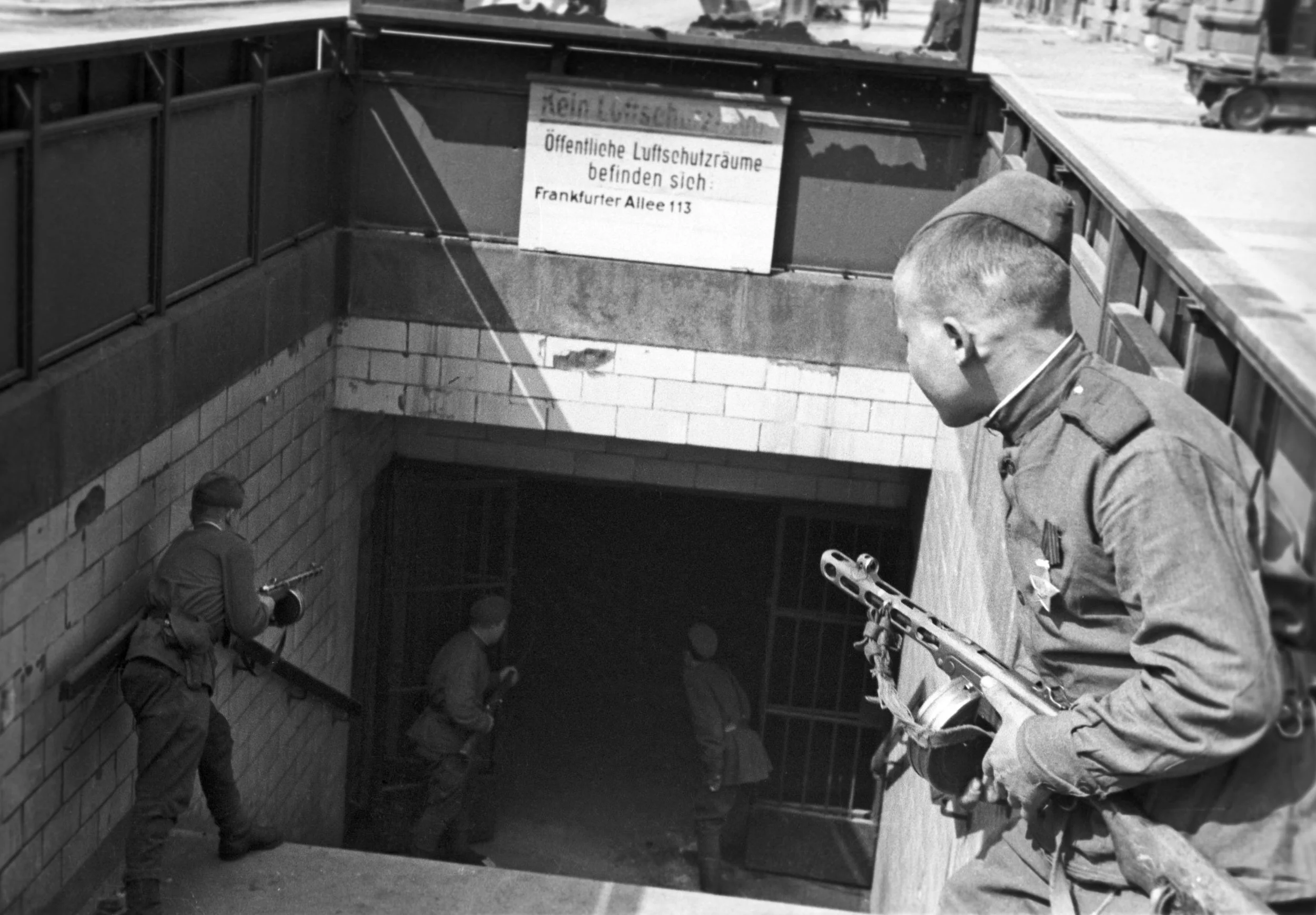
Soviet Soldiers enter a U-Bahn Station in Berlin
In the city center order began to rapidly break down as the sounds of gunfire drew ever closer. Looting and violence became ever more common, with the SS and security services unable to stem the tide even by hanging those captured from streetlamps. In the massive Karstadt department store near the Tempelhof Airport the SS demolished the building as it was filled with looting civilians, while elsewhere many soldiers, civilians and government officials alike threw wild parties as the end rapidly approached.
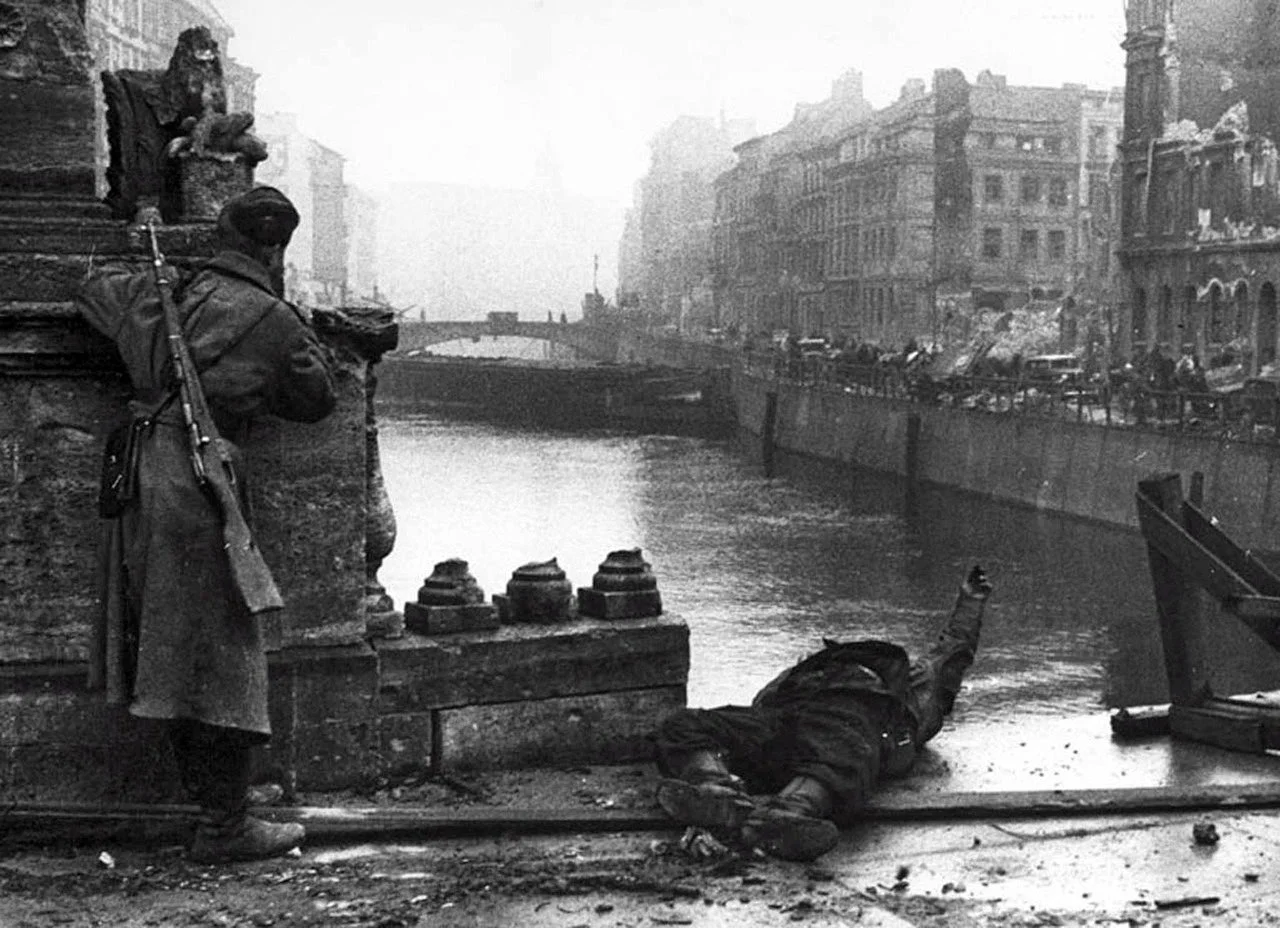
A Soviet soldier peers cautiusly out from a statue on a Spree bridge in Berlin
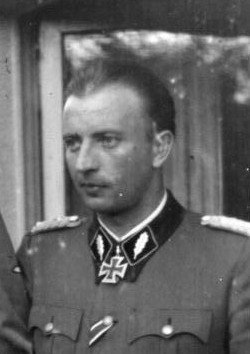
The Soviets had breached the Citadel perimeter by 28 April, bypassing the flak towers and pushing toward the government buildings in the center. River gunboats had been trucked in and launched upstream, appearing on the Spree and the canals to the surprise of the German defenders, the soviets pushing from the Alexanderplatz to Museum Island on the Spree, where the burnt out ruin of the Stadtschloss, the former German Imperial Palace, stood. The same day Hitler received news (via the BBC on civilian radio, all communications out of the city having now been cut) that Himmler was working with the Swedes to negotiate with the western powers. The Fuhrer once again flew into a rage, and ordered Himmler arrested. His liaison officer in the bunker, Gruppenfuhrer Herman Fegelein, was found to have deserted, and after being dragged back to the bunker (heavily intoxicated) was shot after a brief show court martial.
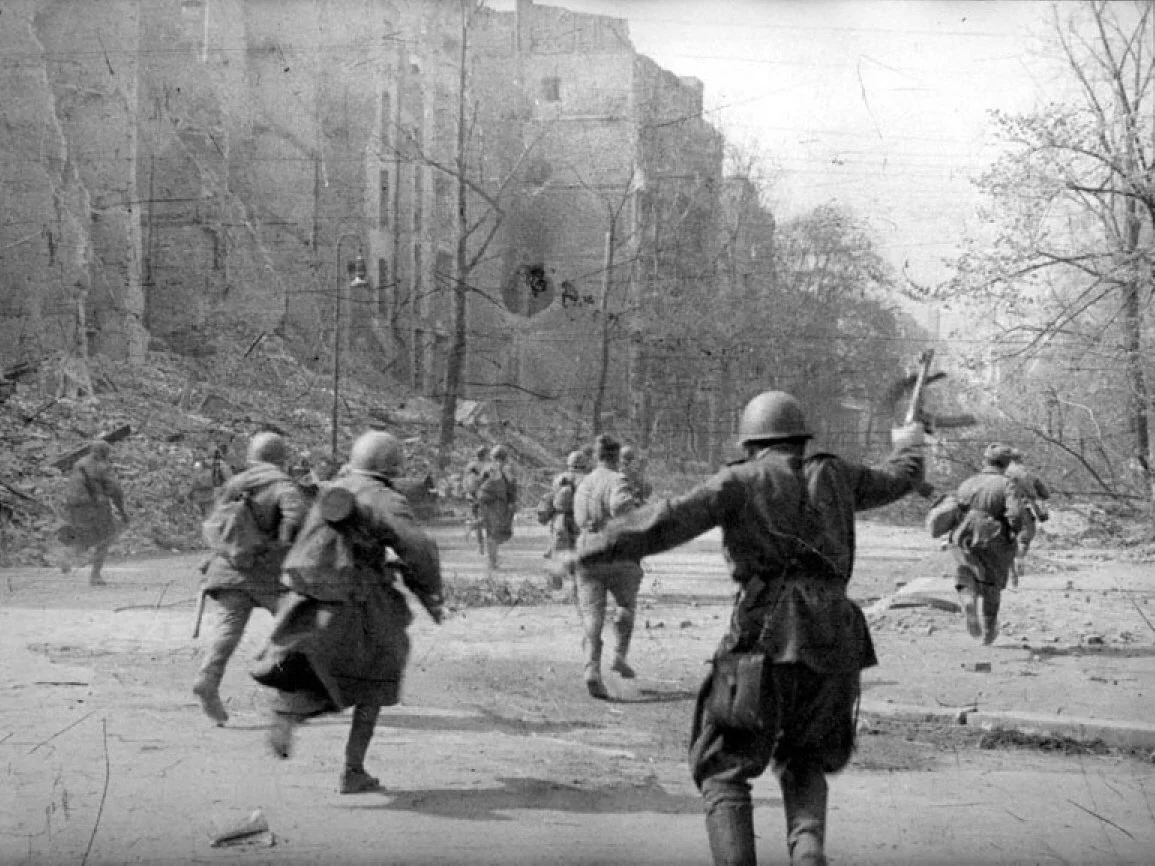
Soviet infantry assault German positions on a Berlin street
Just to the north, the Soviets had secured the Moltke Bridge over the Spree, and were now pushing across it into the embassy quarter and the Ministry of the Interior. Despite taking losses from direct fire from the Tiergarten flak tower as well as fierce resistance from fanatical SS troops in the ruined buildings, they Red Army reached the Konigsplatz on 29 April, as other Soviet troops crossed into the Tiergarten from the south via the Landwehr Canal, while other Soviet forces managed to take the Gestapo headquarters on Prinz Albrecht Strasse, mere blocks from the Fuhrerbunker.
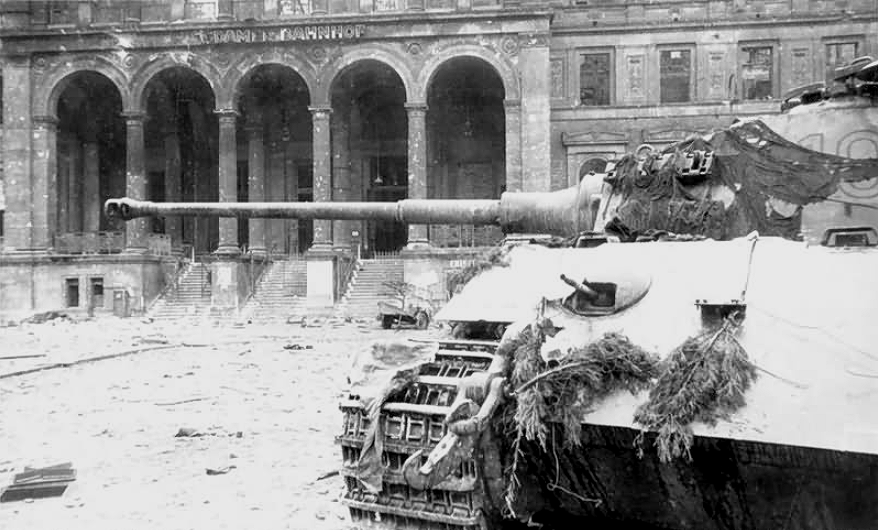
An SS King Tiger knocked out on Potsdammer Platz
By 30 April, as Soviet troops cleared the Kroll Opera House on the western end of the Konigsplatz heavy gunfire was raging in the Bendlerblock as Soviets on the opposite side of the canal enaged German troops above Weidling’s headquarters. Fighting also raged on the Potsdammer Platz, with SS troops fighting desperately 1,500 feet from the Fuhrerbunker. The main objective of the Soviets, however, was not the Reich Chancellery, but the Reichstag. Sitting on the eastern end of the Konigsplatz, the former German legislature had never been repaired since it had burned during the Nazi’s rise to power, and now stood derelict. The plaza in front of it was now a construction site for Hitler’s planned “World Capitol”, with a huge, flooded trench bisecting it north-south. Despite this, its symbolic status made it the most coveted prize in the city, and the battle that began for it on the morning of 30 April was one of the fiercest in the city.
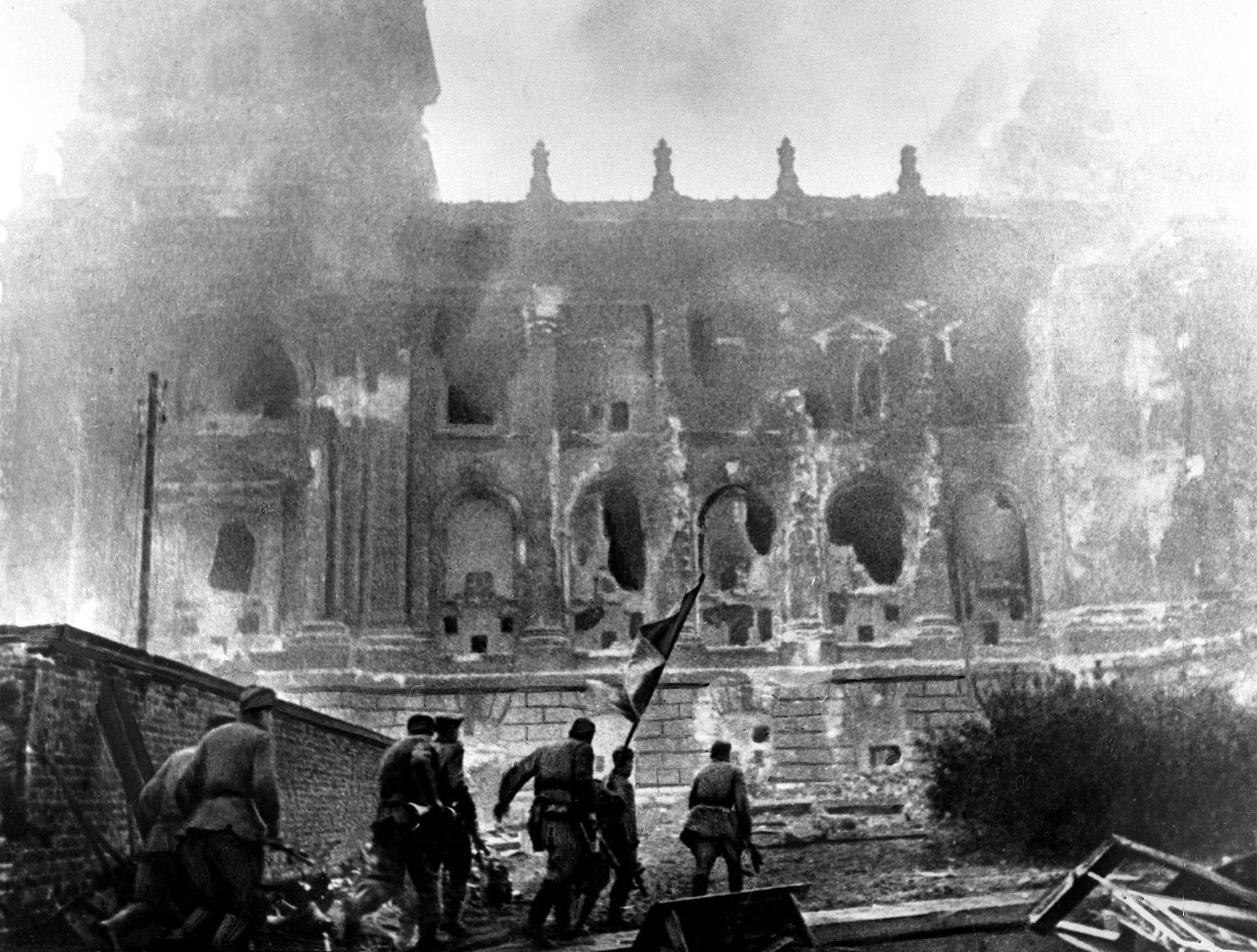
Soviet infantry assault the Reichstag
Facing well entrenched German defenders, the Soviets were not able to reach the Reichstag before sundown on 30 April, even with heavy armor support, which came under devastating fire from the flak tower some 2,000 yards distant. With about a thousand men defending the building itself, the Soviets finally managed to enter it just after darkness fell, with vicious room by room fighting following. The structure was pitch black, with soot blackened walls and crumbling structure, and in several halls and galleries the Germans rained murderous fire from above on the Soviets as they pushed into the building. They reached the roof around midnight, raising the Red Banner even as fighting still raged, and indeed it would not be until the morning of 1 May that the Reichstag was finally secured. By that time, although few knew it, the Fuhrer was dead.
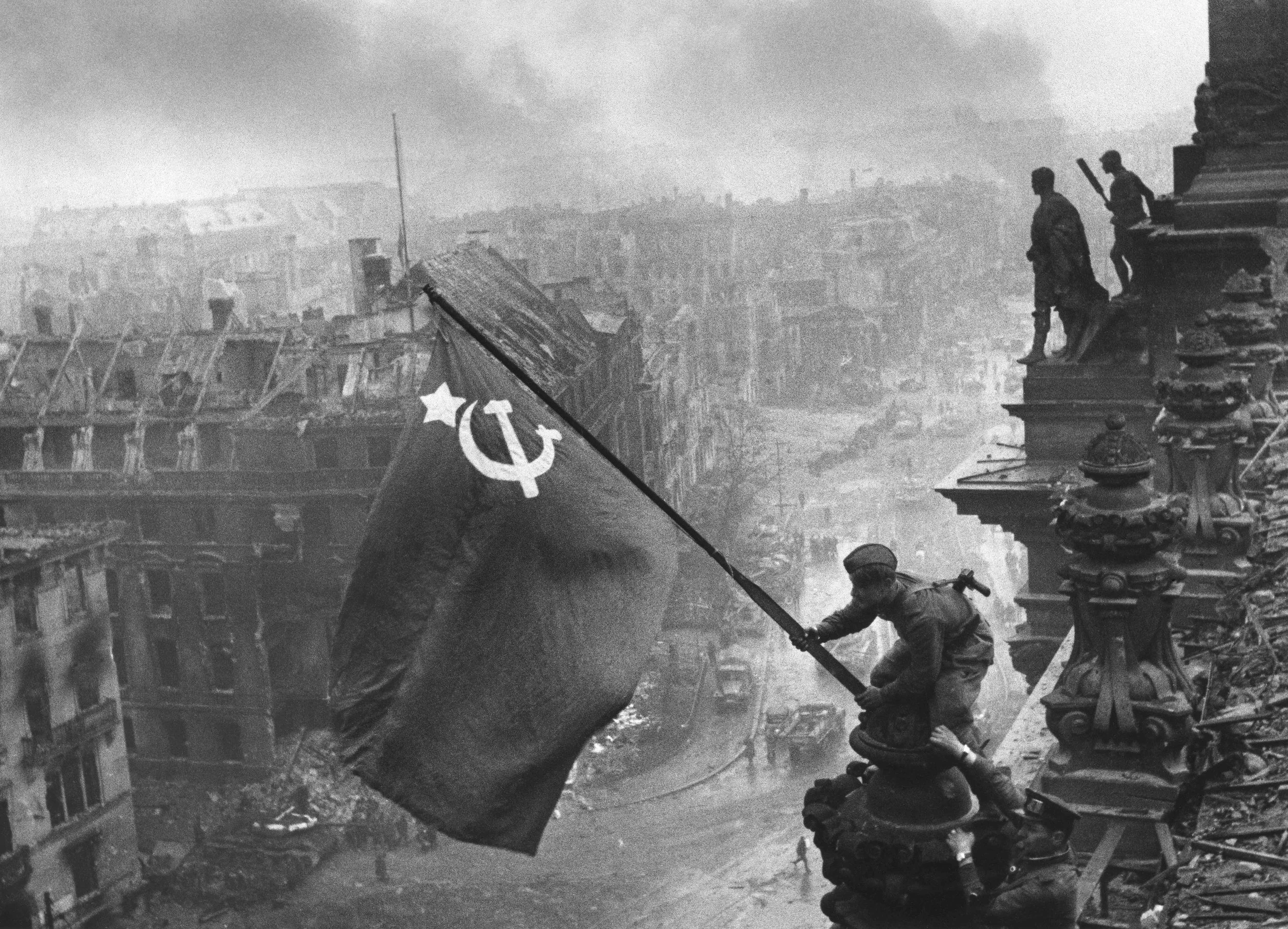
A Soviet soldier waves the Red Flag atop the Reichstag
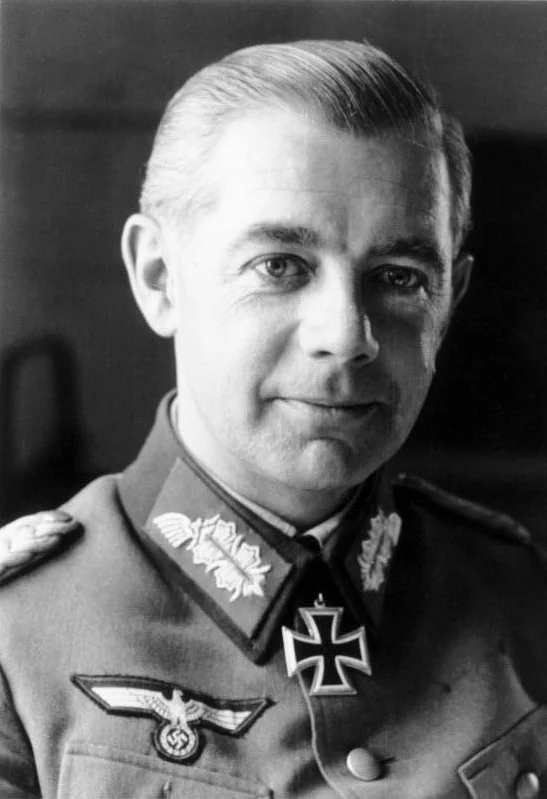
Since the failure of Steiner to relieve the capitol, Hitler had been vacillating between despondency and hallucinatory hopes that other German forces would manage to rescue Berlin and the National Socialist dream. His last hopes had rested on General Walther Wenck, commander of the 12th Army facing the Americans along the Elbe. Ordered to come about and push into Berlin, the 12th had been neither capable nor willing to do so. Instead, Wenck had launched his forces eastward toward Potsdam and Halbe, hoping to open corridors for the beleaguered 9th Army, along with the civilians and battered garrison of Berlin to break out to the west. Informed of this, Hitler knew the game was over.
Summoning a local offical to the bunker, Hitler married his mistress Eva Braun in a brief ceremony in the bunker, and dictated his political testament to another of his secretaries. Distrusting the stocks of cyanide left behind by Himmer and the SS, the poison was first tested on the Fuhrer’s beloved German Shepard, Blondie. Affirmed to be workable, the Fuhrer and his bride retired to their rooms just after 1400 hours, where Hitler shot himself while taking posion, Eva opting for just the poison. The bodies were covered in blankets, and carried up to the Chancellery gardens, where they were doused in gasoline siphoned from limousines in the nearby garage, and burned. Adolf Hitler was dead, and the Reich would not be far behind him.
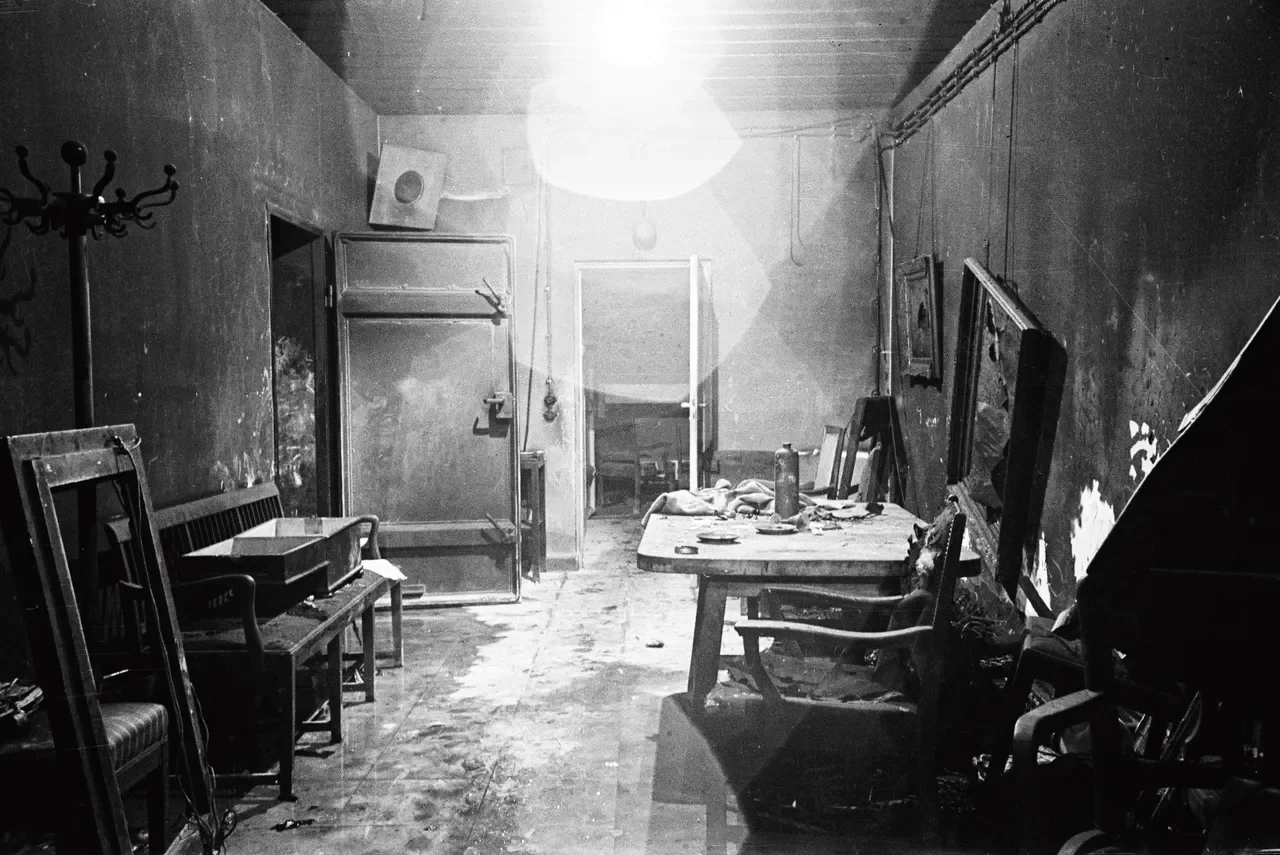
The inside of the Fuhrerbunker after its capture by the Soviets
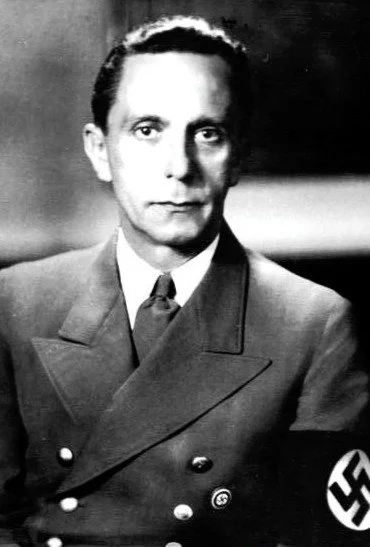
Even with the Reichstag in Soviet hands, the battle for Berlin was not yet over. Hitler had named Grand Admiral Karl Donitz, currently in Flensburg, as his successor as President, while Propaganda Minister Josef Goebbels had been named as Chancellor. Goebbels had remained in Berlin, and had moved into the Fuhrerbunker with his wife and six children as the battle began. On 1 May Goebbels in his new capacity as Chancellor dictated a letter to the Soviet leadership requesting a ceasefire to discuss terms for armistice. This was dispatched under a white flag in the hands of General Hans Krebs, but was rejected by Soviet general Vasili Chuikov, who demanded immediate and total capitulation. Seeing no way forward, Magda Goebbels drugged and killed all six of her children, leaving them in their beds as she and her husband ascended to the Chancellery gardens. Josef Goebbels then shot his wife and himself, the bodies partially burned by SS guards with what remained of Hitler’s gasoline.
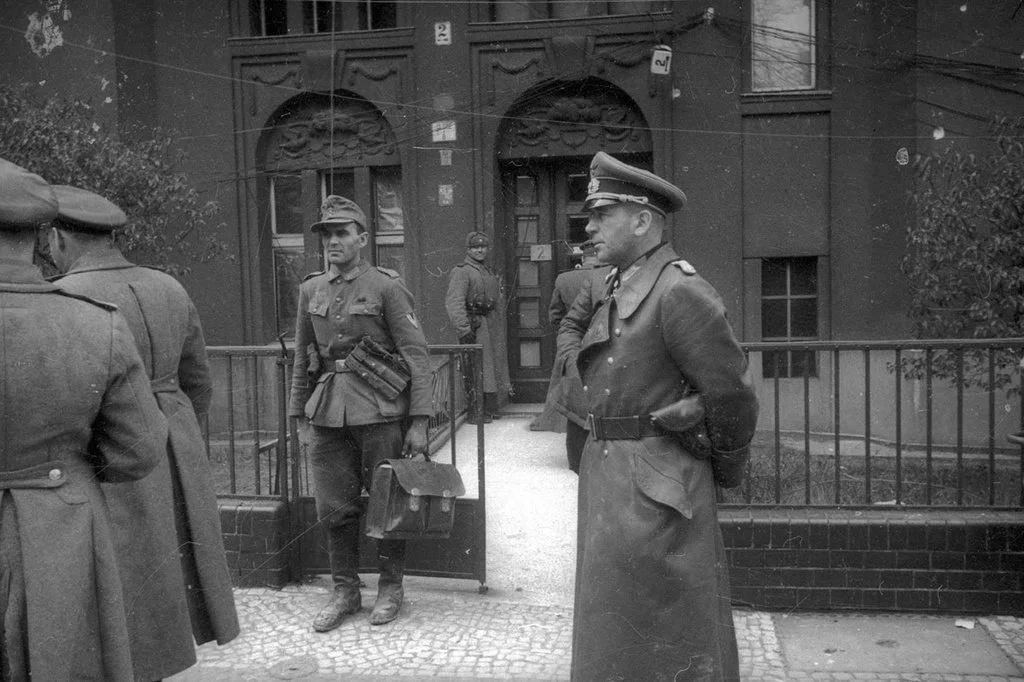
General Hans Krebs waits outside of Chuikov’s headquarters, an aid carries Goebbels’ request for a cease fire
Essentially left to their own devices, the remaining SS troops under Mohnke made an attempt to break out of the city on the night of 1 May, but in the end the majority were unable to escape. Several were killed in the process, and the rest captured. On 2 May the Soviets stormed the Chancellery and captured its ruins, finding the bodies of the Goebbels children along with several others who had killed themselves within the Fuhrerbunker, along with some junior personnel still operating the communications and mechanical equipment. Weidling’s headquarters made contact with Zhukov via radio, and shortly afterward he surrendered the garrison at 0600hrs on 2 May, 1945. The battle of Berlin was over, and with it the effective end of the Nazi regime. German forces were still fighting across the scattered battlefronts of Europe, but with the bloody last stand of National Socialism the writing was on the wall.
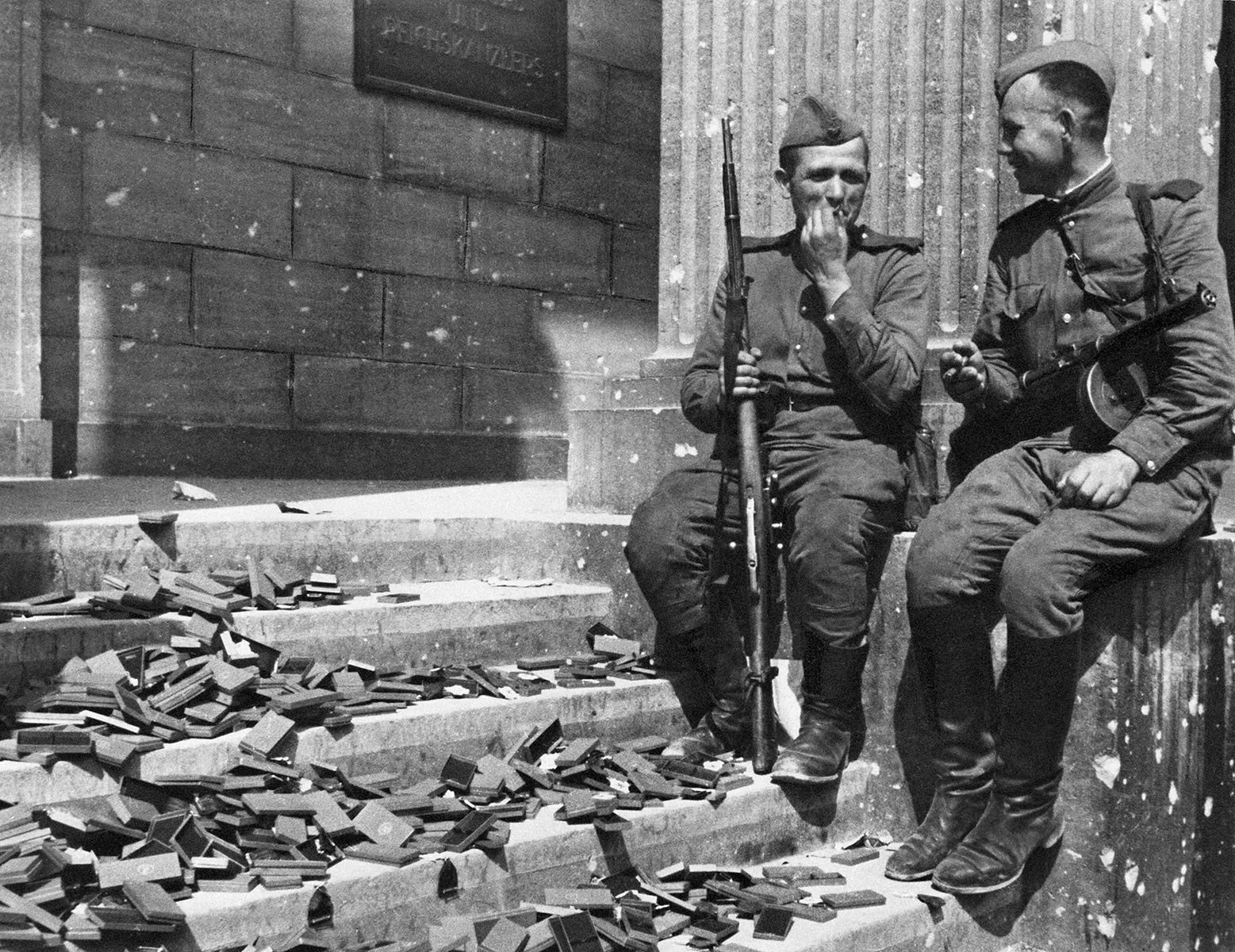
A Soviet sniper takes a cigarette break on the bullet pocked steps of the Reich Chancellery, strewn with discarded Iron Cross medal cases
The Nazi Government Collapses - The Fuhrerbunker
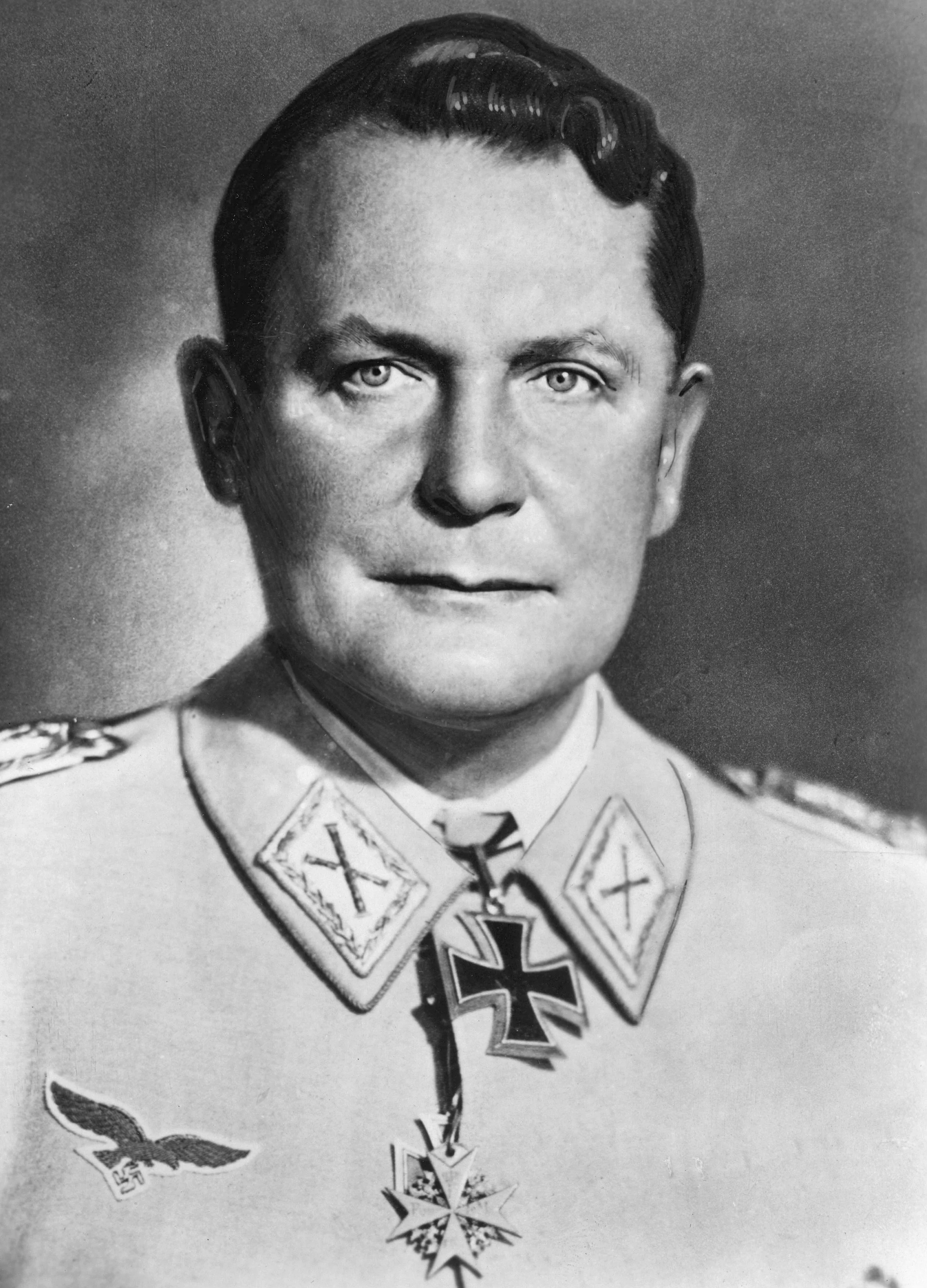
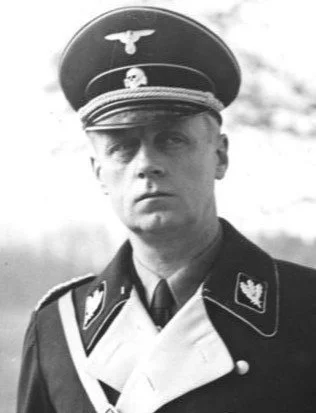
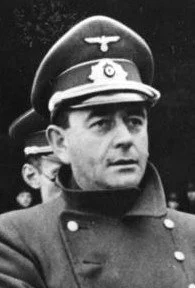
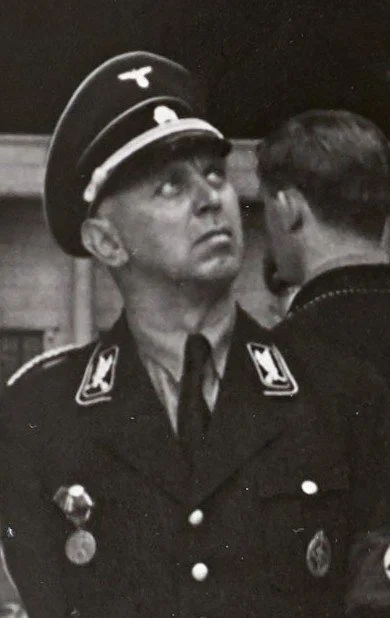
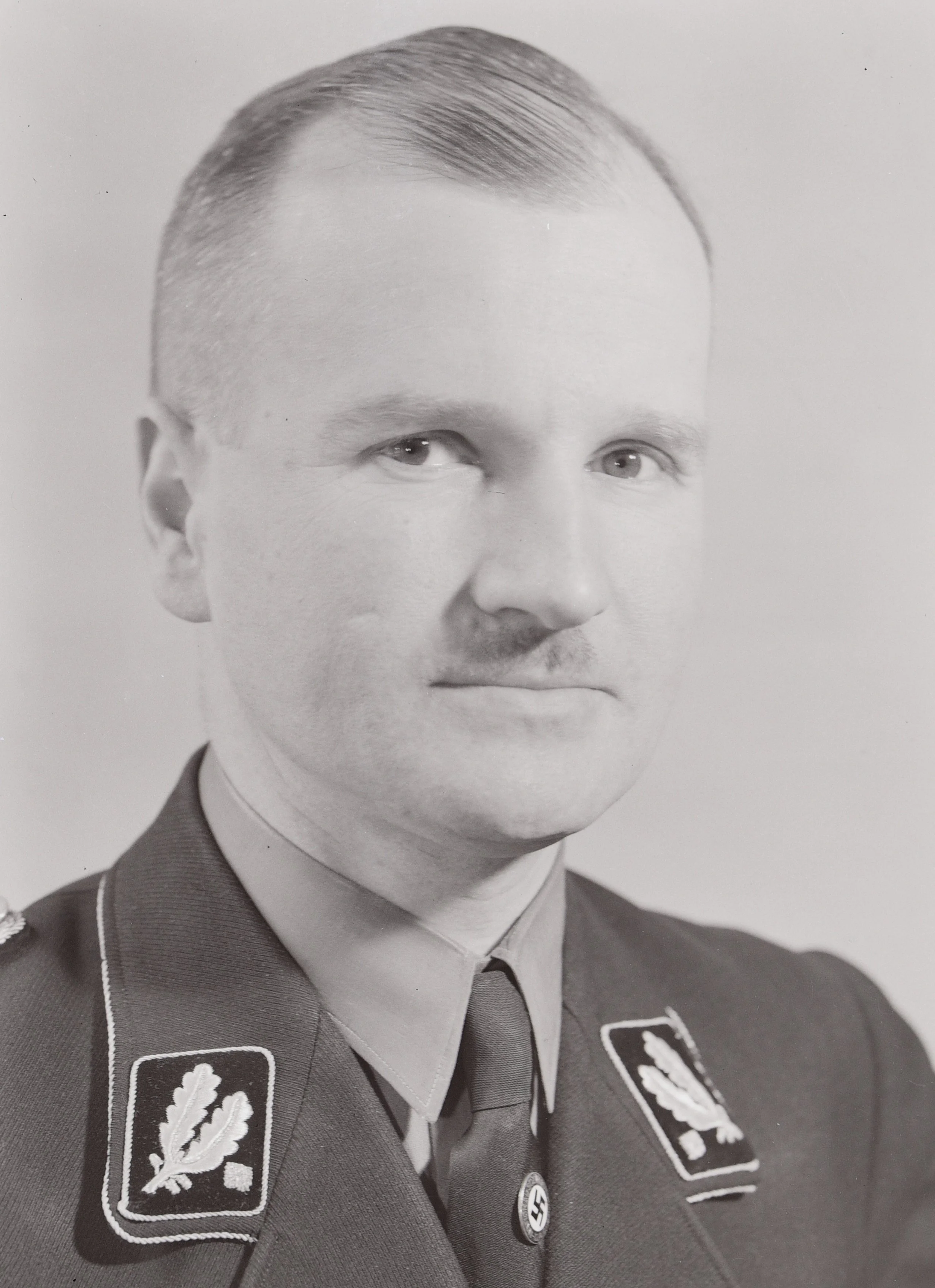
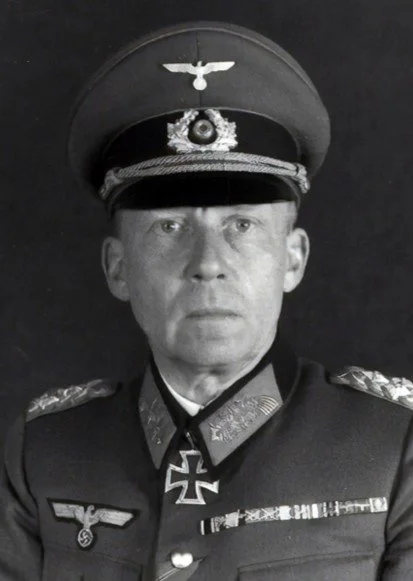
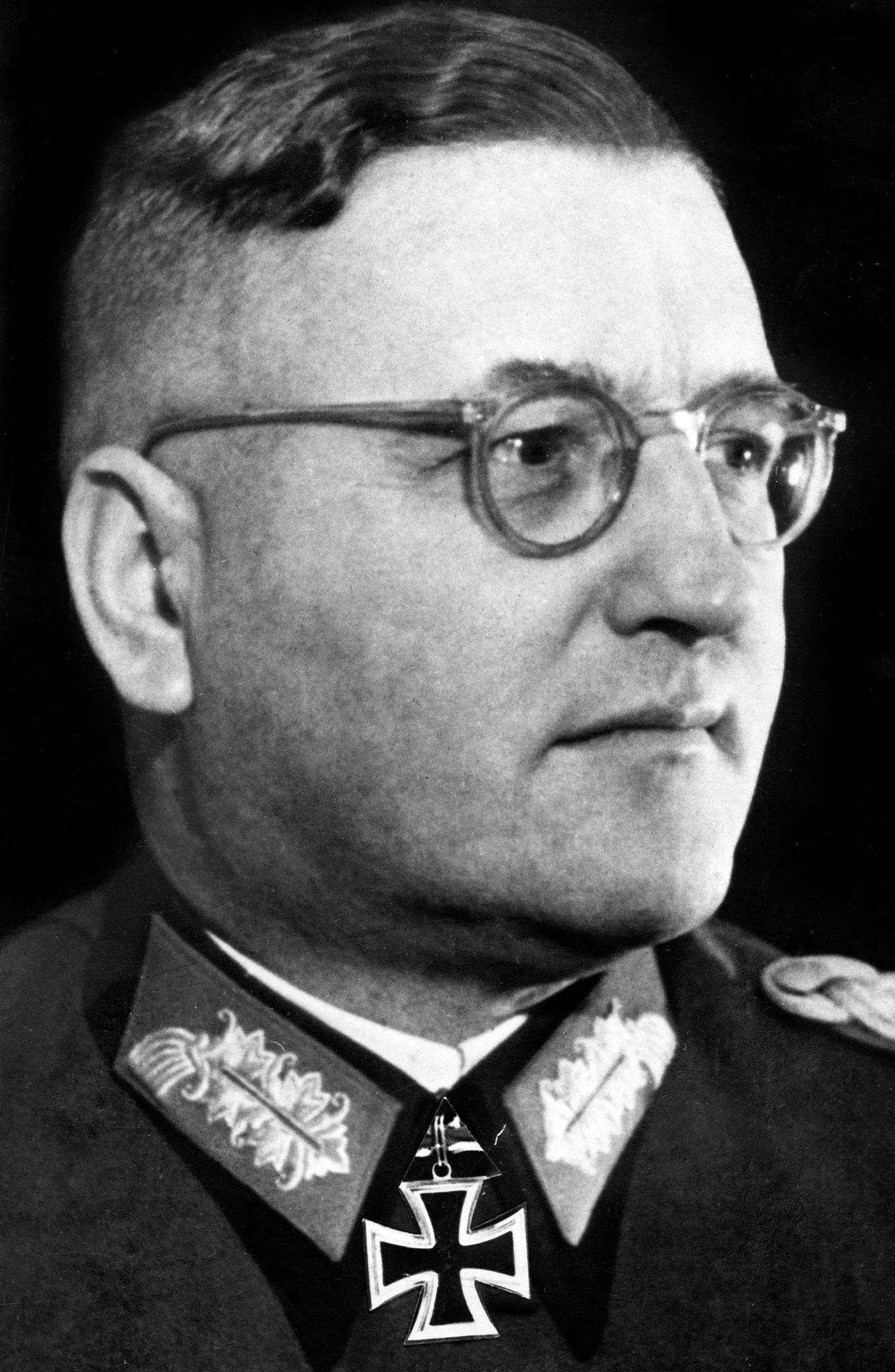
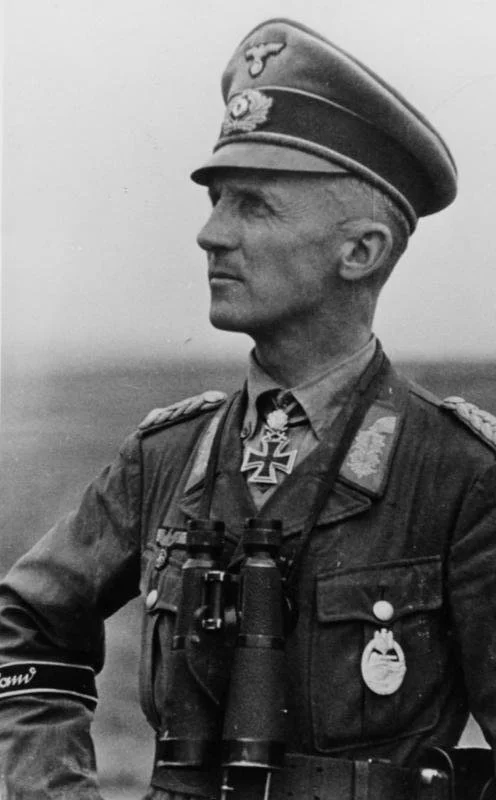
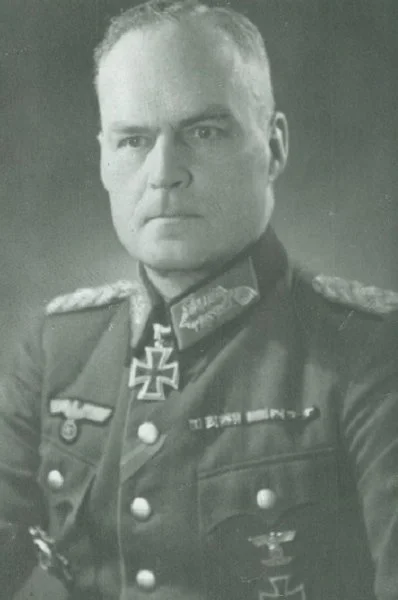
The Commanders