Saturday, June 17
The Battle of the Rosebud
After spending the night at the abandoned Sioux camp, Custer relocated his command to the actual mouth of the Tongue, some two miles distant. The Far West followed them in, anchoring in the river just upstream from the mouth. Gibbon’s men remained in their camp, keeping an eye out for the Far West and the return of the 7th Cavalry’s scouts.
To the south, Reno’s men moved northward along the Rosebud, halting at 1000hrs while the scouts fanned out around the area, reporting back in the afternoon that the various lodgepole trails in the area were recently made. At 16oohrs, Reno and his men set out northward again, moving in total about 14 miles today, unaware of what was happening just to their south.
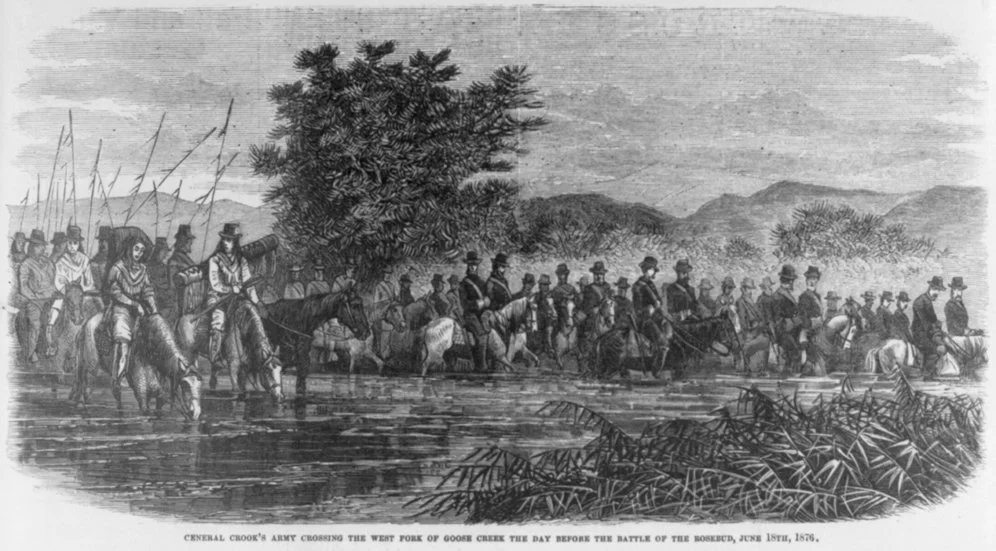
A contemporary illustration of Crook’s column on their march to the Rosebud
Crook’s men rose early, with a pre-dawn fog allowing the lighting of fire for coffee, as the Crow and Shoshone scouts were dispatched to the front, the main force moving out at 0600hrs. After a march through treacherous terrain forcing the column to move in single file Crook ordered a halt to rest his men in the open country along the Rosebud at 0800hrs, hoping to regroup his forces before moving onward. Meanwhile, the Army scouts were ascending a nearby hill, and at its summit ran into a Sioux scouting party and exchanged the first shots of what would become known as the Battle of the Rosebud.
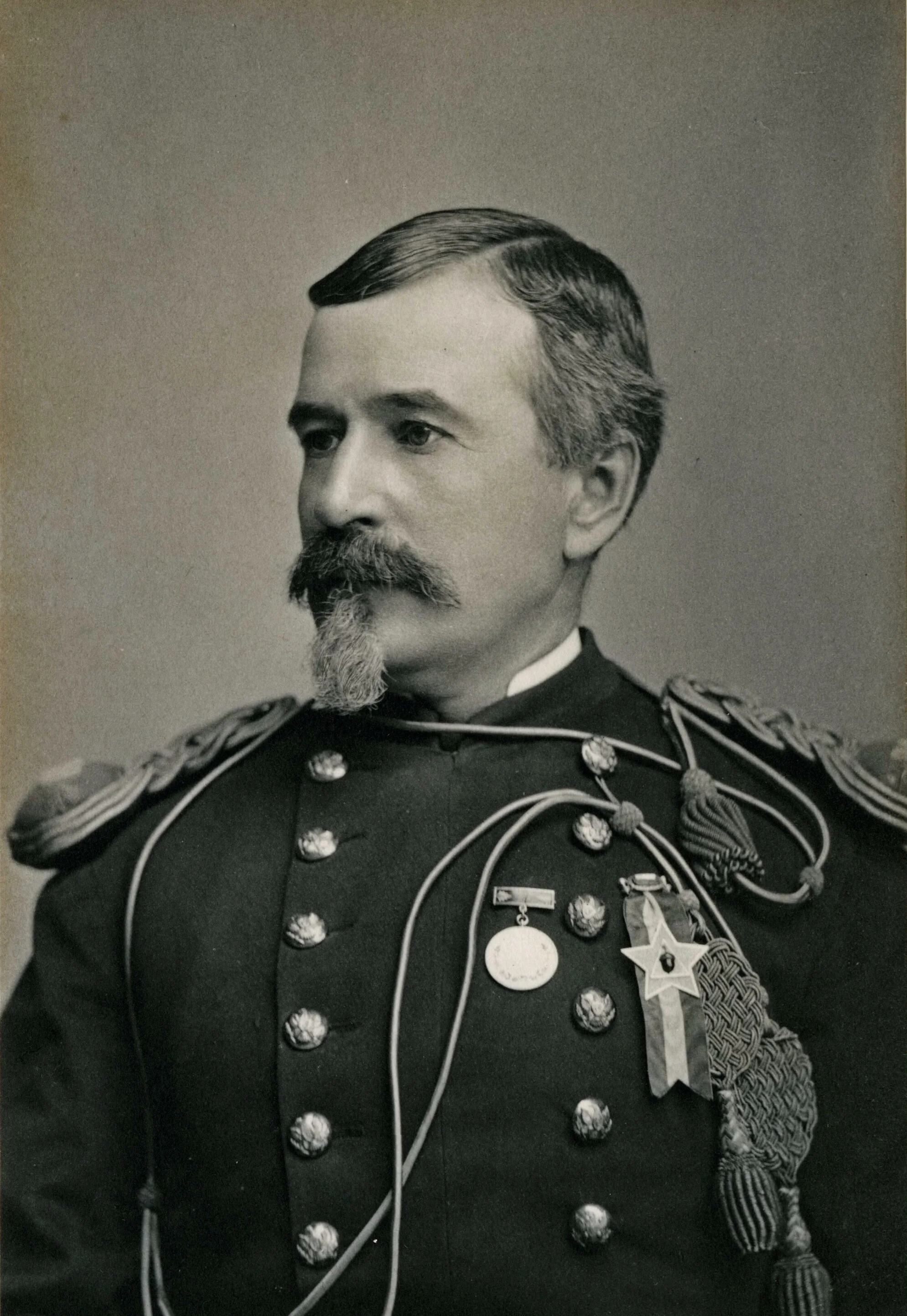
Captain Anson Mills
Some of Crook’s men at first thought their scouts were hunting when they heard the shots, until the Crows came galloping over the rise shouting to warn the column, and shortly after the first shots of the pickets rang out. General Crook quickly dropped his game of whist¹ and ordered his men into action, with some dismounted troopers running forward as skirmishers while the rest quickly resaddled and mounted. As this occurred Captain Anson Mills reported that he had observed a massive war party moving to engage them. Captain Frederick van Vliet was dispatched to secure the high ground to the southeast, narrowly beating the hostiles to the position, while Mills charged the enemy on a ridge to the northeast.
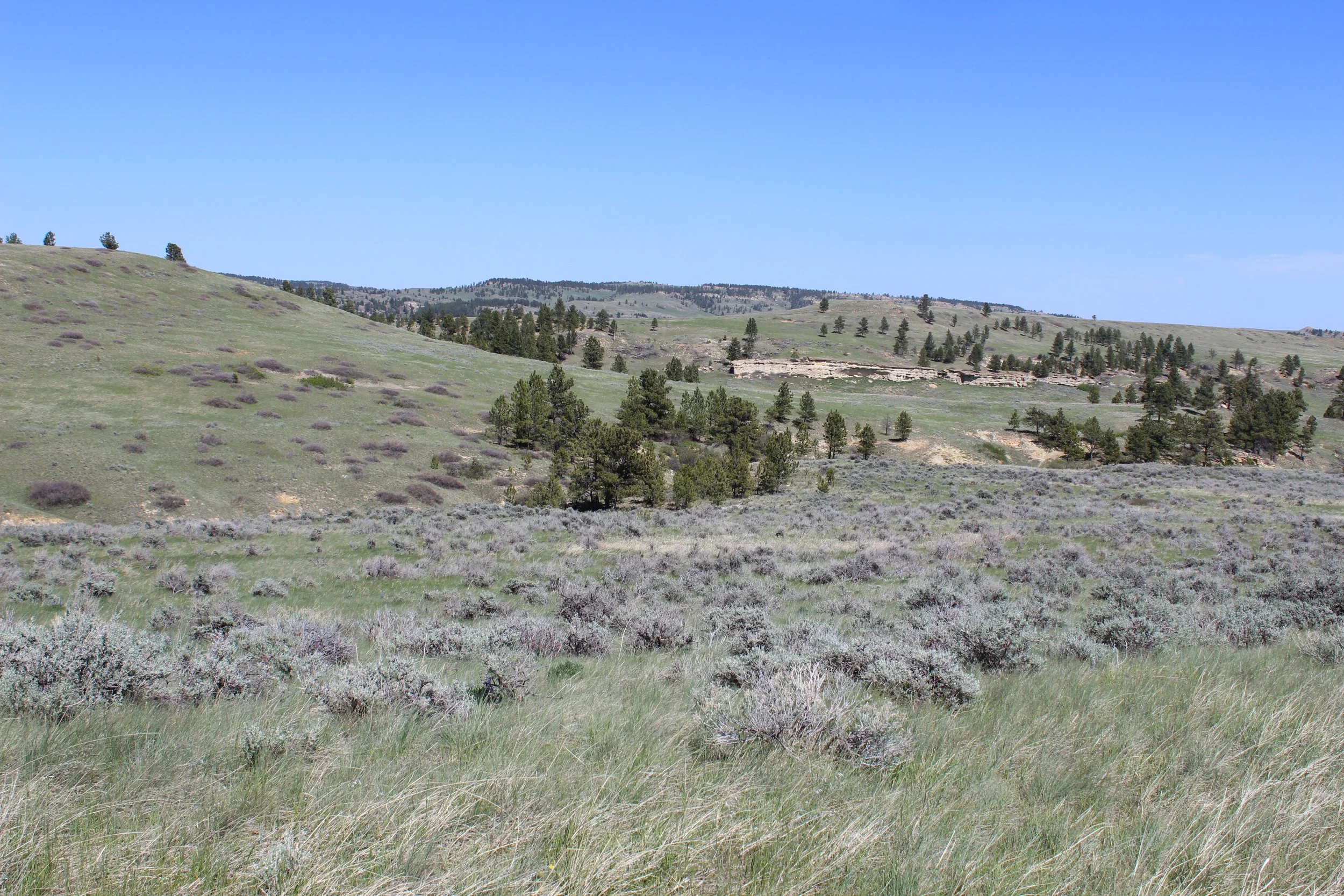
The view toward the site where Buffalo Calf Road Woman rescued Comes-in-Sight
Marching Through History
As Mills’ troopers dismounted and began to drive the hostiles back, the Cheyenne warrior Comes-in-Sight was launched into the air as his pony was cut down mid gallop. Dazed and exposed, the soldiers and their scouts moved in quickly, but his sister, Buffalo Calf Road Woman, galloped through the battle lines to her brother, pulling him onto her mount and whisking him to safety. The Lakota Jack Red Cloud was also dismounted by enemy fire, but the young warrior was not killed, rather the enemy Crows taunted him and stole the elaborate war bonnet he had worn into battle, leaving him humiliated².
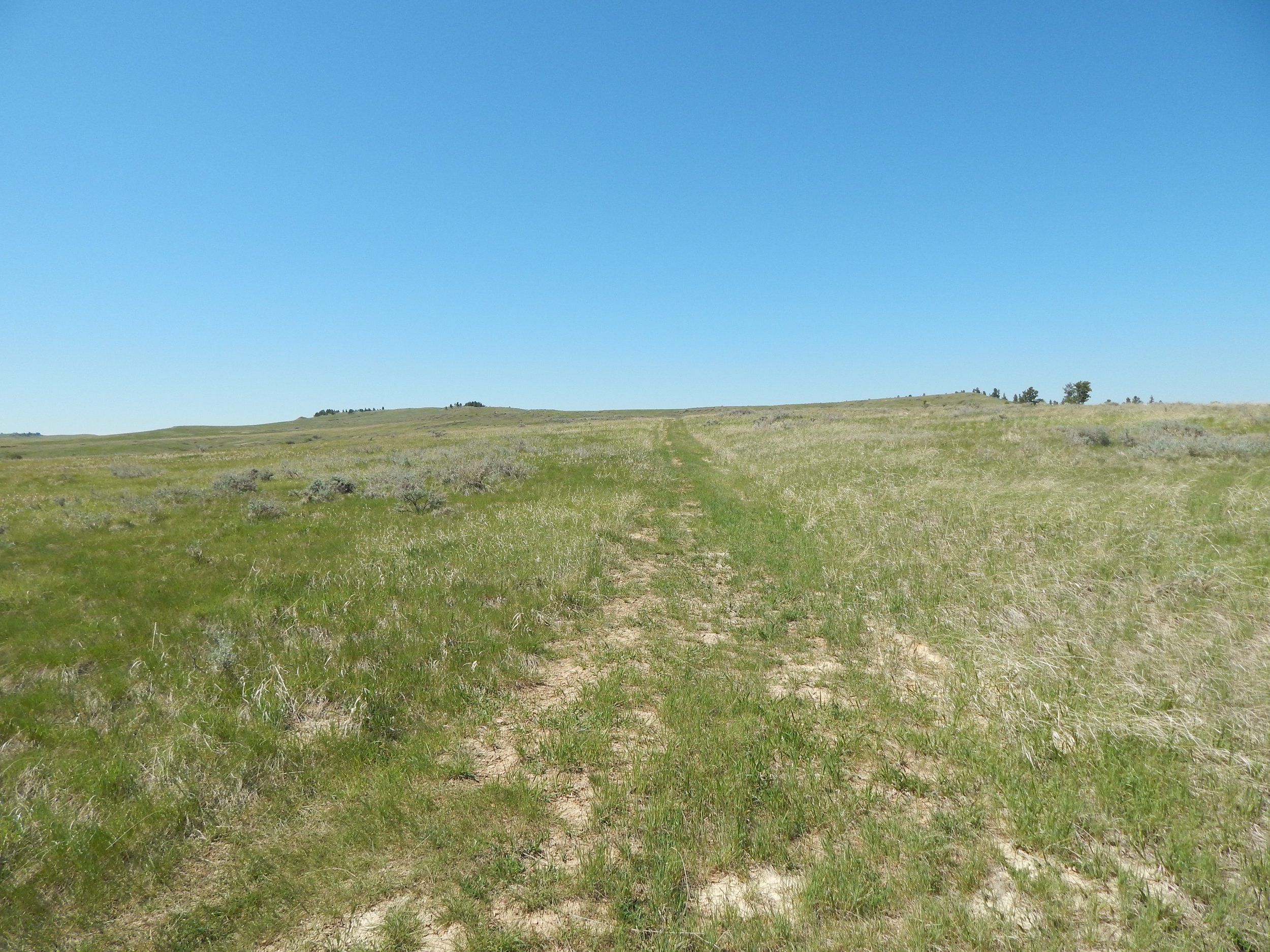
Looking up Crook’s Hill
Elements of the 3rd Cavalry led by Colonel William Royall began to drive the main body of the Sioux and Cheyennes back, linking with Mills securing a high hill where Crook soon moved his headquarters. The hostiles moved to an adjacent ridge and kept up a constant pressure on Crook, but they too were under pressure, as the civilian miners enlisted by Crook in Wyoming maintained deadly, accurate fire from their own position amongst the rocks north of Crook.
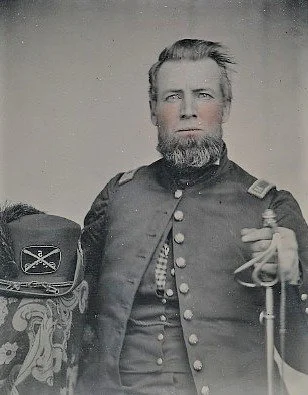
Colonel William Royall in a Civil War era portrait
In the face of the huge numbers of indians attacking their positions, Crooks men pulled closer to the headquarters hill, with the western outliers congregating around Royall’s position. Royall himself made two tactical withdrawals after holding positions against several assaults. The final move brought them into the shadow of Crook’s Hill, where they found an enemy force between them and the main body at the summit.
Meanwhile, Crook was convinced that the strength of the hostile force could only mean that the main encampment was almost within his grasp, rather than thirty miles away along the Little Bighorn. As Royall continued his desperate fight Crook ordered Mills to take nine companies of cavalry and make a rapid drive eastward along the Rosebud to secure the supposed village. This advance would lead to six miles of empty country, until Crook sent orders to return at once, as he was being overwhelmed.
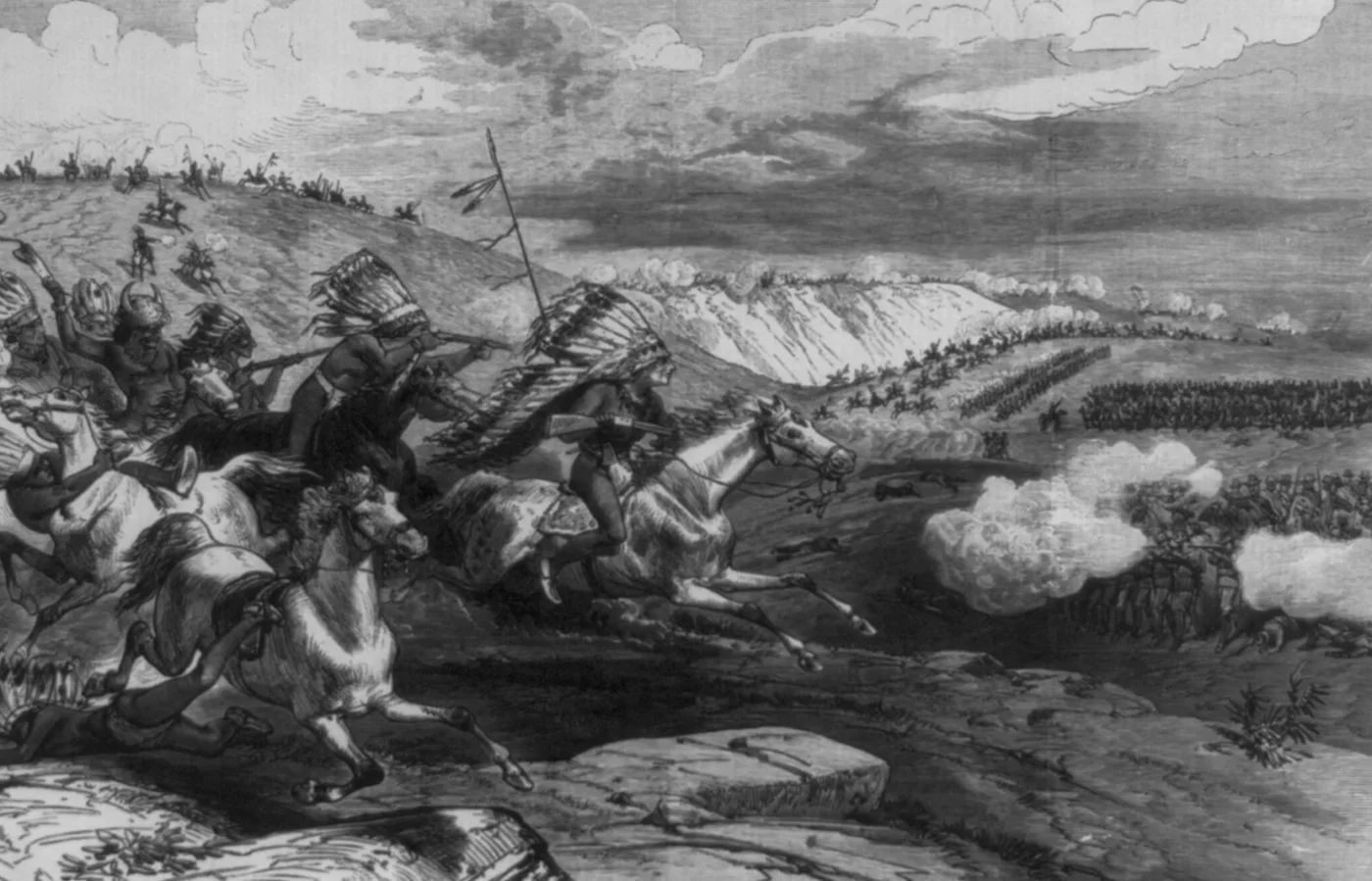
A contemporary newspaper ilustration of the fighting at the Rosebud
Mills made his return in a wide arc to the northeast, and when his troopers appeared on the hostiles’ flank prompting them to finally break off and withdraw. The command was left to lick its wounds and bury its dead. Ten soldiers were dead, with another 21 wounded. One Shoshone scout was killed, as was one Cheyenne. A similar number of Sioux were killed in the engagement. Camp was set up on the field, and the dead were buried in a mass grave near the banks of the Rosebud, with a bonfire built atop it in the hopes it would prevent the desecration of the grave by the hostiles.
Crook would claim victory at the Rosebud, but in the end, despite holding the field he was compelled to retreat due to exhausted ammunition supplies. The command had been spared total destruction in no small part due to the quick reaction of the scouts, while Crook’s leadership was been questioned by historians, in particular his choice to detach Mills to search for the phantom village. Regardless, the Battle of the Rosebud would effectively remove the Wyoming Column from play in the Little Bighorn Campaign. The fate of the operation now rested upon Terry’s men in the north.
Research Trip
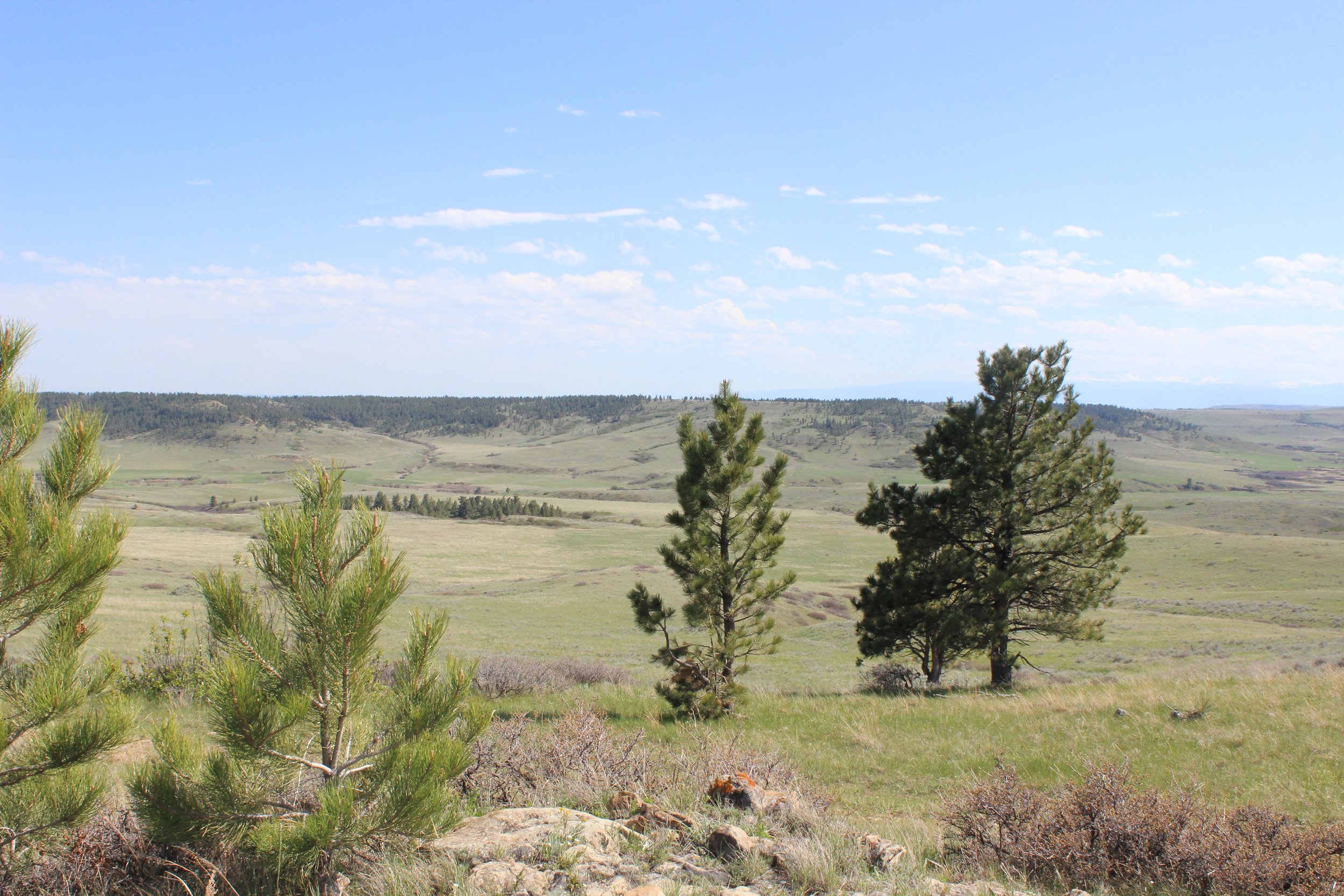
The view from atop Crook’s Hill at the Rosebud
Marching Through History
The highlight of the third day of the May 2026 research trip was a visit to the Rosebud Battlefield State Park in Montana. Starting out from our campsite in Hardin, we passed the Little Bighorn Battlefield we had visited the day before and crossed into the Northern Cheyenne Reservation before diverting southward near Busby. The park at the Rosebud allowed hiking through some of the most beautiful country we would encounter, although due to time constraints were were compelled only to hike to the top of Crook’s Hill before returning for a brief ride through the rest of the park (although only after a brief visit near the truck by one of the park’s resident rattlesnakes). We then departed, following in the footsteps of General Crook as we drove south to Sheridan, Wyoming.
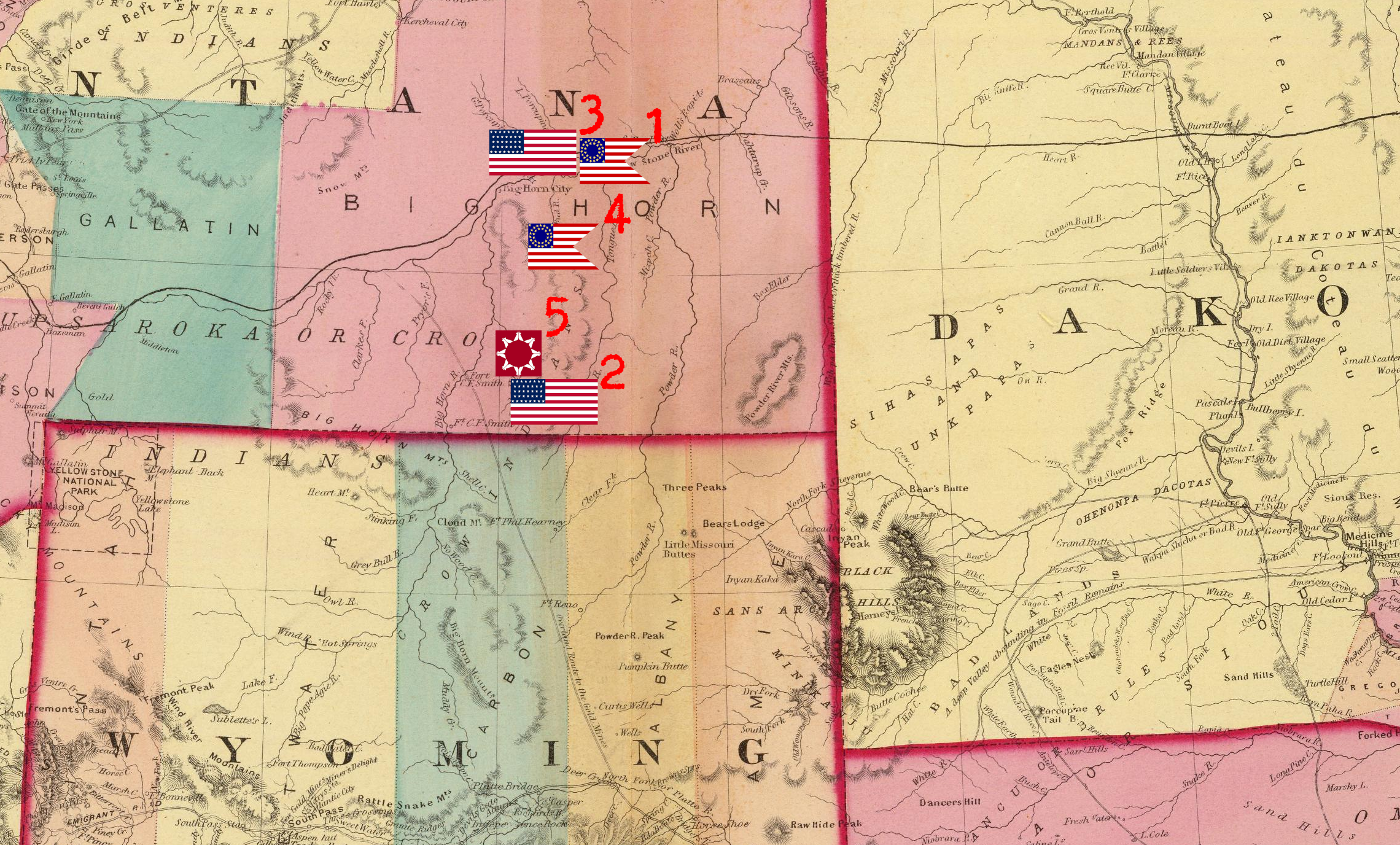
1. Dakota Column - CUSTER - Yellowstone River/Tongue River
2. Wyoming Column - CROOK - Rosebud Creek
3. Montana Column - GIBBON - Yellowstone River
4. 7th Cavalry Scout - RENO - Rosebud Creek
5. Sioux Encampment - SITTING BULL - Little Bighorn River
-
Robinson, p.141
Robinson, p.143