Sunday, June 25
The Battle of the Little Bighorn
The first rays of the sun began to strike the valley of the Little Bighorn at 0300hrs on 25 June of 1876. Perched high above the valley at the Crow’s Nest, Lt. Varnum and the 7th Cavalry’s scouts were watching the vast country spread out below them for signs of activity. The Crow scouts were the first to note the Sioux ponies grazing, looking like worms from such a distance, and two hours after daybreak two Arikaras were sent to Custer with a report. Rousing his officers and men, the column began to move out at 0830hrs.
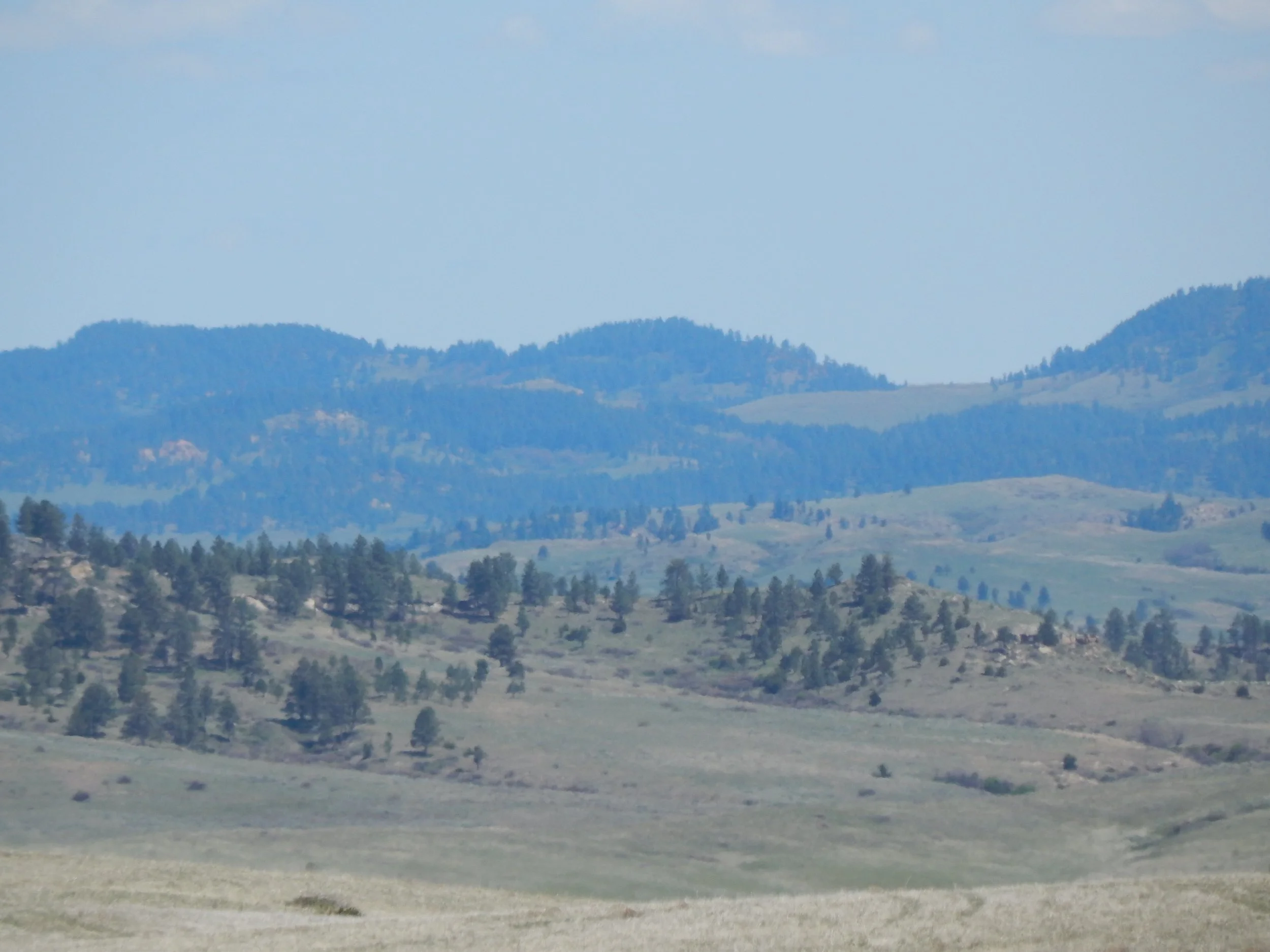
The Crow’s Nest, as viewed from near the Sioux village
An hour later Custer arrived at the Crow’s Nest at the head of his column, and began to survey the scene. Although initially skeptical, he was eventually convinced that the enemy was directly in front of him in the valley. As he returned, he was informed that a detail sent to recover rations dropped from a mule overnight had encountered young Lakotas breaking into the crates and fired on them. It is possible that one was killed, but the others escaped, and would certainly warn their fellows. With this knowledge in hand, Custer ordered immediate preparations for an attack.
Along the Little Bighorn itself, Sitting Bull’s camp was nearly four miles in length and a half mile in diameter¹. Three hundred lodges of Cheyennes under Lame White Man lay at the northern end of the camp, with the Oglala Sioux of Crazy Horse to their south. The Brules were camped along the river just south of the Cheyennes, and south of them were Spotted Eagle’s Sans Arc and Runs-the-Enemy’s Two Kettle Sioux bands. Next were the Minneconju Sioux under Lame Deer, followed by the Blackfoot, who were mixed with Assiniboin, Tanktonnai and Santee. Finally, at the southern end of the camp, stood the tipis of Sitting Bull and his Hunkpapa. Some reports had reached them about the soldiers under Long Hair (Custer) approaching, but most did not believe them, having beaten Crook so thoroughly days prior.
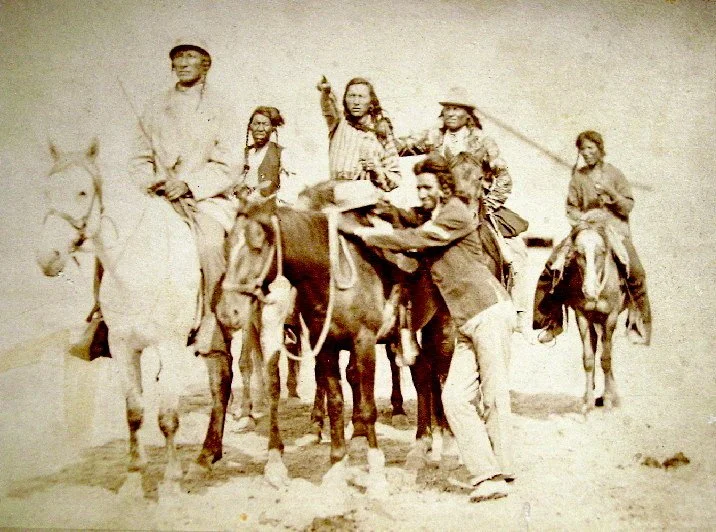
Crow scouts. It is possible that the man on foot wearing the uniform jacket is Half Yellow Face
To the east, Custer met with his men, reporting that the enemy was some fifteen miles from their current position, and that they would immediately form up to launch an attack. Three battalions were organized, with Custer personally commanding C, E, F, I and L Companies with 225 men. Major Reno was assigned 112 men of A, G and M Companies, while Capt. Benteen took 125 men in Companies D, H and K. Company B was assigned to remain behind and guard the mule train under Capt. Thomas McDougall². Half Yellow Face, the leader of the Crow scouts, objected to this division of forces, concerned over the overwhelming numbers of Sioux they were about to engage³, but was rebuked by Custer. The attack was to commence as planned, with Custer moving along the right bank, while Reno was to cross to the left and attack from that direction. Benteen was sent to move along the bluffs to the southwest, much to the Captain’s displeasure.
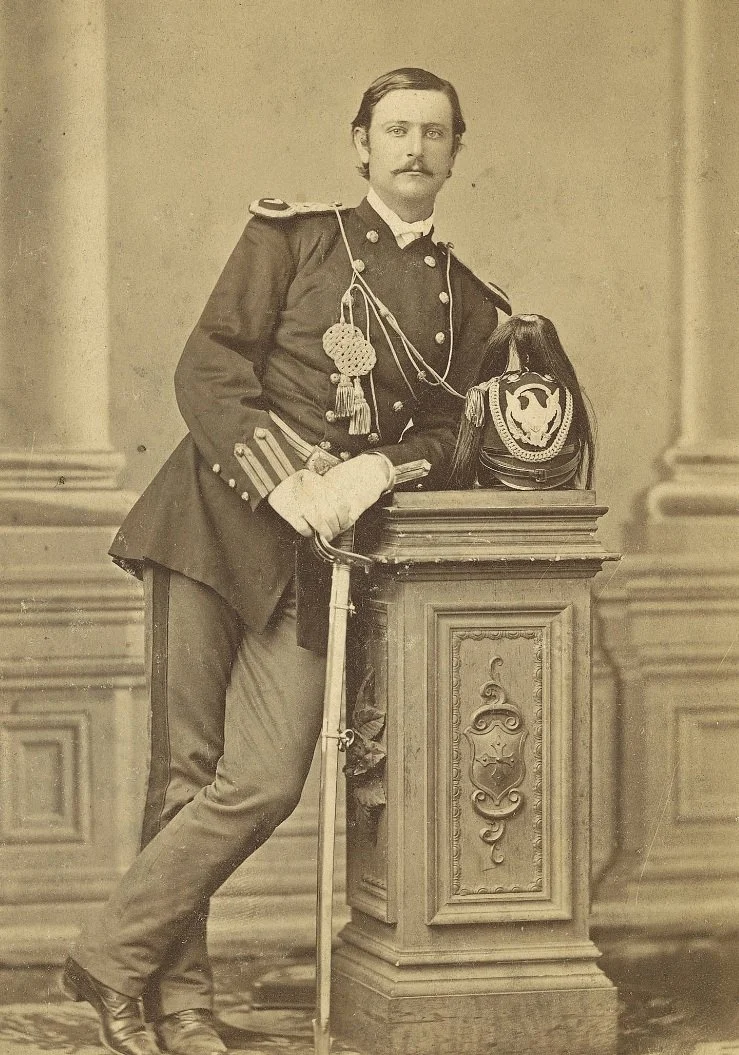
Captain Thomas McDougall, commander of Company B
The morning was spent moving toward the camp, and as they did they encountered small sub-camps, recently abandoned as the soldiers’ approach had compelled outliers to rejoin the main camp. A single tipi was found abandoned at 1400hrs, containing the burial scaffold of one of the Sans Arc warrior Old She Bear⁴, who had succumbed to wounds sustained at the Rosebud. Custer inspected the tipi, before ordering his men to burn it. Seeing the dust cloud of the camps last fleeing occupants, Custer ordered Reno to pursue them.
Reno made his advance, moving four miles to the southern edge of the village, observed in the open country by Sioux. There was still hope at this time that the soldiers would not launch an unprovoked attack. Coming in sight of the edge of the village at around 1500hrs, Reno ordered his men to a gallop, sounding a charge. The Battle of the Little Bighorn had commenced.
Reno’s Fight
Sitting Bull was in the midst of a council with the other Chiefs as the attack began⁵, the sounds of shooting at the perimeter rousing the nearby warriors as criers ran through the rest of the camp of the attack. One warrior, One Bull (Sitting Bull’s nephew) was sent out to ask for a parley, but was met with gunfire. Thus he countercharged the cavalry with his own warriors, while others moved to intercept the Arikaras moving against the pony herd.
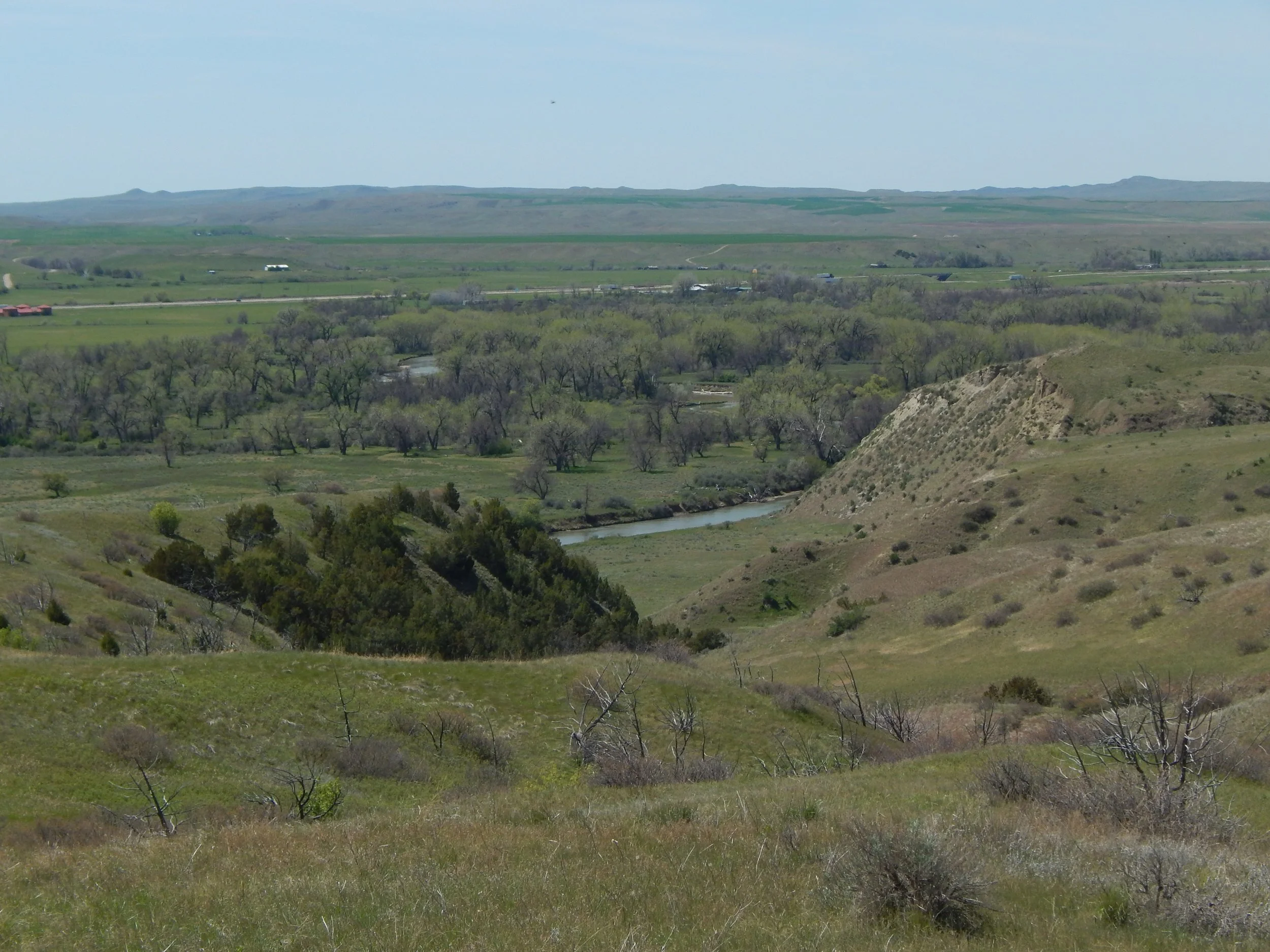
The Little Bighorn River as viewed from the ridgeline
Reno ordered the battalion to halt around 1530hrs, dismounting and forming a skirmish line about a half mile from the edge of the village. Two rookie troopers, unable to stop their horses, galloped on into the village, and were never seen again. Lt. Varnum, fighting on Reno’s line, noted the horses of Company E moving along the high ground to the right, and hoped that soon Custer would attack the enemy flank, relieving the pressure building on his position.
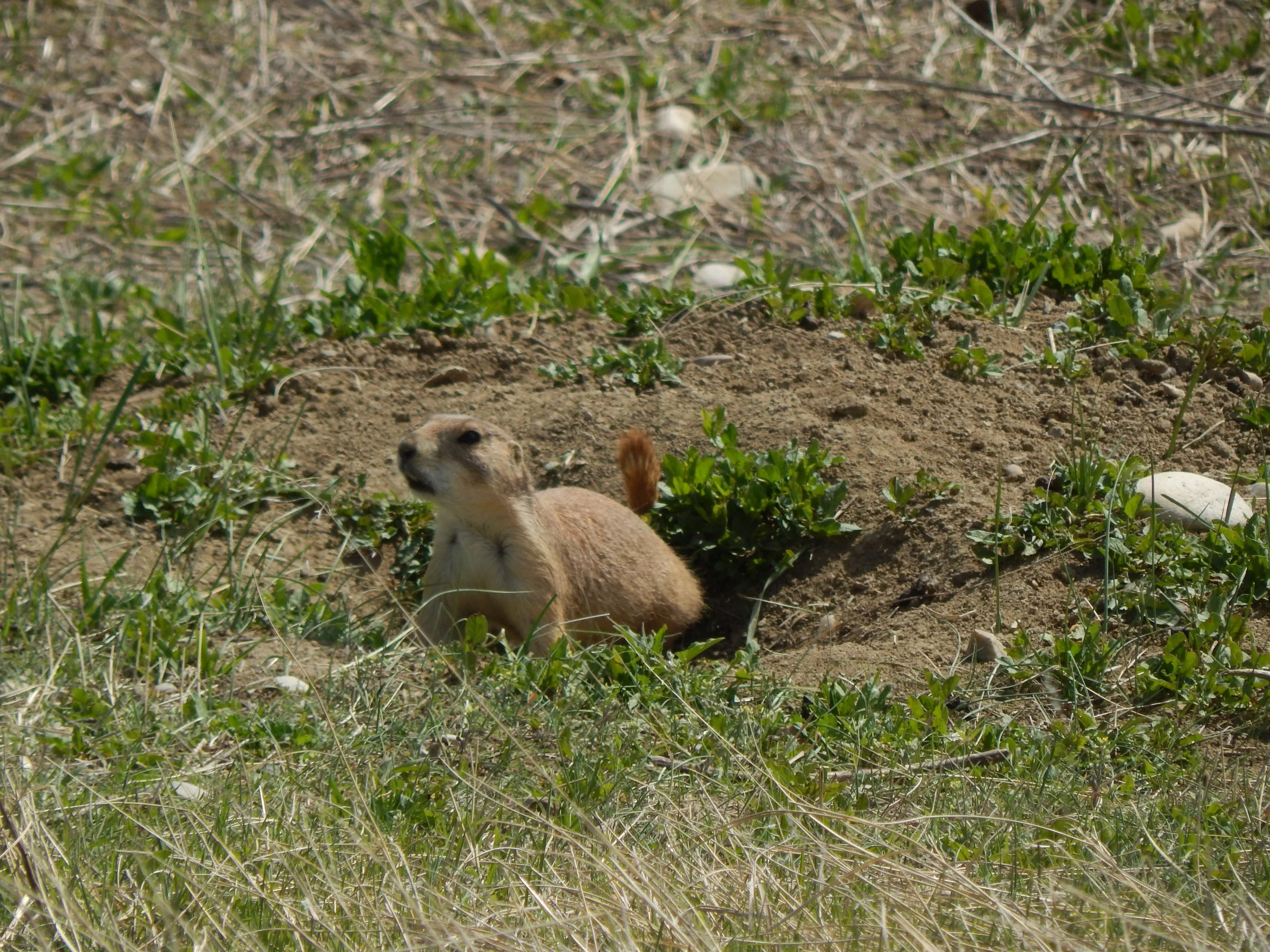
A prairie dog on the battlefield
Some troopers attempted to take cover behind prairie dog burrows⁶ as ever increasing numbers of warriors descended upon Reno’s line. Soon they began to move around the soldiers’ flank, and were in danger of enveloping them. Reno, noticing this, gave the order to fall back to a nearby line of timber, but failed to provide any organization to this⁷, and some elements of the battalion began to flee in disarray until Captain Tom French restored some semblance of order, the men moving backwards and maintaining fire on the enemy.
Meanwhile, Two Moons was organizing the Cheyenne at the far end of the camp. Women and children attempted to strike their tipis and move away from the battle area, while the warriors assembled in the center of the camp. Moving at their head, Two Moons led the Cheyenne to join the onslaught against Reno, declaring that he would stand with his fighters to the death.
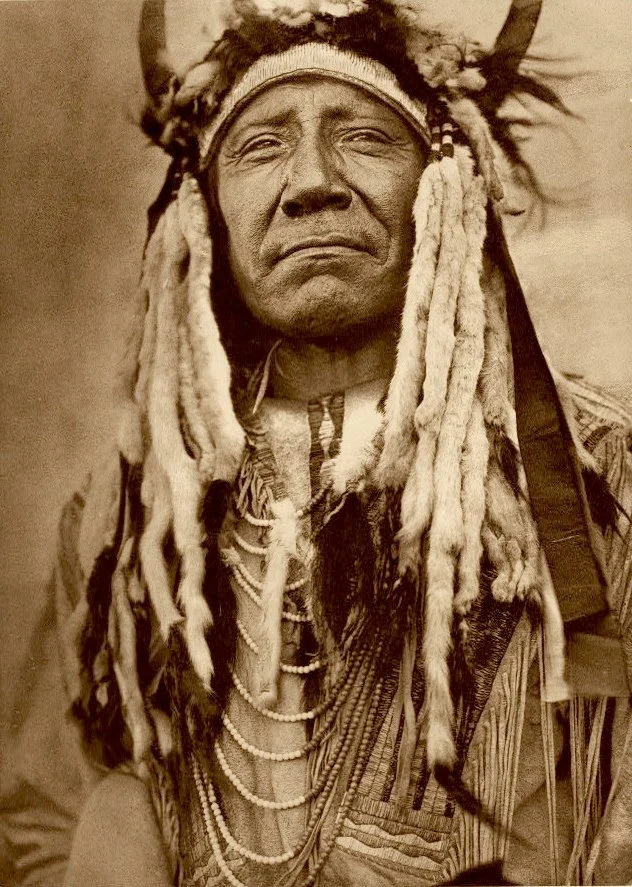
Cheyenne Chief Two Moons
Reno, stuck now in the timber in a defensive fight, was running out of ammunition and options. He issued orders to mount up and retreat from the village, but the dissemination of this order proved very difficult in the chaotic setting. The majority of the troopers did not receive the order, but as the firing died down the Sioux surged closer to the line, with others in the rear attacking Reno’s position itself. Bloody Knife, the Arikara scout favored by Custer, was killed instantly by a rifle shot to the head, leaving the Major, standing beside him, covered in blood and bits of grey matter. Ordering his men to dismount again as the enemy entered the woods, Reno then observed them pulling back, and in turn almost immediately ordered his men to remount, sewing much confusion.
As the situation collapsed, Reno drew his sidearm and exhorted his men to follow him. The men of the battalion began to retreat in disorder toward the Little Bighorn, with several killed in volleys of rifle fire and arrows. Others were overtaken by mounted Sioux, toppled with clubs from their mounts and dispatched on the ground. In total, 29 men were killed attempting to cross the river⁸, including Lonesome Charlie Reynolds, Dr. James DeWolf, and the interpreter Isaiah Dorman. A former slave who had married a Sioux woman, Dorman was shot in the chest, and asked for mercy as warriors crowded around him. Sitting Bull recognized him, and got him water before riding onward. Shortly afterward a Hunkpapa woman rode up, and shot Dorman in the head⁹.
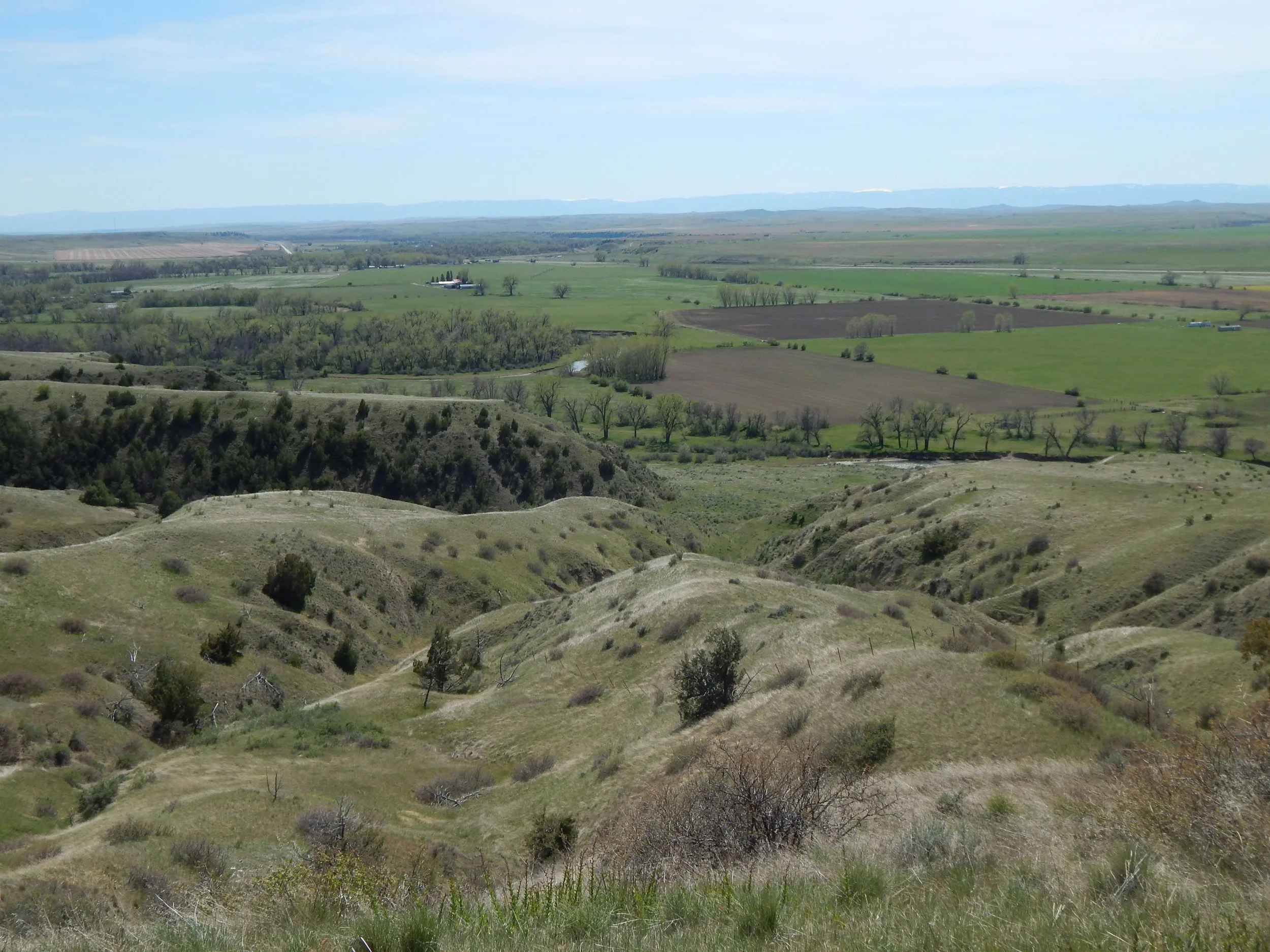
The hills Reno and his men had to scale during their retreat from the village
Reno meanwhile had made the summit of a ridge across the river, with a semicircular depression facing away from the enemy. Reno and his command began to dig into this natural fortress. Some men remained below, sheltering in the timber and hiding as the Sioux women began to execute and mutilate the wounded, and warriors and boys ran out to claim scalps. It was now approximately 1615hrs.
Custer’s Last Stand
While Reno’s command was so desperately engaged along the southern end of the village, Custer and his men were making a laborious march along the steep hills and valleys along the right side of the river. They had passed along the very ridge that Reno was now digging into, and had observed hundreds of tipis in the valley below them, but even this was not the full extent of it. Sgt. Daniel Kanipe of C Company was ordered by the company commander, Tom Custer, to make for the pack train and tell them to hurry along, before finding Benteen and ordering him to rejoin Custer for the attack.
Custer altered his plan of attack as he was made aware by Mitch Boyer that Reno had been forced to retreat up the hills, deciding to split his own force, with a contingent under Captain George Yates taking two companies to the ford on the Little Bighorn where it met Medicine Tail Coulee, while the rest would continue to move up with the remaining three companies under Capt. Myles Keough. When Benteen arrived, Custer would take the combined force and move to reinforce Yates, and if Benteen did not then Yates would rejoin the main force just to the north of the ford along a ridge line.
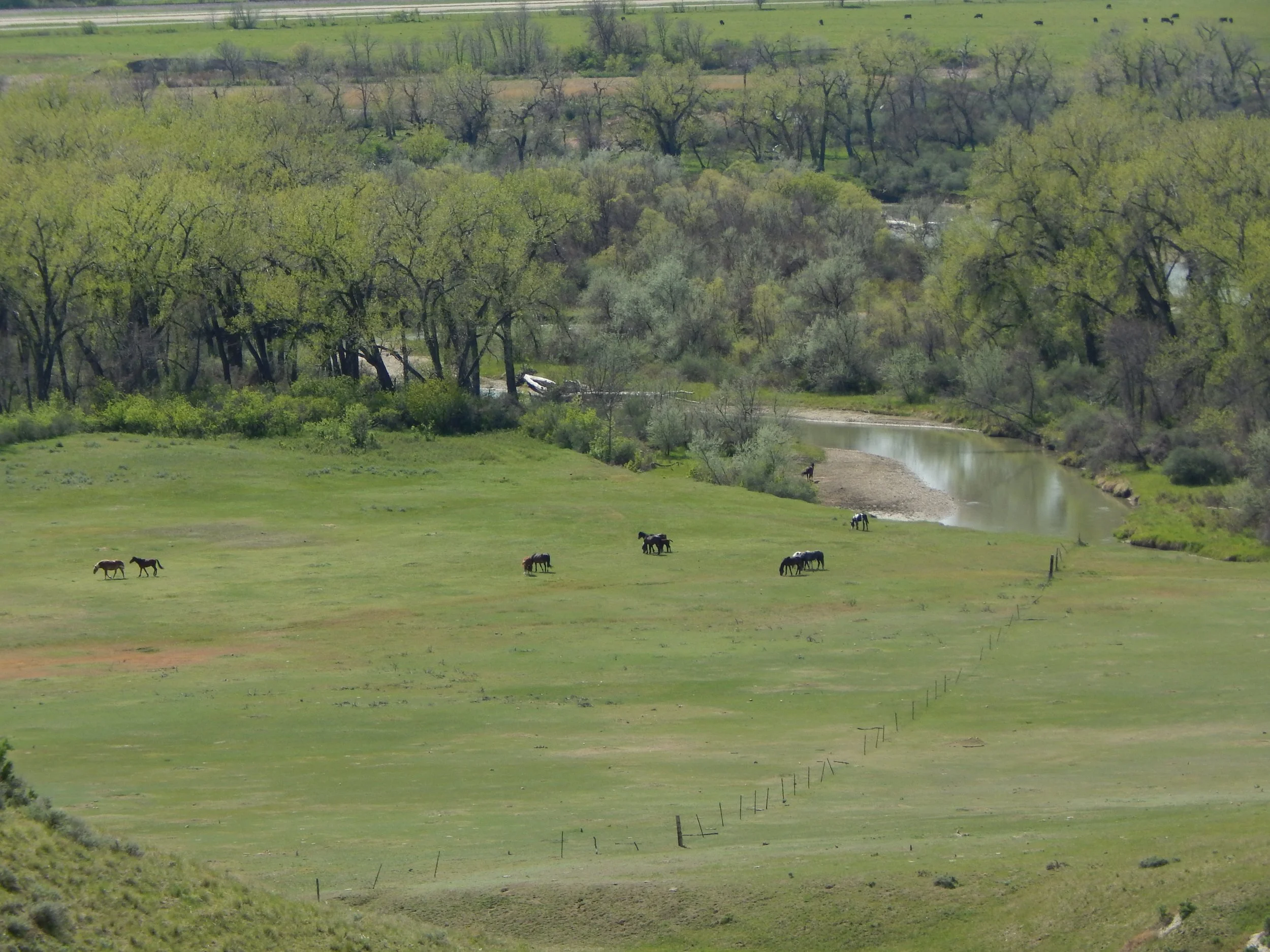
Horses grazing along the Little Bighorn near Medicine Tail Coulee
Moving farther down, Custer assembled his men atop a hill near Medicine Tail Coulee, taking a moment to send his trumpeter, the Italian born John Martin, with a message to Benteen to move up as quickly as possible with with packs. The same order was written out by Lt. William Cooke, and Martin took off at a gallop, not knowing that he would be the last white man to see Custer alive. He reported that he observed Custer and the rest of the troopers galloping down Medicine Tail Coulee toward the Little Bighorn and the village on the far bank.
The Cheyenne camp now lay squarely in Custer’s sights, and it was nearly empty, with all but two warriors¹⁰ having gone to join the defense of the Hunkpapa camp from Reno’s assault. Picking up an additional two warriors in the area, these hastened to engage the throng of blue uniformed riders coming down the Coulee toward the camp. The troopers approached the river itself, but came under fire from Cheyenne and Sioux on the far side, and from here the record becomes somewhat foggy.
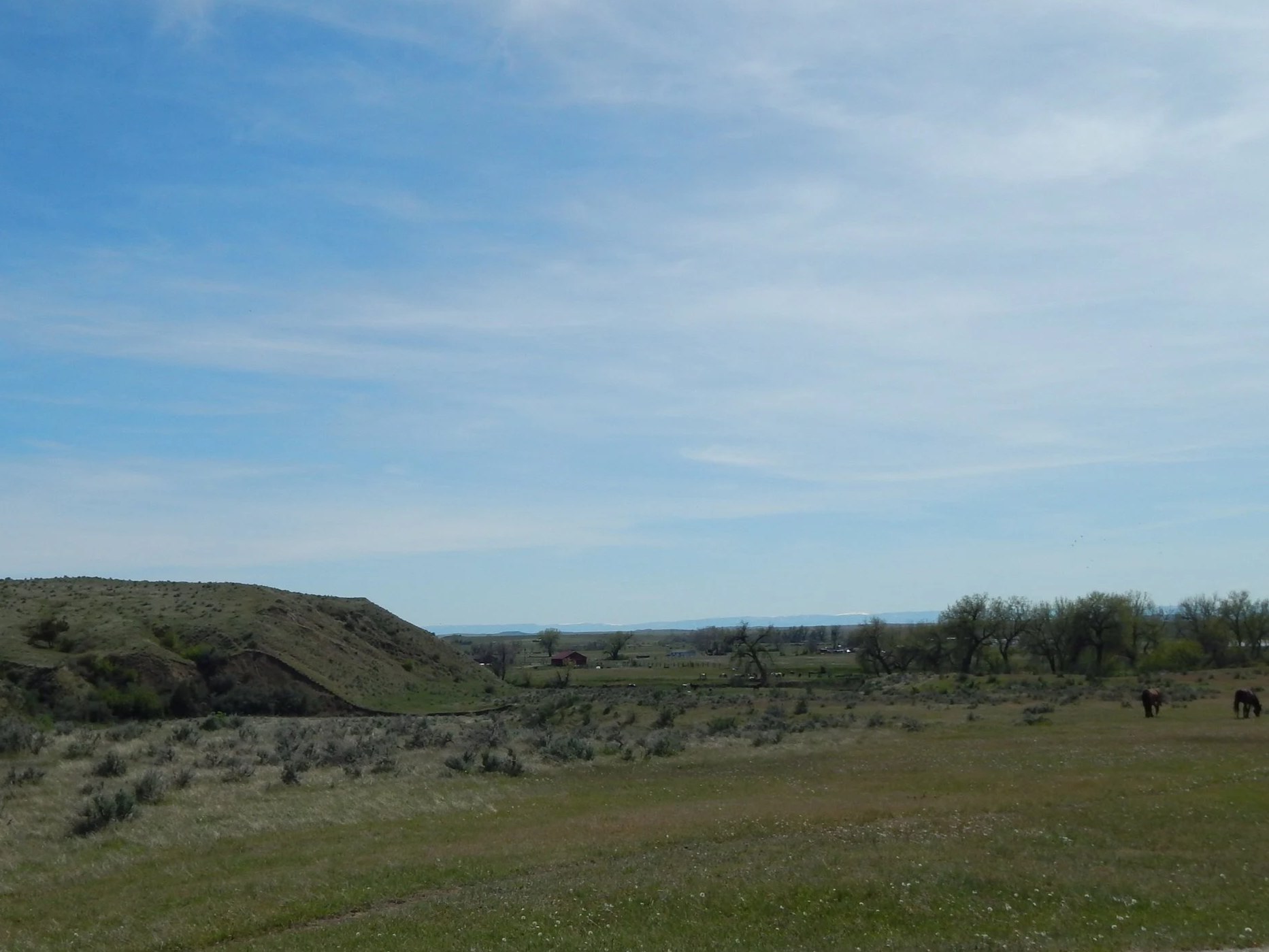
A modern view toward the ford
The Cavalry broke off their attack as they approached the river, with the defenders claiming that they turned the enemy back, but it is also contended that Custer may have realized the size of the village and withdrew in order to attempt again to attack farther north to envelop it and sweep southward toward Reno. Regardless, by this point Reno was pulling back, and some of the warriors attacking him were breaking off as word spread of Custer’s forces. Some indians also shot at Keogh’s men atop the ridge, and the Irishman responded by sending a detachment to sweep the lower ridges, which was accomplished.
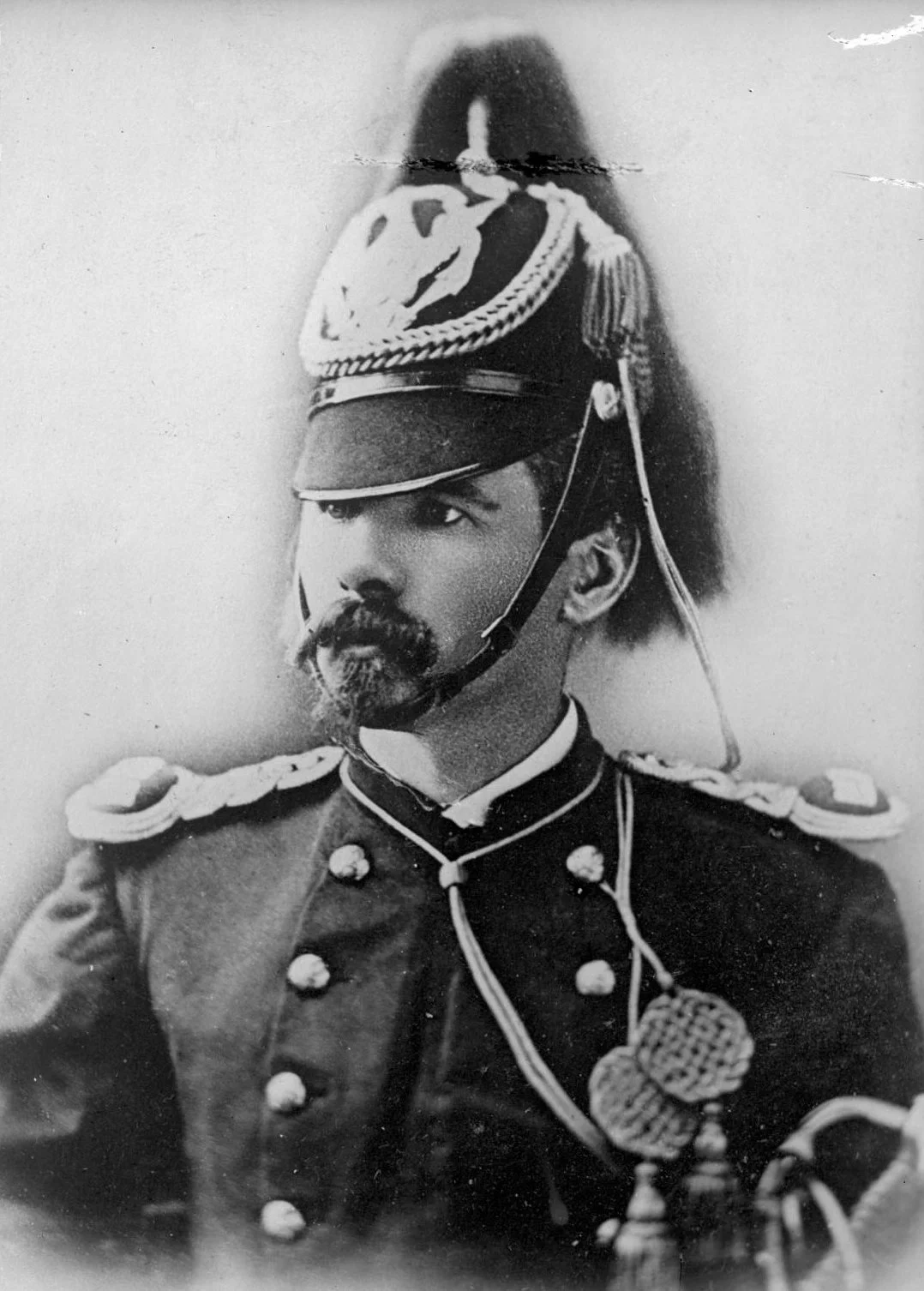
Captain Myles Keogh
Despite this, the pressure continued to mount on Keogh’s men as the indians continued to close the distance, making good use of cover as they advanced up Medicine Tail Coulee¹¹. As the enemy closed, Keogh’s exhausted horses began to panic, and the indians charged into the midst of the handlers, engaging in hand to hand combat and stampeding the animals. The rest of the formation began to collapse at this point, with any attempt at organization breaking down as troopers attempted to disengage any way they could. Only one of Keogh’s men managed to break out, riding his horse while the Sioux gave chase. Just as the last of his pursuers was giving up, however, the man shot himself with his sidearm, falling from his horse within one mile of Reno’s fortified perimeter¹². C, L had collapsed first, then I Company had been overrun, with Keogh falling after a bullet smashed his knee¹³. The last of his men fell in a small group around him.
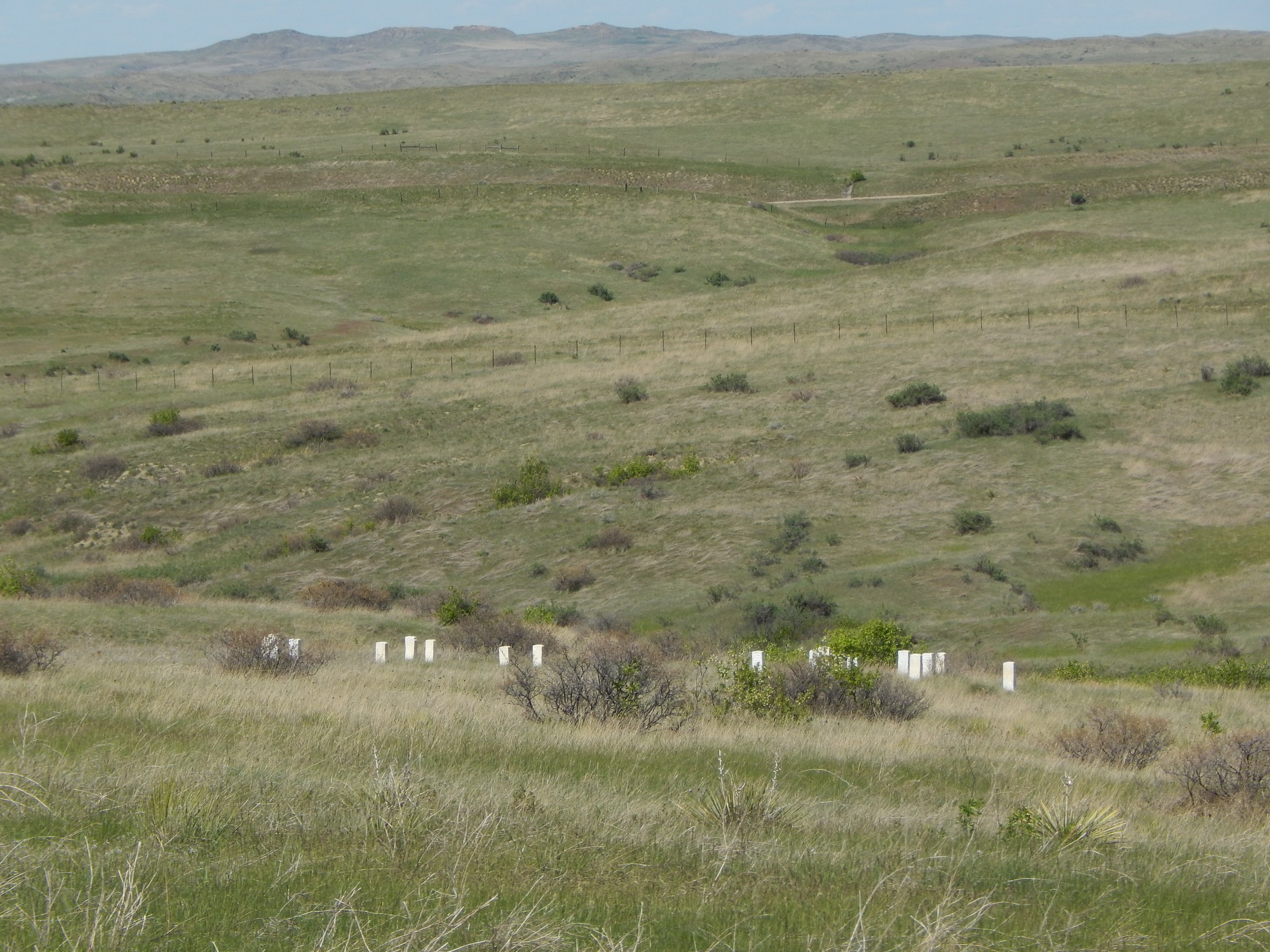
White markers denoting where Captain Keogh and his men fell
Benteen was meanwhile slowly plodding back toward Custer, and was passing the burning burial tipi when Sgt. Kanipe reached them, with Martin on his heels. The orders to move quickly and bring the packs confused the Captain, as the pack train was some distance behind him. Electing to move up without them, they crested a ridge to behold the pandemonium of battle in the valley below, and shortly afterward had been met by Reno, and was ordered by the Major to join his force on the hill. No support would be coming to the remnants of Custer’s command to the north. One officer, Captain Thomas Weir, broke off from Reno with his men from D Company, advancing to a high ridge a mile northward, where they observed fighting about three miles distant, and the signs were not promising for Custer.
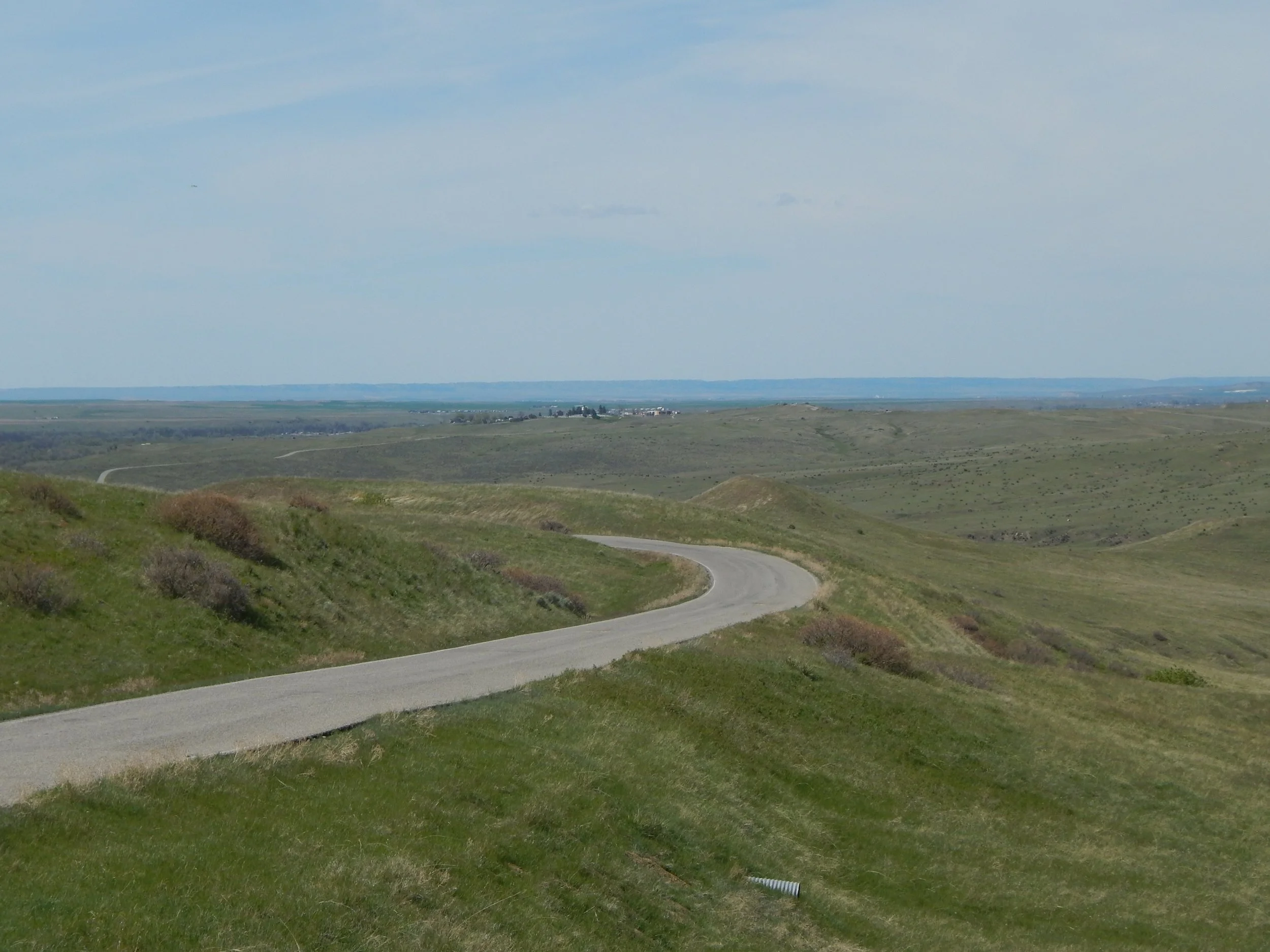
Looking toward Custer’s position from Weir Point
A few stragglers from Keogh’s butchered command desperately scrambled to link up with Custer, under covering fire from the General’s men on their ridge. As soon as they reached the lines, their horses were shot and the carcasses used as improvised cover on the exposed hillside. These proved inadequate, and men continued to fall as the Sioux closed the distance. A charge of Lakota youths who had earlier made a pledge to die in battle charged the position, breaking through the perimeter followed by their comrades. Custer and his surviving troopers dropped their rifles and drew their sidearms, but the end had come. The General fell with bullets in his chest and head, while a few survivors (including Custer’s brother Boston and nephew Autie Reed) desperately made for the river with Mitch Boyer, but all were swarmed and killed by mounted Sioux.
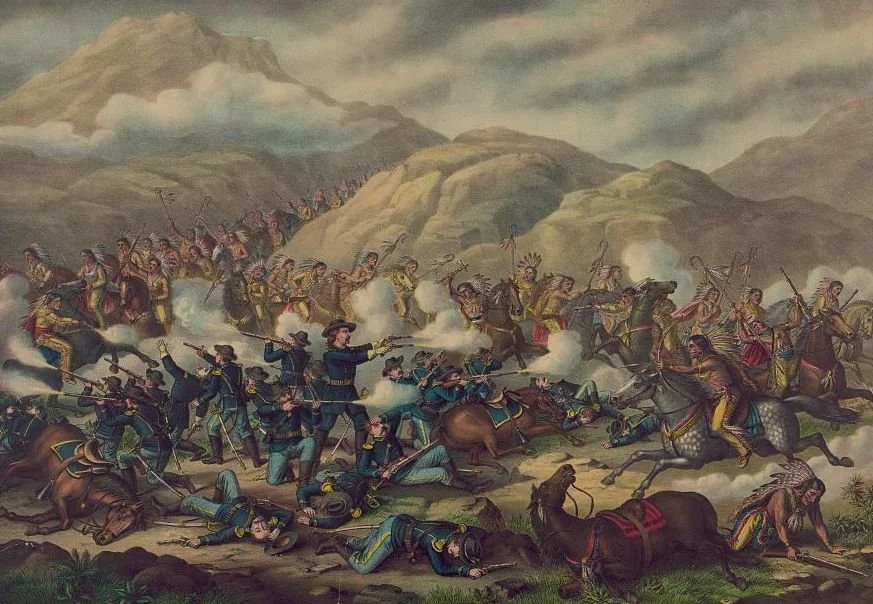
An artist’s depiction of the final moments of George Custer and his command
Siege
Following the destruction of Custer’s command, the Sioux and Cheyenne set about looting and mutilating the dead, despite the orders of Sitting Bull that this must not be done here. Scalps were taken, including that of the Cheyenne Chief Lame White Man, who was mistaken for an Arikara scout.
Meanwhile, the stand of timber where Reno had originally taken shelter was set on fire, forcing those sheltering there to flee as darkness fell. They made their move after dark, moving through passing indians but not being noticed. In a tense moment a group of mounted warriors passed them at the river, but mistook them for friendly Sioux and rode on. The four men (Lt. Charles DeRudio, Pvt. Thomas O’Neill and scouts Fred Gerard and Billy Jackson) reached Reno’s perimeter around midnight*.
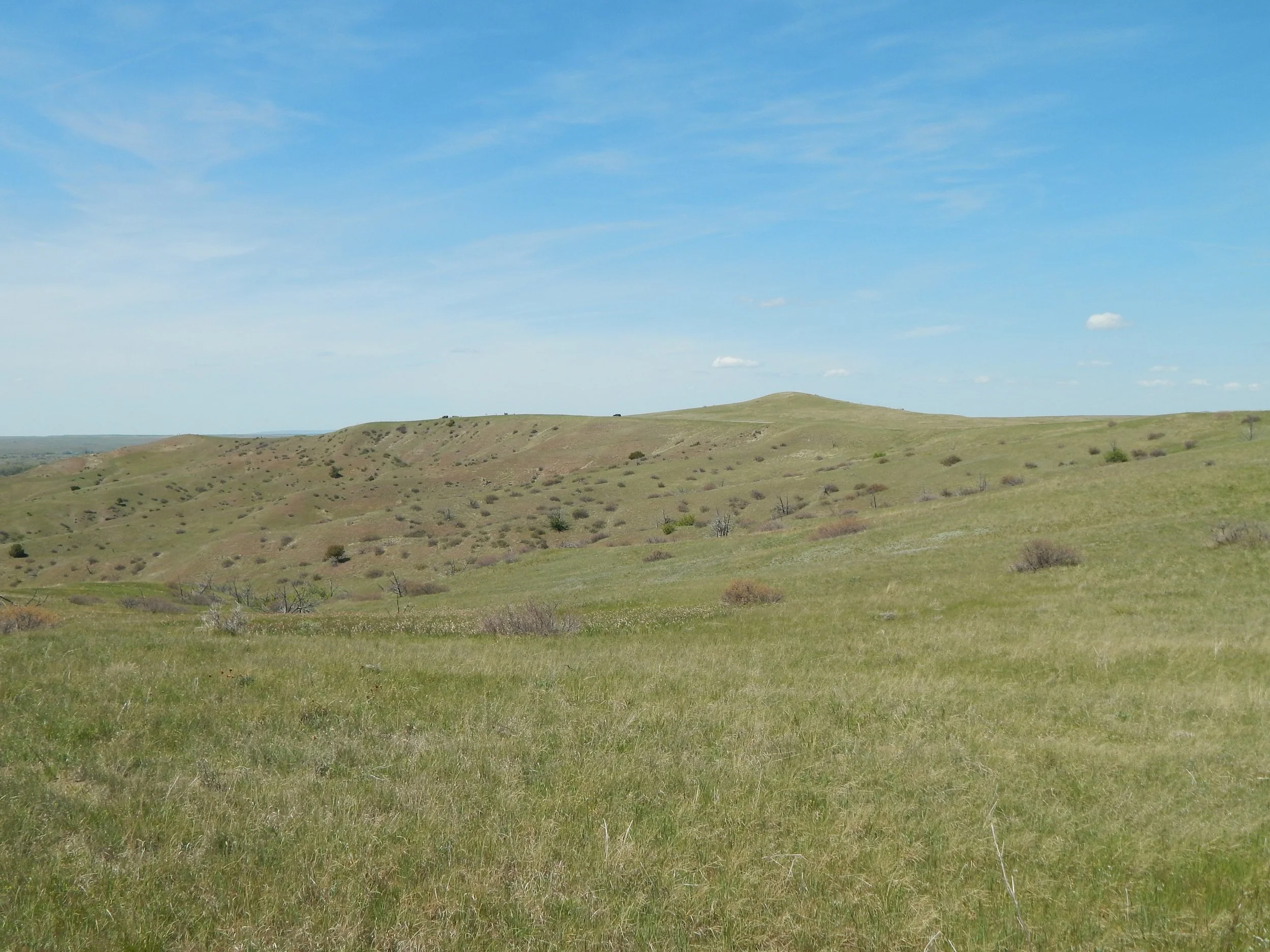
Looking toward Weir Point from Reno Hill
The situation there had stabilized, but remained perilous. Weir’s force had retreated back to the perimeter with a large number of hostiles in pursuit, and Benteen had taken effective command from Reno, who mostly kept to a position in the center near the field hospital. The pack train had also arrived here, allowing the troopers to replenish their nearly depleted cartridge belts. Sniping took some of the troopers as the day came to an end, and the lack of water was rapidly becoming a crisis, particularly for the wounded laid out at the center of the depression.
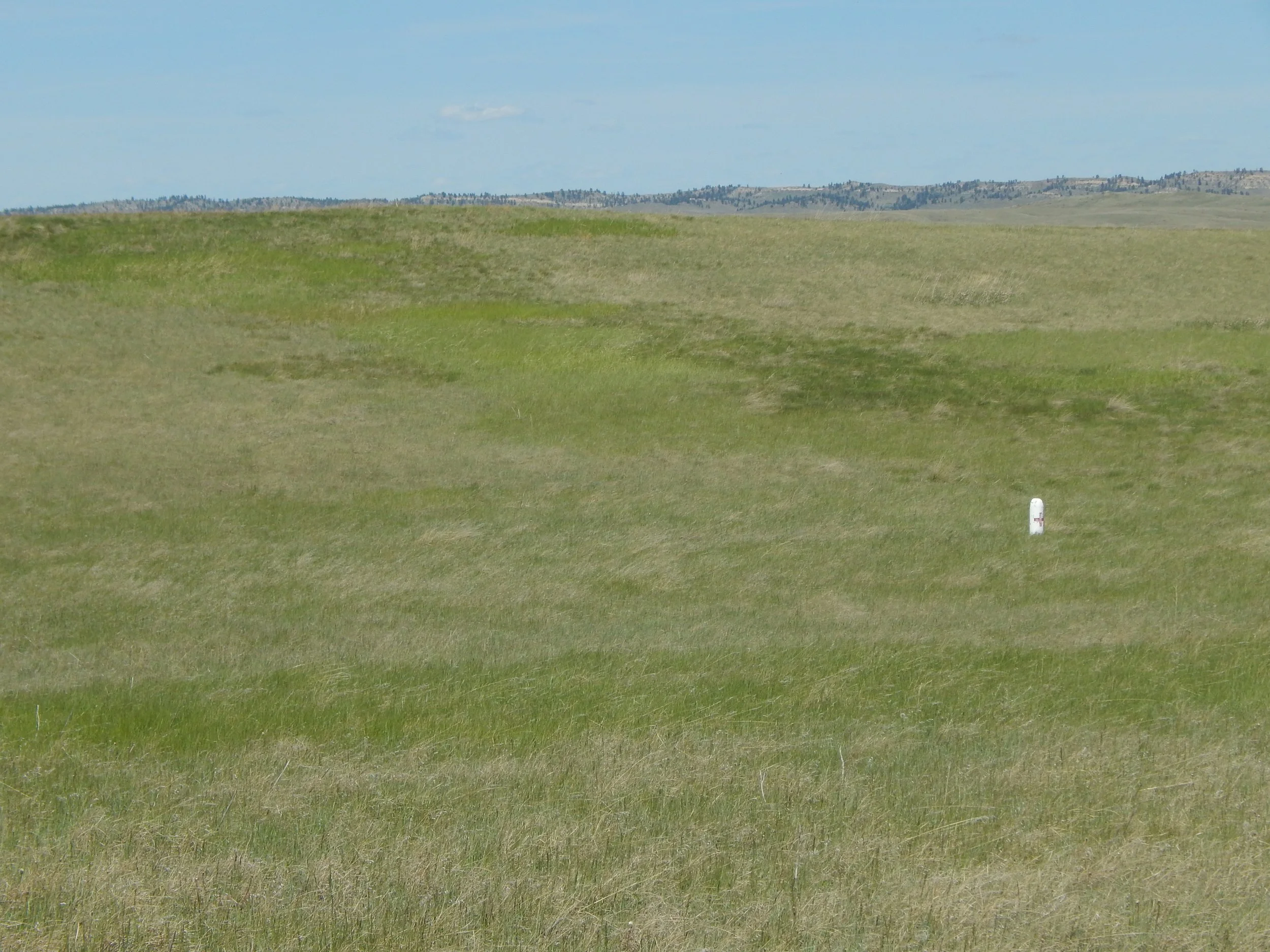
The depression at the center of Reno’s perimeter. The white marker marks the site of the hospital
Most officers and men of the command were hopeful that Custer and his men were merely pinned down as they were, or had even managed to break off and move north to meet Gibbon and Terry. Some even took this to be that Custer had abandoned them to their fate here. As night fell, the men set to digging crude earthworks and erecting barricades with empty ration and munitions crates.
The Montana Column was indeed on its way, but had had rough going over the terrain and likewise were short of water. Their scouts had reported smoke along the Little Bighorn, and Terry had rode up with the cavalry, while the infantry made camp along the Bighorn River. Marching into the night, they made camp still unaware of the fate of General Custer and his men along the Little Bighorn.
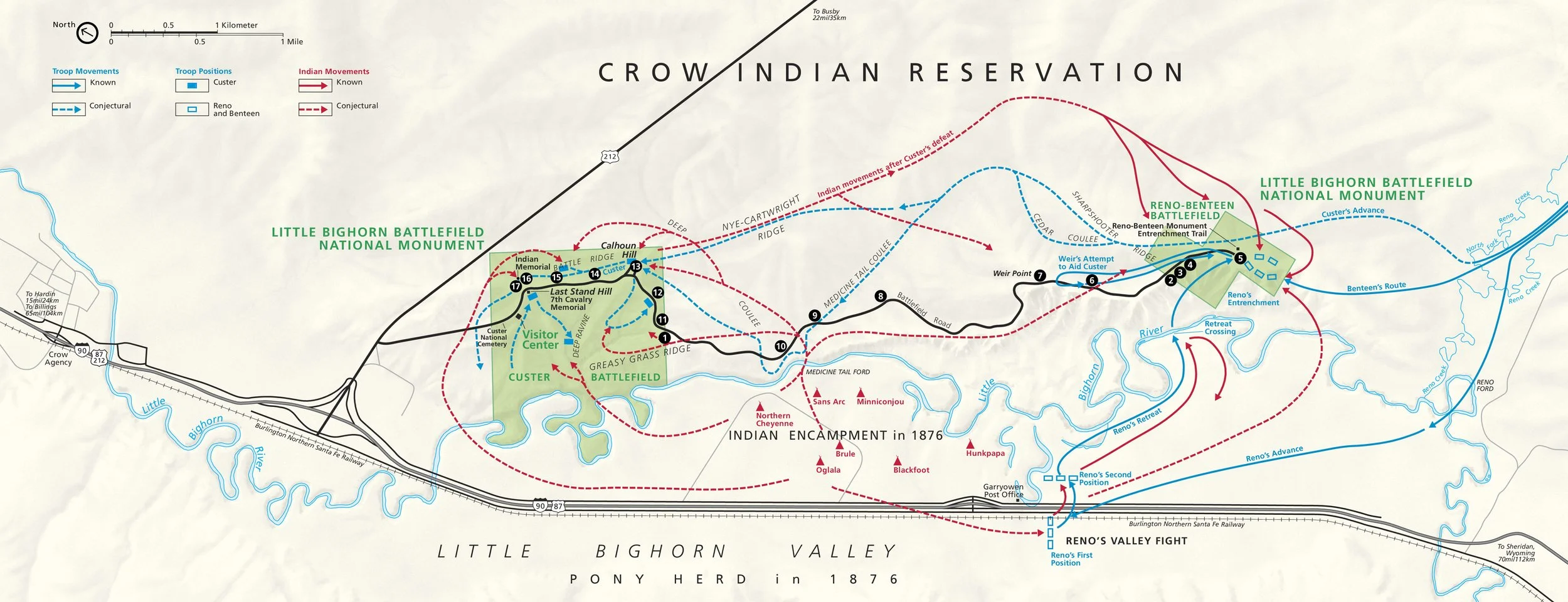
A map of the Little Bighorn Battlefield Park
US National Park Service
Research Trip
The Little Bighorn Battlefield National Monument was the primary destination of the May 2026 research trip, and was reached in the afternoon of the second day. Due to the construction of a new visitor center being severely delayed (comment withheld here), the park itself was only open on weekends at that time, which severely hampered the timetable of the trip.
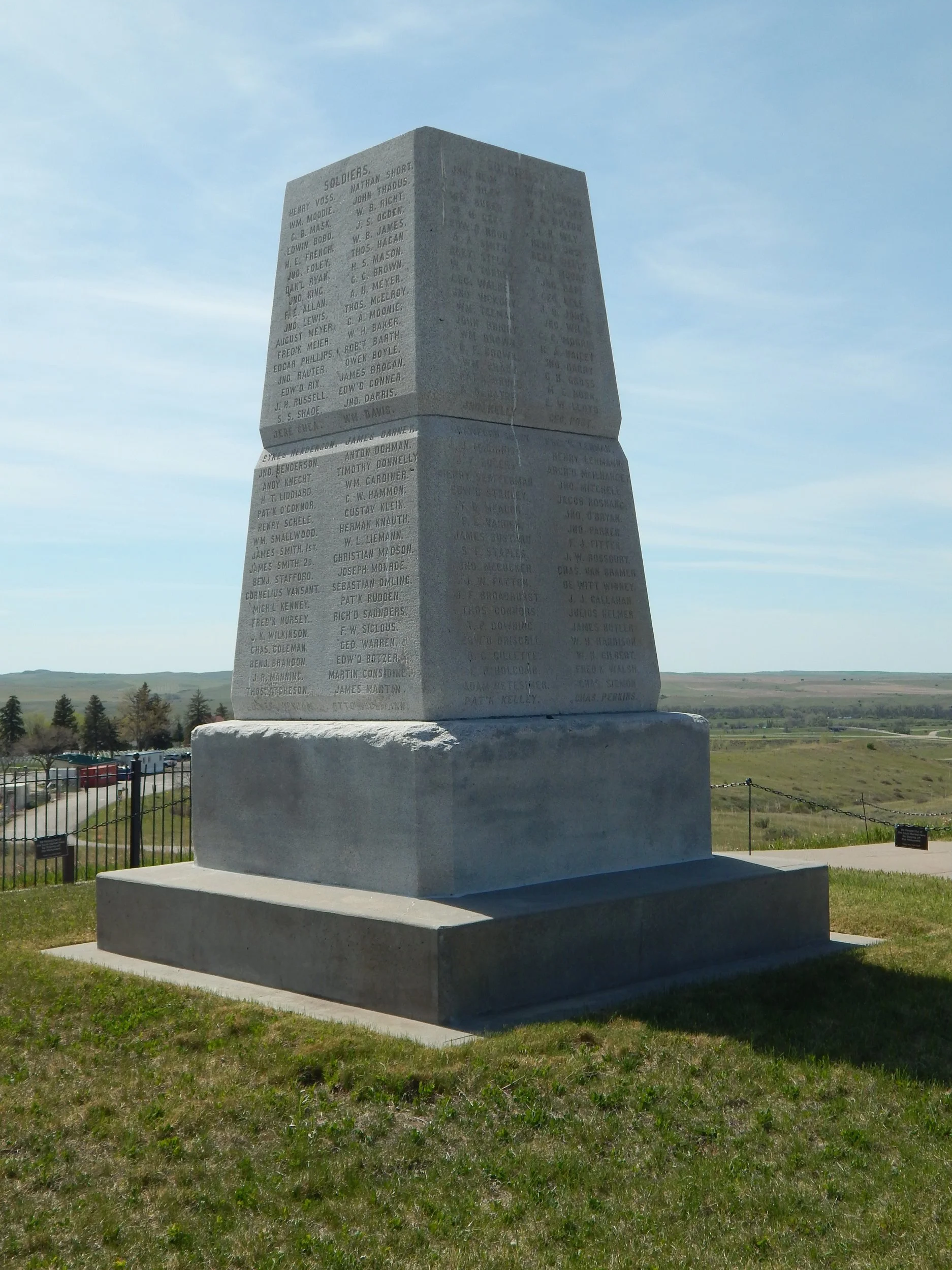
The Last Stand Monument
Also disappointing was the nature of the park itself. Excursions beyond the tour road were discouraged, and as a result many areas could not be reached. Taking the path backwards due to time constraints, we started at Reno Hill, before moving on to Weir Point, Medicine Tail Coulee, and finally to Last Stand Hill. This today contains a large monument as well as an enclosure where markers show the spots where the bodies of the 7th Cavalry were located. It is notable that the Little Bighorn is the only such battlefield park in the country where markers are scattered all over it, denoting where bodies were found with white marble headstones. Newer red granite stones also identify where the warriors fell as well.
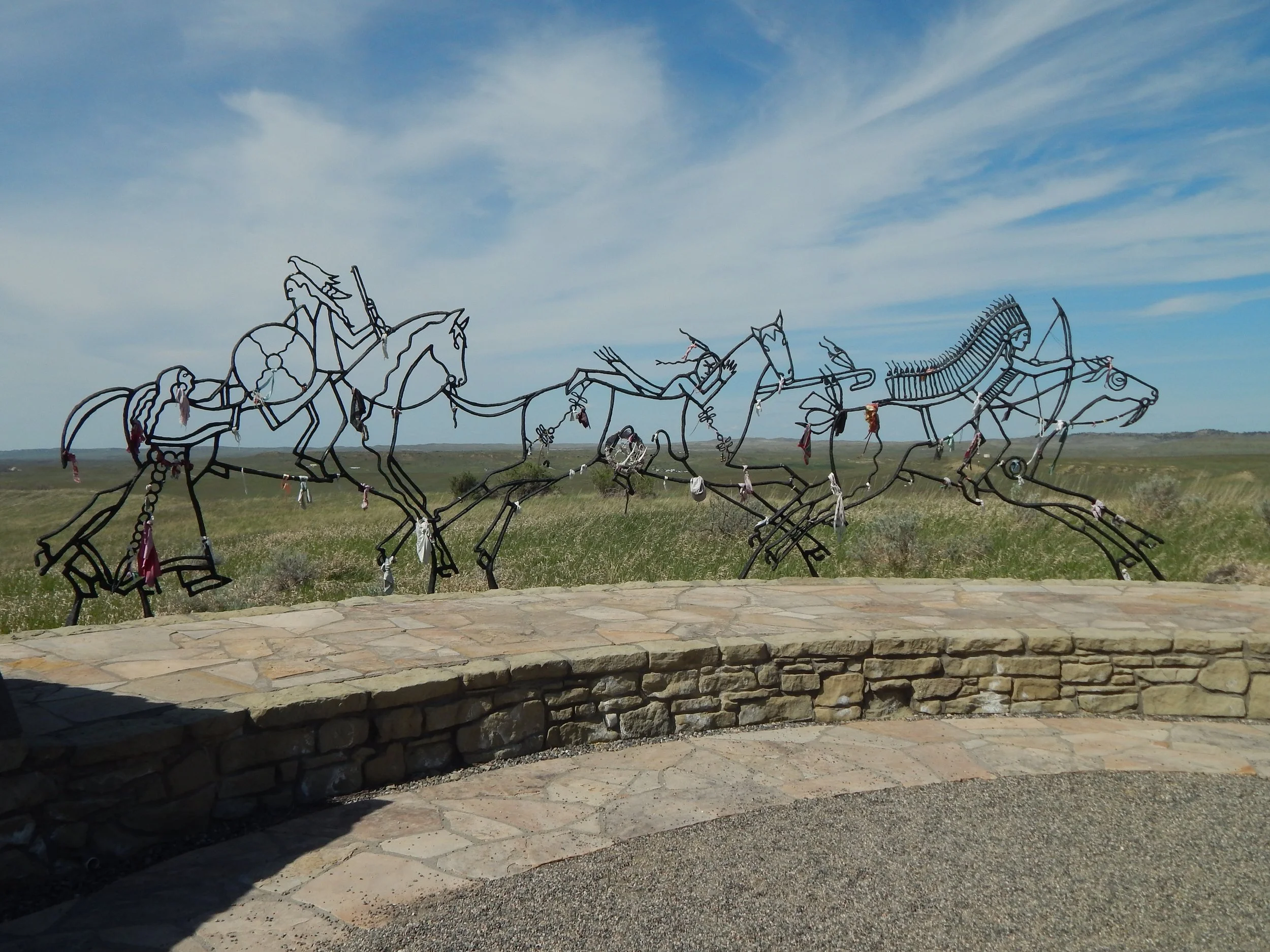
The Native American Memorial
Across from the Last Stand monument is the Native American Monument, with a striking metal relief of mounted warriors riding into battle, with a “spirit gate” facing the Last Stand monument, to welcome the fallen soldiers in reconciliation. Adjacent to the site is the Custer National Cemetery, where many famous names from the battle, including Marcus Reno, are buried. The base of the Last Stand Monument contains a mass grave for the unidentified remains recovered on the field, while Custer himself was removed and reburied at West Point in 1877.
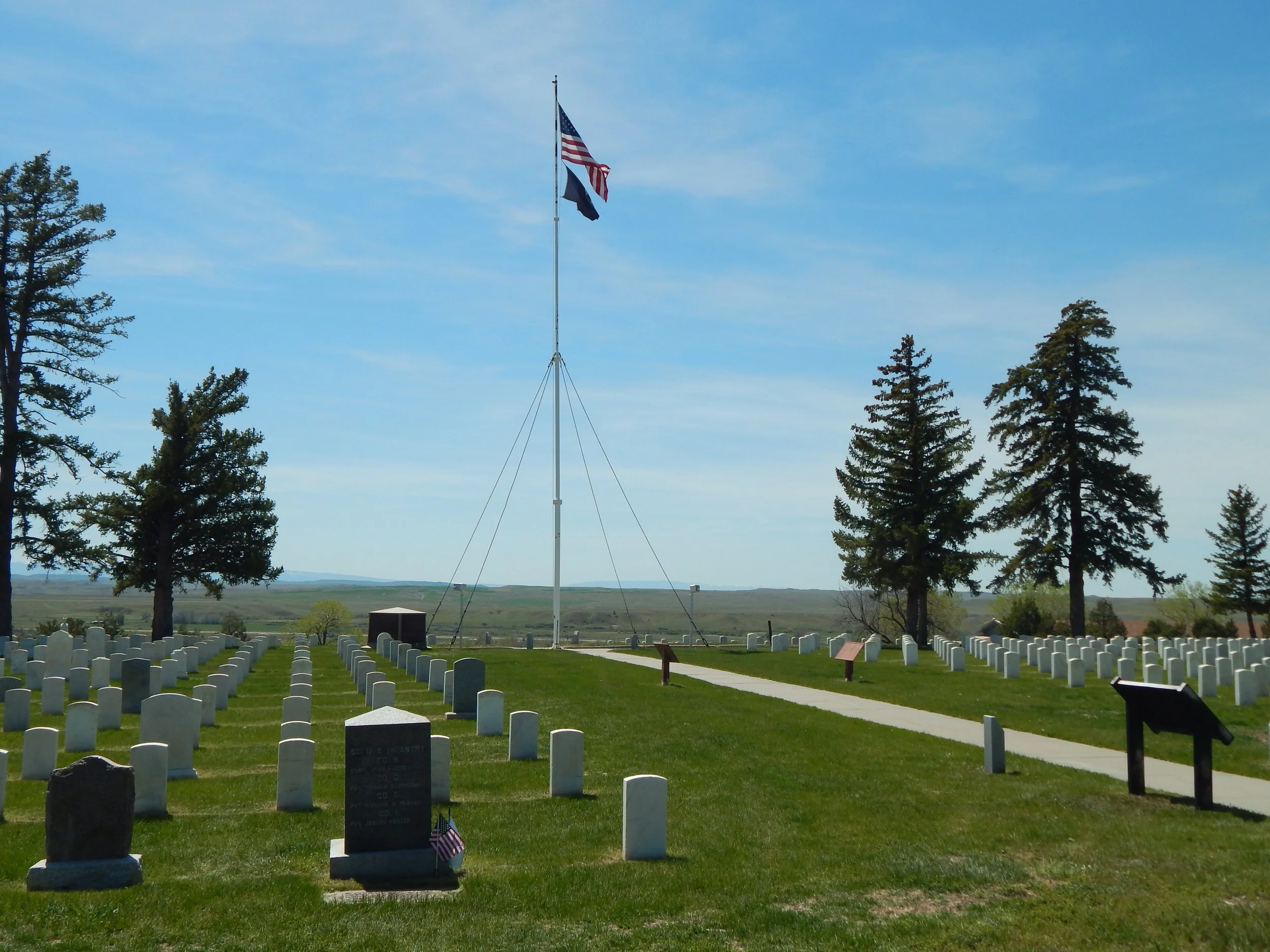
Custer National Cemetery
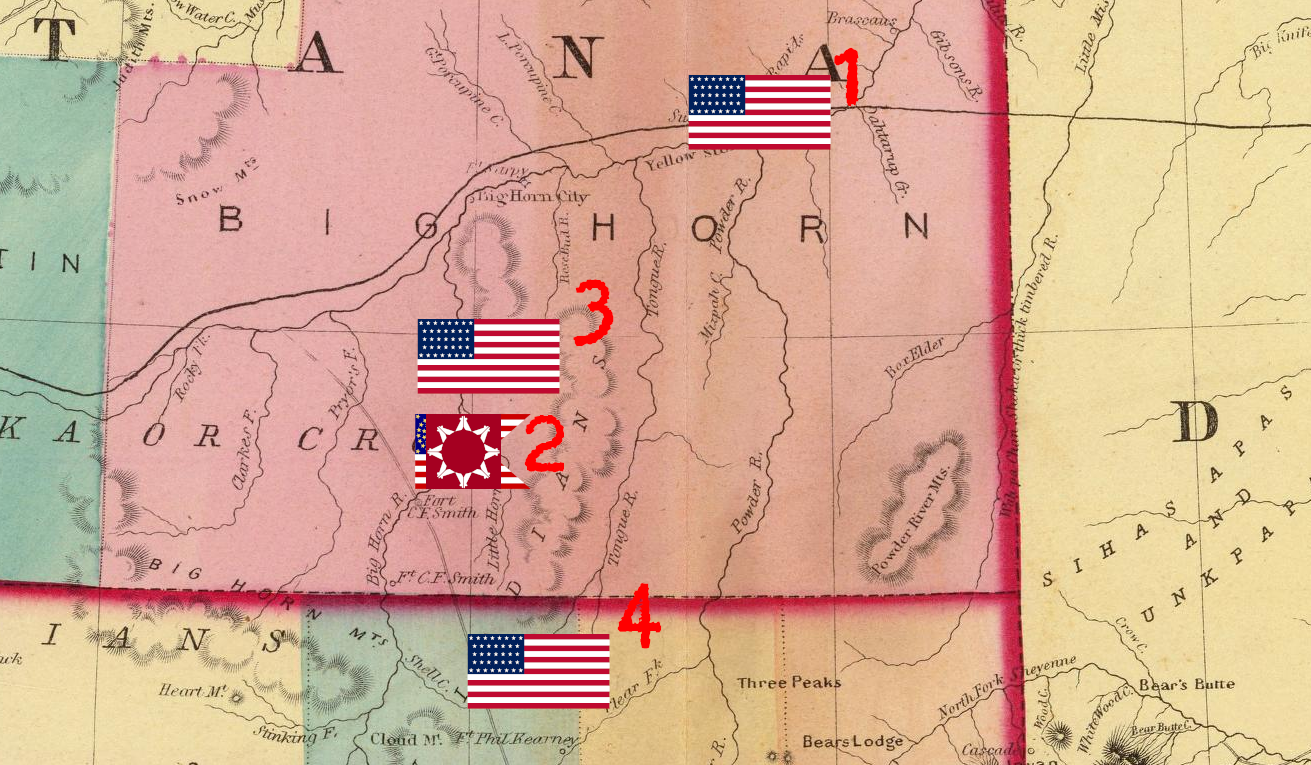
1. Powder River Depot
2. Little Bighorn Battlefield
3. Montana Column - GIBBON - Bighorn River
4. Wyoming Column - CROOK - Goose Creek
-
Miller, p.46
Robinsin, p.175
Donovan, p.212
Miller, p.76
Miller, p.88
Robinson, p.181
Donovan, p.236
Robinson, p.184
Donovan, p. 244
Miller, p.123
Robinson, p.192
Robinson, p.193
*Sources differ, and some state that they arrived the following night, the 26th.