Tuesday, June 27
The remnants of the 7th Cavalry woke to find the enemy had fully vacated the area, and at 0900 a column of dust to the north signaled the arrival of Terry and the Montana Column. Two Arikara scouts and two officers were dispatched to make contact, reporting to General Terry shortly afterward. They reported that they had last seen Custer riding northward along the bluffs, but were not sure of his current location. His eyes clouded with tears, Terry replied: “We have found him”¹.
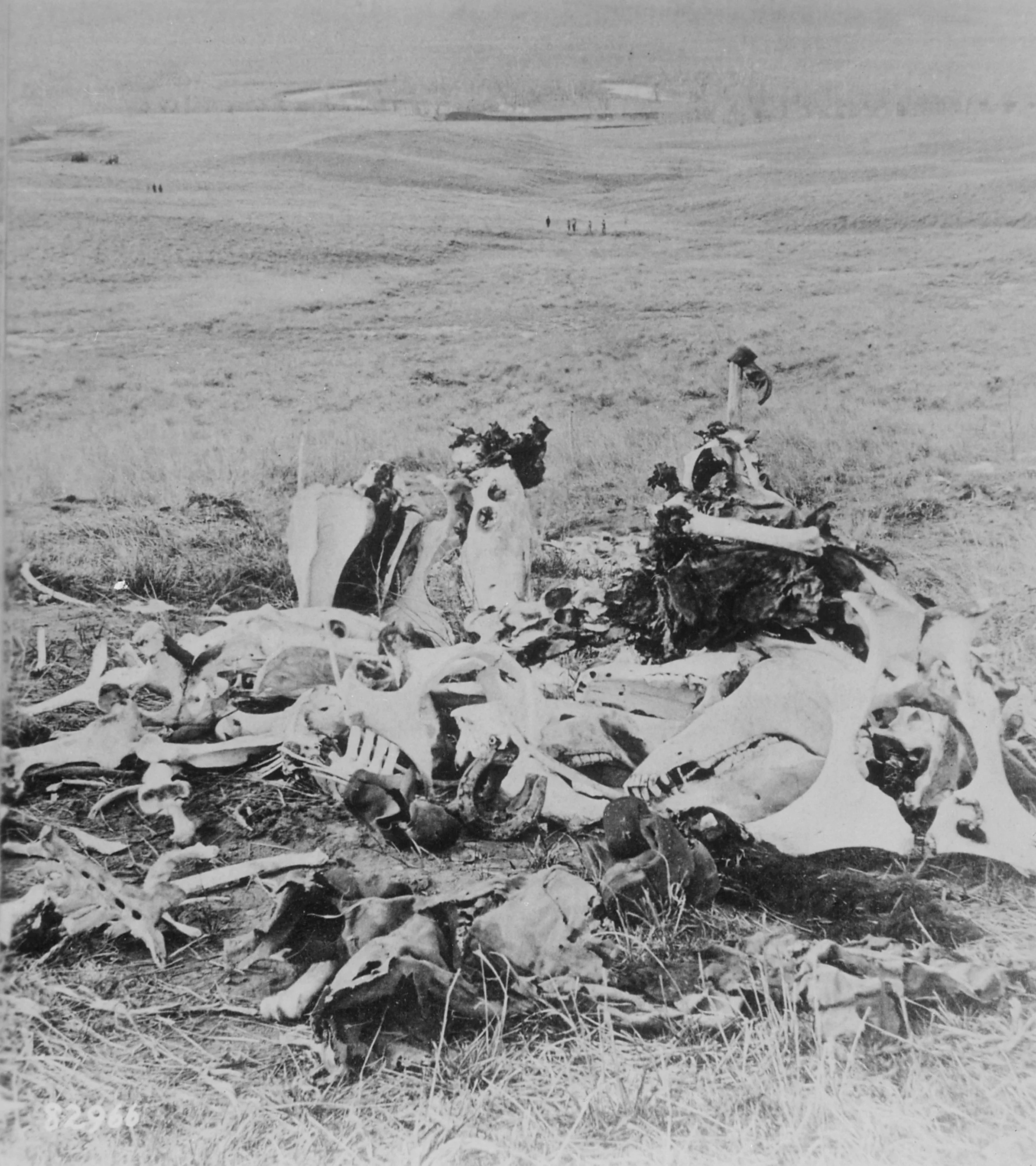
The remains of horses on Last Stand Hill, photographed on a later expedition to the site
Terry and his men had encountered first the remains of the massive village, with two tipis still standing as burial lodges for the fallen from the recent battle. A number of dead horses were visible on a nearby hillside, along with some 197 dead soldiers, including Lt. Colonel George Armstrong Custer. Terry was brought this grim news as he inspected the abandoned village, and it was here that the 7th’s emissaries reached him. Terry was quickly brought to Reno and Benteen, where the latter asked the General about the status of Custer.
“To the best of my knowledge and belief he lies on this ridge about four miles below here with all his command killed”
Benteen refused to believe it, stating his conviction that Custer had again simply abandoned him as at the Washita. Terry in turn sent Benteen and Capt. Weir with Lt. Bradley to what is today known as Last Stand Hill, where the remains of Custer were formally identified. Identification of the bloated remains commenced at once, and would take the next two days. Only one survivor was found in the abandoned village, the wounded horse of Captain Keogh, Comanche.
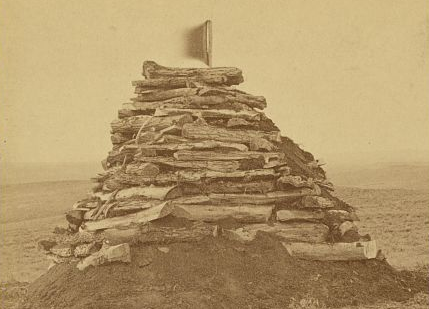
The crude monument erected over the burial site on Last Stand Hill
News of the disaster slowly spread back east. One Crow scout, Curly, arrived at the Far West on 28 June, and the next day a detail arrived with confirmation from Terry. The wounded began to arrive at the steamer on 30 June. The news broke in the eastern press on 4 July, dampening the US Centennial celebrations, even though the military channels took longer, leading to some confusion. Regardless, the campaign was over, now would come the assigning of blame and the prosecution of the wider war.
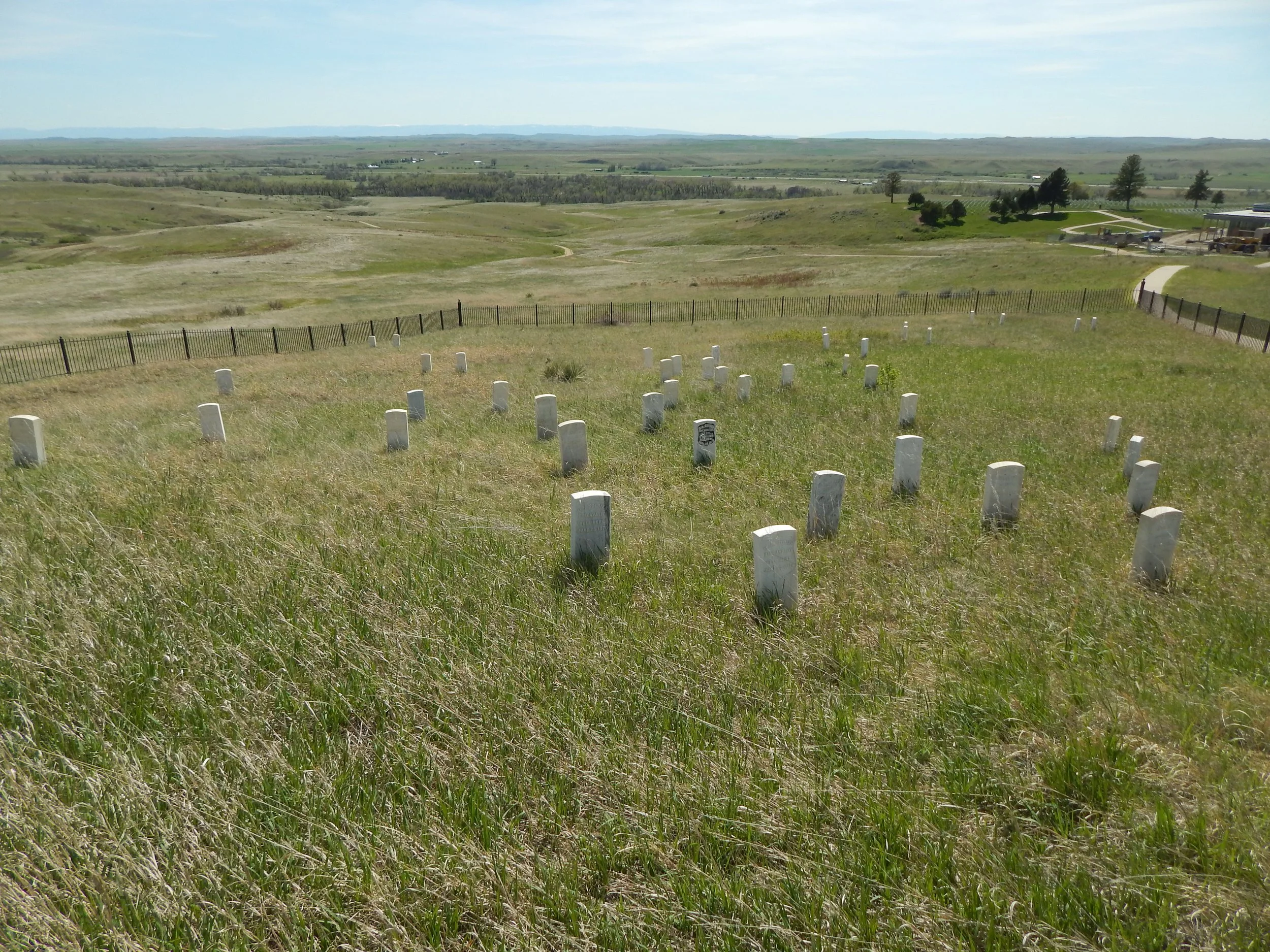
Modern markers noting where the corpses of Custer and his command fell atop Last Stand Hill. The blackened marker belongs to General Custer.
-
Donovan, p.306
Robinson, p.210