Fall, 1944
Chapter 41
“I Have Returned”
October - December
Europe: The Western Front
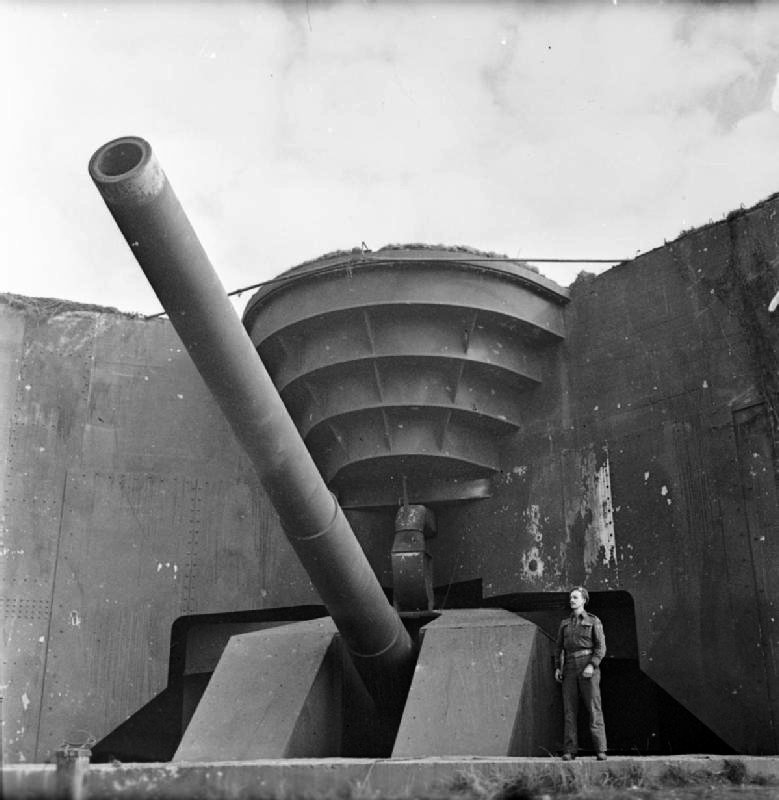
A soldier stands next to a massive German coastal gun near Calais
As the year came to a close the Western Front saw the Allies consolidating their massive gains since the invasion six months earlier. While the Americans captured the city of Aachen, the British and Empire forces were pushing northward in the aftermath of the Market-Garden fiasco, attempting to cross the border into Netherlands en masse. In September, the Canadians invested the German stronghold around Calais, intent on capturing the port and silencing the large German coastal batteries in the vicinity in order to clear the path of shipping supplying the armies on the continent. This operation was completed in early October, with the garrison surendering quickly after a heavy air and artillery bombardment.
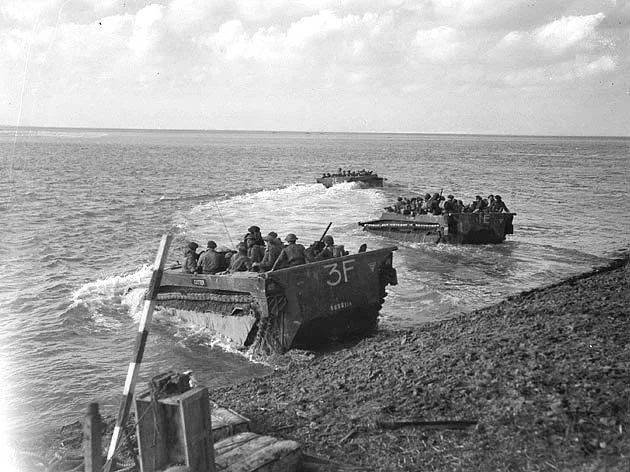
Canadian troops aboard alligators cross the Scheldt
Following this, the Canadians moved to secure the area of the Scheldt; the seaway approaching the port of Antwerp. Here the Germans had been well dug in since before the invasion, and the Fuhrer himself had issued orders that it was to be held to last despite the lack of supplies to the German forces here, by now nearly cut off aside from a strip of land along the coast. The thrust came in early October, and led to a brutal, month long slog in the miserable, flooded wetlands of the estuary. By the end of October, the Germans were isolated on Walcheren island, and by early November they had finally been cleared, with it taking until the end of the month for mine-clearing operations in the estuary to be completed.
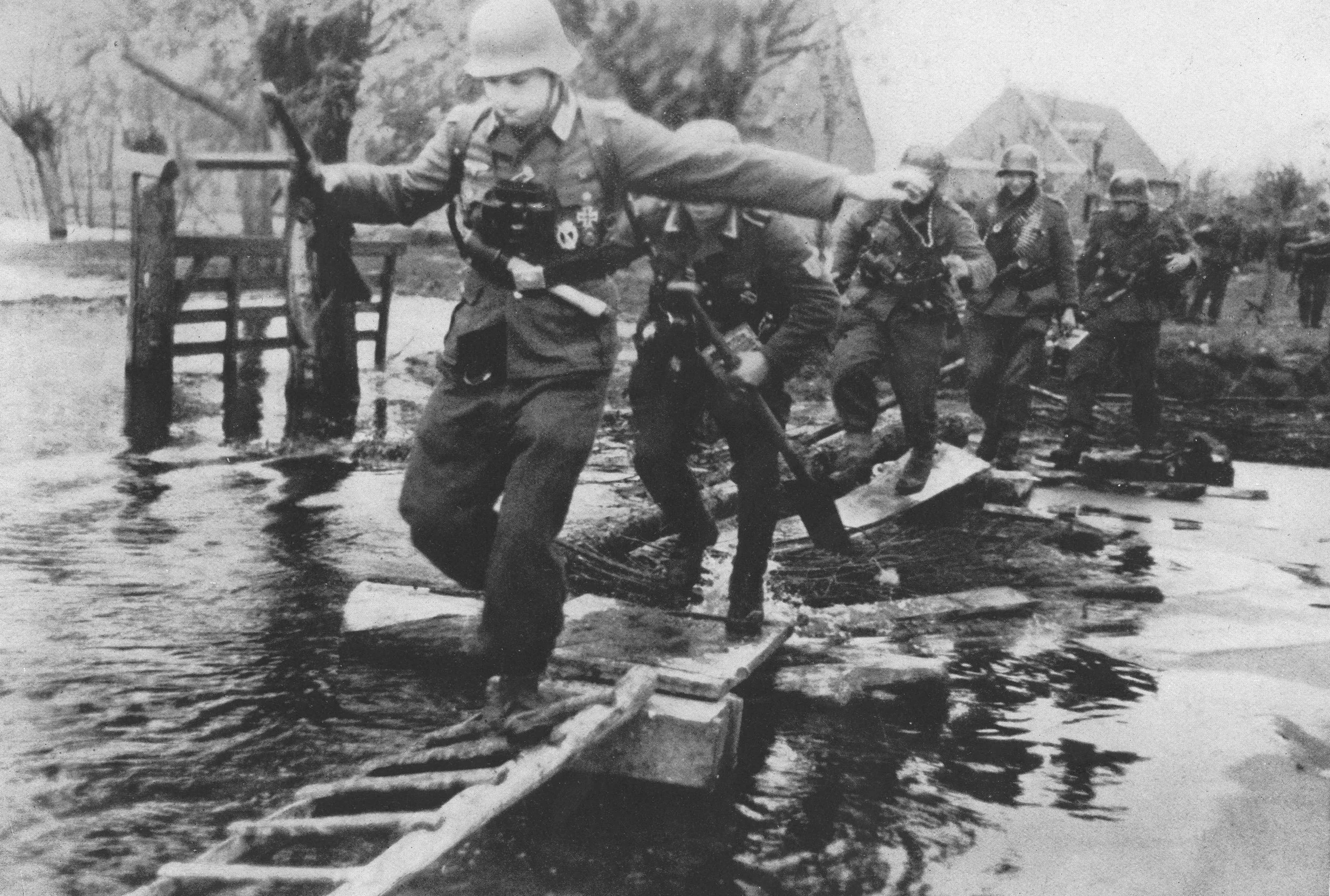
German soldiers cross a makeshift bridge during the fighting for the Scheldt
Meanwhile, in mid November Anglo-American forces launched Operation Clipper: an offensive intended to eliminate the salient around Gielenkirchen, situated at the junction of American and British lines. late in the month, the town had been captured, and the bulk of the adjacent Siegfried Line defenses reduced, although the deteriorating weather as winter set in prevented the Allies from achieving all of their objectives. The operation was also intended to secure the American flank as they pushed into the Hurtgen Forest.
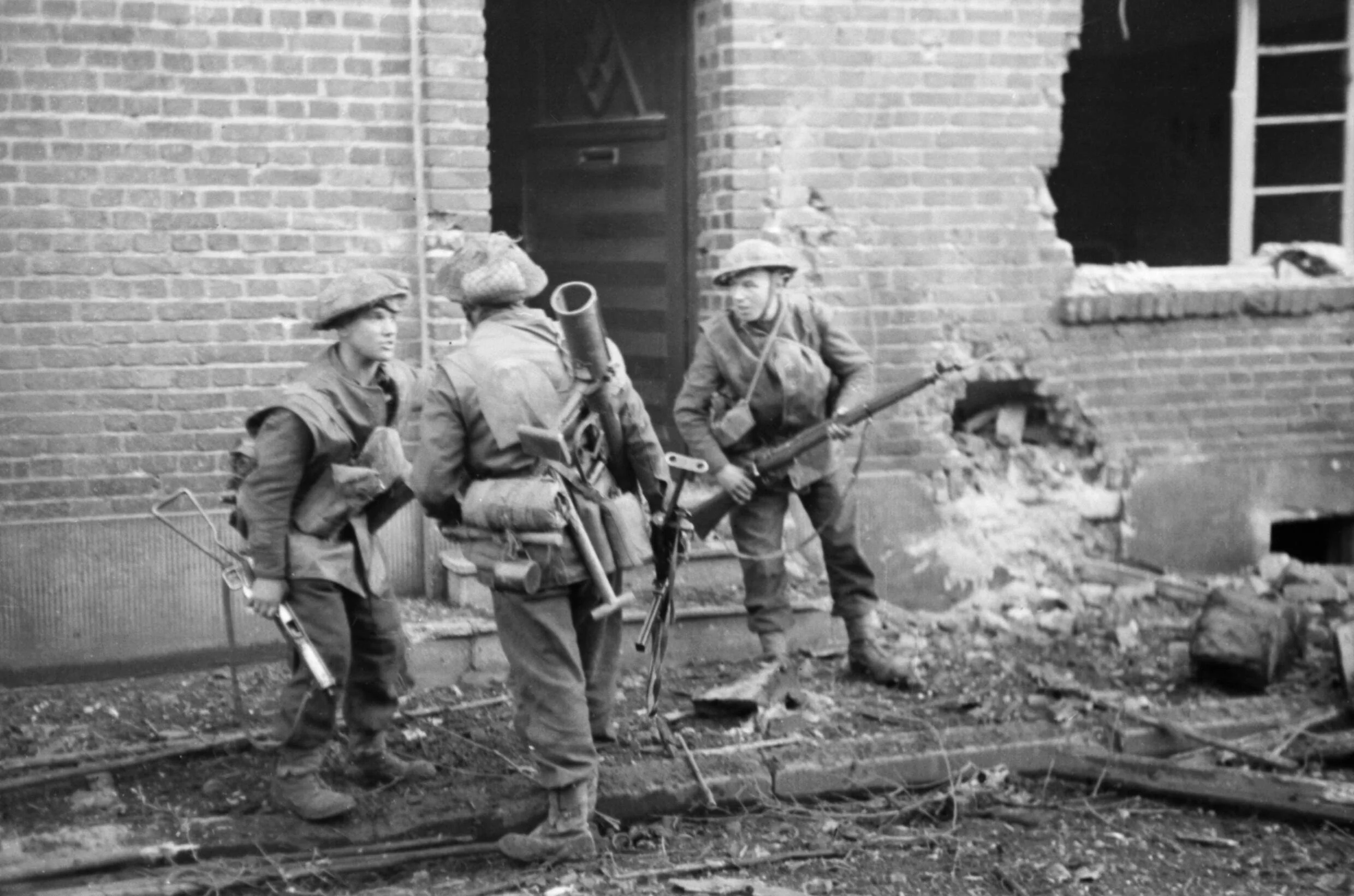
British soldiers on the streets of Gielenkirchen
American units had first entered the forest along the German-Belgian border in September, but progress had been agonizingly slow. Determined to stall the American thrust into the German heartland, Field Marshal Walter Model’s men were deeply entrenched and offered relentless resistance. The situation did not improve as the winter set in, with conditions on the ground worsening as the Allied air forces found themselves increasingly unable to provide support in the few areas open enough to be effective in the first place. The battle for the Hurtgen Forest would see brutal fighting, effectively stalling the American drive in the Reich as the winter arrived.
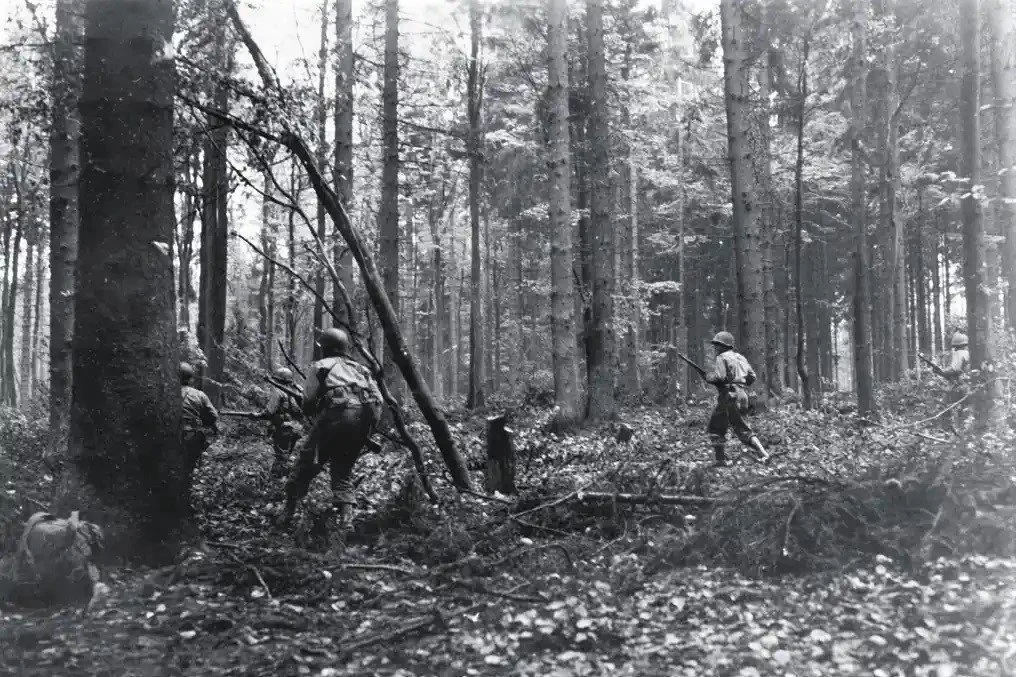
American soldiers in the Hurtgen Forest
In one notable episode, in early November the Americans were engaged in heavy fighting with the Germans along the Kall River, when a truce was called by a Wehrmacht doctor in order to treat the innumerable casualties strewn across the battlefield. American and German medical personnel worked together over several brief ceasefires, caring for both side’s wounded strewn about the forest floor. Decades later, a monument would be erected to his honor on the site.
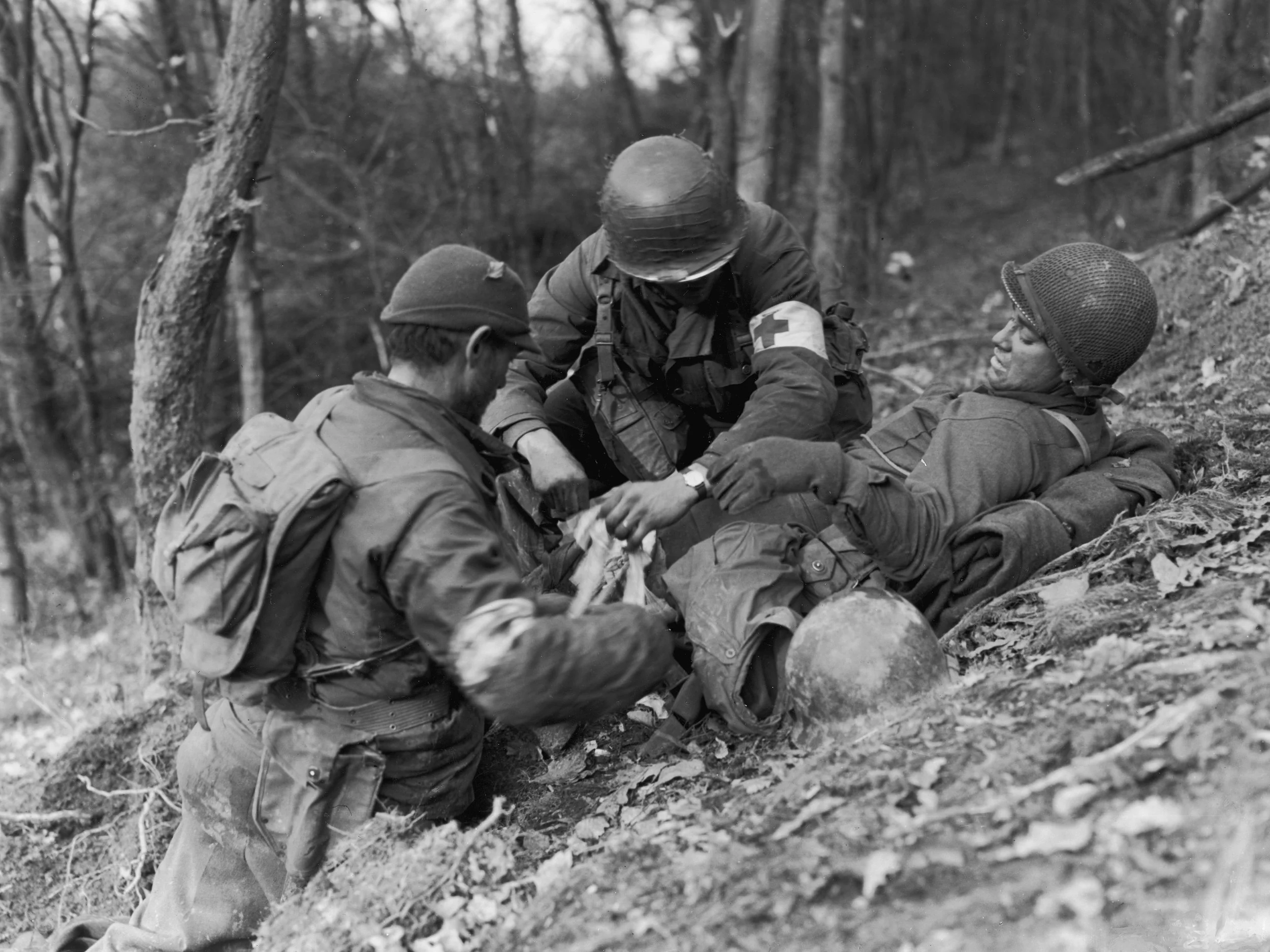
American medics treat a wounded GI in the Hurtgen Forest
Europe: The Eastern Front
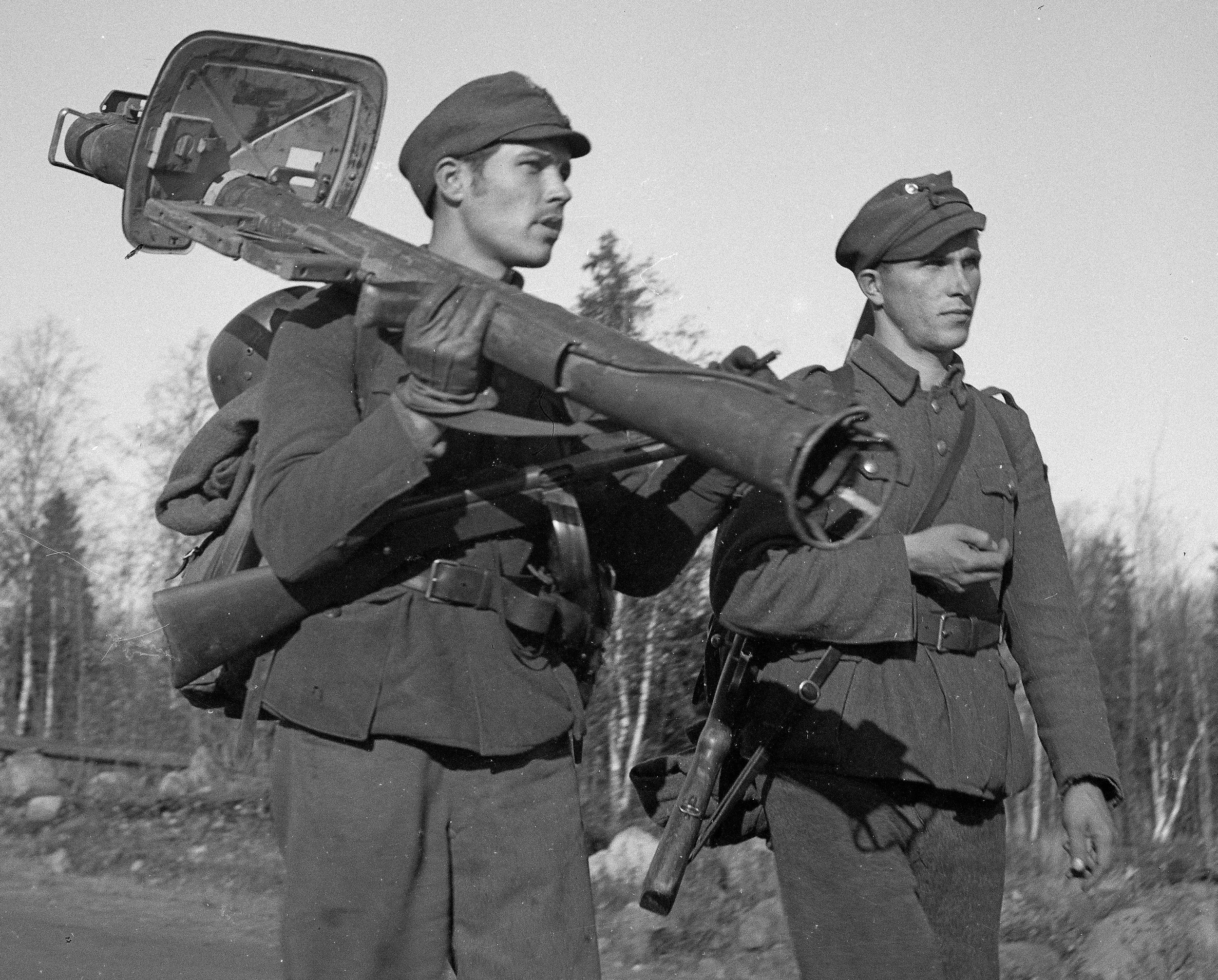
Finnish solders during the pursuit of the retreating Wehrmacht in late 1944
As winter set in in Finland, the German forces stationed there found themselves continuing their attempt to withdraw toward Norway, harassed by their estwhile allies as they went. In early October, the Germans began to execute scorched earth orders, while Finnish troops were landed by sea to interdict their movements. This accompanied the deceision by OKW to pull all of their troops back beyond the Norwegian border, setting up a new defensive line farther south. By the end of the year, the Germans were almost entirely pushed from Finland, and Soviet troops had crossed the Norwegian frontier in pursuit.
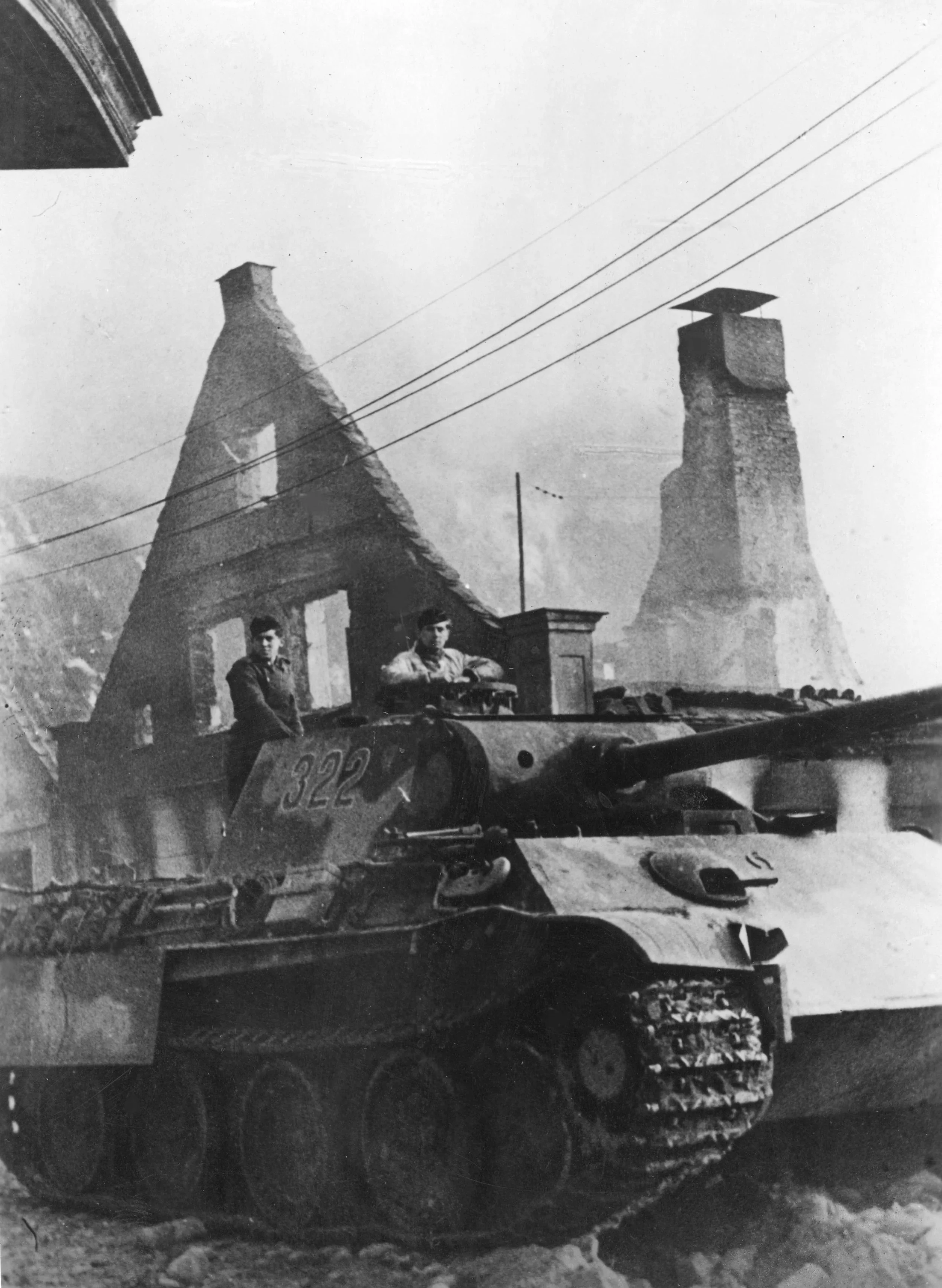
A German panther tank in action during the fighting around Gumbinnen
Meanwhile, the Soviets were poised on the borders of the Reich at East Prussia, and laid siege to the city of Memel on the Lithuanian border. As Memel was isolated, the Soviets attempted to launch an offensive into East Prussia proper by striking at Gumbienen, but were halted by strong German forces that had coalesced there after the retreat over the summer. Despite some gains, the Germans were too well dug in, and the Germans were able to retake Gumbiennen two days after the Soviets captured it. The offensive stalled by the end of October, leaving the Soviets to plan instead to renew the attack in the spring. As the year came to a close, the lines were mostly static in East Prussia, as well as the substantial German force trapped on the Courland Peninsula just north of Memel, unable to break out but also strong enough to prevent the Soviets from overrunning them.
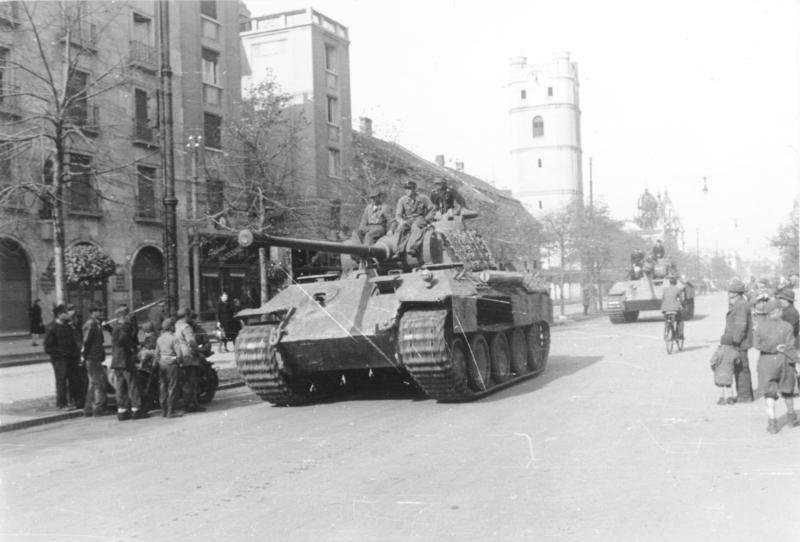
German tanks roll through the streets of Debrecen, Hungary in October of 1944
Farther south, in early October the Soviets, now joined by the formerly Axis-alligned Romanians, launched an invasion of Hungary. Hoping to break through the Carpathian Mountains, the Soviets first blunted an ill-conceived German strike ordered by the Fuhrer in the same region. Breaking through the weakend Hungarian frontline, Soviet forces began to advance rapidly on Arad, although the other wing of their planned pincer encountered far stiffer resistance from Wehrmacht panzer divisions stationed in the area.
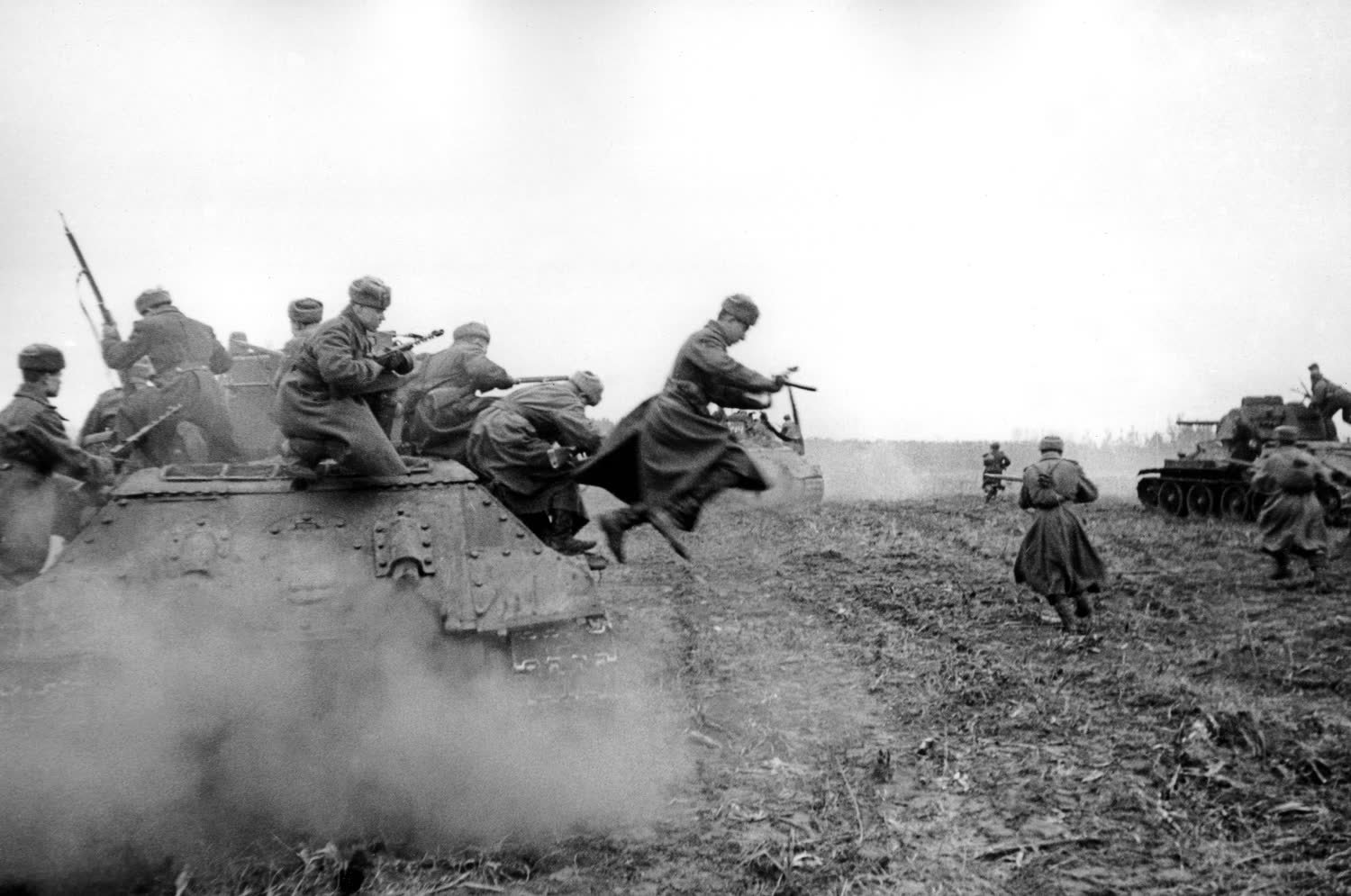
Soviet soldiers dismounting tanks to engage Axis forces in Hungary
Late in the month, the Soviet and Romanian forces were able to break through after crossing the river Tisza, and despite some tactical success with an armored counterattack the city of Debrecen, the second largest in Hungary, was under communist control by the end of the month. The result was an increase of pressure on the capitol, Budapest, as Soviet spearheads approached the city in November, and this pressure would lead the ailing government of Miklos Horthy to the breaking point. As for Budapest itself, by the end of the year it remained in German hands, but Soviet forces enveloped it entirely in late December.
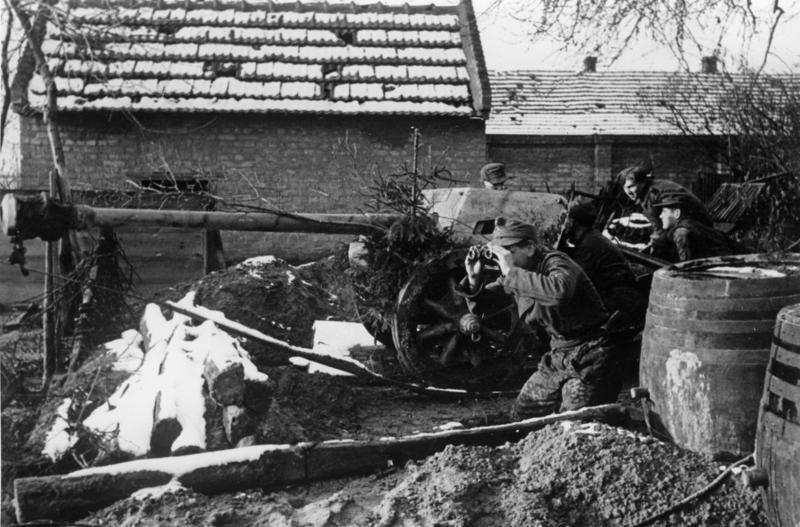
A German anti-tank gun position near Budapest
German Federal Archives
While this was happening, yet another Soviet offensive had been in action since late September, with the Red Army driving into Yugoslavia from Romania and Bulgaria. The situation here was already precarious for the German occupation forces, as their local puppet regime was barely more than a paper construct, and their own forces had lost effective control over much of the country due to the ceaseless resistance from the various resistance groups active in the country.
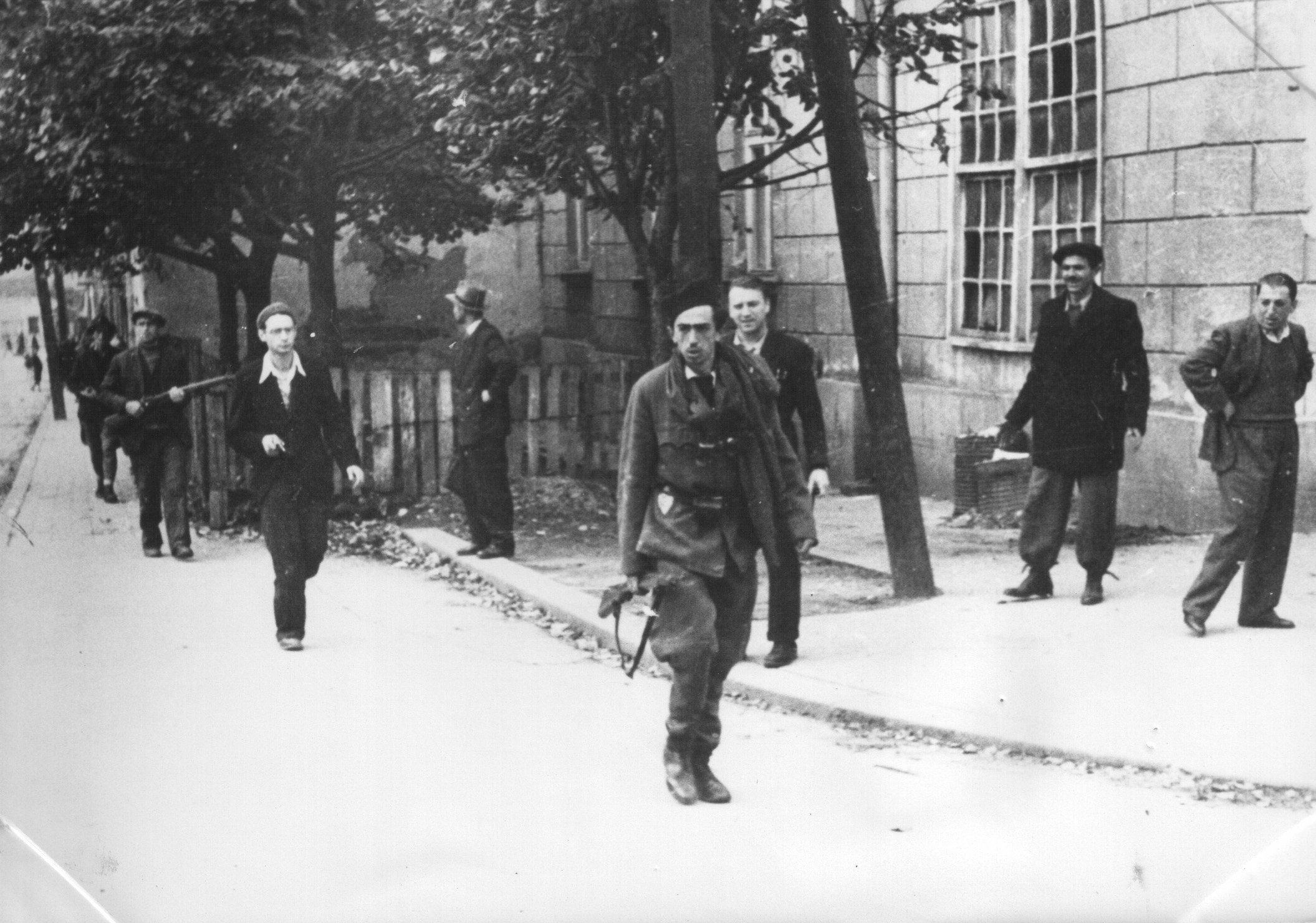
Yugoslavian partisans on the streets of Belgrade
Supported by Bulgarian troops (many already inside Yugoslavia from their recent status as Axis troops), the Soviet drive was ready to strike at the capitol city of Belgrade itself by mid October. The Germans had done what they could to redeploy troops to hold along the line of the Danube, but the position was untenable. The lines were broken and Soviet forces and Yugoslav communist partisans were able to enter Belgrade by the end of the month, and subsequently continued to push the Germans northward for the duration of the year.
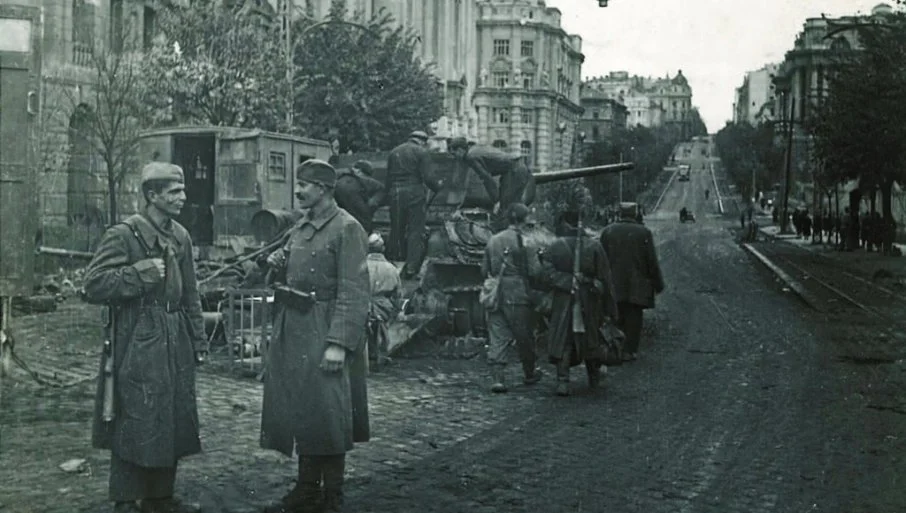
Partisans and Soviet armor on the streets of Belgrade
Europe: The Italian Front
As the year came to a close, the Germans remained dug in along the Gothic Line in northern Italy. On the Allied right, along the Adriatic coast, the British continued their drive northward, crossing the vaunted Rubicon in the opposite direction of Caesar two millennia before and driving toward Ravenna. This capitol city of the late Roman Empire would fall to the British 8th Army in late November, leaving the Germans to dig into their fallback lines along the river Senio just north of the city.
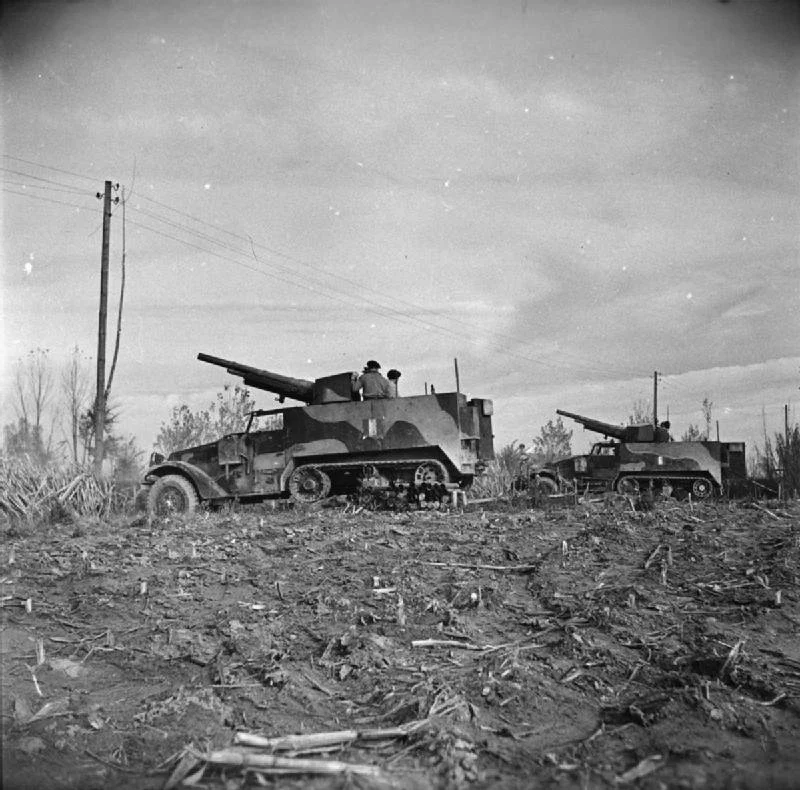
British self propelled guns in action near Ravenna
Meanwhile, the Americans were making their own thrust toward the city of Bologna in the center, but as German resistance stiffened (an unintended consequence of the contraction of the line as the British broke through in the west, allowing Kesselring to redeploy some of his best divisions to block the attack) the attack slowed. Additional fighting continued in the area, however, as a new player arrived in the Allied lines in the form of the Brazilian Expeditionary Force, finally at strength and entering combat in November.
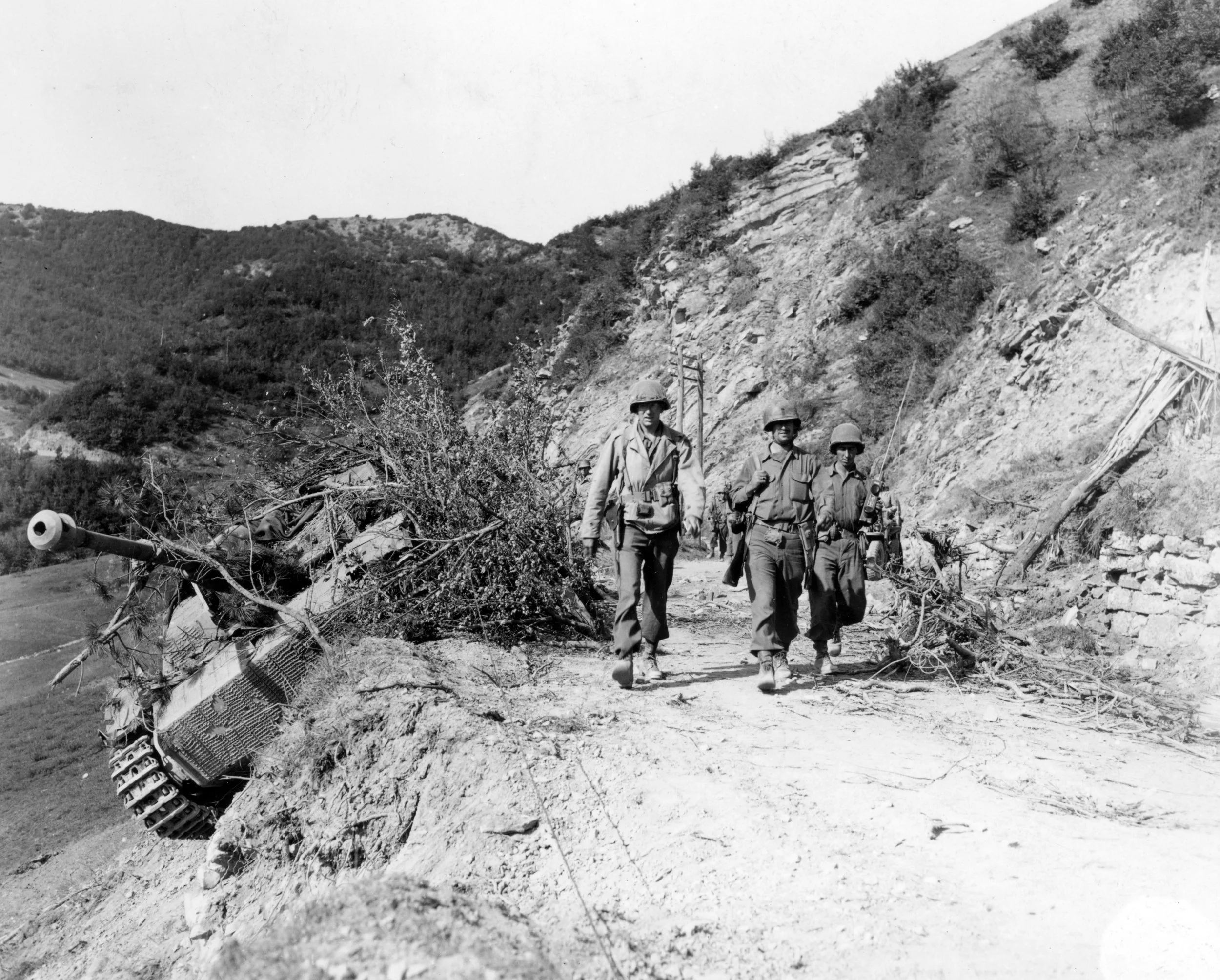
Americans advance toward the Gothic Line, passing a knocked out German StuG assault gun
Hoping to secure Bologna before the end of the year, the American theater commander, General Mark Clark, ordered the Brazilians to attack the Germans at Monte Castello in late November. Heavy fighting would see the hills of the region changing hands between the Germans and the combined American/Brazilian forces until mid December, when the positions were consolidated as the Allied offensives began to slow for the winter.
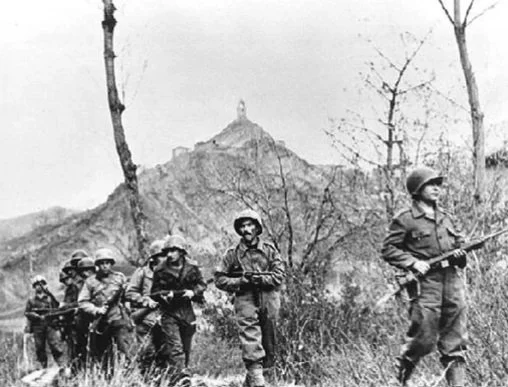
Brazilian troops near Monte Castello
Europe: The Air War
In the skies over the flaming ruins of Europe, the battle continued unabated. German V-Weapon attacks continued unabated, as V2 missiles continued to strike at London and other cities in Britain. As the situation on the continent evolved additional heavy strikes were directed against the port of Antwerp, attempting to make up for the near extinction of the Luftwaffe’s bomber forces in an attempt to close the port. These were not invincible, however, as air raids targeted launch facilities, while the Germans vaunted jet fighters struggled to stem the tide, with the first confirmed air-to-air shootdown of an ME262 jet fighter occurring before the year was out.
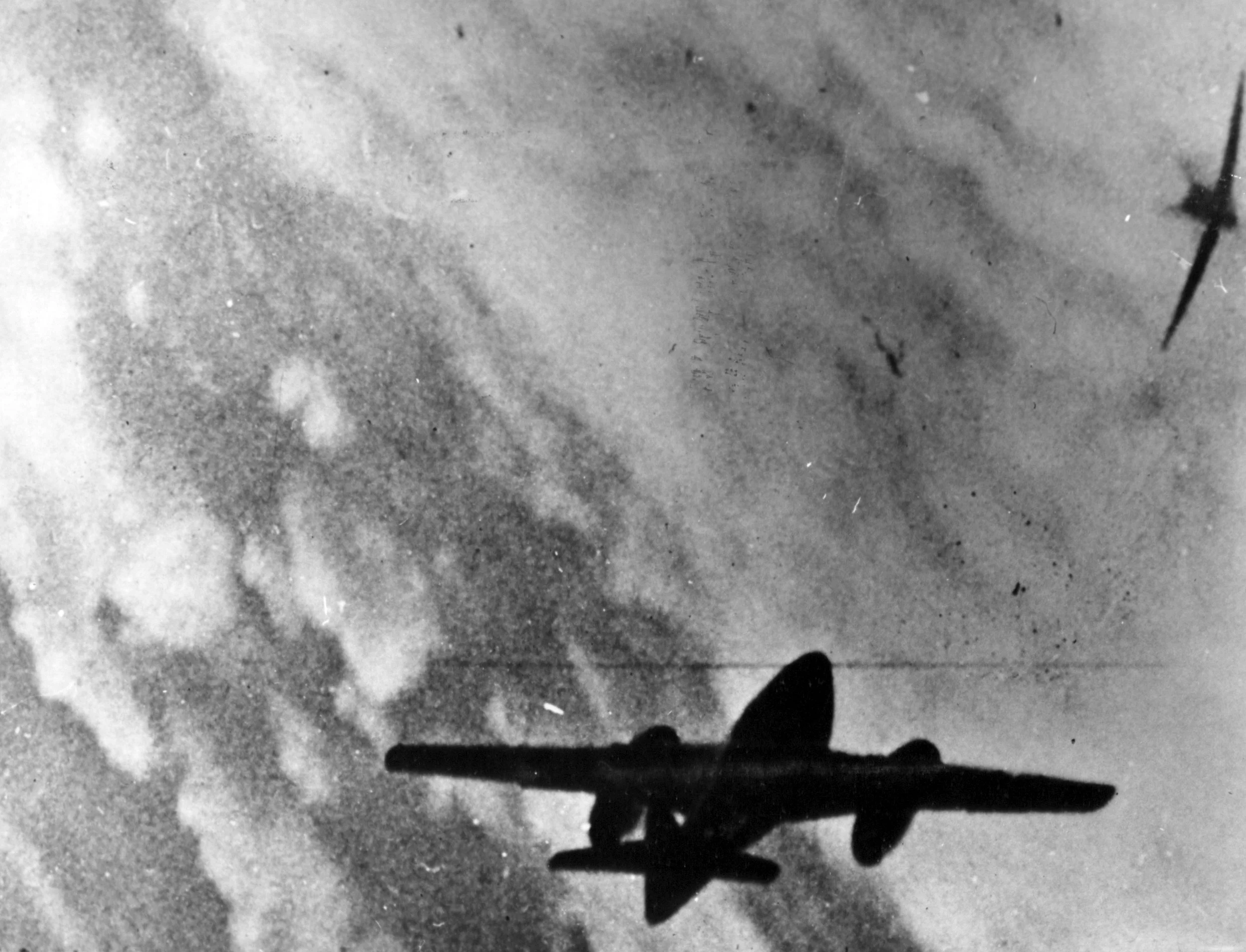
An ME262 on the tail of an American P51 Mustang, as seen from the gun camera of another P51
As far as the bombing campaign, the round-the-clock raids continued. Heavy raids in late 1944 devastated the city of Salzburg, including destroying the dome of the city’s cathedral, and other cities continued to be pounded as German manufacturing infrastructure began to be moved into underground mines to save it from complete annihilation. A massive raid occurred toward the end of the year, with RAF bombers striking the city of Heilbronn with almost three hundred bombers on the night of 4 December. This raid saw a firestorm obliterate more than half of the city, killing over 6,500 people while the broken Luftwaffe was only able to offer token resistance.
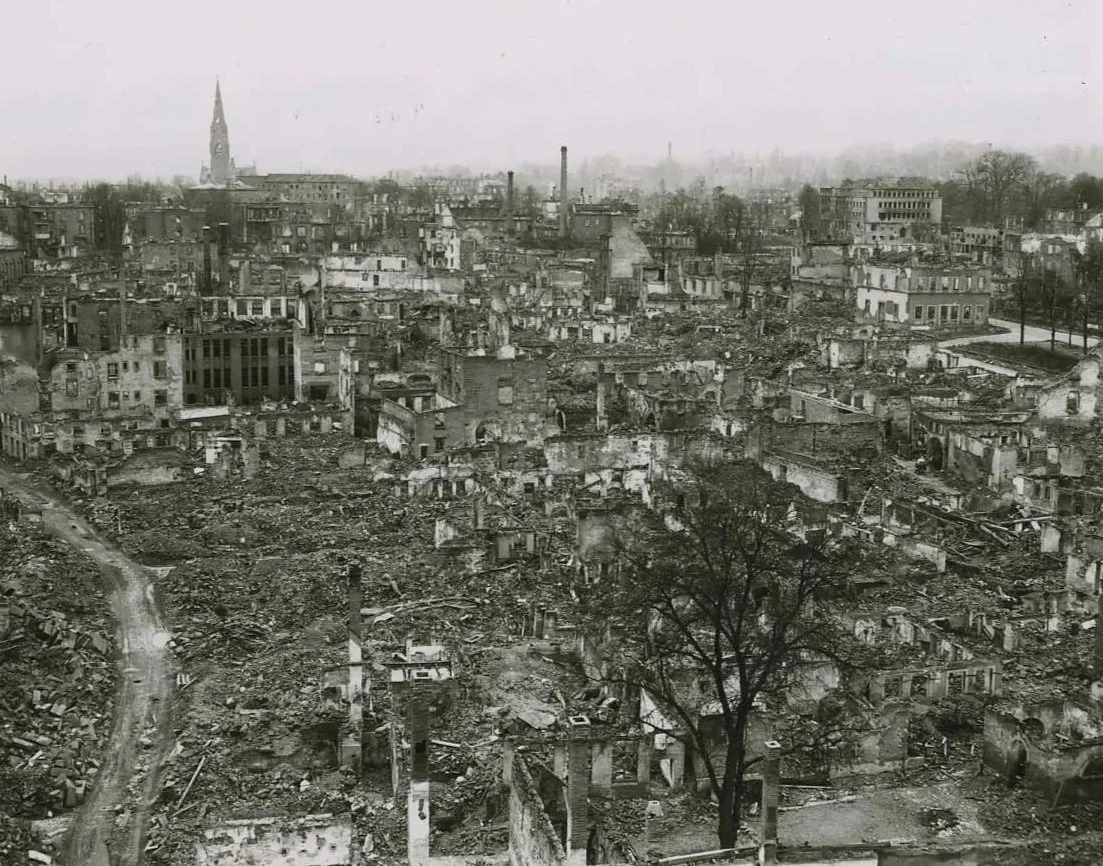
The ruins of Heilbronn
Europe: The War at Sea
The massive Allied advances in the west over the summer and fall had seen the Germans lose control of several major bases on the French coast, and although some remained under their control, these were isolated and unable to support further operations. The U-boat fleet was evacuated to bases in Norway, and only long range boats equipped with snorkel devices (allowing them to run continuously at periscope depth with their main engines) could venture into the open ocean. Allied convoy losses slowed to a trickle, while U-boat losses approached the breaking point by the end of 1944.
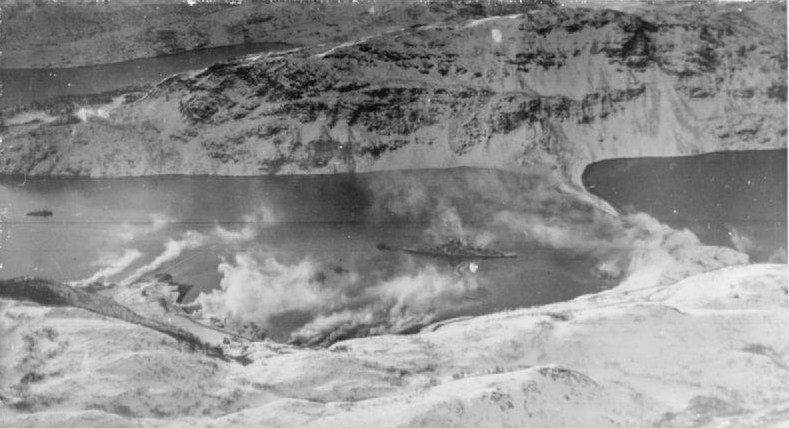
The Tirpitz as seen from the air, with smoke generators active to attempt to conceal the ship
As far as the Kriegsmarine’s surface fleet, what little remained was by this point confined to ports. The greatest extant symbol of Hitler’s naval power, the battleship Tirpitz, had been based in Norway for years, with High Command (OKM) not willing to lose her in the same manner as her sister Bismarck in 1941. RAF and Fleet Air Arm attacks had been periodic, but had not managed to sink the German titan.
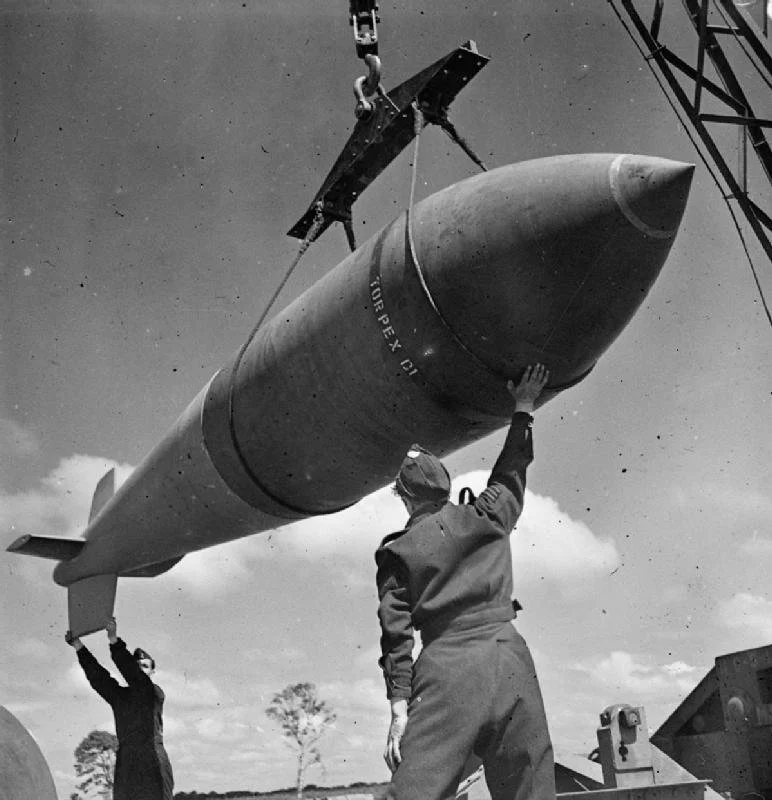
RAF crewman handle a Tallboy bomb
Another major strike, designated Operation Obviate, took place in late October with RAF Lancasters, but this inflicted only minor damage. Resolute in their intention to destroy the battleship, the British struck again on 12 November with Operation Catechism. 29 Lancasters set out for Norway, equipped with 12,000 pound Tallboy bombs. The battleship opened the engagement with volleys from her 15 inch main batteries at a range of almost fourteen miles, joined soon by additional flak batteries on both the battleship and her escorts. Two Tallboys struck Tirpitz, with one penetrating to her boiler rooms and causing massive internal damage and flooding. Near misses damaged her hull with their shock as well as delved the shallow fjord deeper, and ten minutes after the attack began, the blazing battleship capsized, taking up to 1,000 sailors with her.
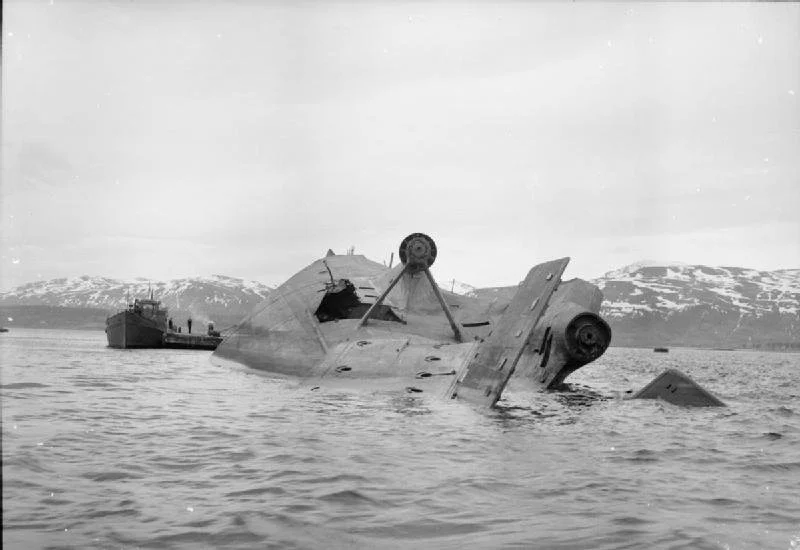
The capsized wreck of the Tirpitz
Europe: Under Occupation
German occupied Europe was by this point growing smaller by the day, as the Germans were pushed back on all fronts by the victorious Allied armies. In Serbia, the German puppet regime installed in Belgrade under Milan Nedic collapsed as its ministers fled to the Reich ahead of the advancing Soviets and partisans. The end of the regime triggered to formal creation of a new communist government in Belgrade, and left the right wing resistance fighters, the Chetniks facing a dangerously uncertain future.
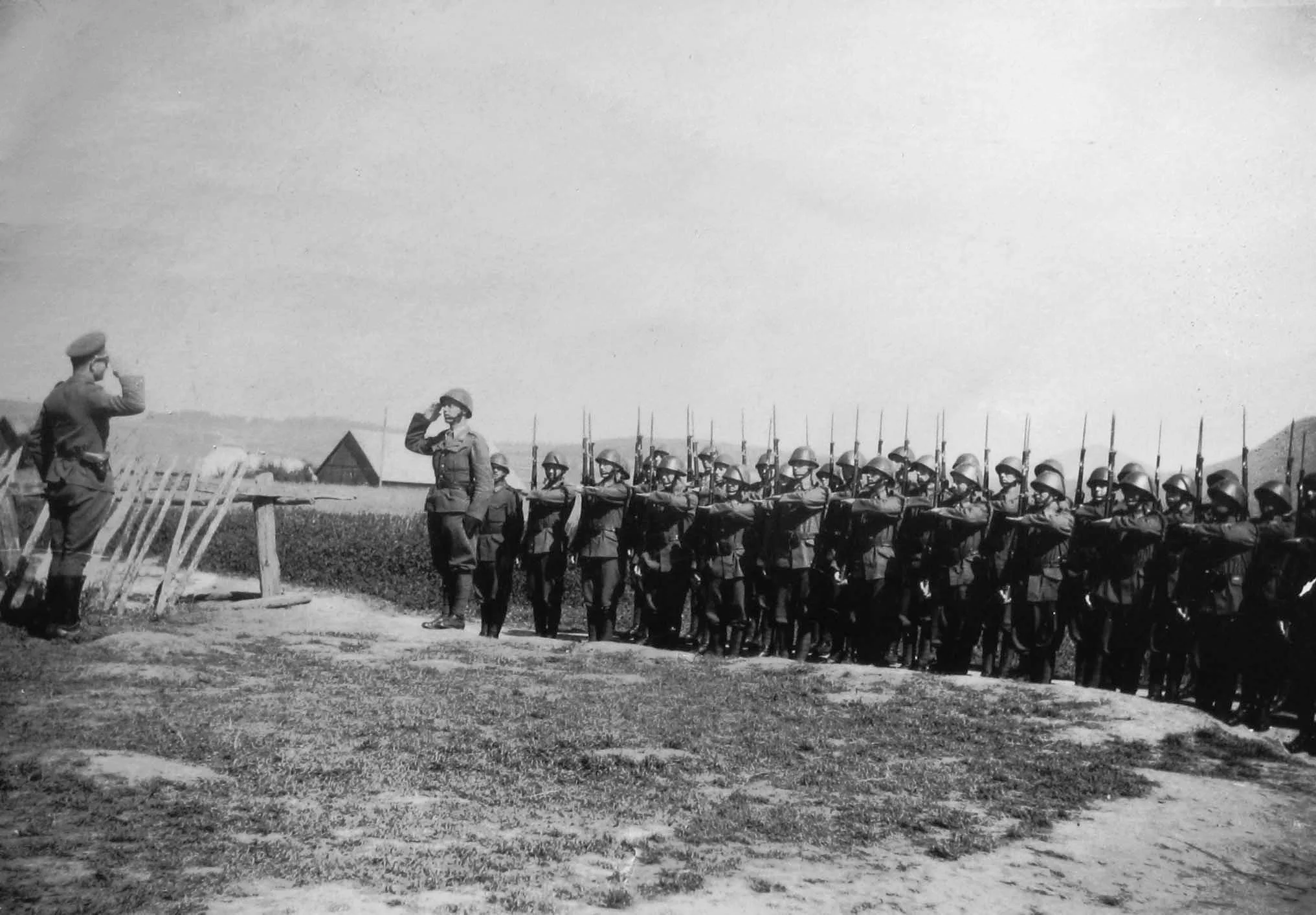
Slovakian Army soldiers in formation during the Uprising
In the oldest of the German puppet states, the Slovak Republic under Jozef Tiso, dissent had been emboldened by the approach of the Soviet armies as well as the attempted general uprising in Poland, and had launched their own revolt in August. Consisting of defecting units of the collaborationist Slovakian government as well as local resistance fighters and partisans, they took control of most of the country in their opening moves, but ran into stiff opposition from SS units. Much like in Poland, the Slovakian rebels hoped for rapid assistance from the Allies, but found little help from the distant Western powers, and Stalin viewed it as an opportunity to allow the Germans to annihilate pro-democratic elements before he himself occupied the nation.
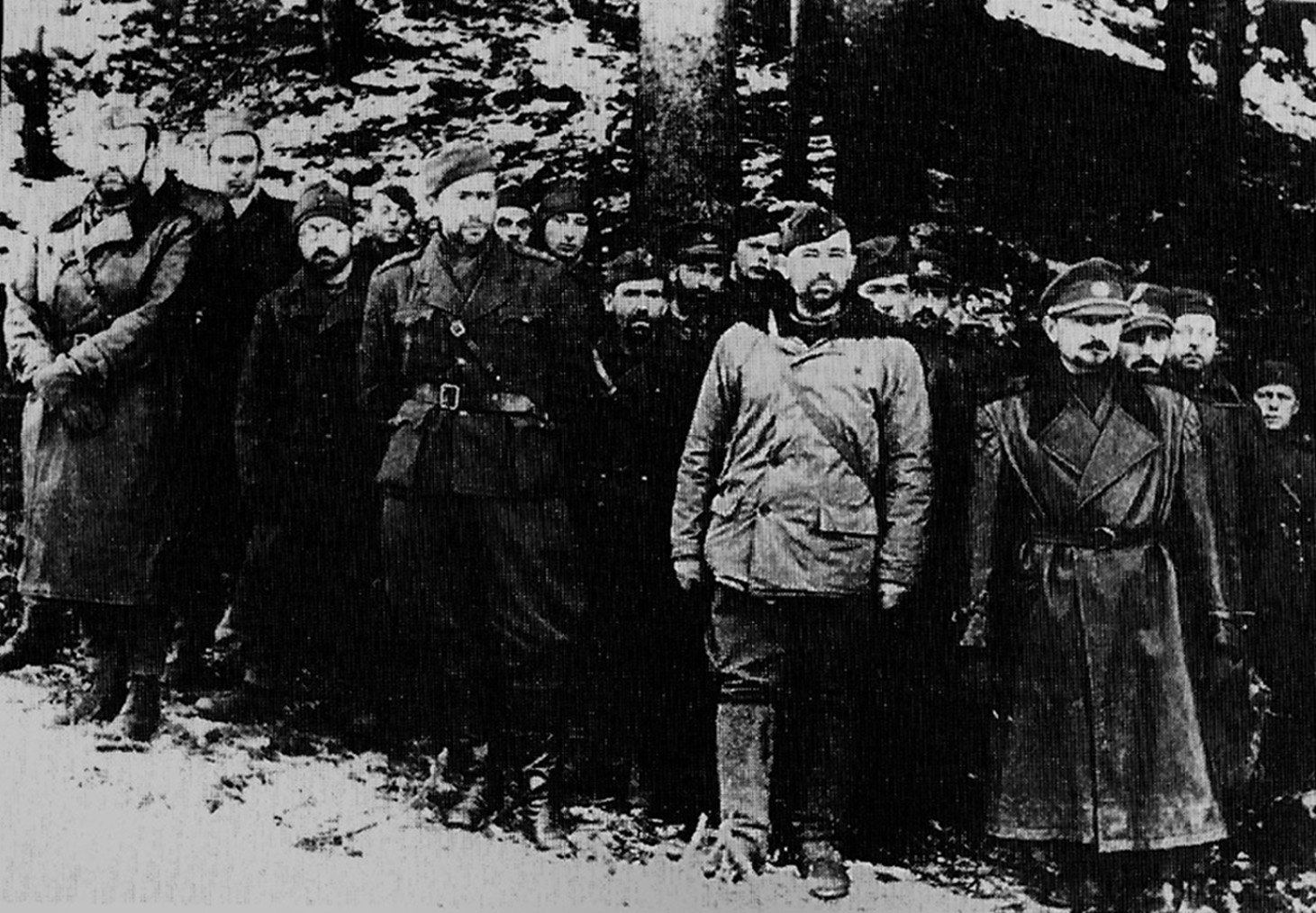
Slovak resistance fighters after the failure of the 1944 Uprising
The uprising was crushed by the Germans and their collaborators in late October, forcing the remnants of the resistance to flee into the mountains to begin an insurgency. The pacification operation entailed large scale massacres of the civilian population and the razing of numerous villages. Slovakia would remain under German control until the advance of the Red Army in April of the new year.
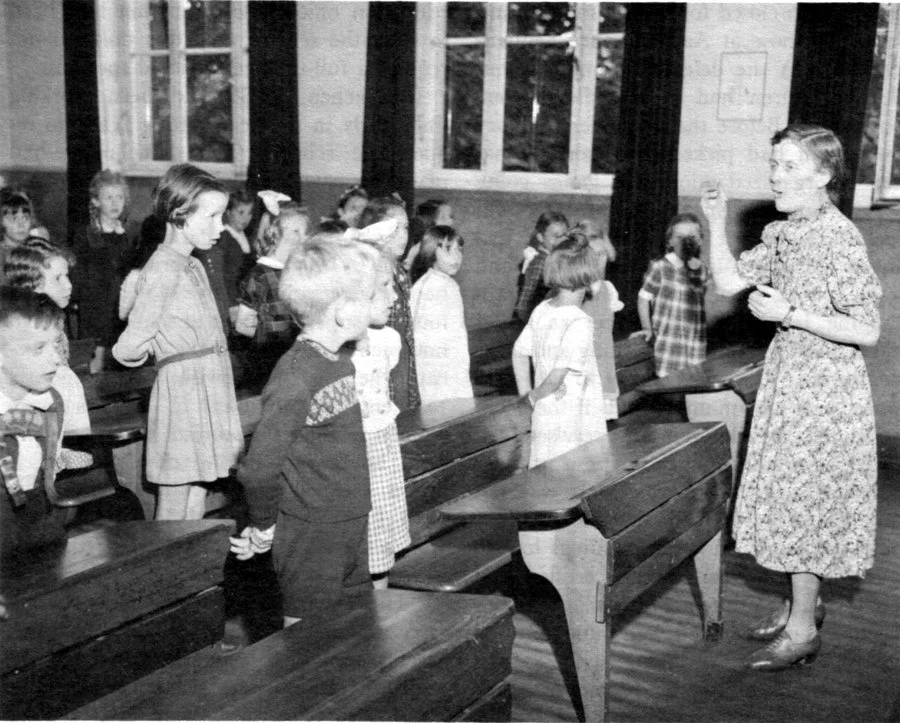
Children back in class in Aachen under American occupation
As the Allies began to penetrate the frontiers of the Reich itself the tables were turned in late 1944, with areas of the Fatherland being placed under Allied military rule. In the west this was generally benevolent, with Nazi party officials arrested and removed and local civilian administrations created. In the city of Aachen, the Americans installed the German lawyer Franz Oppenhoff as Burgermeister of the city with a mandate to set up a new administration to reconstruct the city.
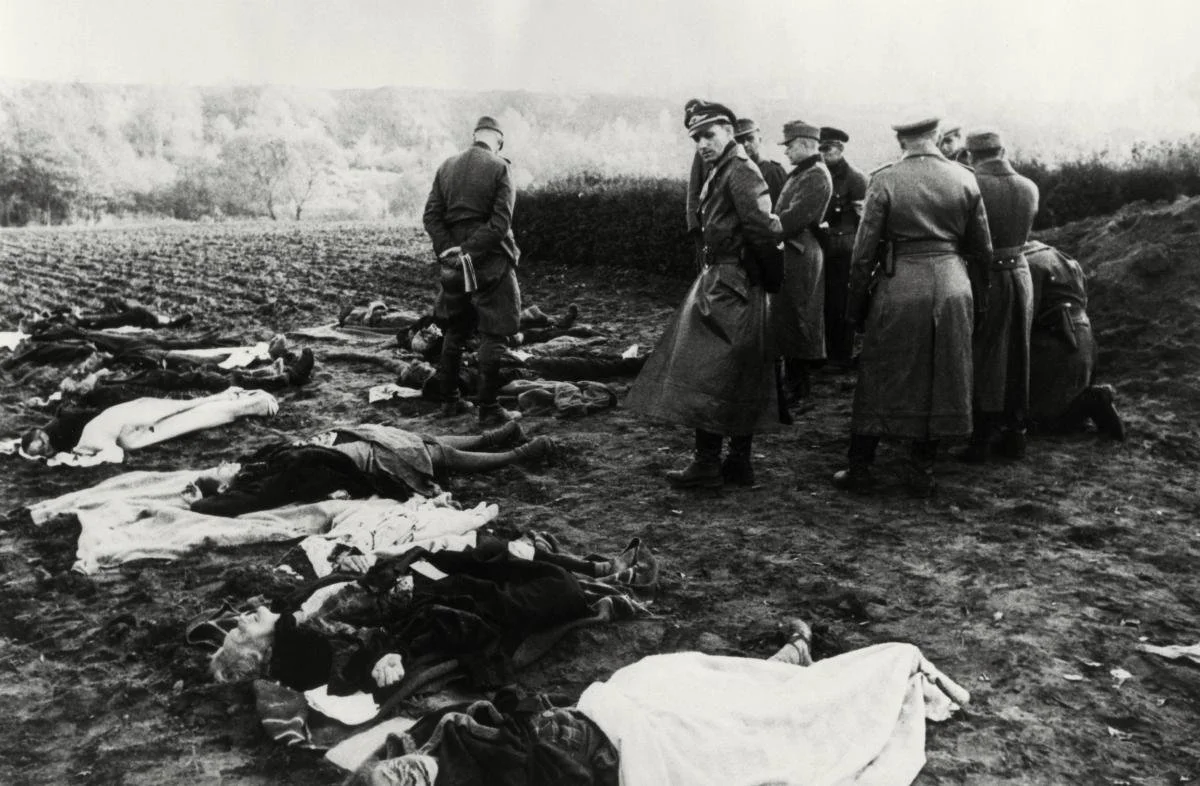
German officers inspect civilian bodies at Nemmersdorf
In the east, the Soviets conversely were brutal in their occupation, taking revenge against the German citizenry for the atrocities committed by the Wehrmacht over the past three and a half years. At the town of Nemmersdorf in East Prussia the Red Army raped and murdered numerous German inhabitants of the town before German troops were able to retake it. The specifics remain up to debate as the severity of the crimes inflicted, but the event was used by German propagandists to stir fear and a desire to resist the Soviets at all costs.
Pacific: Southern Islands
In the southern Pacific, the Americans were shifting their power for the new campaigns further north, with the Australians moving to replace them in New Britain in early October. Offensive operations against the Japanese still remaining on the northern portion of the island around their stronghold at Rabaul would not commence until after the new year.
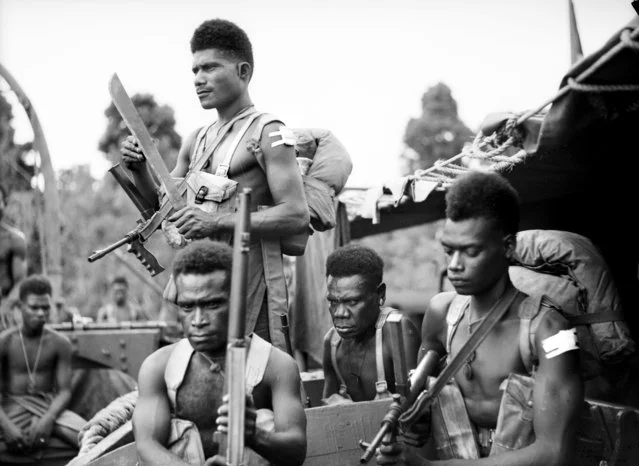
New Guinean soldiers in Australian service aboard a transport en route to New Britain
On New Guinea, the Australians launched a new offensive in November, aimed to expand their hold on the northern side of the island from the small bases established at Aitape. The goal was the Japanese bases farther west along the coast at Wewak, which the weakened Japanese forces in the area had been contentedly sitting on for some time. The Australian offensive commenced, encountering sporadic resistance, and as the year came to a close the advance was not yet in position to strike Wewak proper.
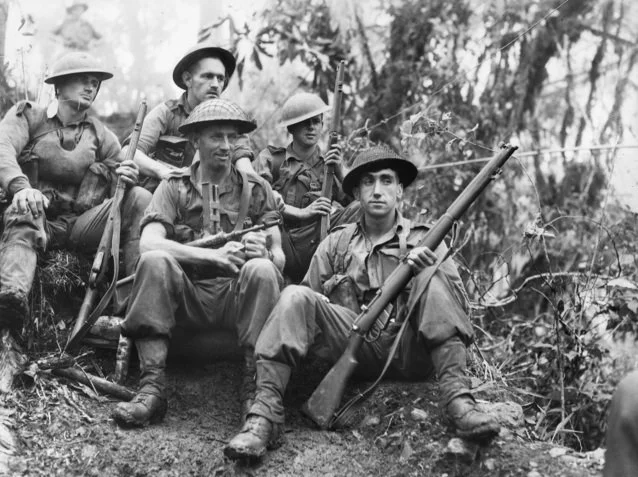
Australian soldiers in New Guinea
Pacific: Central Islands
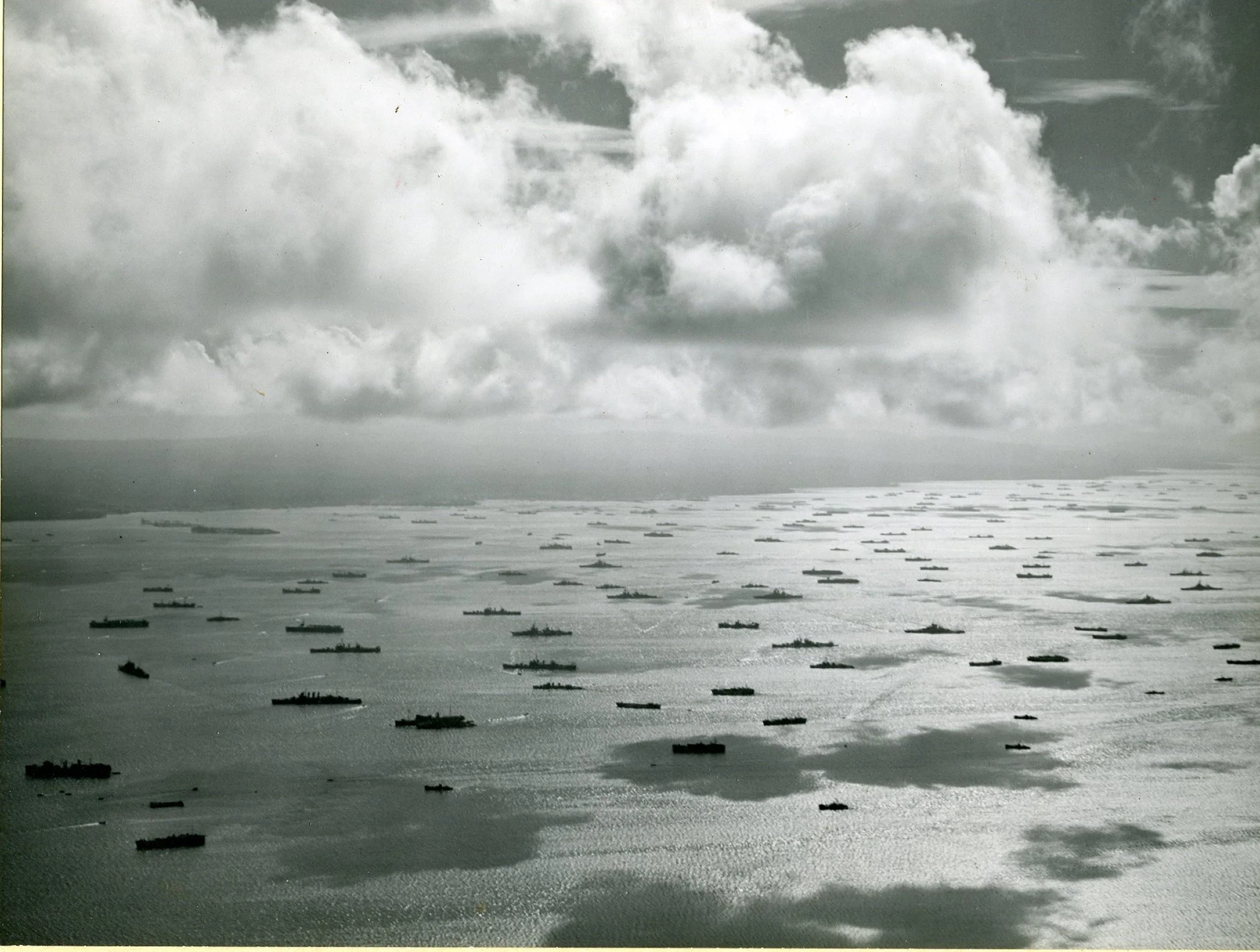
The US invasion fleet setting out for the Philippines
The brutal battle being waged by the US Marines on Pelelieu, as well as the mammoth naval clash in Leyte Gulf were just means to an end. That end was MacArthur’s long promised campaign of liberation of the Philippines. The loss of the archipelago to the Japanese in 1942 stood out as a black mark on the record of the vain MacArthur, not to mention to single largest defeat in the history of American Arms. This was to be made good in late 1944, as MacArthur set out with a huge army for the island of Leyte, intending to take the center of the archipelago and thence drive northward toward the main island of Luzon as well as spread through the rest of the chain.
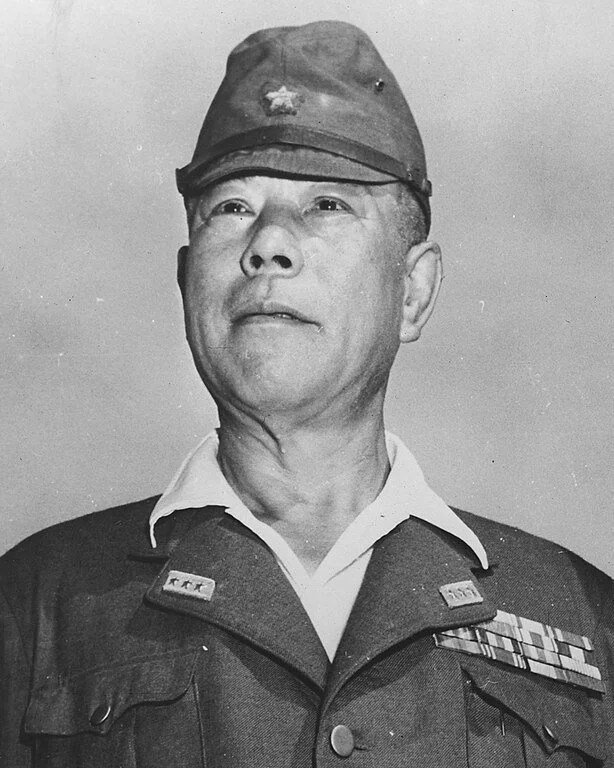
General Tomoyuki Yamashita
The Japanese knew full well the importance of retaining the Philippines, as together with Formosa they shielded the supply routes to the East Indies and Indochina, where most of the Empire’s supplies of petroleum, rubber and other resources came from. The islands were nominally under control of a puppet government of Filipino nationalists led by former judge Jose Laurel, although the ability of the republic and its KALIBAPI party to project power had always been limited.
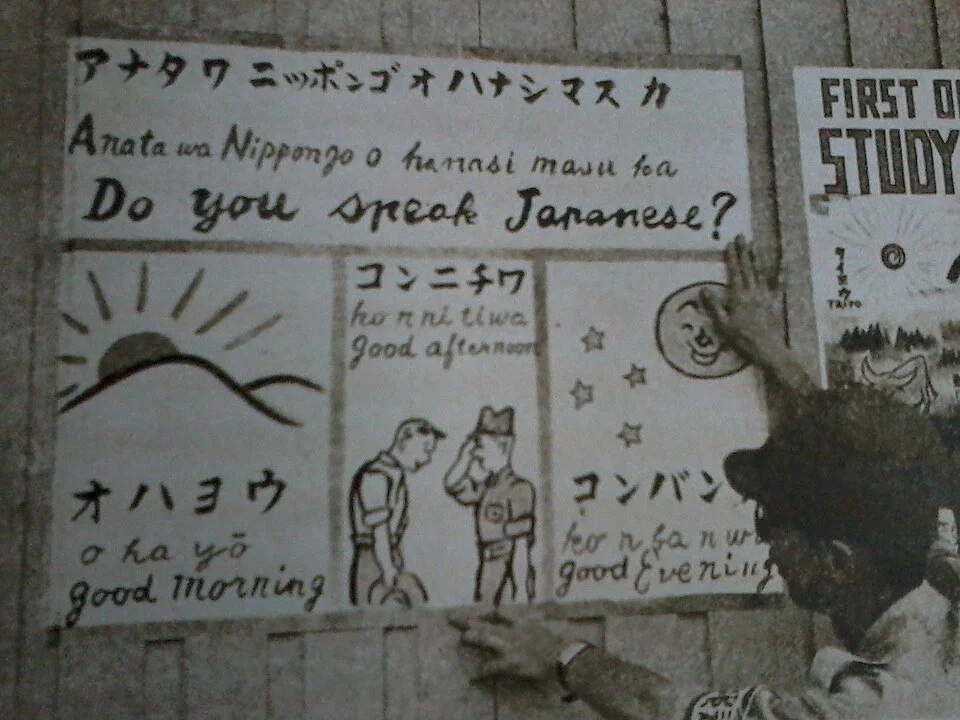
A Japanese soldier posts propaganda in English, Japanese and tagalog in the Philippines
Insurgent activity had been a near constant peril for the Japanese occupiers, opposing both the collaborators and the Japanese military forces across the islands. Only twelve Provinces of the puppet republic were firmly under government control, and guerillas maintained an extensive sabotage and intelligence network that was, despite its lack of recognition by history, may well be the single most effective such movement in any Axis occupied nation during the war. For the rest of the Philippines, they had been subjected to both an attempt to indocrinate them into the Japanese-dominated “Greater East Asian Co-Prosperity Sphere” as well as a heavy handed military rule. Use of the US Dollar and the pre-war Commonwealth Peso had been forbidden, with another form of control coming in the form of hyperinflated Japanese printed Pesos.
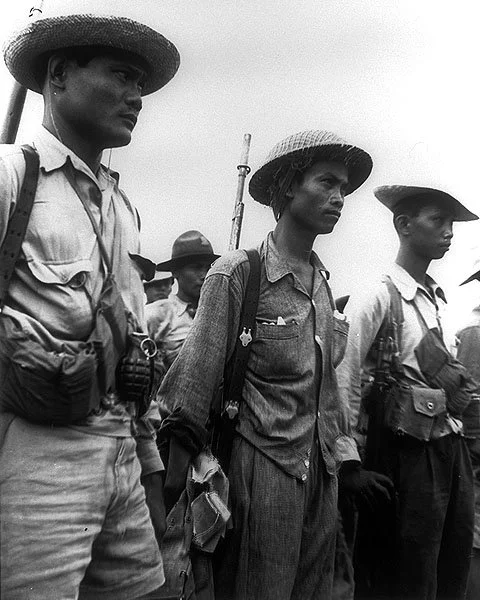
Filipino Guerillas
The Japanese, for their part, anticipated this invasion, and following the removal of his rival, Hideki Tojo, as Prime Minister the Japanese had stationed General Tomoyuki Yamashita, the famed conqueror of Malaya and Singapore, as theater commander in the Philippines. Resigned to the inevitability of defeat, Yamashita hoped to delay the invasion of Japan proper as long as possible, and intended to make his stand in the mountains northern Luzon, but orders came down from Imperial Headquarters to shift to meeting the Americans on Leyte.
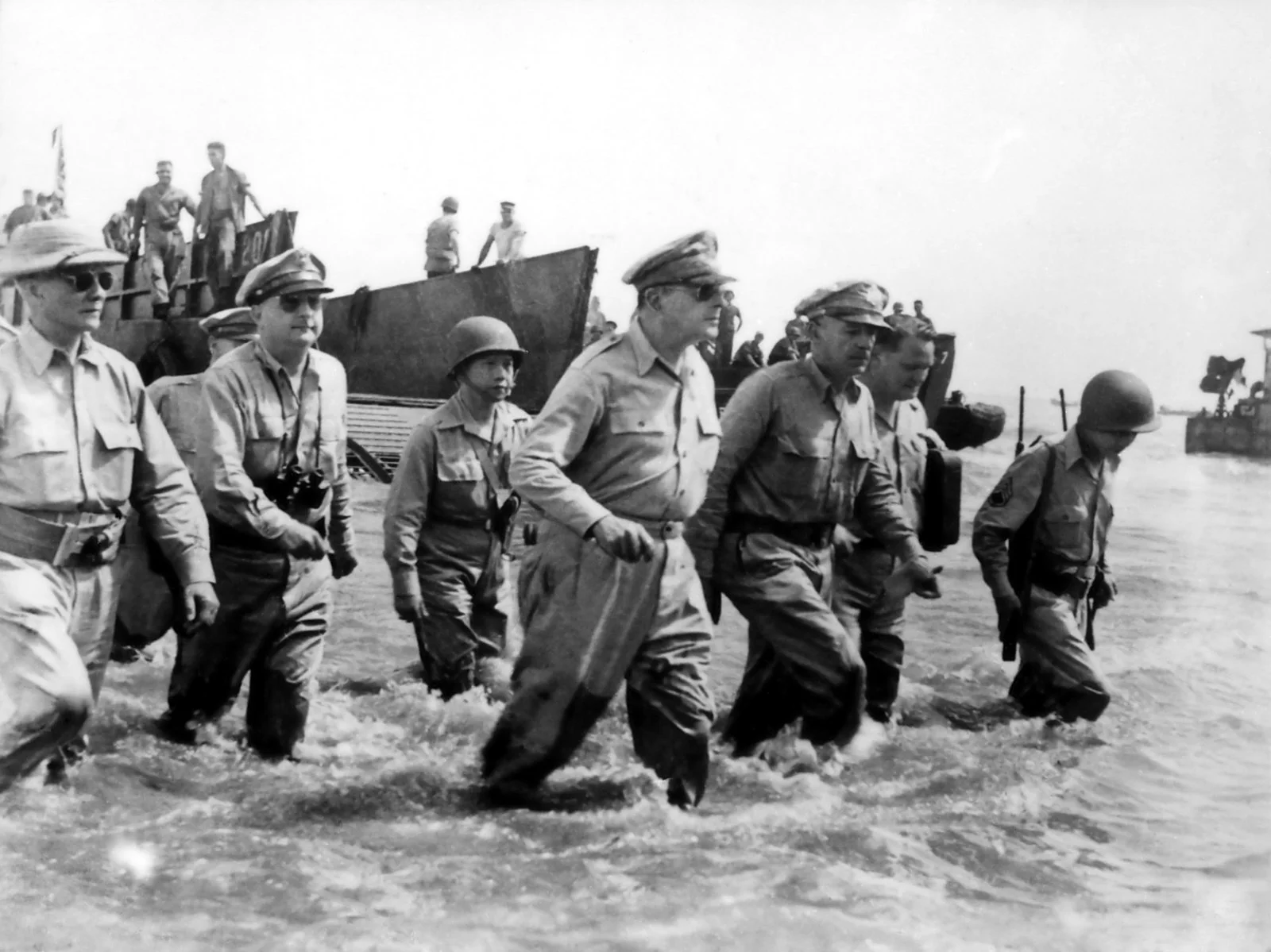
MacArthur wades ashore at Leyte. President Osmena is also present at the far left, wearing the pith helmet
They came on 20 October, preceded by several hours of naval and aerial bombardment. Landing in three sectors of Leyte, securing the airfield at Tacloban and all landing focres securing strong beachheads despite Japanese resistance. In the afternoon, General MacArthur came ashore at Red Beach near Tacloban, his landing craft hanging up on a sandbar near the shore. The irritated General thus had to wade ashore, trailed by several officers and Filipino President Sergio Osmena, while a photographer captured one of the most famous images of the Second World War. Arriving on shore, his ever-present press corps set up a transmitter, and the General made a formal announcement to Filipinos, Americans, and the world:
Tacloban was secured the next day, and the Philippine Commonwealth was formally restored there at that time. By 24 October, advanced elements of the US 1st Cavalry Division had crossed the San Juanico Strait and gained a foothold on Samar as well. Elsewhere, the Americans began to push into the central valley of Leyte, encountering stiffening Japanese resistance. Supported by armored spearheads, the Americans penetrated the Japanese lines to overrun several smaller airbases on the island, as well as heavily fortified Japanese strongpoints hewn from hills and ridges.
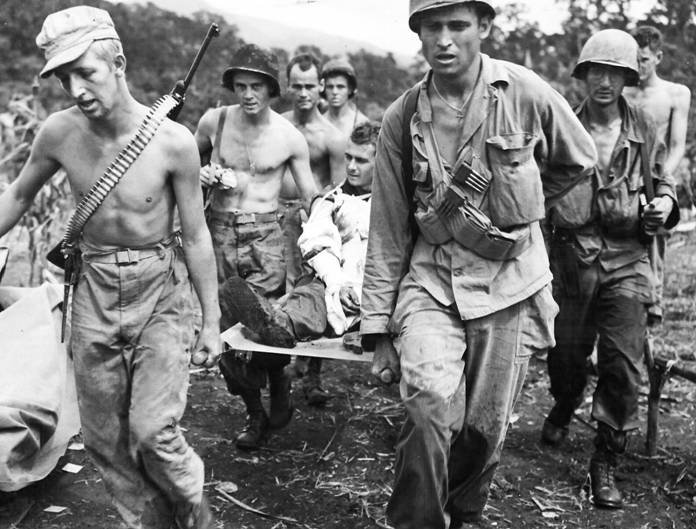
Paratroopers of the US 11th Airborne Division evacuate a casualty on Leyte
Heavy reinforcement of the defenders of Leyte was accomplished despite attempts to interdict them, and the Americans were forced to throw additional forces into the fight as they pressed deeper into the island. Vicious fighting engulfed the Ormoc Valley as the Japanese were pressed into the northwestern corner of the island in November.
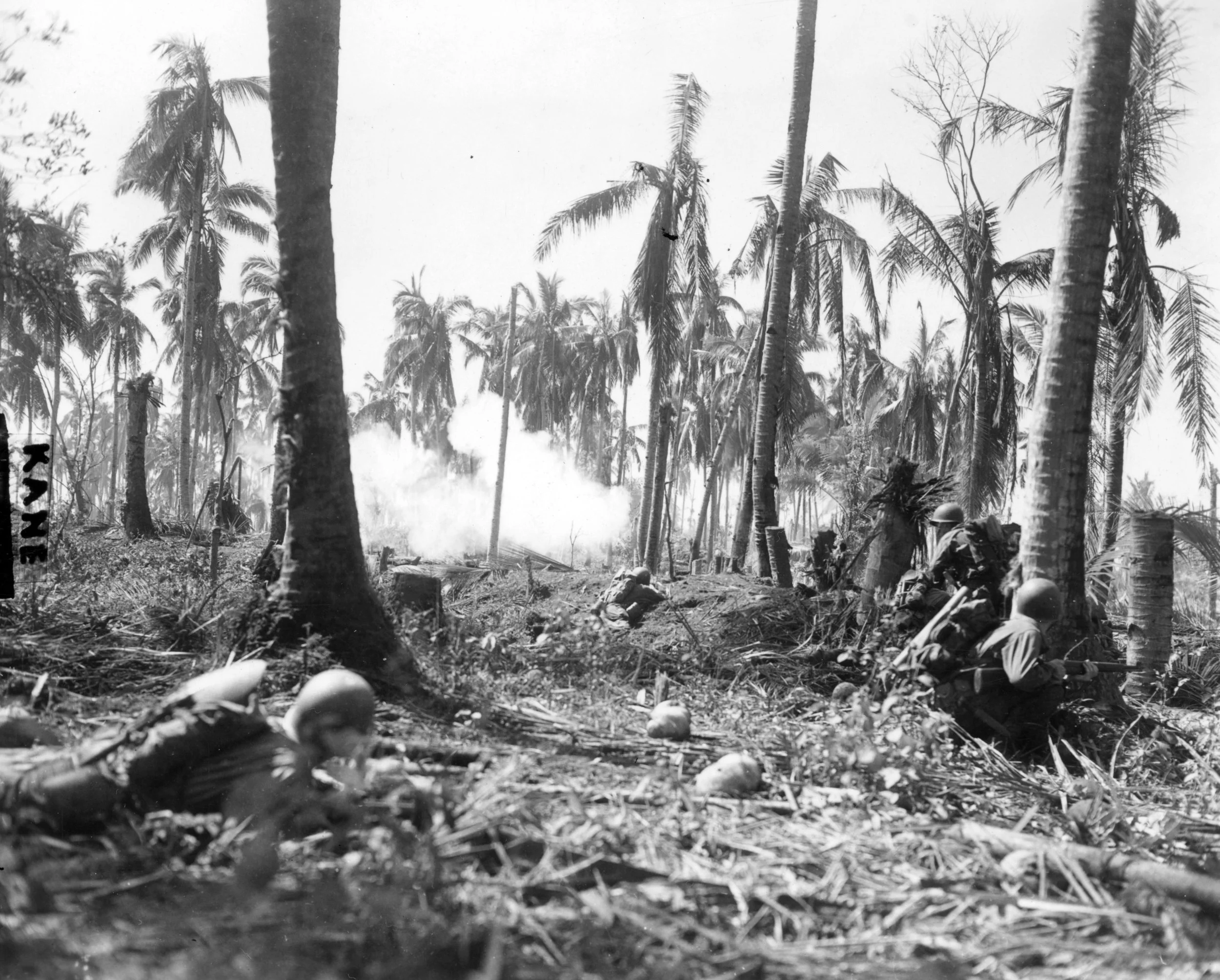
American soldiers fighting on Leyte
In early December, Japanese paratroopers performed a combat drop on the Americans at the Buri Airfield, with most being shredded by US flak guns during the descent. The Japanese were able to secure parts of the base, but not its whole, and after a suicidal stand had been wiped out by 10 December. Concurrently, additional American landings on the western shore of Leyte in the Japanese rear led to the capture of Ormoc city on the same day. Thus being pushed against the sea, the Japanese were slowly crushed as the Americans took each coastal town one by one, with organized resistance collapsing in late December, while the nearby island of Mindoro was secured after a brief battle in mid December. Thus, the Americans were left to prepare for their movement ot Luzon in the new year.
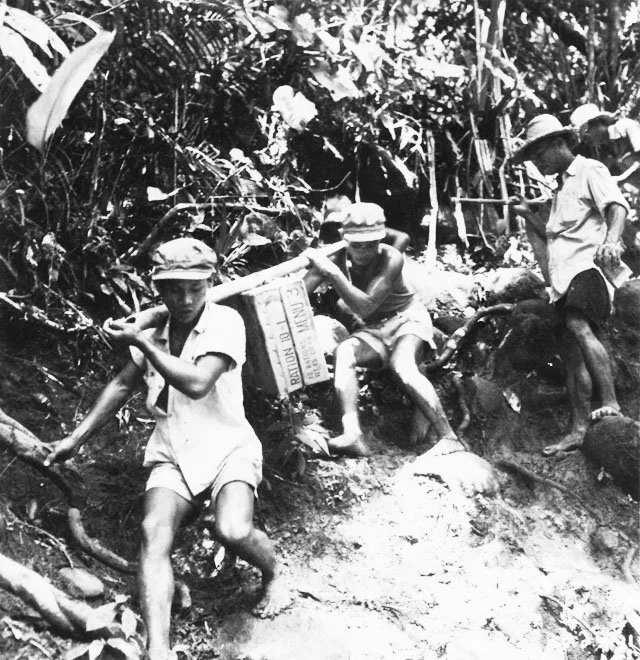
Filipino civilians bring supplies to the front over the rough terrain on Leyte
Pacific: China
In China, the ongoing Japanese offensive into Guillin was nearing its conclusion. With the Chinese forces withdrawing across the front and several USAAF bomber bases overrun, the operation could be considered a success at a time when Tokyo was becoming starved of such news. The defeat resulted in shakeups in Chinese command, as well as the culmination of a power struggle between Chiang Kai Shek and American General Josef Stilwell, resulting in the compromise that the Chinese army was placed under American tactical command, while Stilwell was replaced. The ensuing damage to the prestige of the Kuomintang government was, likewise, exploited by the communist forces in the ongoing Chinese Civil War, with dire consequences after the destruction of the Japanese.
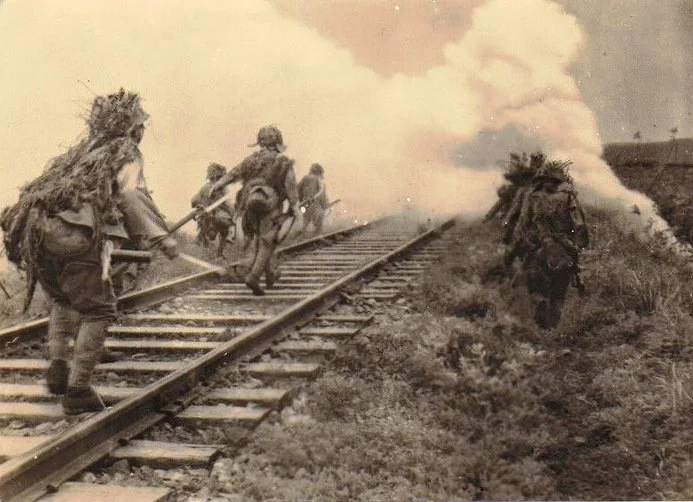
Japanese troops in action along a Chinese railway
Pacific: The War at Sea
In October of 1944 all eyes in the Pacific were on the Philippines, with the titanic clash at Leyte Gulf serving as a climax to the naval war, as the Imperial Japanese Navy saw its fleets all but destroyed. In the aftermath the Emperor’s navy found itself no longer able to conduct any meaningful operations against the American fleets prowling the Pacific. US battleships bombarded the Volcano Islands late in the year, encroaching dangerously close the Home Islands themselves. Meanwhile, following the catastrophic losses of the carrier fleet after being used as bait at Leyte Gulf, an additional three carriers would be lost before the year was out.
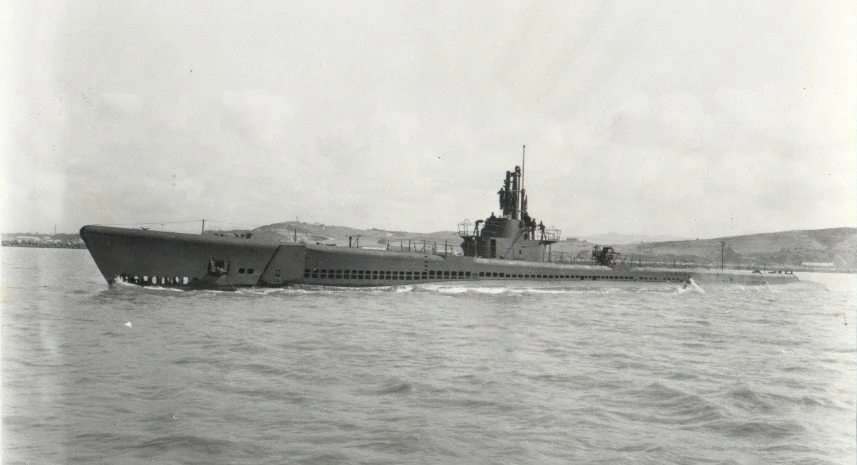
USS Spadefish
One, the Akitsu Maru, was a landing craft carrier, similar to modern amphibious assault ships. She was torpedoed by the submarine USS Queenfish while a part of a convoy bringing reinforcements to the Philippines and sank with over two thousand men. In the same convoy, the light carrier Shinyo was torpedoed by another submarine, USS Spadefish. Converted from a German ocean liner stranded in Japan when the war broke out and purchased by the Japanese, she took four torpedoes on the night of 17 November, going down with almost her entire crew.
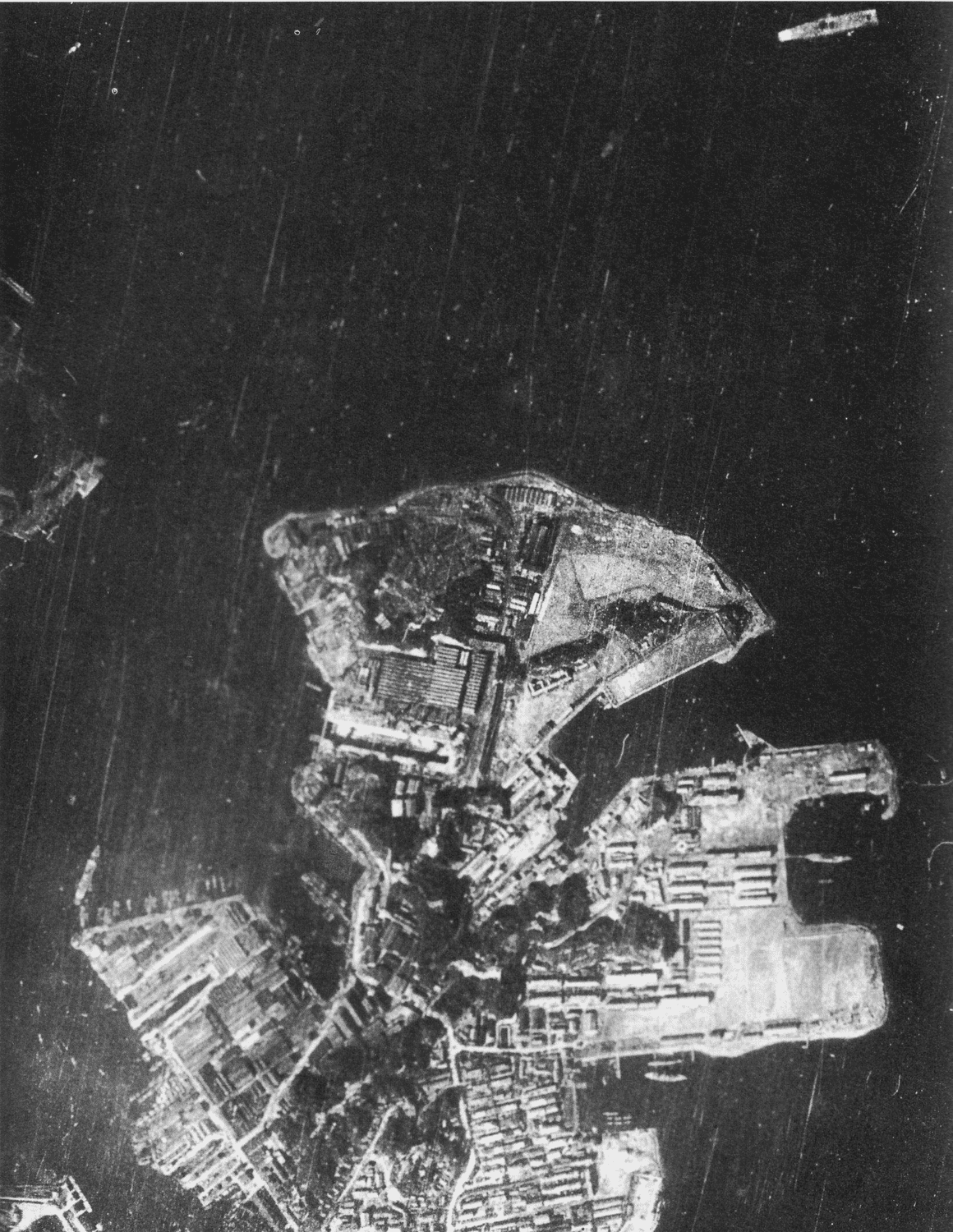
An American recon photo of the Yokosuka Naval Yards, with the massive carrier Shinano visible in the upper right
The third was another conversion of another ship, but on a far grander scale. The Shinano had been laid down as the third Yamato Class battleship, but conversion to a carrier had commenced on the incomplete ship after the disaster at Midway in 1942. Finally near completion in late 1944 as the largest aircraft carrier ever built (a record that would hold until the introduction of US nuclear carriers decades later), Imperial Navy Command feared that she was vulnerable to air attack, and ordered the ship to transition from Yokosuka to Kure in November. Escorted by three destroyers, she was spotted by the American submarine USS Archerfish, which was patrolling the Japanese coast in that sector, and engaged. Struck by four torpedoes, the incomplete internal structure allowed for massive flooding as the carrier continued to limp toward Kure, and she foundered in early morning, taking another record as the largest ship ever sunk by a submarine.
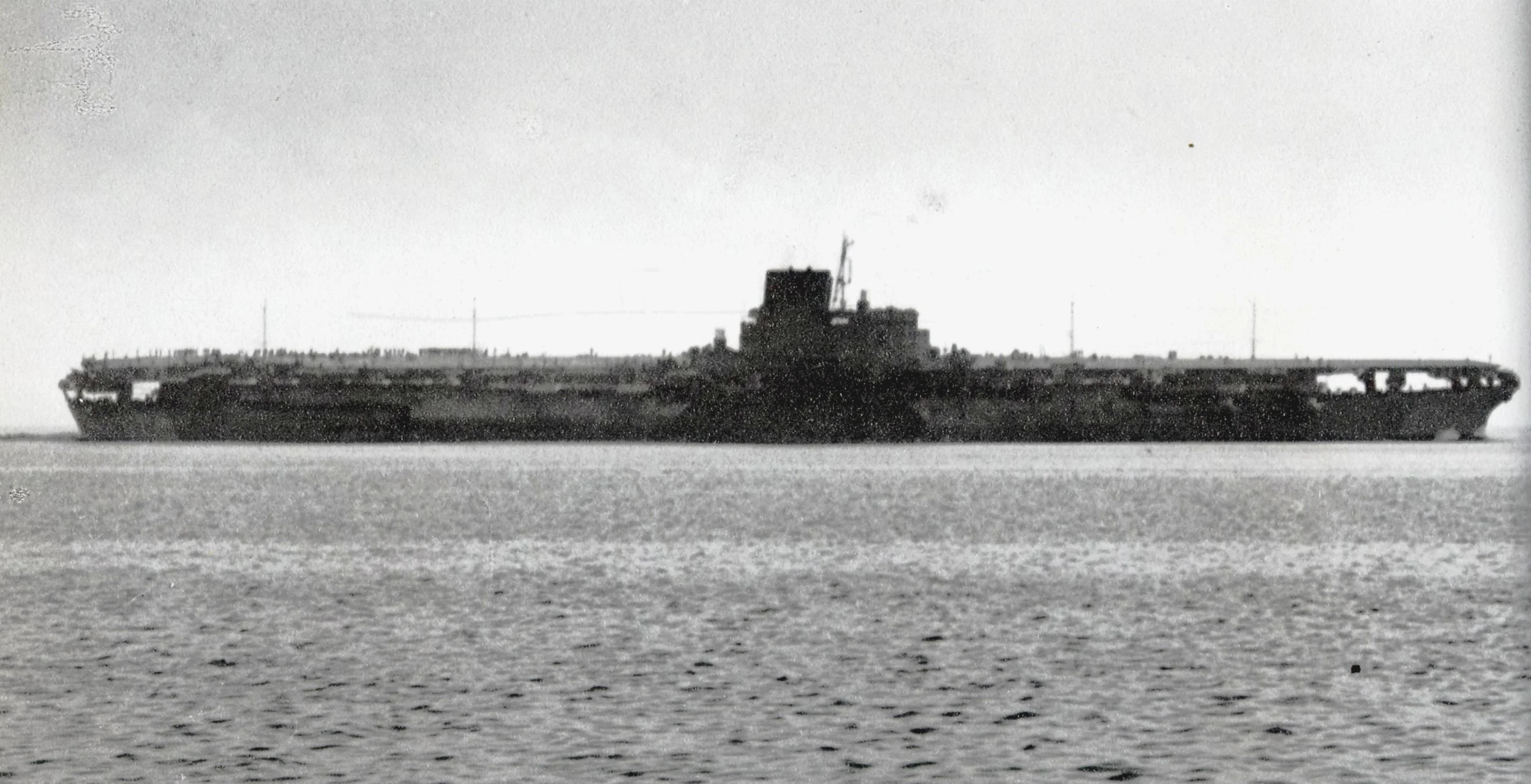
The Japanese carrier Shinano during her trials
All was not well for the US Navy in late 1944, however. In December operations to support the landings in the Philippines were continuing, even as a severe threat was building over the Pacific, but it had nothing to do with the Japanese. Admiral “Bull” Halsey’s US 3rd Fleet had been running low on fuel by mid December, and while operations to resupply were underway the fleet was struck by a category 5 typhoon. The massive storm caught many ships with their fuel tanks empty, resulting in lower displacement and stability issues, and in the end the storm scattered the fleet and caused three destroyers to founder, along with damaging several others. The event led to an inquiry, with Halsey being found responsible for the losses, although it was acknowledged that forecast information from Pearl Harbor had been flawed.
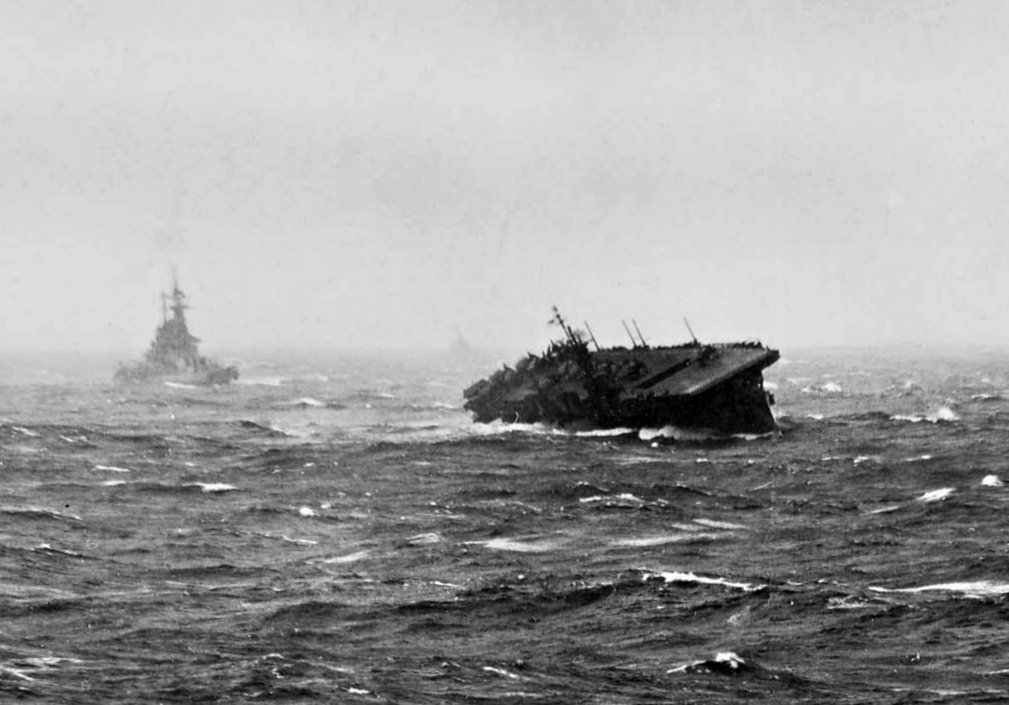
An escort carrier rolling during Halsey’s Typhoon
Pacific: The Air War
In the skies over the Pacific, as the Japanese began their desperate Kamikaze campaign against the encroaching Allies, the Americans continued to ramp up their own air attacks against Japan. Despite losing most of their forward bases in China to Japanese advances, the capture of islands such as the Marianas allowed the US Army Air Force to base bombers in range of the Home Islands, with B29 Superfortress raids becoming increasingly frequent. Before 1944 came to a close, several areas of Japan, including the island of Okinawa, had been bombed, while American planes had appeared over Tokyo for the first time since Doolittle’s Raid in 1942, providing a grim portent of what was to come in the new year.
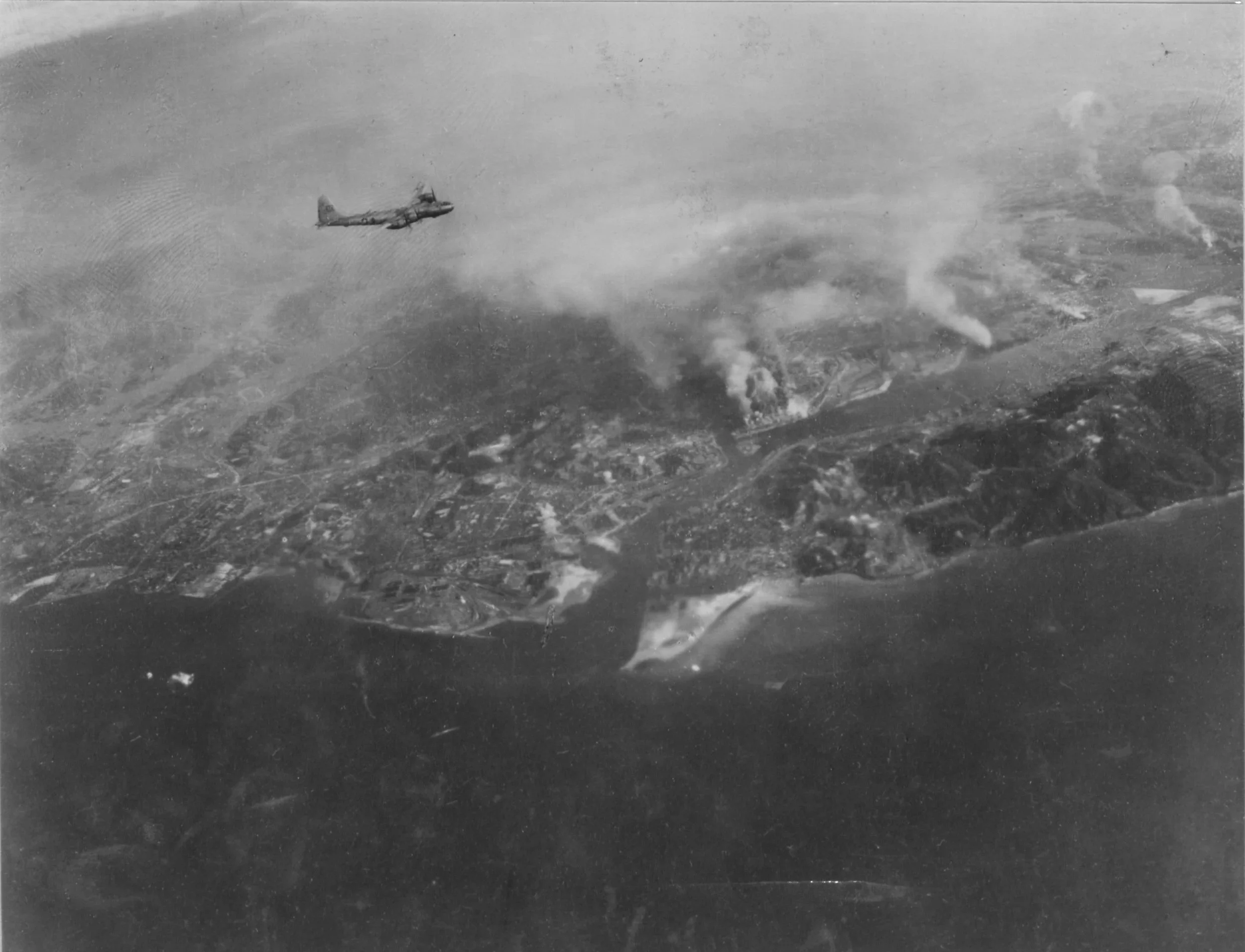
A B29 over the Japanese coast
In November the Japanese struck at the United States by air as well, in the form of the Fu-Go bomb. These were clusters of incendiary bombs attached to balloons, which were launched from Japan itself to be carried to the United States via the jet stream. Upon arrival, their small payload of incendiary devices was hoped to ignite forest fires in the western US, although the damp weather of fall and early winter served to negate the danger of such conflagrations.
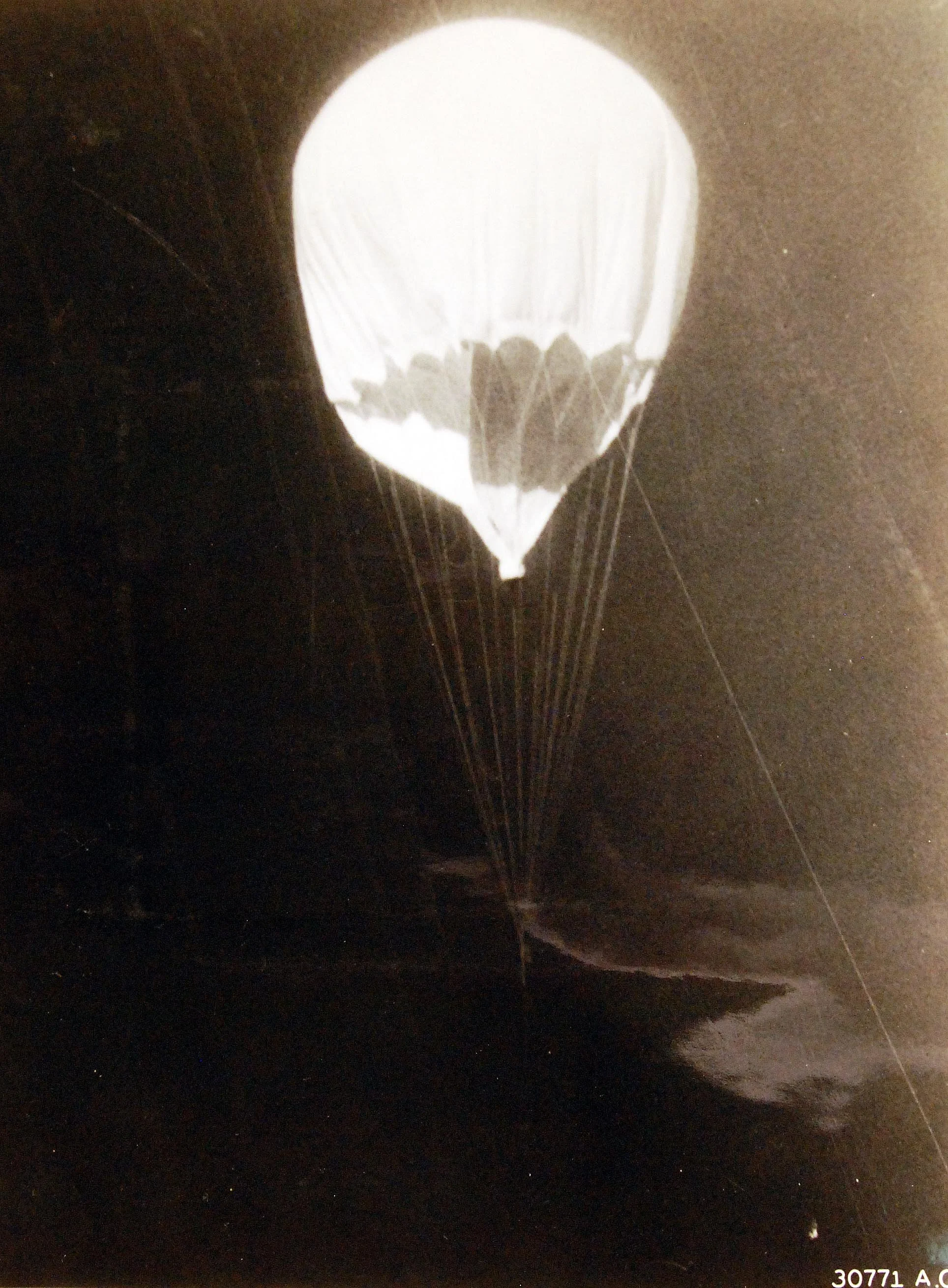
A Japanese Fu-Go balloon bomb photographed by a USAAF plane
Political Developments
As the year wound down, it was becoming apparent to the Allies that the end was in sight, and preparations were underway to shape the political future after the end of the conflict and the destruction of Germany and Japan. Meeting in Washington, DC, delegates from the United States, Soviet Union, British Empire and Chinese Republic held a conference to create a new organization to replace the defunct League of Nations, with the formal groundwork for a new United Nations being laid to take on these roles after the end of the war.
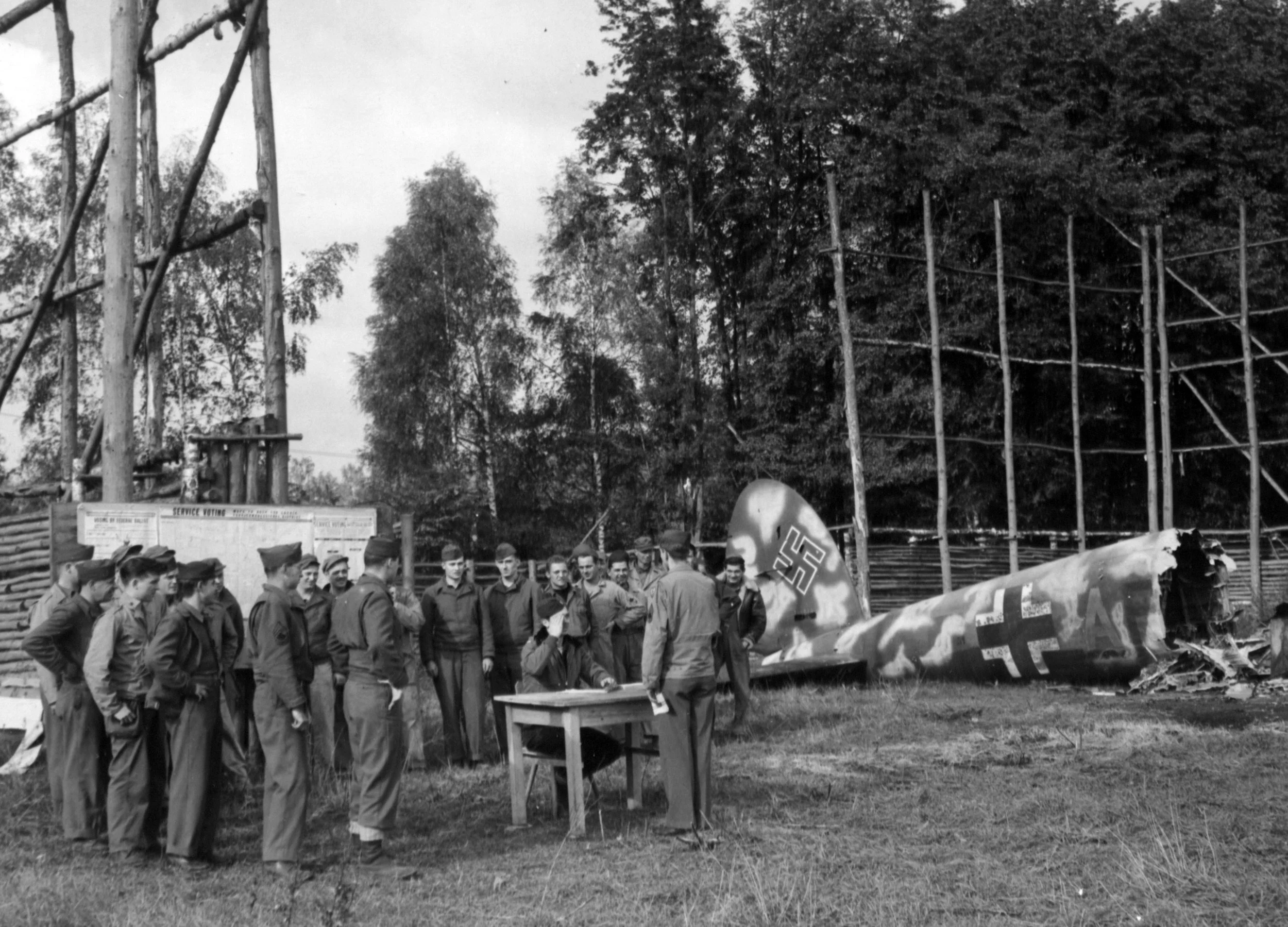
American soldiers cast their ballots for President at a captured German airbase
Also in Washington, President Franklin Roosevelt won reelection to an unprecedented fourth term in office, defeating Republican challenger Thomas Dewey. Despite his enthusiastic campaigning, the President was ailing, and concerns about his health were mounting. His new Vice President, Harry S. Truman of Missouri, had been selected over incumbent Henry Wallace due to concerns about the latter’s ability to lead if Roosevelt became incapacitated, being a relatively unknown moderate. It remained to be seen whether this would prove nessesary.
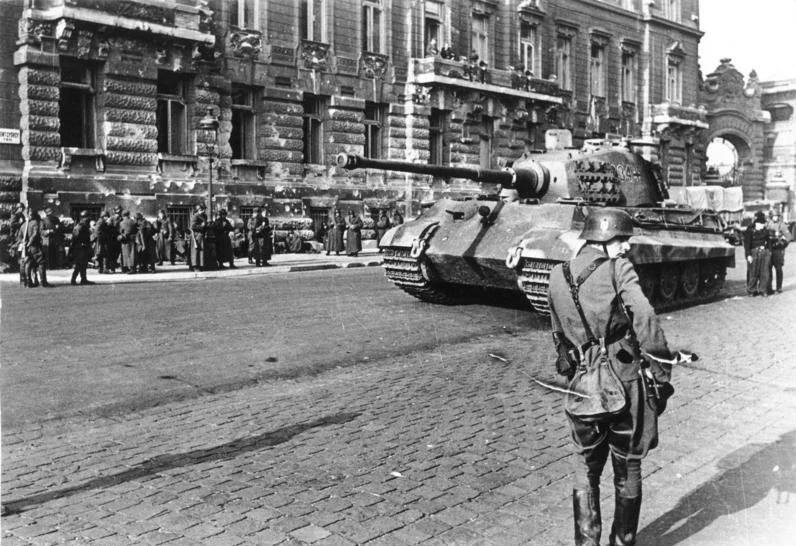
A German Tiger II tank on the streets of Budapest along with SS and Arrow Cross soldiers during the coup, designated Operation Panzerfaust
In Europe, the situation in the east was growing extremely volatile as the Red Army pushed farther and farther west. In Hungary, with the Soviets bearing down, Regent Miklos Horthy had already been turned into little more than a German puppet earlier in the year after quietly attempting to seek terms with the Allies, and in October this was made official. After announcing an armistice with the Soviets, German special forces abducted the Regent’s son and arrested the man himself, taking them back to Germany and placing the fascist Arrow Cross Party into power over the country. The new government swiftly annulled the armistice, and moved to continue both the war and the deportation of Jews and other so-called “undesirables” to the Reich.
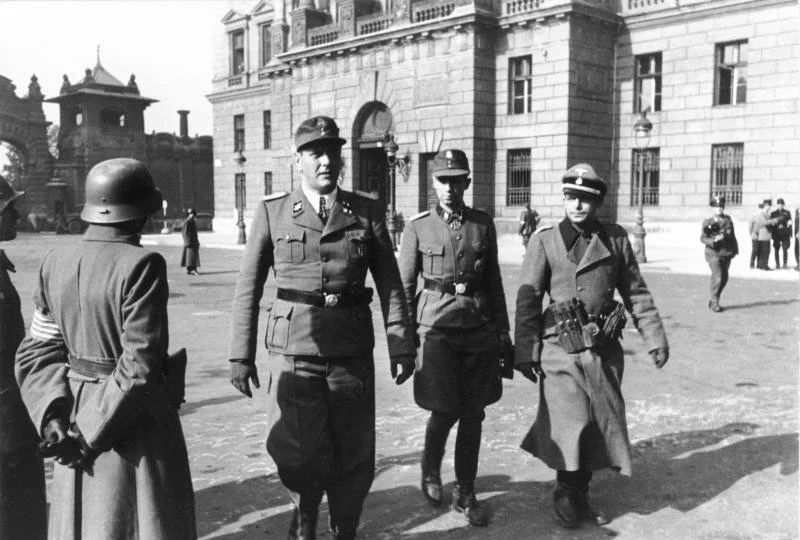
SS special forces leader Otto Skorzeny in Budapest after the German putsch
While the Germans seized power over the crumbing Hungarian state, communists were being installed by the Soviets in “liberated” territories of eastern Europe. In Yugoslavia communist partisans under Josip Tito began to form a new government in Belgrade after the city was taken in late October, in direct opposition to the monarchist government in exile that had been operating in London since Yugoslavia’s fall in 1941. In a similar fashion, communists under Enver Hoxha took control of Albania in October, after fighting both German occupation forces and monarchist resistance in the country.
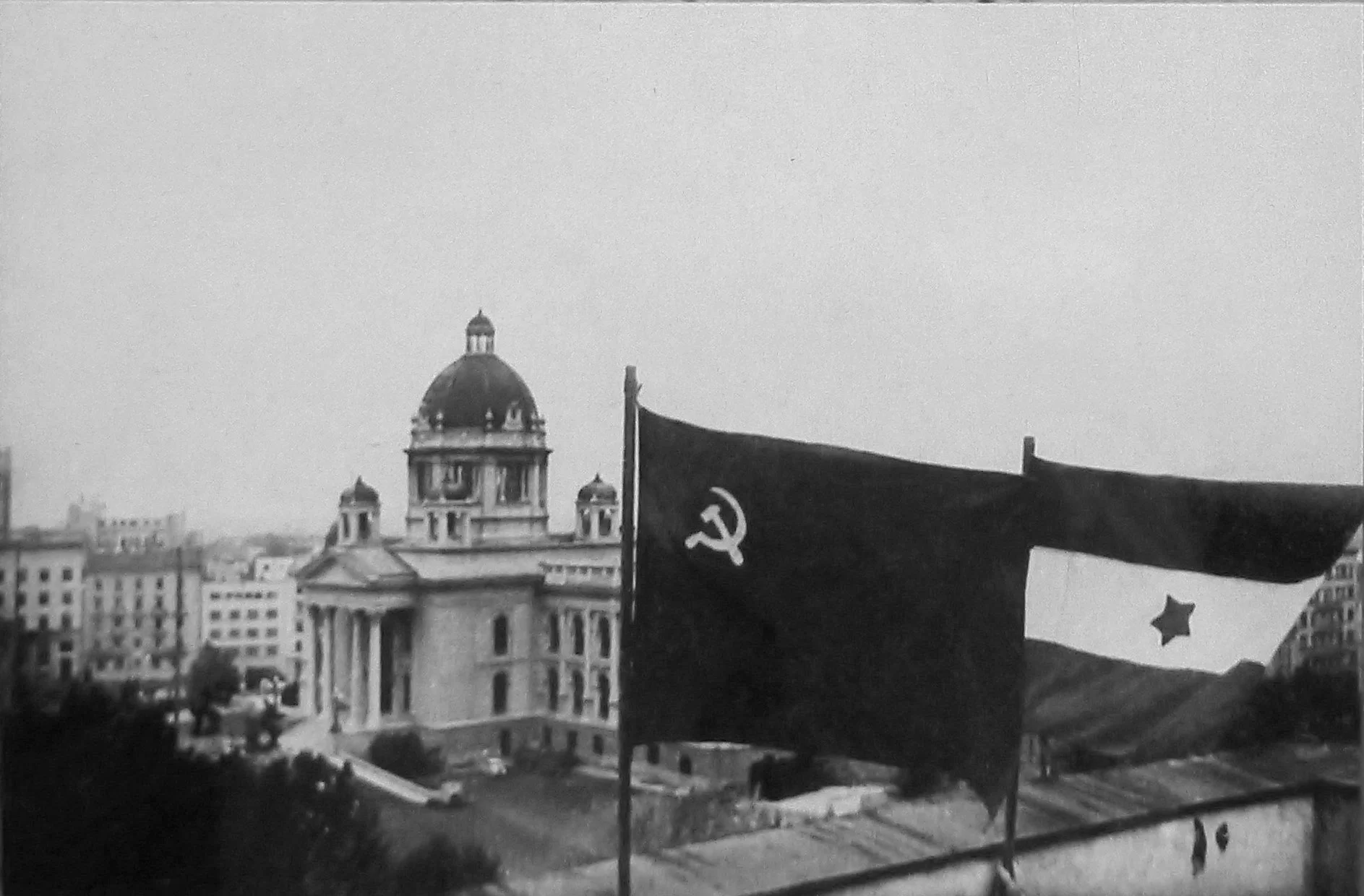
Soviet and Yugoslavian Communist flags over Budapest
In Greece, the Germans had been compelled to withdraw from Greece after the collapse of the Bulgarian government. This allowed the Greek government in exile to make preparations to return to the country, along with British forces. The presence of large numbers of communist resistance fighters in the country resulted in a crisis, and in December demonstrations turned into violence in Athens, and after battles with government forces and British troops the communists were forced to retreat from the capitol.
The Homefront
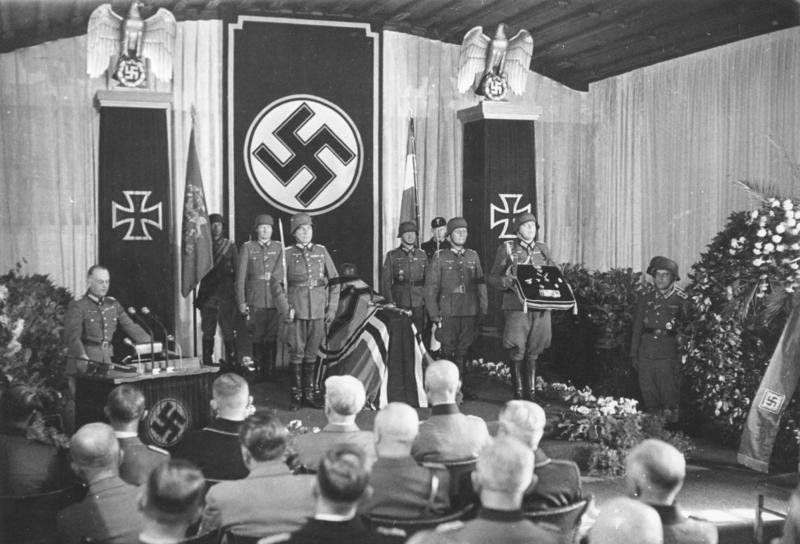
The funeral of Field Marshal Erwin Rommel
In Germany, the fallout from the failed assassination attempt on Hitler in July continued, with Nazi courts condemning numerous military officers to death for real or supposed involvement in the plot. The net cast even extended to one of the most famous and successful of German military leaders, as Field Marshal Erwin Rommel, at the time convalescing in Germany after being wounded in Normandy, was implicated in the plot. Realizing the propaganda danger of such a beloved national hero being accused of high treason, Hitler instead offered Rommel a choice: appear for public trial, whereupon he would be found guilty and executed, with his family also being punished, or commit suicide and be hailed as a fallen hero. The Desert Fox took the second option, taking his own life on 14 October.
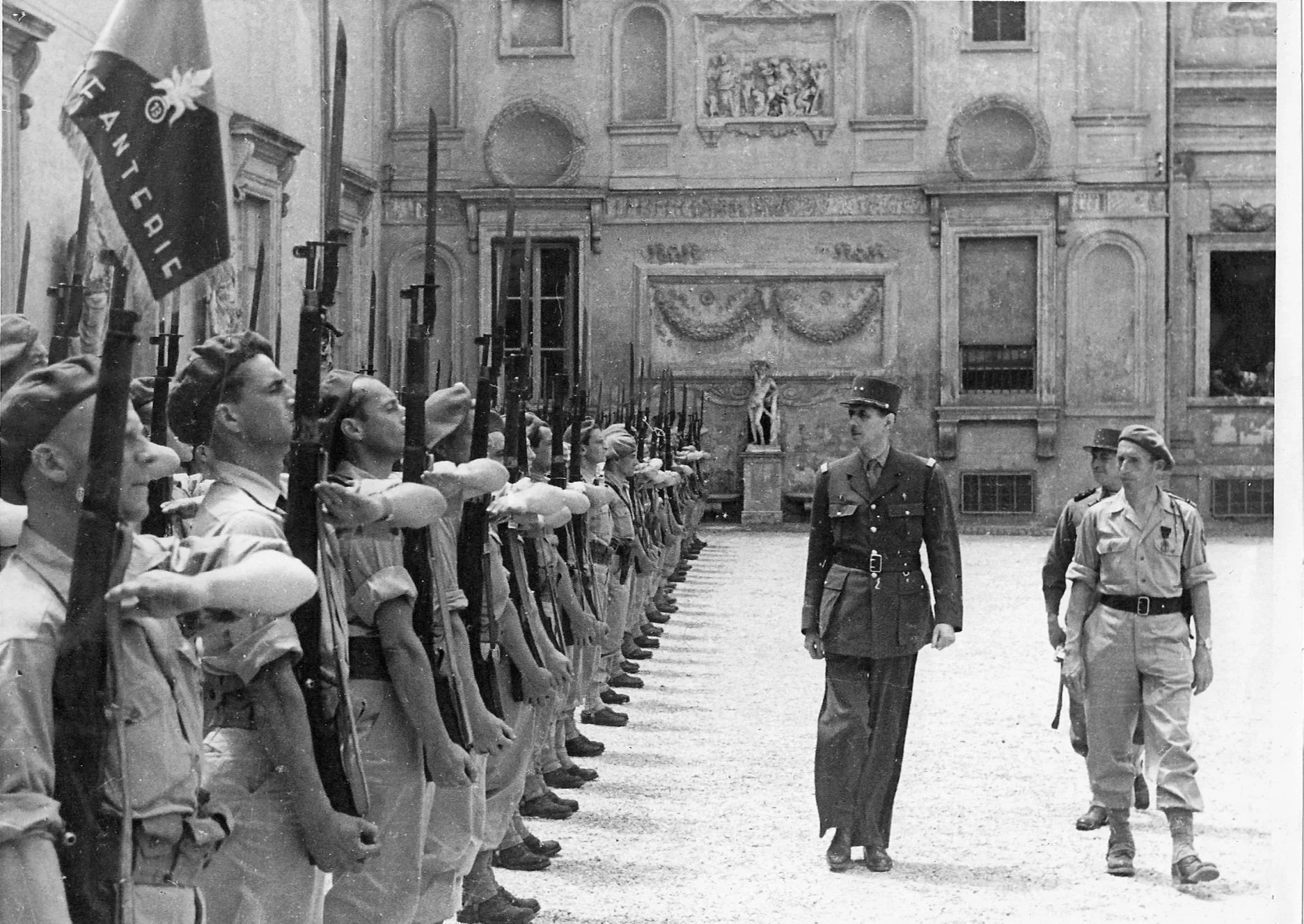
General de Gaulle review French soldiers in 1944
Meanwhile, in France the new Provisonal Fourth Republic was consolidating its power, and ordered the various resistance movements scattered across the country to disarm and stand down following the expulsion of the Germans from the nation. Many resistance fighters were integrated into the restored French Army that was already taking part in the invasion of western Germany, while the reestablishment of French government continued apace.