Carcano M91TS
A specialist variant of the Carcano intended to equip various units involved in a wide variety of roles not served by the standard infantry rifle or cavalry variations.
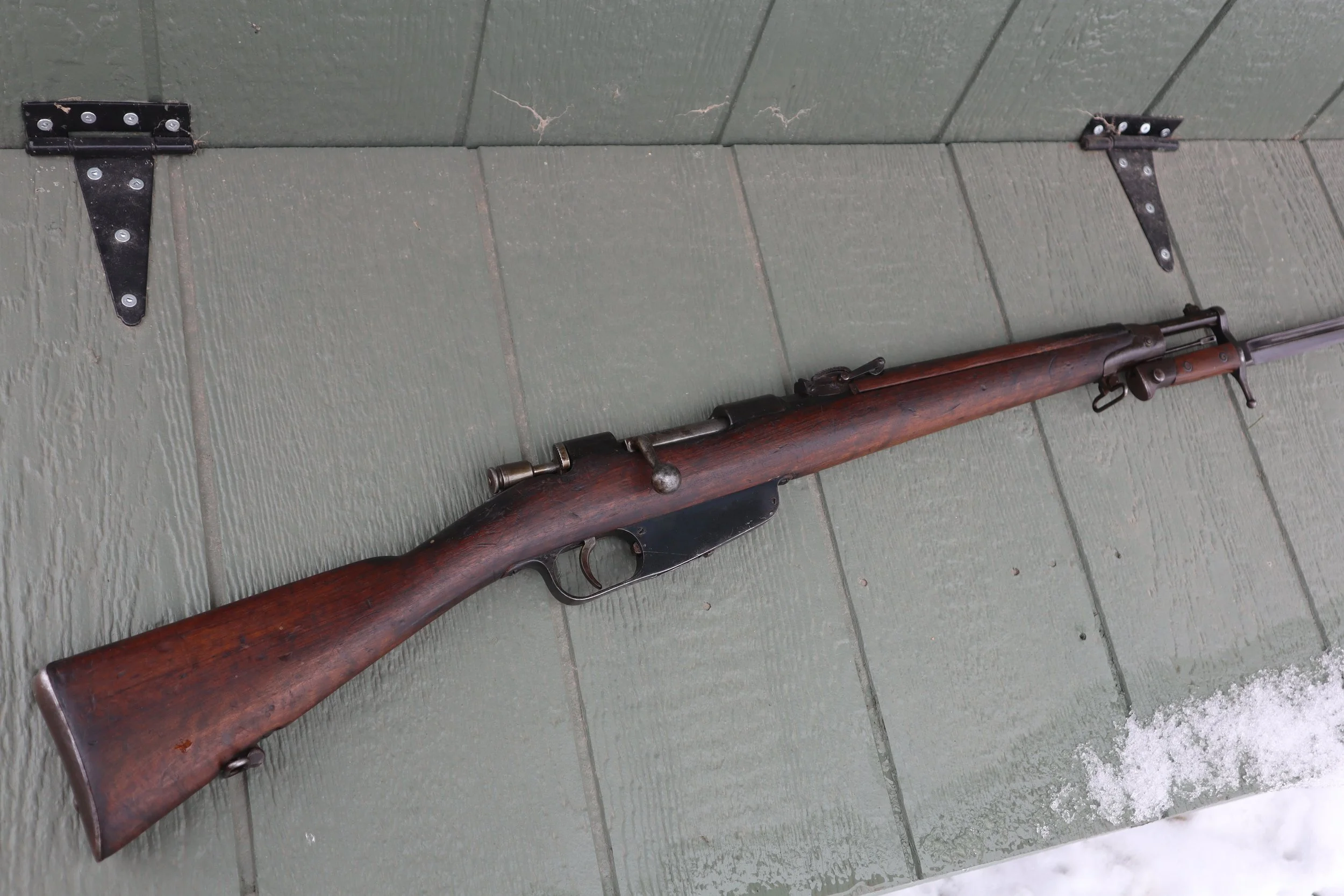
The History
The Kingdom of Italy had adopted its first smokeless powder rifle, the Model 1891 Carcano, in 1892, and the full length infantry rifle was supplemented by a carbine, the Moschetto M1891, the following year. This was not simply shorter than the infantry Fucile, but also featured a distinctive underfolding spike bayonet, optimized for use by mounted cavalry, bicycle troops, and the Carabinieri. This would lead to some complications, however, by some specialized military units that needed the compact nature of the carbine as well as the utility of the detachable bayonet.
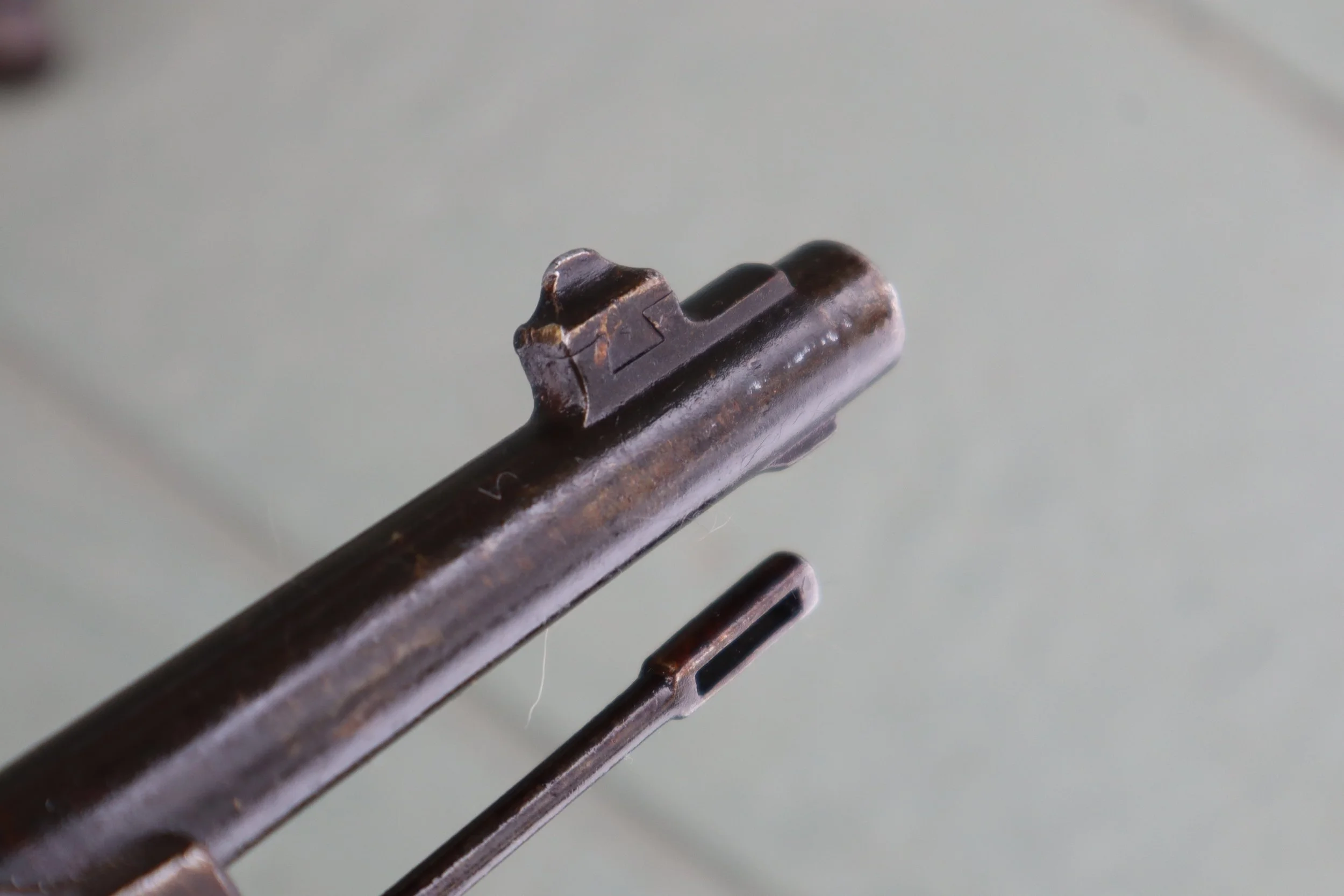
The front sight of the M91TS. Note the extension of the front sight base, intended to expand the diameter of the barrel to secure the M91 bayonet
Thus after some developmental experiments in the last years of the nineteenth century in 1900 a third variant of the Carcano rifle entered the scene in the form of the Moschetto Modello 1891 per Truppe Speciali, or Carbine M1891 for Special Troops. This was identical in length to the existing carbines, but differed notably in the featuring of a full length stock and handguard and a unique transversal lug to attach a proprietary knife bayonet. It should be noted that the TS was intended originally for issuance to specialists such as artillerymen, engineers, couriers and others, rather than the modern connotation of “special” forces. Production took place at the government arsenal at Brescia, and continued through the Italian involvement in the Great War of 1915-1918.
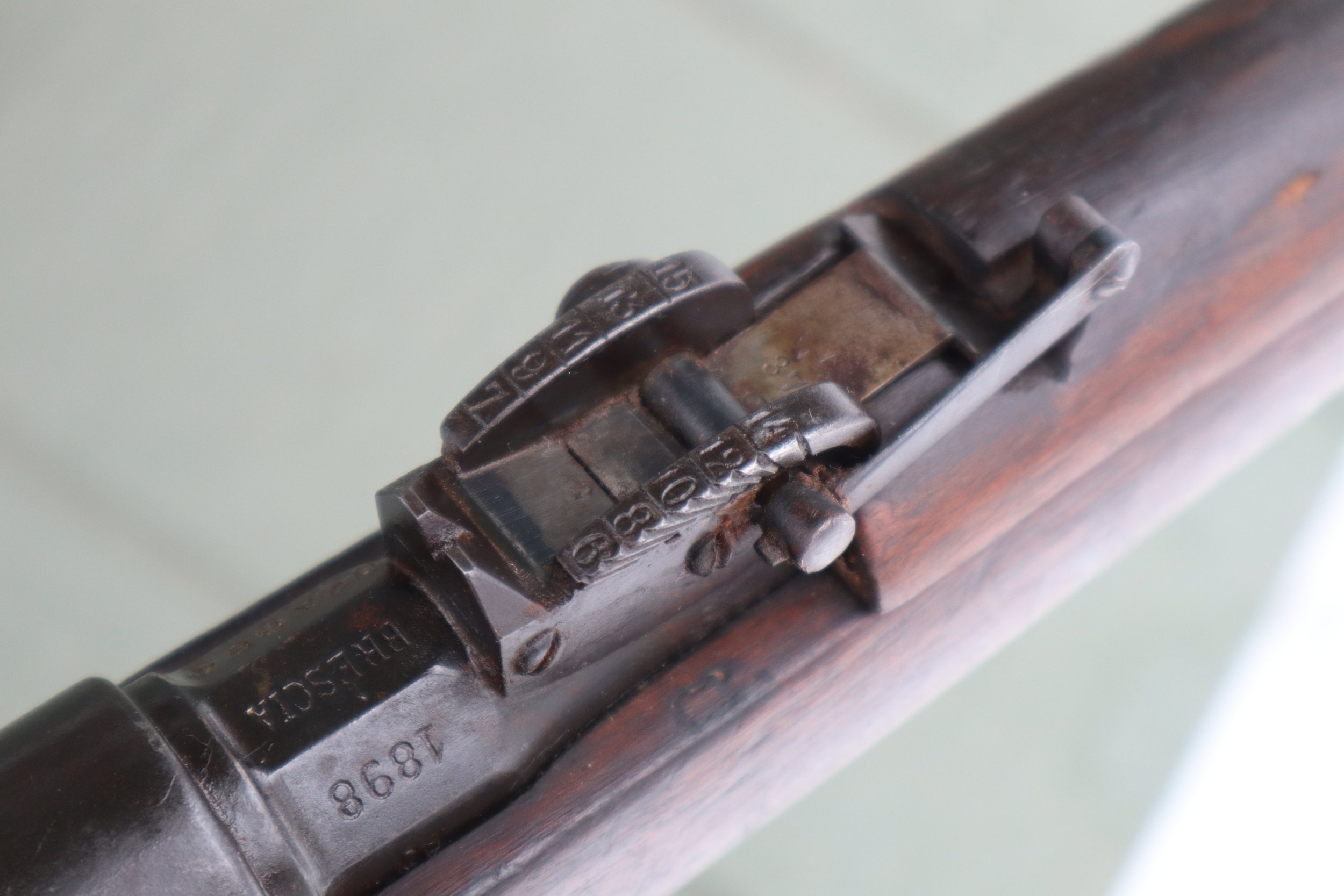
The rear sight of the TS is identical to that of the M91 carbine, being a complacted version of the M91 rifle sight graduated from 600 to 1,500 meters, with a 300 meter battlesight
As the Italian Front opened, the TS went to war with the men of the Regio Esercito, and indeed saw its role expand, becoming popular with field officers and NCOs as the conflict dragged on, as well as becoming popular with the Arditi (Italian trench assault units similar to the German Stormtroopers). Various changes were instituted both in production and in the field, namely reinforcing the handguards and the elimination of the transversal bayonet and its replacement with the standard M1891 model, at first by field armorers in the war in by factory conversion in the 1920s. The sling was also relocate from the underside of the weapon to the left side during this period.
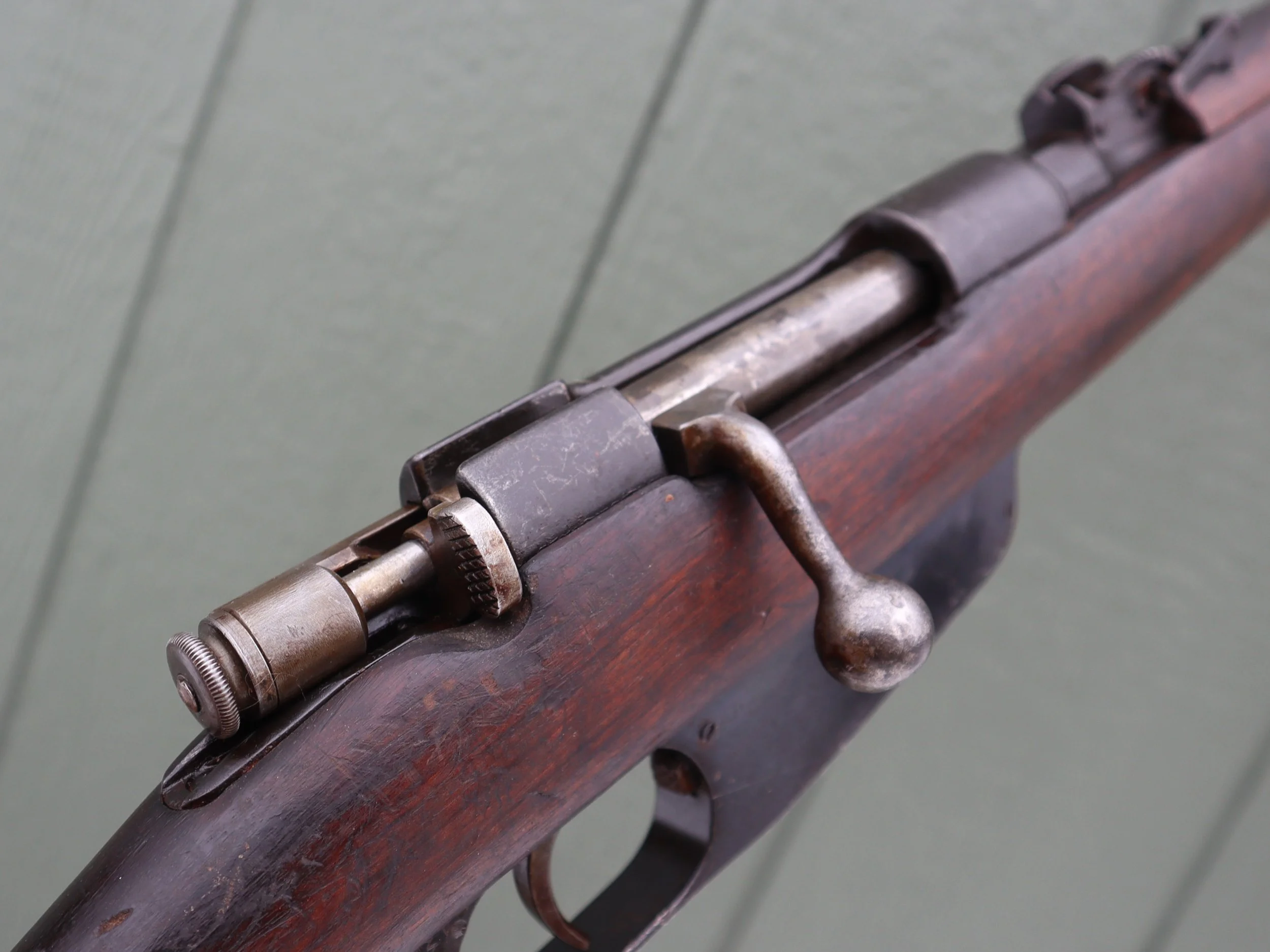
The action of the TS is identical to that of the M91 Carbine, itself differing from the standard M91 rifle only in its bent bolt handle
After the Italian victory in the Great War, the M91TS remained in prodcuction and continued to evolve, an became more prevelant in the armories of the Royal Army during the colonial conflicts and rise of Mussolini. One reason for this was the decision to convert worn down M1891 rifles into TS carbines by shortening them and relining them using the Salerno method (inserting a rifled liner into the barrel). The weapon was also selected for use with the Trombochino grenade launcher as well. Varients were also produced in 7.35mm to the M1938 standard, and conversions to 6.5mm remained in production and use throughout the Second World War.
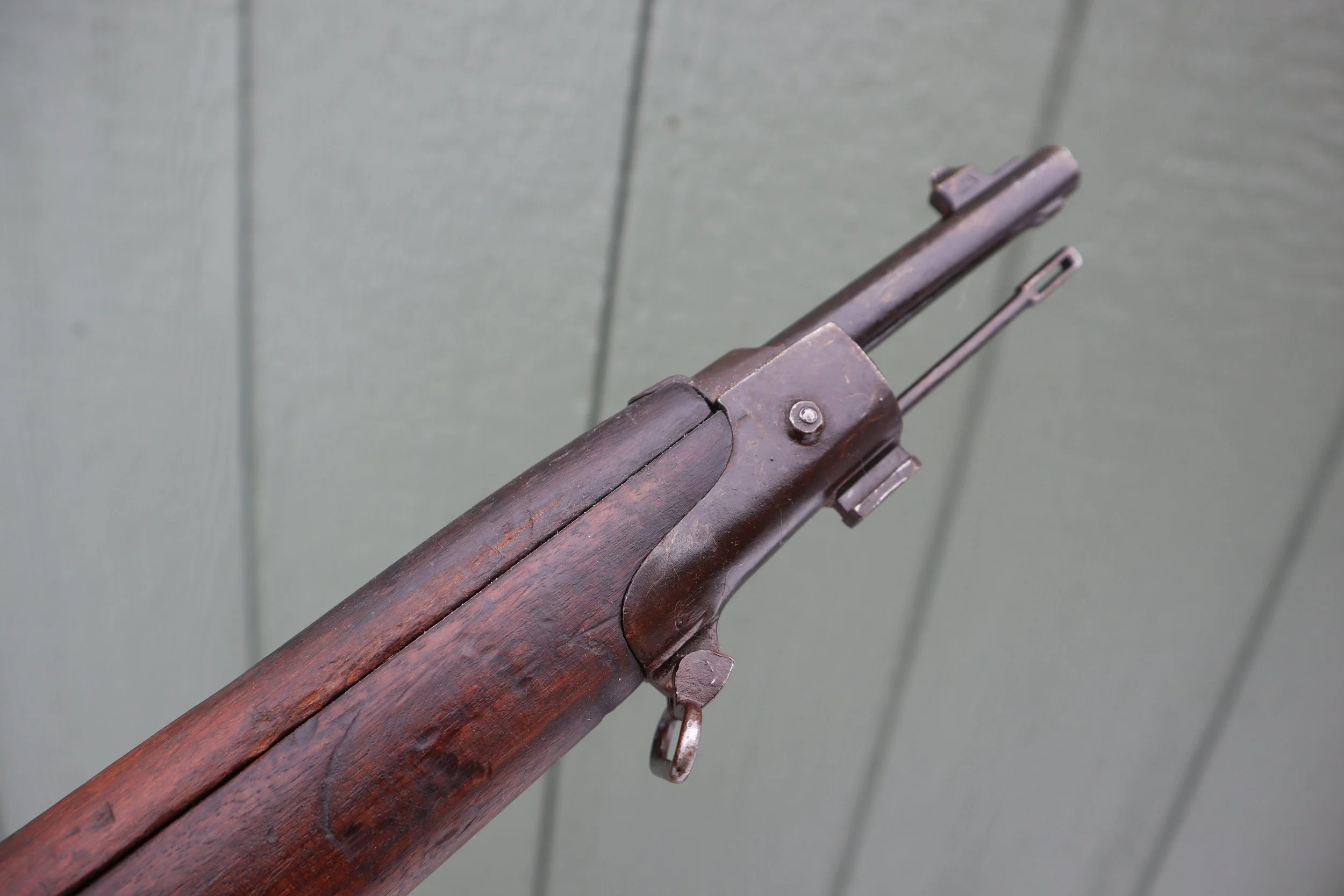
The distinctive endcap and bayonet lug of the TS model carbine
The Design
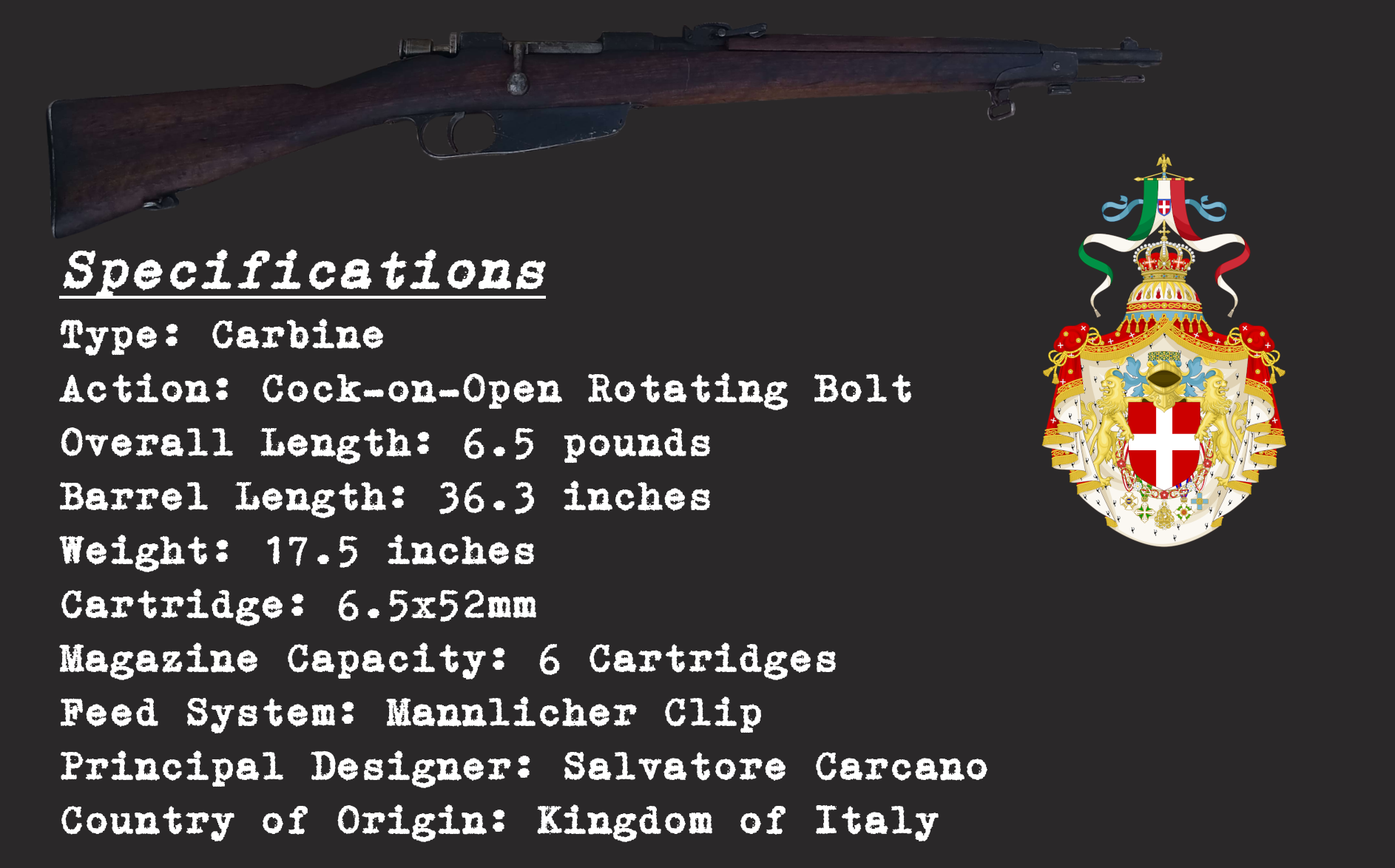
At its core, the M91TS action is identical in every way to the basic carbine, with a bent bolt handle and using the Carcano pattern six round clip feeding system for 6.5x52mm ammunition. It is also identical in barrel length to the standard carbine, but is notably different in its stock and bayonet configuration.
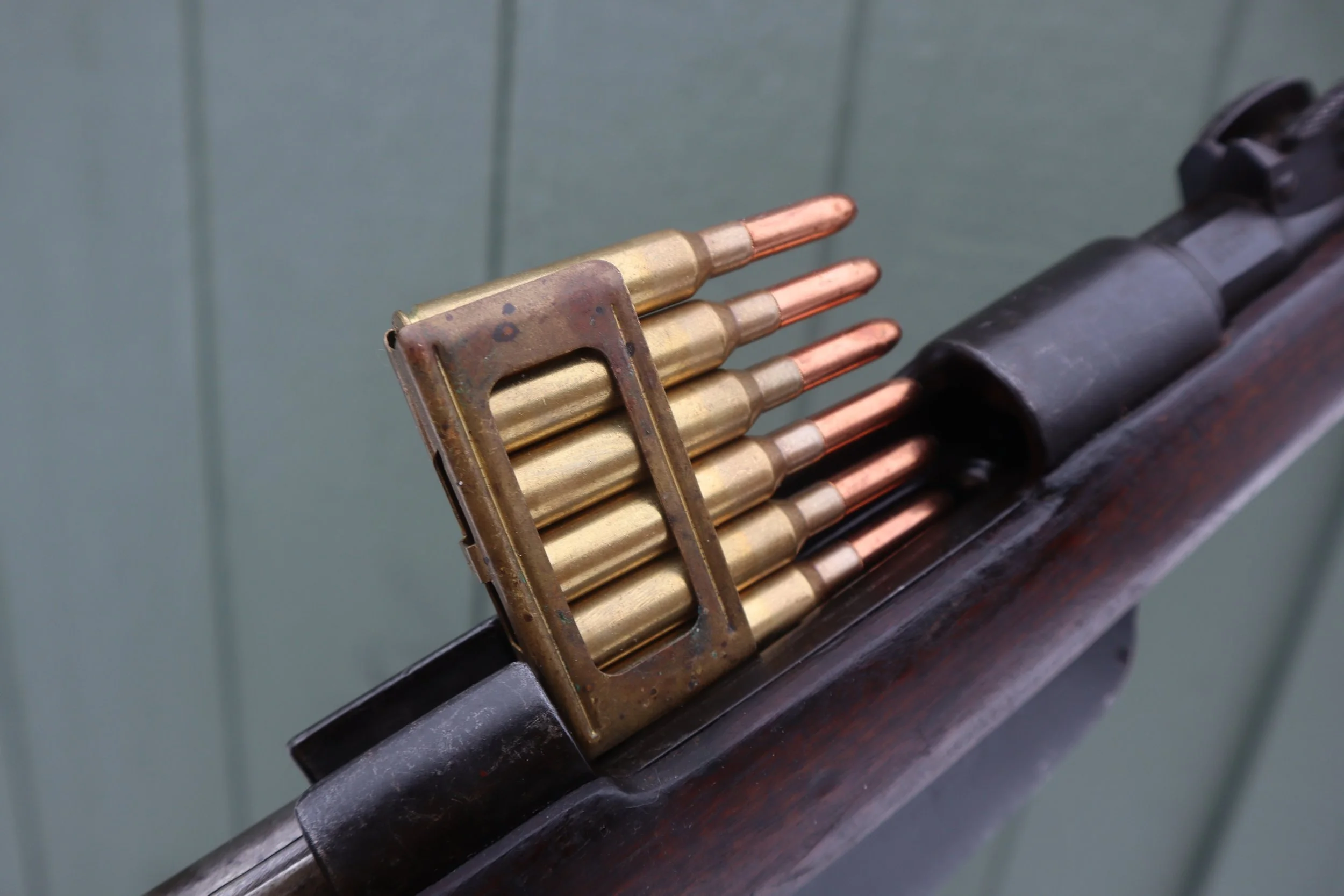
Loading the carbine with a six round clip
This consists of a full length wooden stock and handguard, ending in a distinctive endcap. The forward sling swivel is located here, as is the bayonet lug and cleaning rod. The original transverse lug has been removed here with the modification to a standard lug. A sling swivel bar is located on the side of the stock, as well as the side of the butt as per modification, although the original rear udnerside swivel is also still present here.
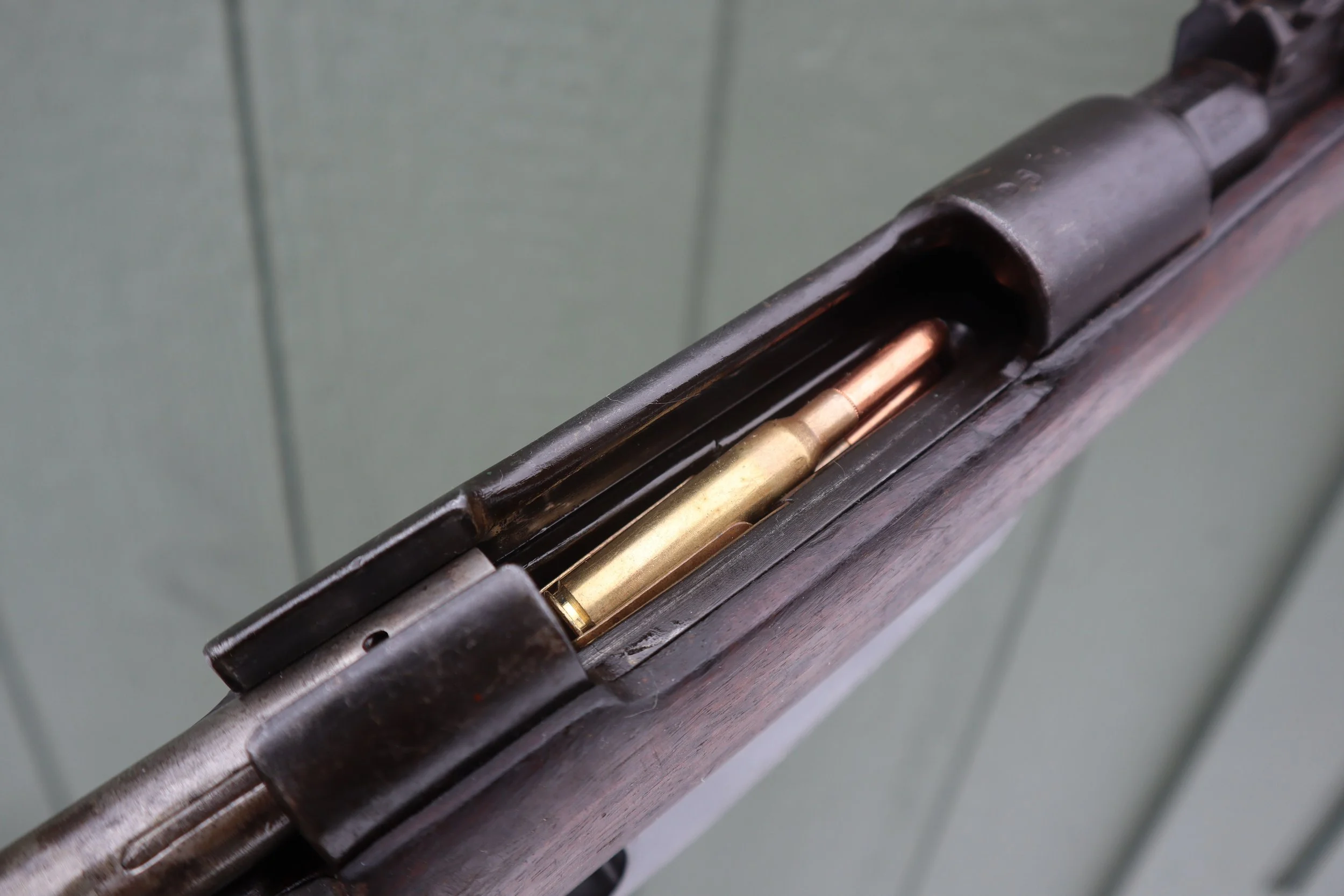
The clip loaded into the weapon, forming the feed lips
This Example
The example in the reference collection was produced in 1918 by the Brescia Arsenal, and is generally a good example of a late WWI type. It features the standard M91 bayonet lug as well as side mounted sling attachment points, and has evidence of reworking and reserialization in the interwar years as was standard. It is in overall very good condition, and is import marked on the left side of the receiver as a component of the large imports from rural Italian police stocks in the past decade.
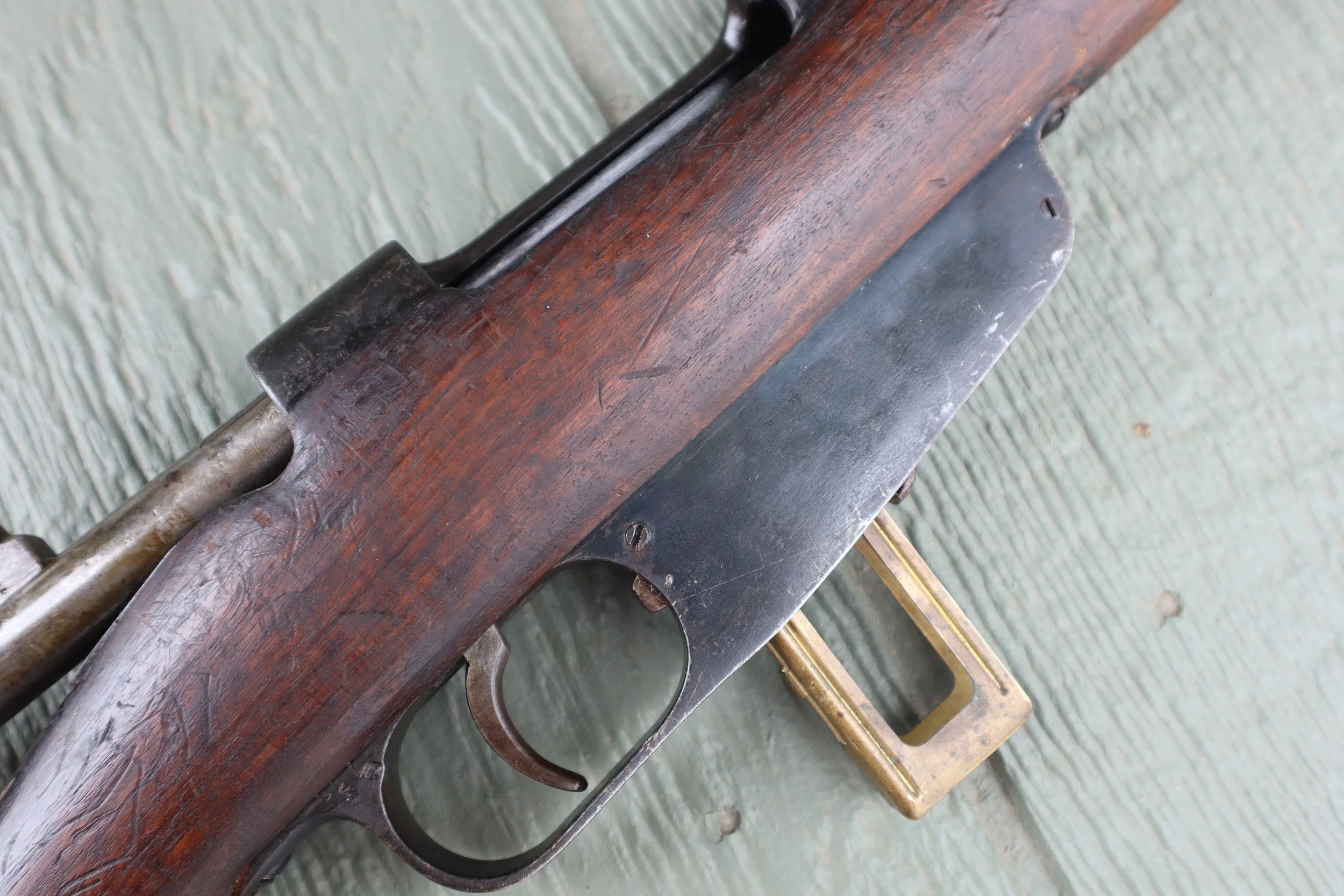
The clip is ejected via a port on the underside of the magazine following the chambering of the sixth cartridge
Opionions
The M91TS has earned its reputation as one of the most handy carbines of the Great War, and the author here is inclined to agree. Taking the ergonomics of the basic carbine and improving it with the utility of the detachable bayonet as well as a larger handguard and stock for more variations in grip based on user size, it makes for a potent platform, and the early model endcap also gives a rather sleek look to the weapon. Recoil from the 6.5mm cartridge remains light and manageable, with the only real issue being the inconsistent performance of different clips, an Achilles heel of the Carcano series that is really more of an issue to collectors a century later than the Italian Soldati of yore.
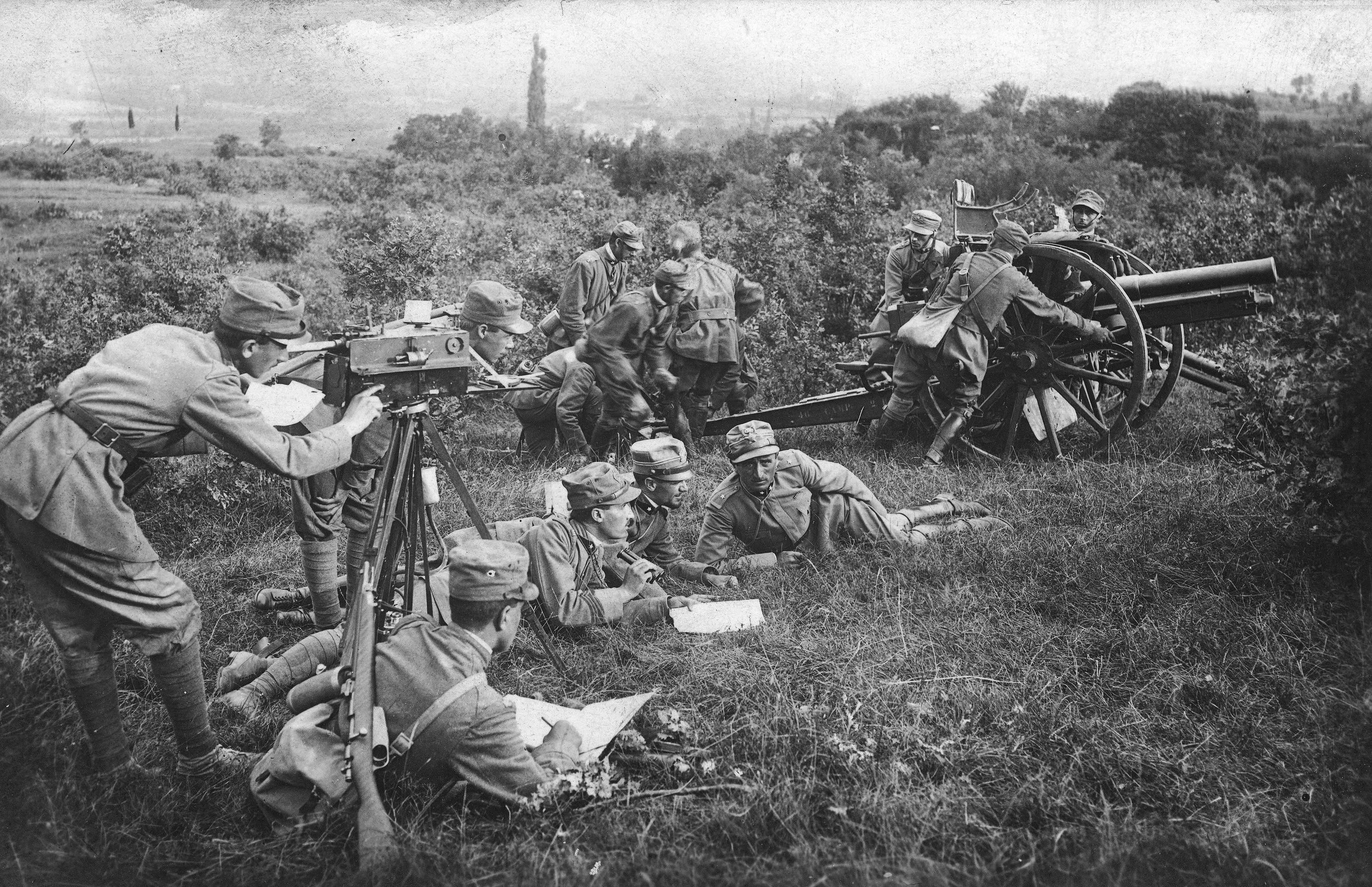
Italian artillerymen maneuver one of their guns. Several are armed with TS carbines
Observed Values and Frequency
Updated: January, 2026
AVERAGE VALUE (USD): $450
FREQUENCY: Uncommon
COLLECTOR’S NOTES: Generally no longer available on the surplus market.
Early models with WWI type endcap are less common than later refit models with dual barrel bands.
Examples with original transverse bayonet lug are rare.