Model 1873 Army
The first cartridge handgun adopted by the United States would go on to leave an enduring legacy as one of the most iconic firearms of all time.
The History
In the aftermath of the American Civil War the predominant type of handgun in the reunified United States was the ball and cap revolver, which had served both the Union and the Confederacy in large numbers. With several calibers and numerous models in service, attempts to standardize post war also took into account that the metallic cartridge was more than a passing fad, leading to the adoption of a breech loading rifle (the M1866 Springfield), and Colt was by the early 1870s scrambling to retain its chokehold on the market in the face of new competition. Due to patents held by Smith and Wesson, design work could not commence until 1896, placing the industry titan at a disadvantage.
Following a series of conversions for their existing percussion revolvers, the first dedicated cartridge model from Colt was the Model 1871, a .44 caliber design with an open top and similar lines to the older Model 1860 .44 caliber percussion revolver. This was rejected by the US Army in its 1872 handgun trials, however, as they feared that the lack of a top strap would render the design weak, as well as reporting dissatisfaction with the power of the .44 cartridge.
The result was a redesign to incorporate a top strap along with a new .45 caliber cartridge, and this improved model was accepted by the Army in 1873 as their new standard service pistol. Deliveries began within the year, with the first deliveries going to US Cavalry units stationed along the western frontier. They quickly won fame, seeing notable service with George Custer’s 7th Cavalry in the Black Hills Expedition of 1874 as well as the ill-fated Battle of the Little Bighorn two years later.
While military procurement continued, the Model 1873 also began to see widespread adoption by law enforcement and civilians on both sides of the law in the subsequent “Wild West” period, cementing its position as an icon of the American frontier in a huge number of configurations of barrel length, chambering, finish and grip.
The Model 1873 was officially replaced in 1892 with the Colt M1892 Army, a double-action design using a .38 caliber smokeless powder cartridge. This design, although more modern, was considered to have a notable deficit in stopping power, and as a result of this along with slow procurements the Model 1873 remained in common service during the Spanish-American War of 1898. Updates performed in the mid 1890s had seen most pistols still in Army service rearsenaled and fitted with shorter 5.5 inch barrels, today mistakenly identified at times as the “Artillery Model”.
The Model 1873 was gradually phased out of military service in the first decade of the twentieth century, but the poor performance of the .38 Long Colt in the Model 1892 led to a return to the .45 Long Colt cartridge with the Colt Model 1909, which would serve as a stopgap sidearm until the autoloading M1911 was able to replace it in service. Civilian production of the Model 1873 has continued to this day, with the pistol becoming iconic thanks to the ubiquitous appearance in Western films and other media. In addition to Colt, a number of other manufacturers produce copies, including this model produced by Pietta of Italy.
The Design
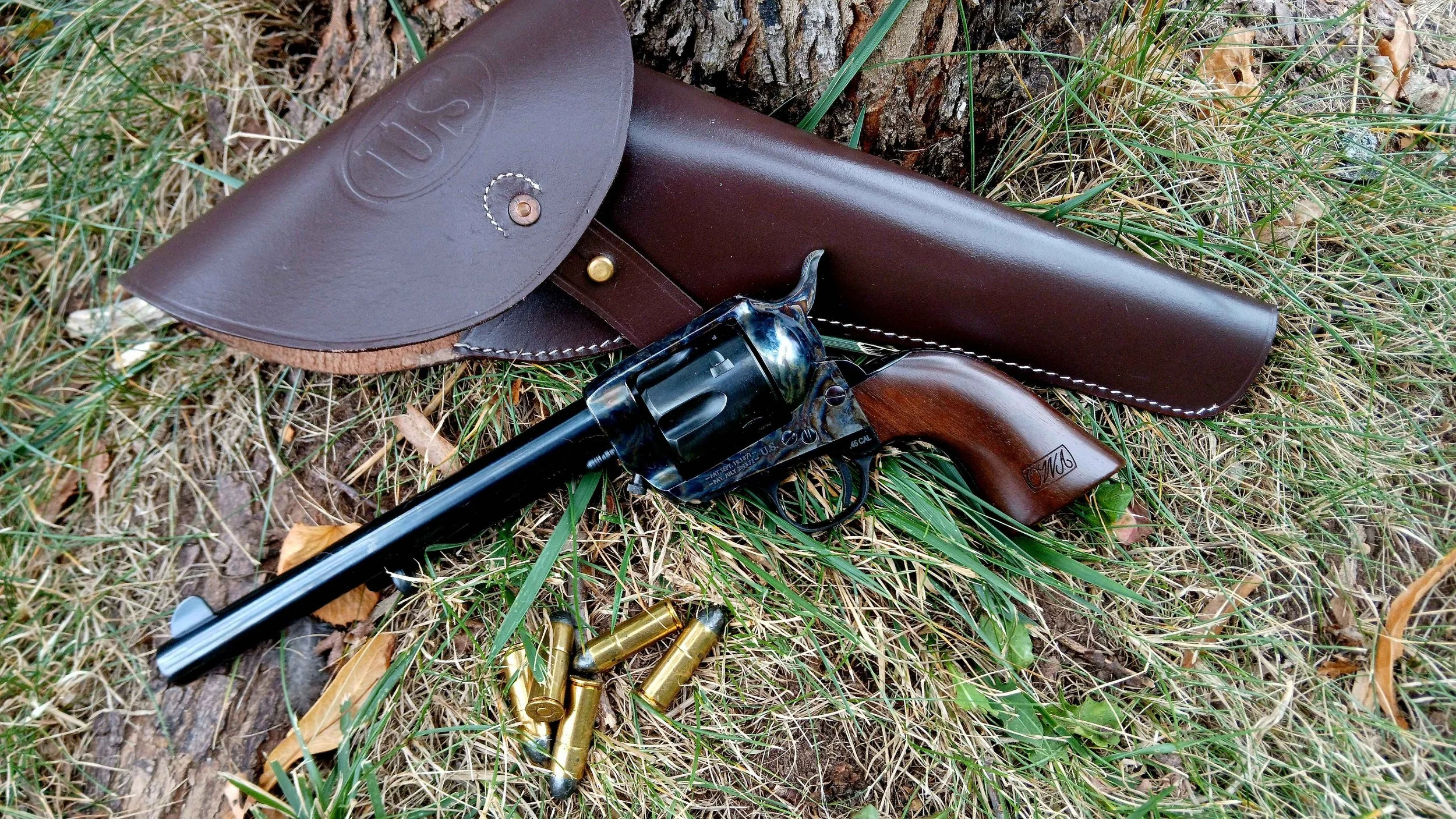
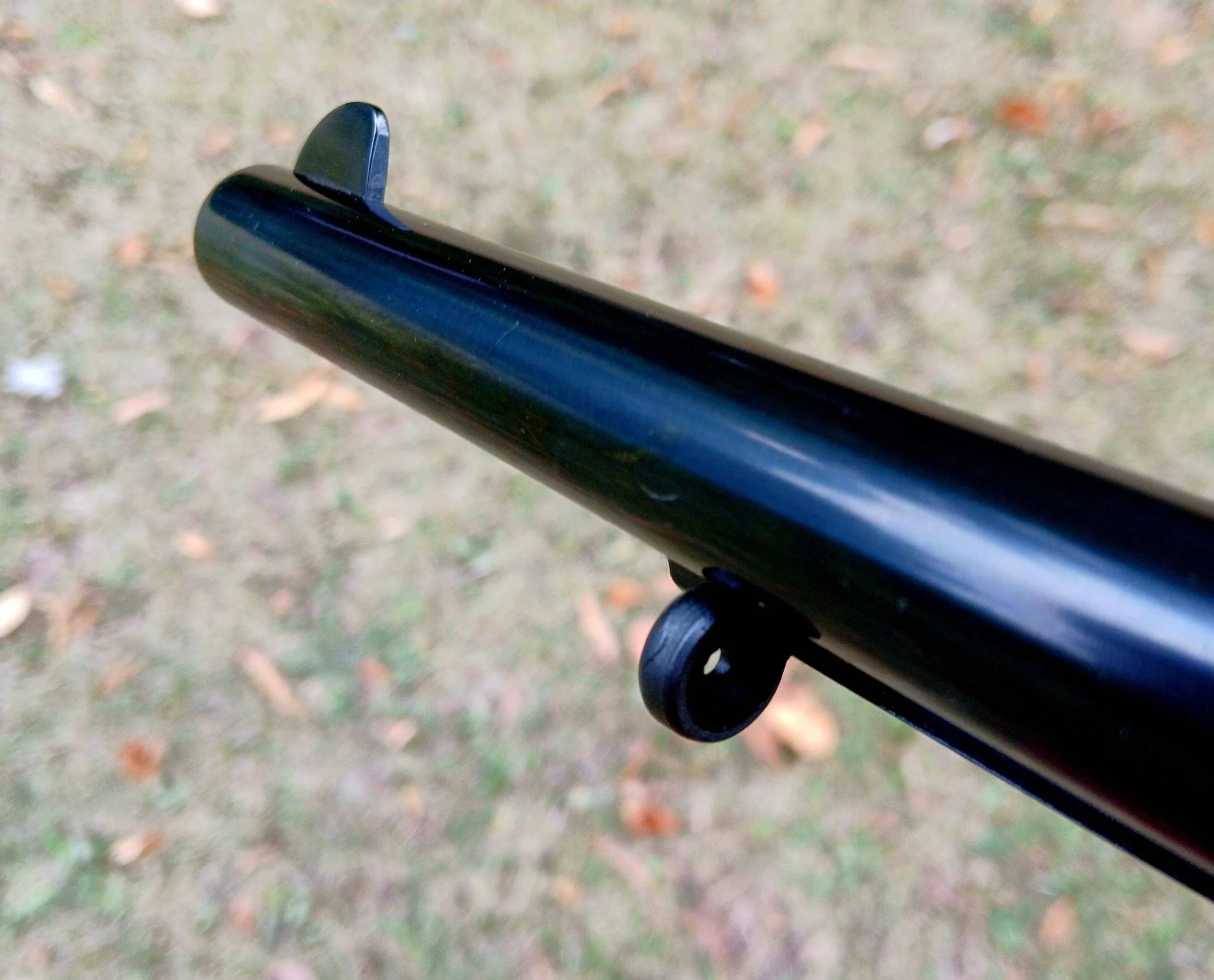
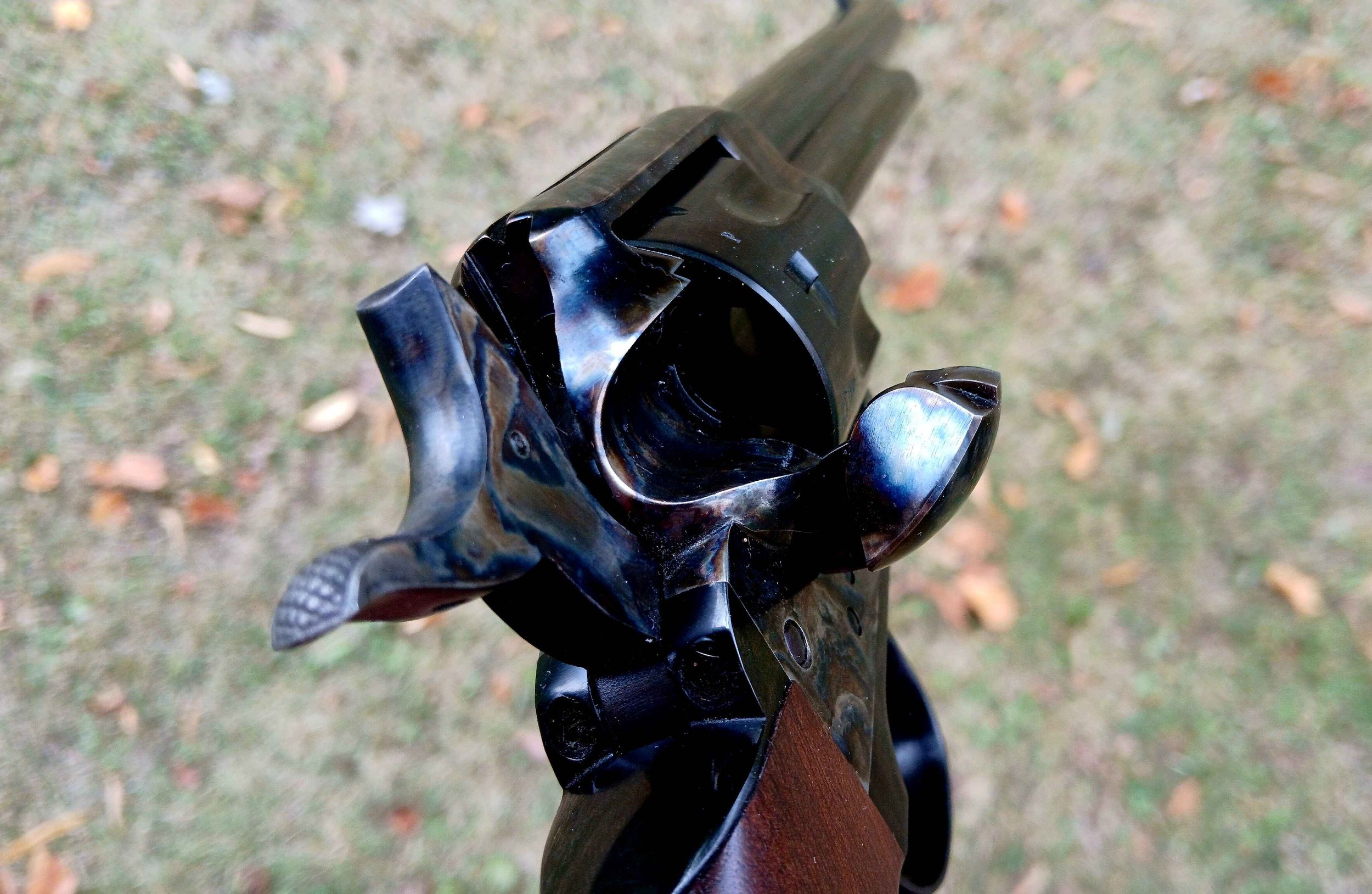
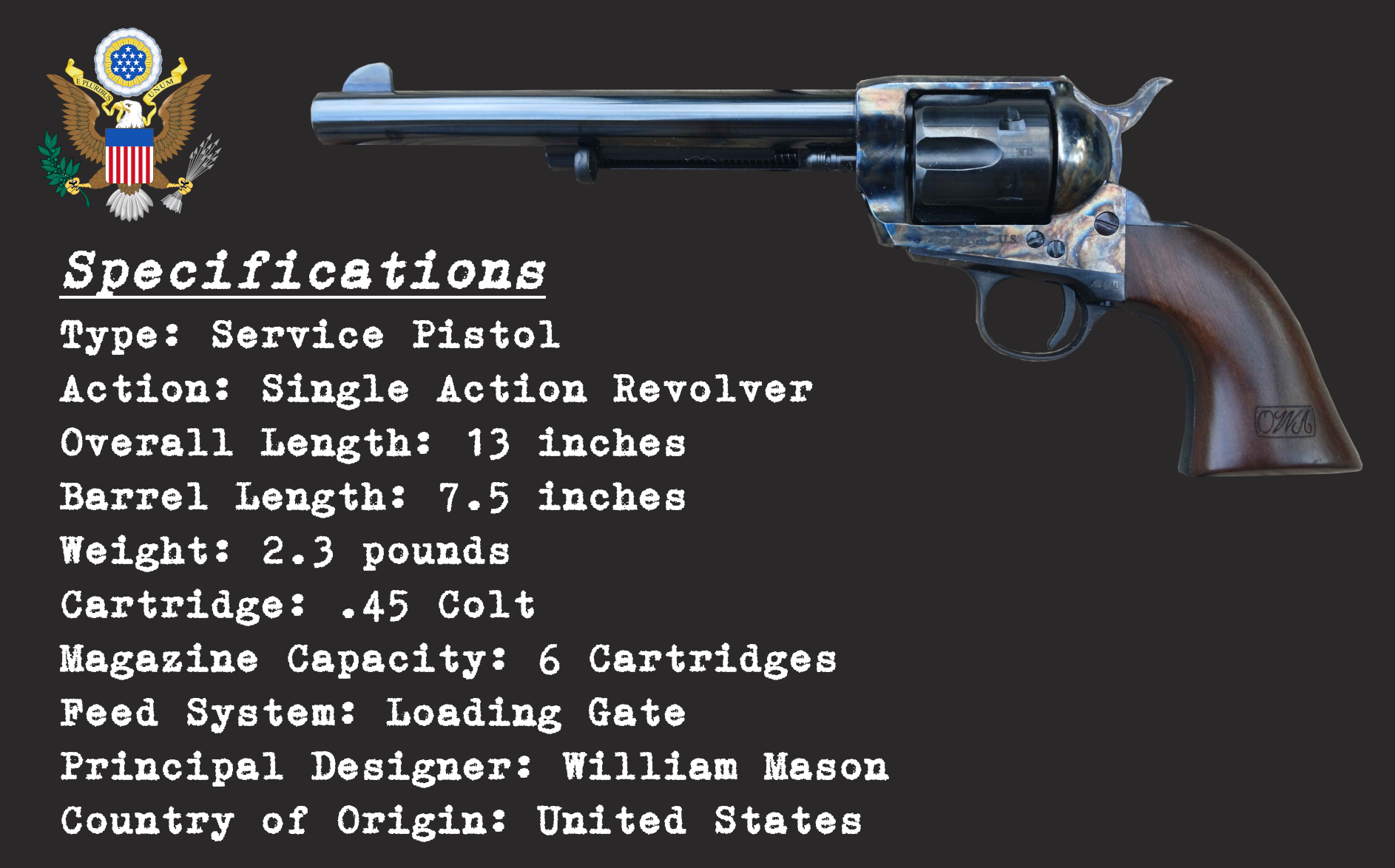
The Model of 1873 is a single action only revolver chambered (for military models, civilian models are available in a plethora of calibers) in the .45 Long Colt cartridge. The original, military specifications for this round called for a 255 grain projectile with 40 grains of black powder propellent with a centerfire primer. The initial military models featured a 7.5 inch barrel, and had case hardened frames mated to blued barrel and cylinder. Sights are rudimentary, consisting of a channel on the top strap and a quarter moon blade front.
Loading is accomplished via a right side gate, with a spring loaded ejector rod housed in a channel at the 5 o’clock position on the barrel relative to the shooter. The safety mechanism consists of a half cock notch, and accidents early in service resulted in orders to load only five cartridges, leaving the hammer down on an empty chamber for carry.
This Replica
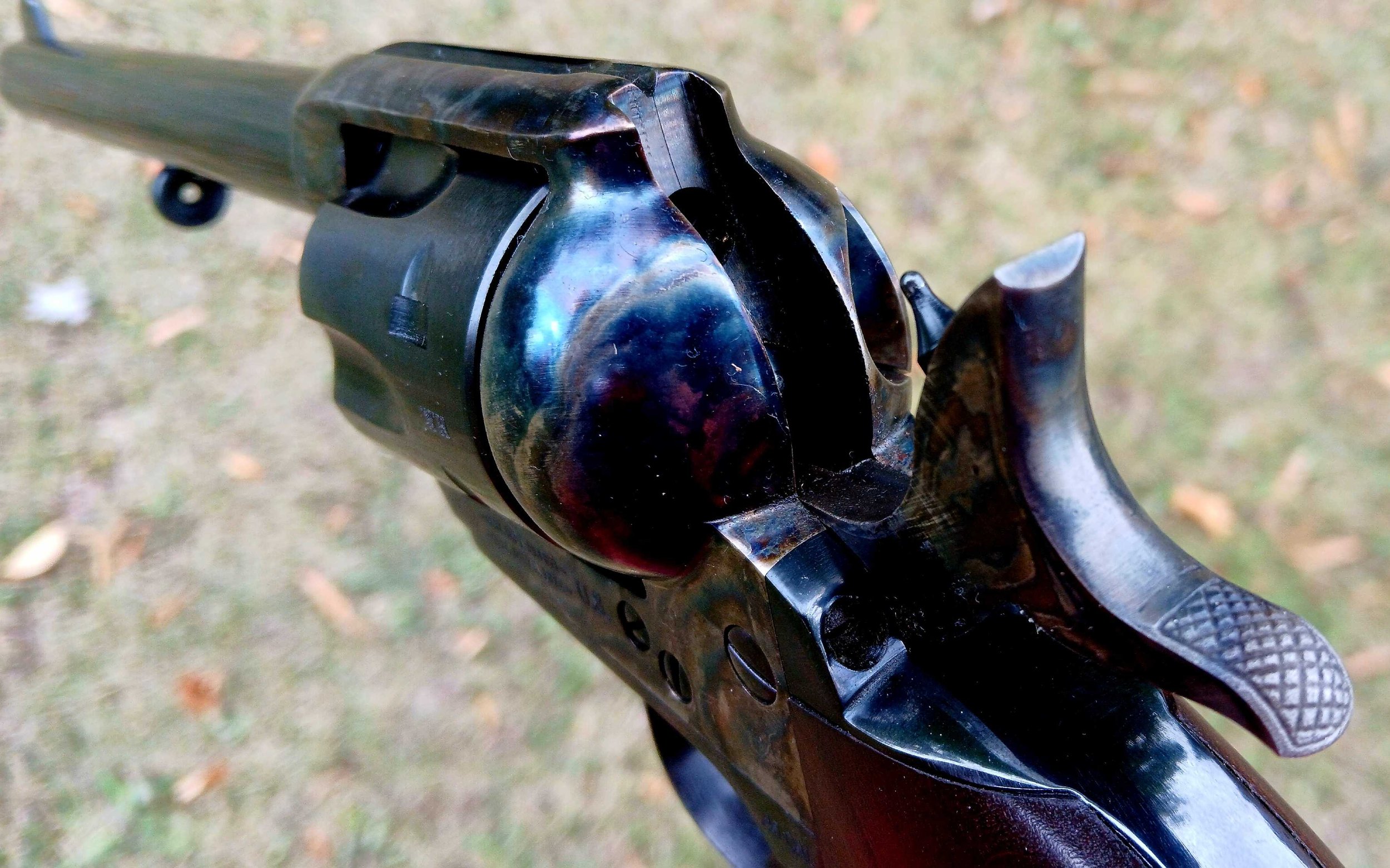
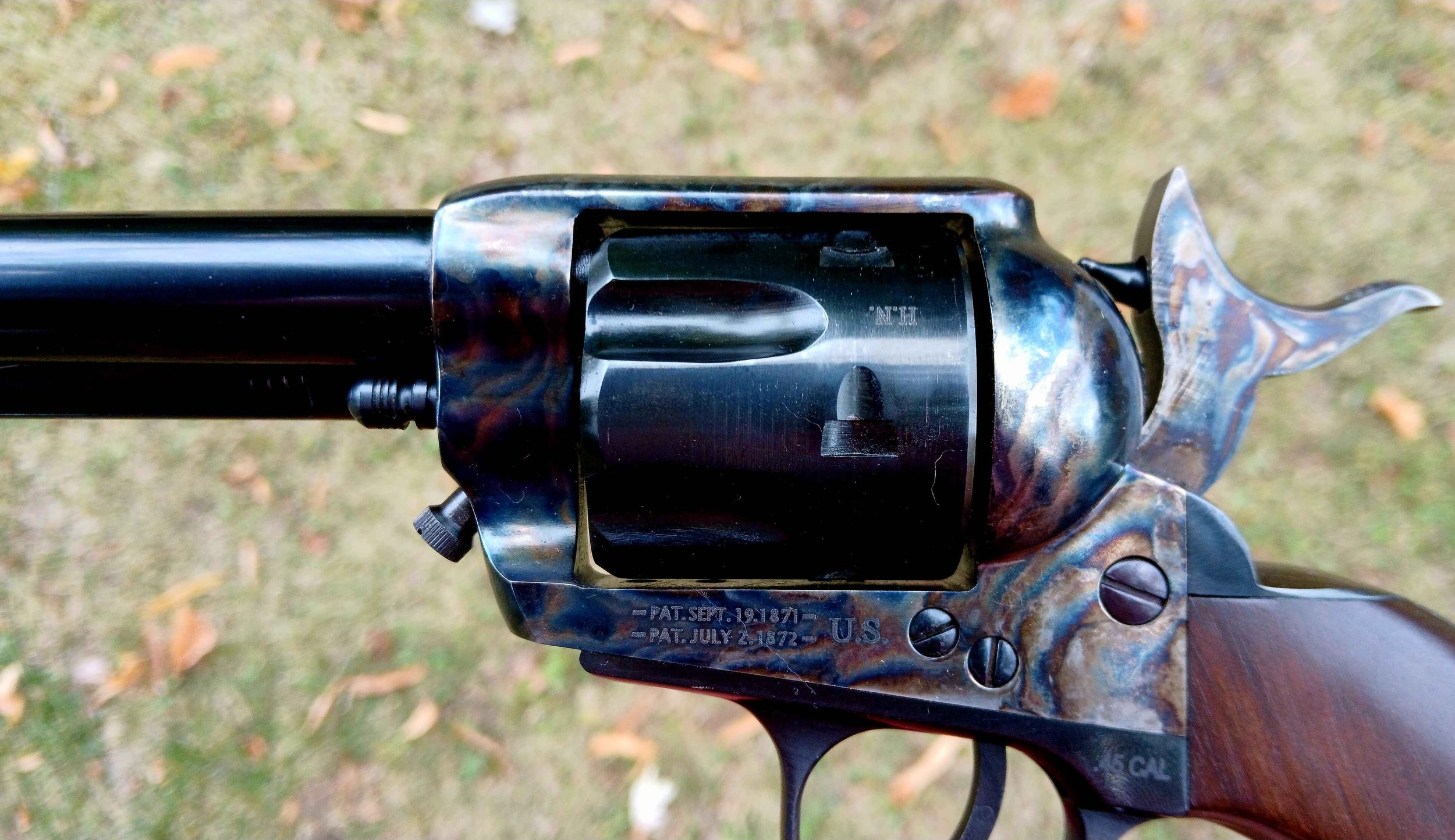
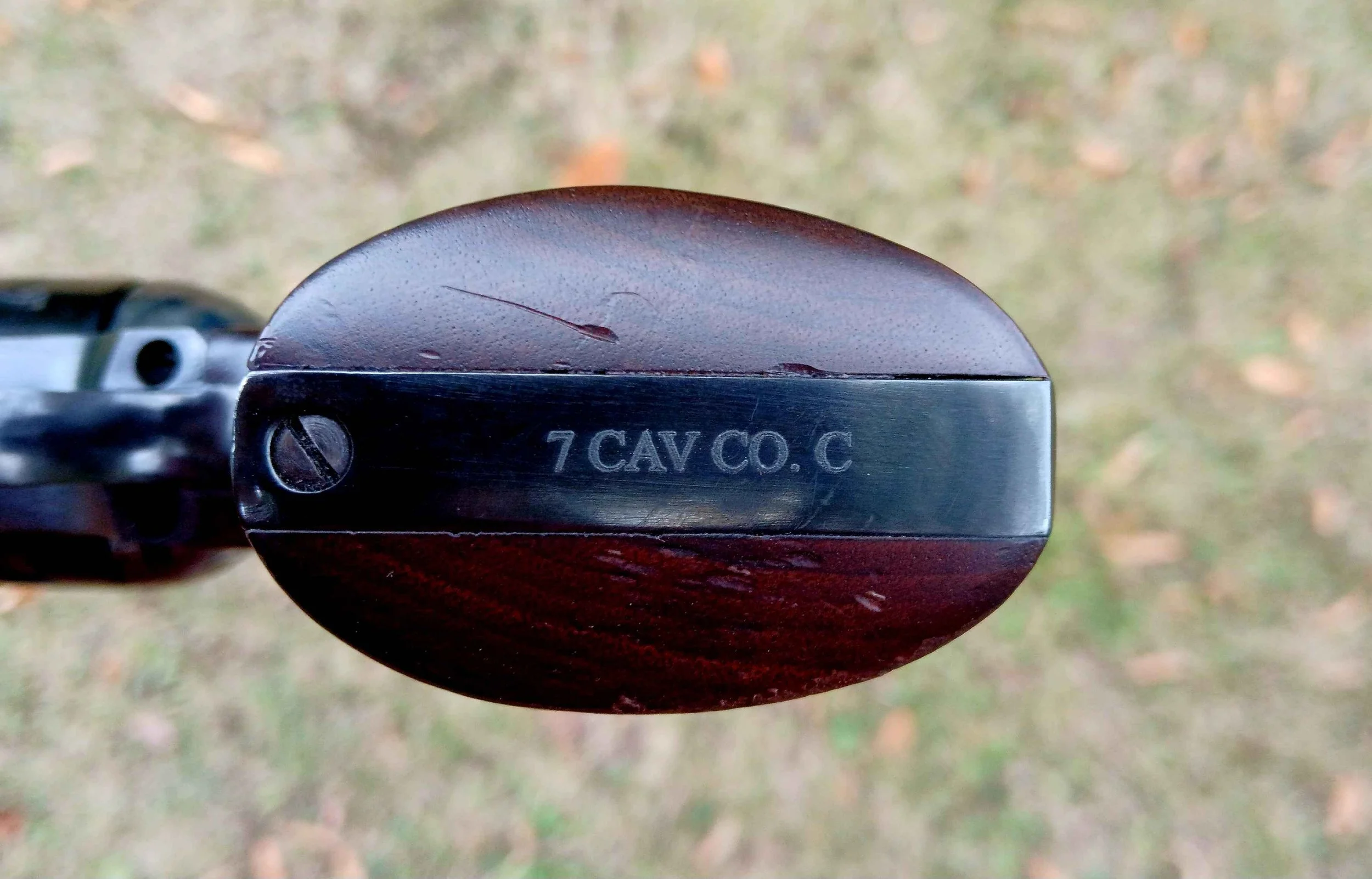
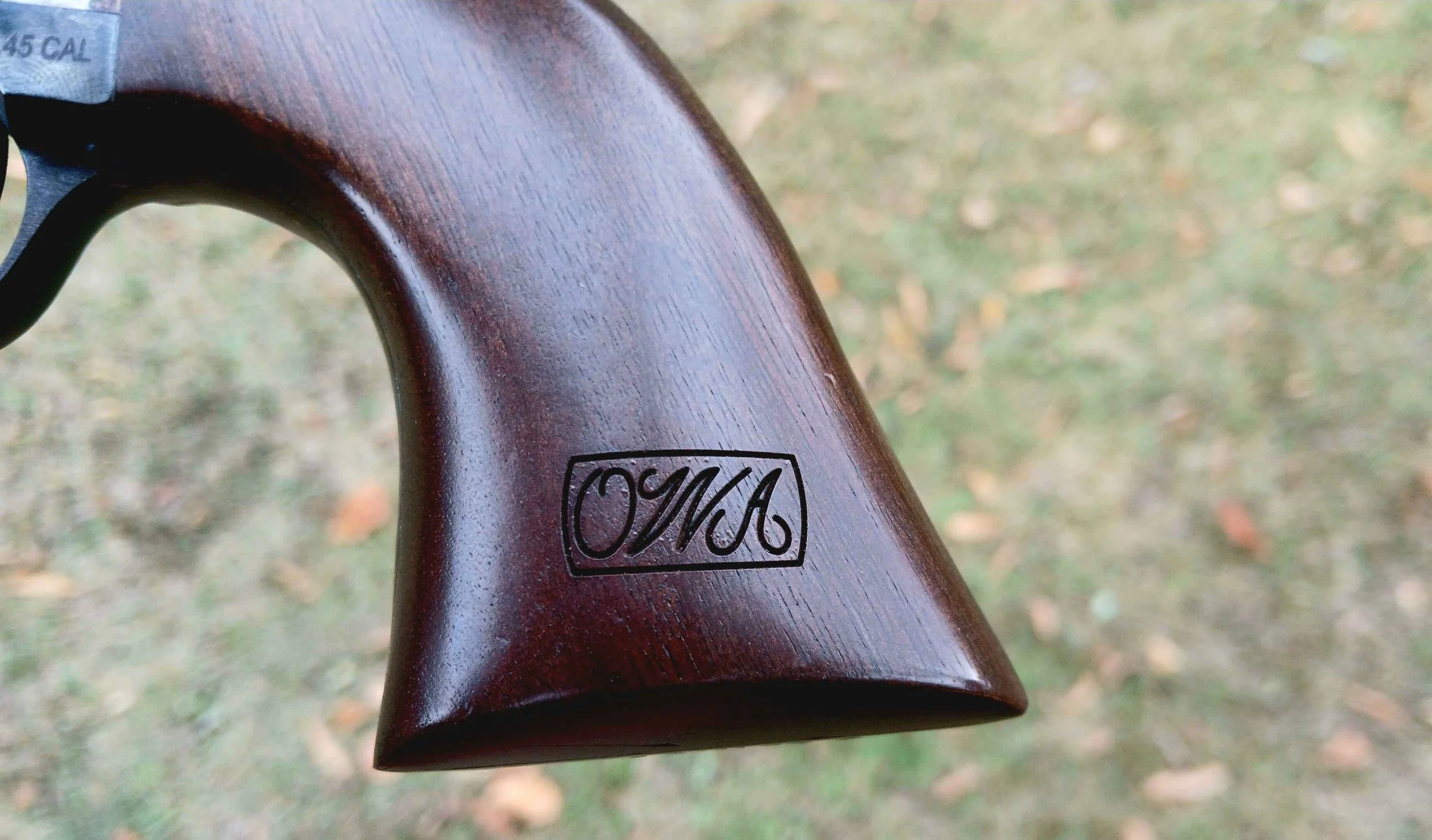
The example in the collection is a modern reproduction of a first generation military issue type produced by Pietta for Cimarron Arms. It features the early non-transfer bar hammer, screw retained cylinder pin and 7.5 inch barrel, as well as replicated martial markings. The “US” surcharge can be found near the patent dates on the left hand side of the frame below the cylinder, and inspector marks and partial serial numbers are located on various components, as is the government “P” proof on the cylinder. The walnut grips bear the “OWA” cartouche of inspector Oliver Ainsworth, as seen on pistols from the first production year. A unit marking on the butt of the pistol marks it for Company C of the 7th Cavalry, commanded by Captain Tom Custer at the Little Bighorn and annihilated there.
Opinions
The Model 1873 is truly one of the most iconic firearms ever made, remaining in production and instantly recognizable even more than century and a half following its introduction. Now mostly relegated to status as a piece of Americana, it never the less remains a potent and useable firearm for numerous applications, as well as sought after by collectors. This replica is a handsome piece, and serves well to fill a gap in a collection of US martial sidearms that would otherwise be extremely difficult to fill (original early military revolvers often commanding prices north of six figures). In addition, this example has also been known to serve as a “woods gun” for the author, its powerful .45 cartridges being sufficient for defense against black bears and other local predators should the need arise.
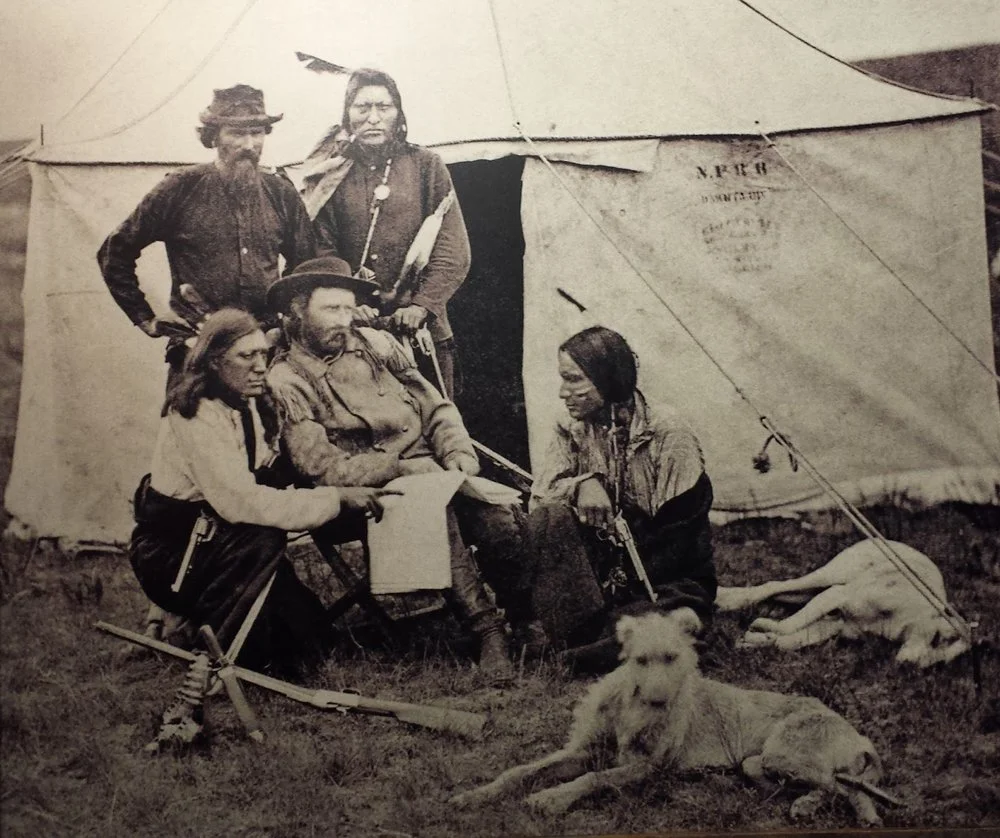
General George Custer with two Arikara Scouts, both armed with Model 1873 Colt pistols, in 1874
Observed Values and Frequency
Updated: August, 2026
AVERAGE VALUE (USD): $635 Retail - New
FREQUENCY: Production
COLLECTOR’S NOTES: Currently available on the primary market. Original 1870s vintage Colt models command a very high price.