“Enfauser”
During and after the Great War, the Turks were pressed by a shortage of modern rifles, and in some cases they would turn to unorthodox solutions using captured weapons.
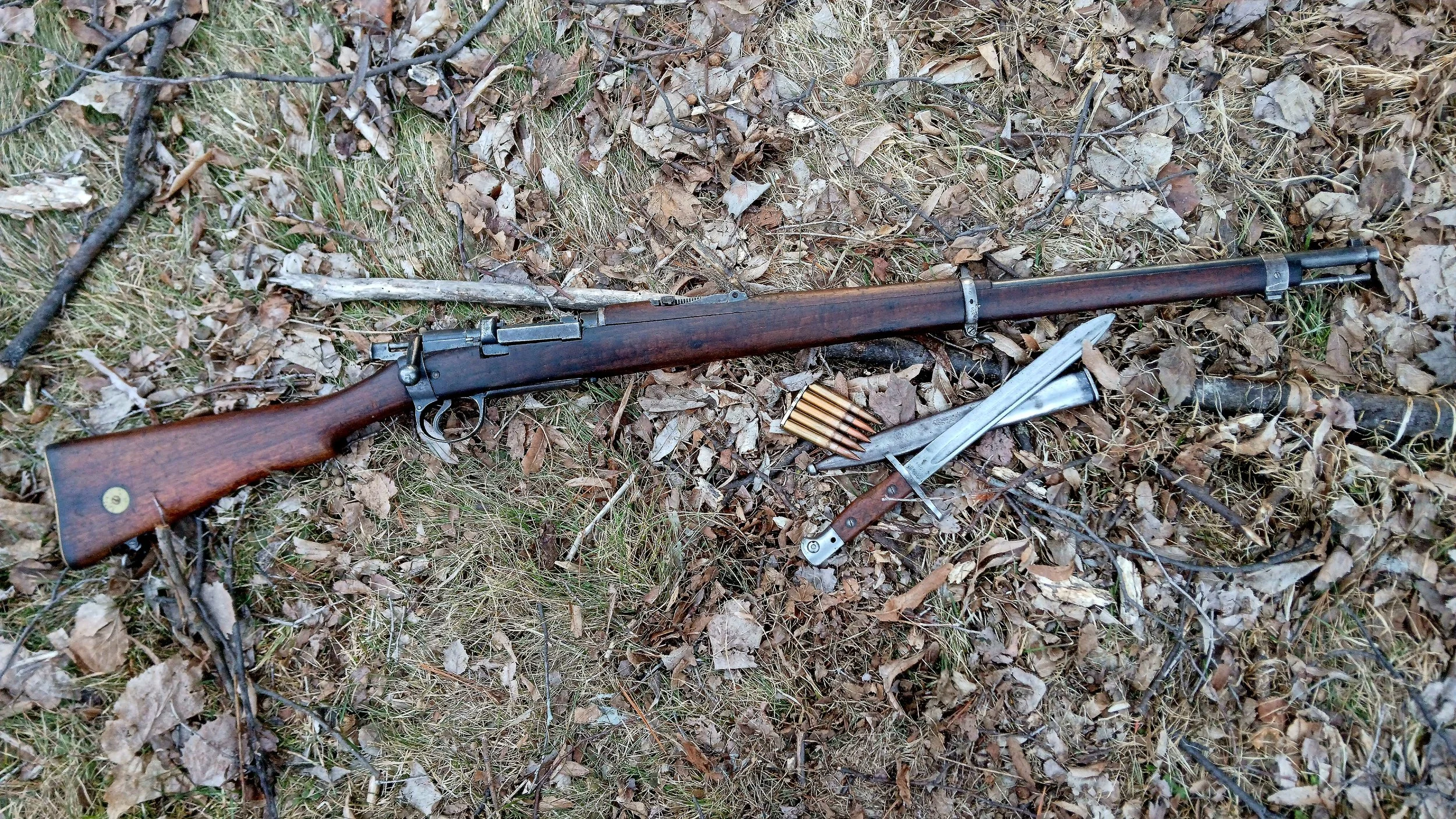
The History
The chimera of a rifle featured here is a relic of one of the most infamous military failures of the Great War, as well as of the difficult situation that was found in the late Ottoman Empire and early Turkish Republic. With an enormously varied stock of rifles in the immediate aftermath of the conflict, some creative solutions arose as a component of a generalized standardization program in the 1930s.
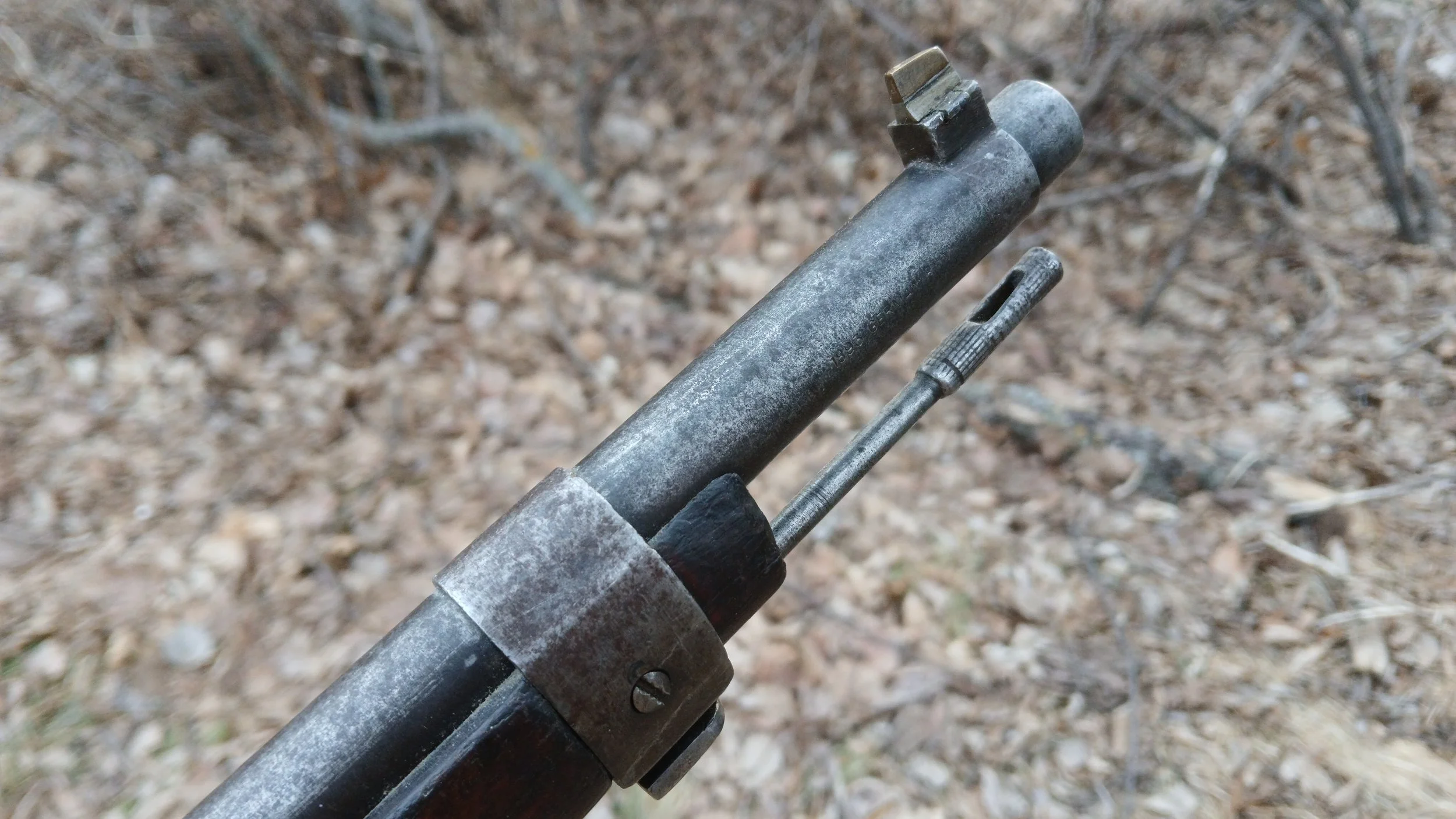
The front sight of this example is fairly tall and made of brass. Note also the forward band, which although similar is not identical to that of the M1903 pattern Mauser.
While the Great War had not gone in the favor of the Ottomans, but they had enjoyed some notable victories against the Entente Powers. The most famous of these was the defeat of the large scale landing operation on the Gallipoli Peninsula, intended to force open the Dardanelles to allow access to Russia via the Black Sea. After almost a year of heavy fighting the Entente withdrew, leaving the Turks in possession of the peninsula as well as a large quantity of military equipment.
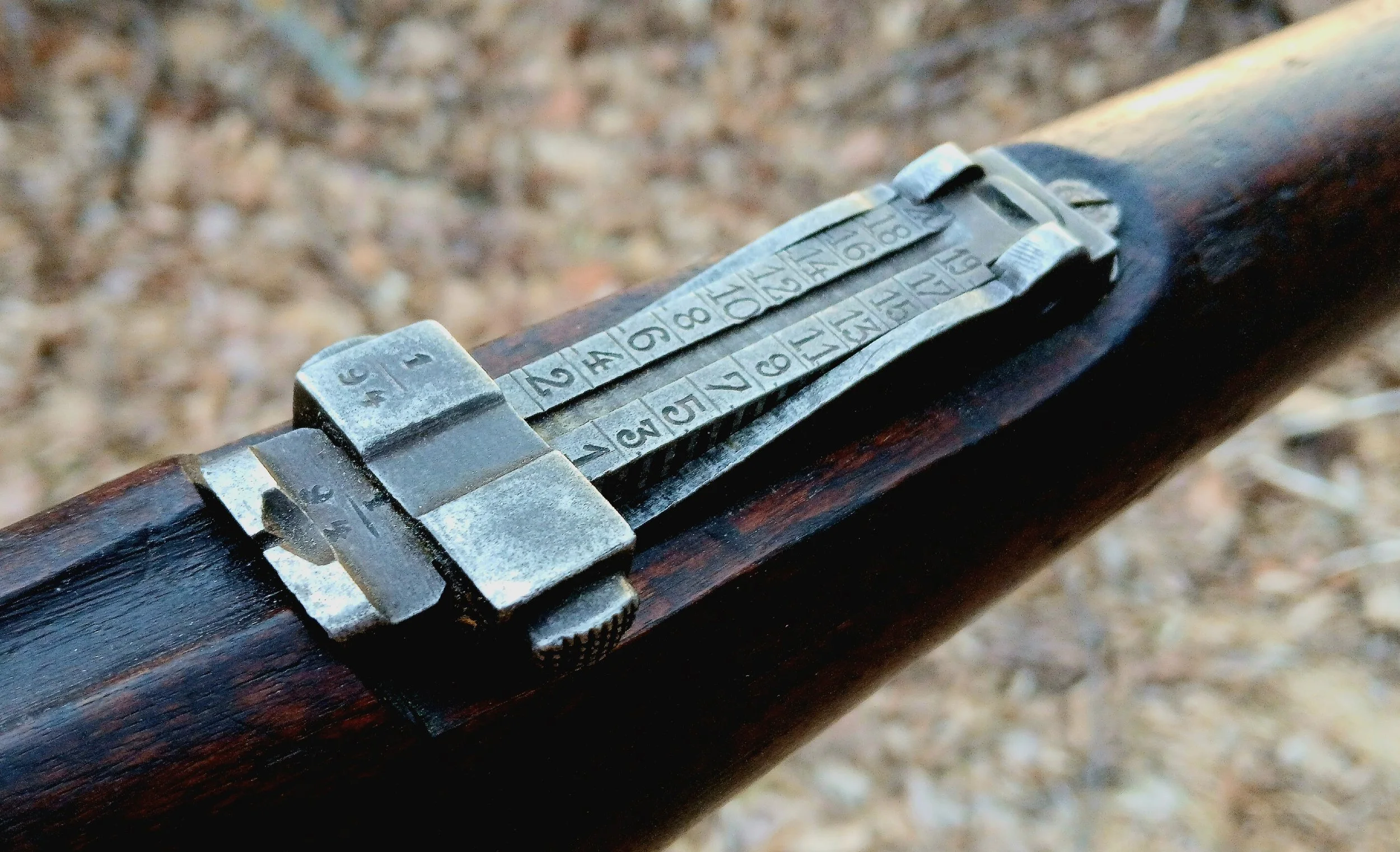
The rear sight is a basic Mauser export pattern, marked in meters and Arabic numerals as a component of the Turkish standardization program
Much of this horde was in the form of British Short, Magazine Lee Enfield rifles, and these were stockpiled for rear line use and reserve purposes. In the tumultuous aftermath of the collapse of the Empire, there was little ability for the nascent Republic to undertake any large armament projects, but by the 1930s efforts were underway to modernize small arms. The basic pattern of the standard M1903 rifle was retained, but with a caliber change to 7.92×57mm from the original 7.65mm, along with switching of sights over to meters in Arabic numerals to replace Farsi.
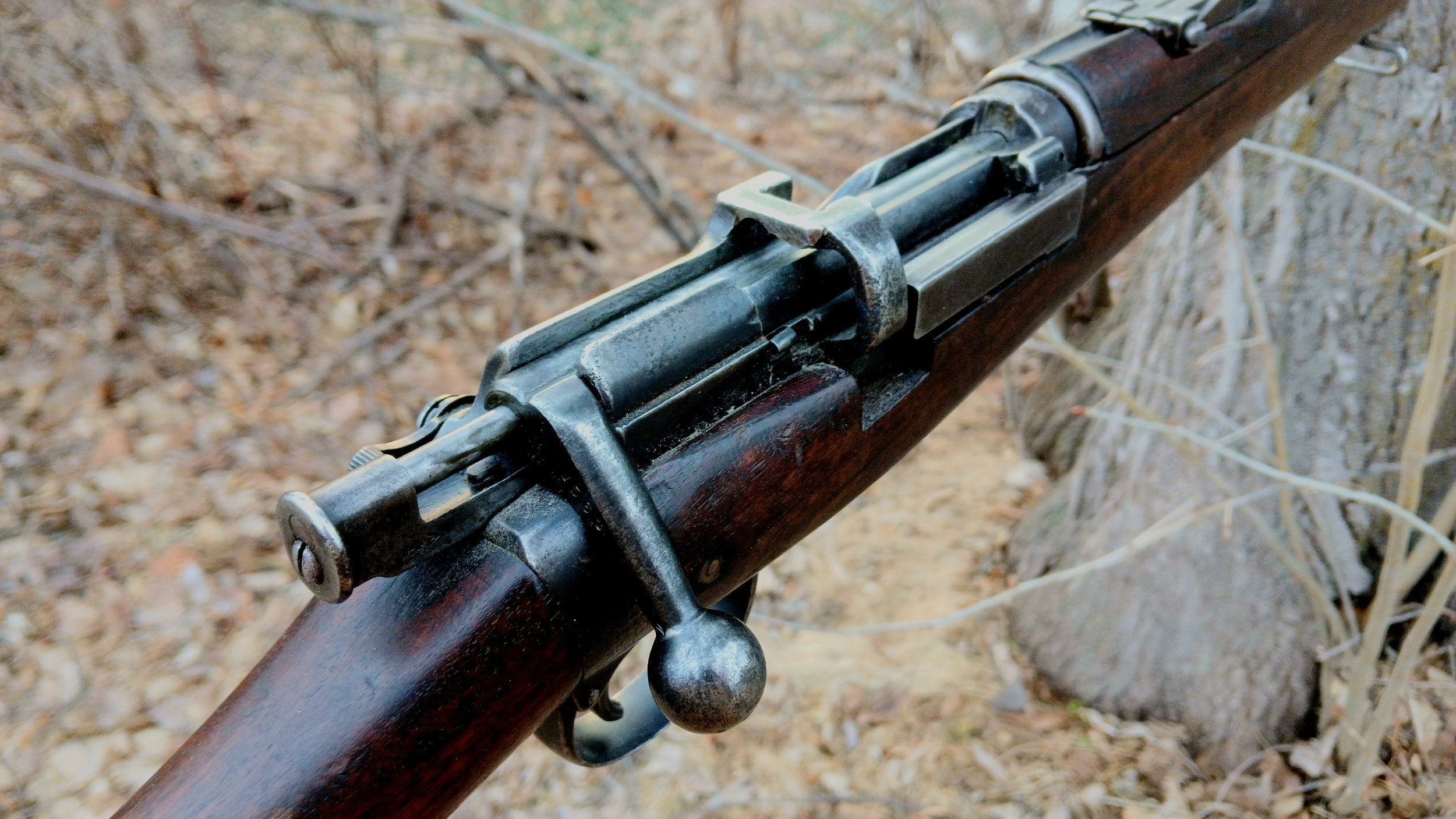
The basic Lee Enfield action is unaltered save for the reinforcement bar on the side and the modified extractor and charger bridge for the 7.92mm cartridge
While the majority of the Mausers on hand, including M1903 and M1893 models along with German Gewehr 98 and others were relatively easy to convert, others would prove more challenging. Gewehr 88 commission rifles were extensively modified, and when the time came for the stocks of captured British rifles the program would be stretched yet farther. Requiring modification of a number of components, the resulting hybrid would serve an unknown purpose, but was most likely a secondary issued arm, due to the questionable strength of the converted action and lack of replacement parts.
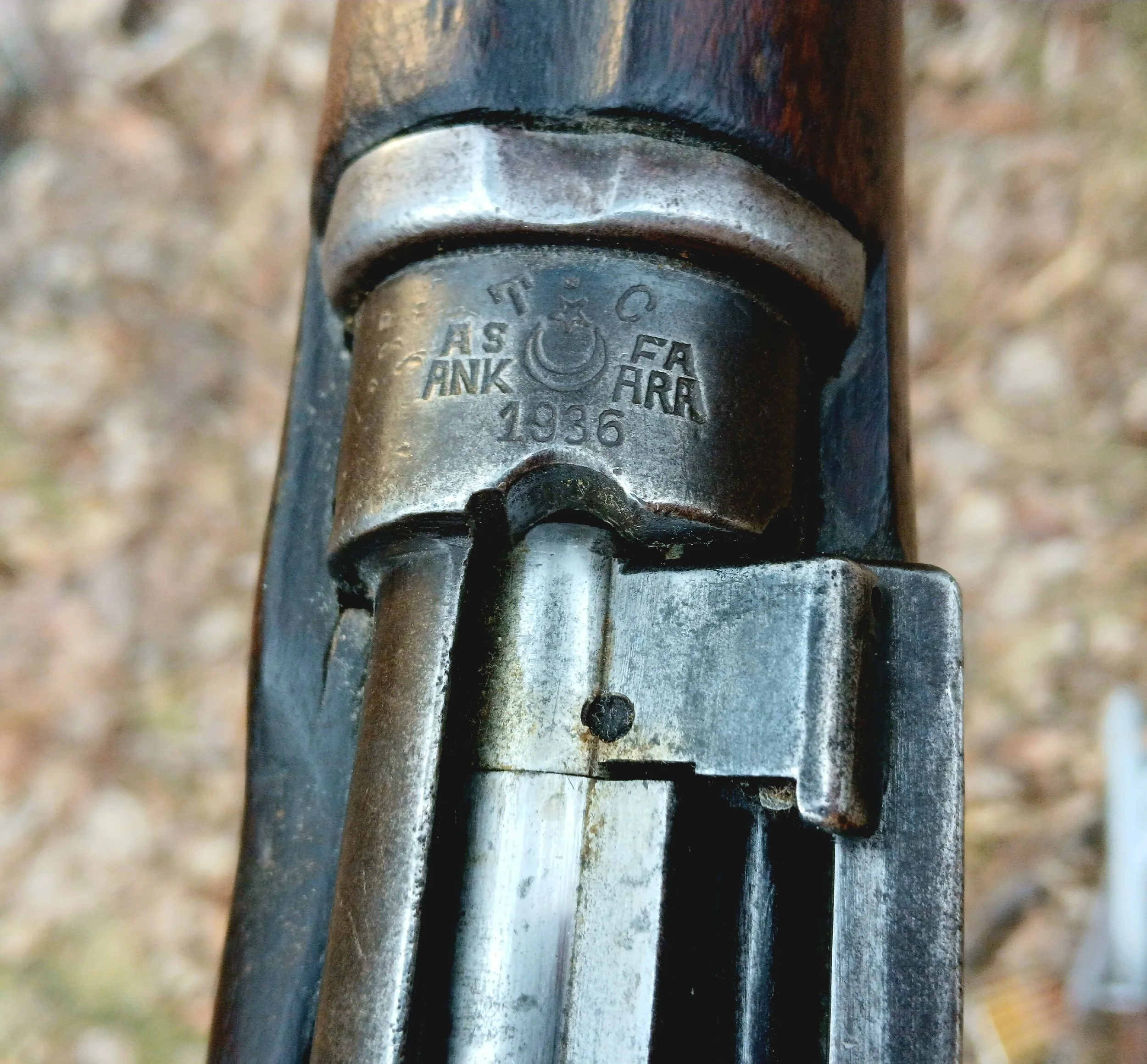
The receiver ring has been modified with a notch for the longer 7.92mm cartridge, as well as shaved down and marked with standard Turkish rollmarks. A retainer for the Mauser type handguard is also visible, as is the overlap of the bolt head and the reinforcing bar.
These arms existed in near total obscurity for the ensuing decades, until they were imported into the United States along with large quantities of converted Mausers. It is generally believed that these rifles were imported by accident, as they were import marked as M1893 Mausers, and only a small number were imported in the first place, with estimates in the low hundreds. They remain somewhat unknown today, occasionally turning up as curiosities at guns shows and auctions.
The Design
In terms of the basic mechanism, the “Enfauser” is a Lee Enfield pattern rifle (examples have been observed made from various models, although the rifle in the Reference Collection is based on an SMLE MkIII), with only relatively minor mechanical alterations. It retains it original bolt, safety, and cock-on-open mechanism of the donor rifle, but has been fitted with the barrel, sights and magazine of a Turkish pattern Mauser.
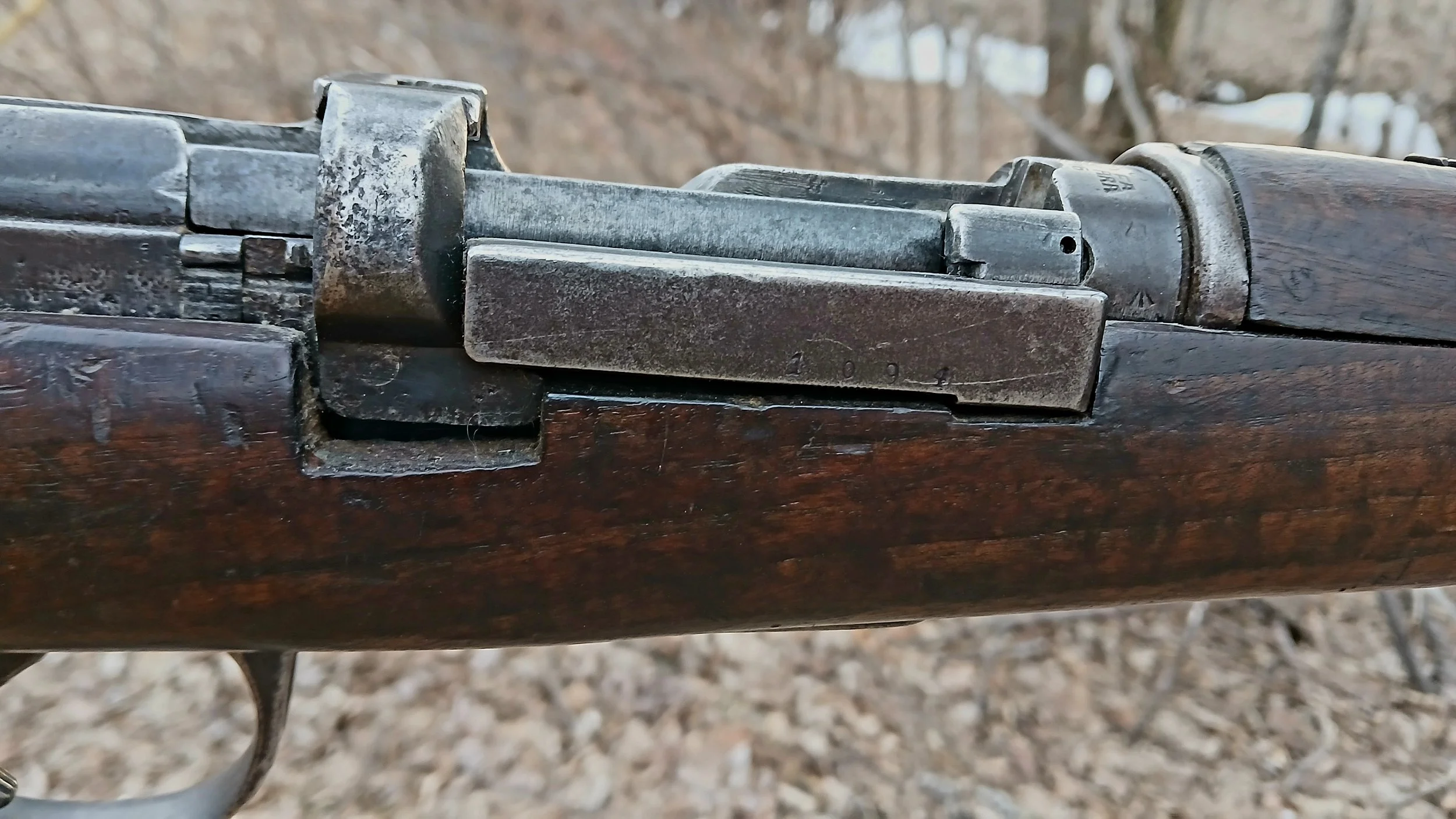
From a profile view one can observe the reinforcing bar, which is serial numbered to the rifle. The modified charger bridge can also be seen, as can a surviving British War Department Broad Arrow marking on the chamber
The receiver has been modified by removing the magazine cutoff and attaching a reinforcement bar to the side of the receiver in its place to strengthen the weapon while using the more powerful German 7.92mm cartridge. This necessitates milling a grove onto the bolt head as well, to allow it to ride a rail on this bar while cycling. The extractor is also modified, due to the switch from the rimmed .303 to the new rimless round.
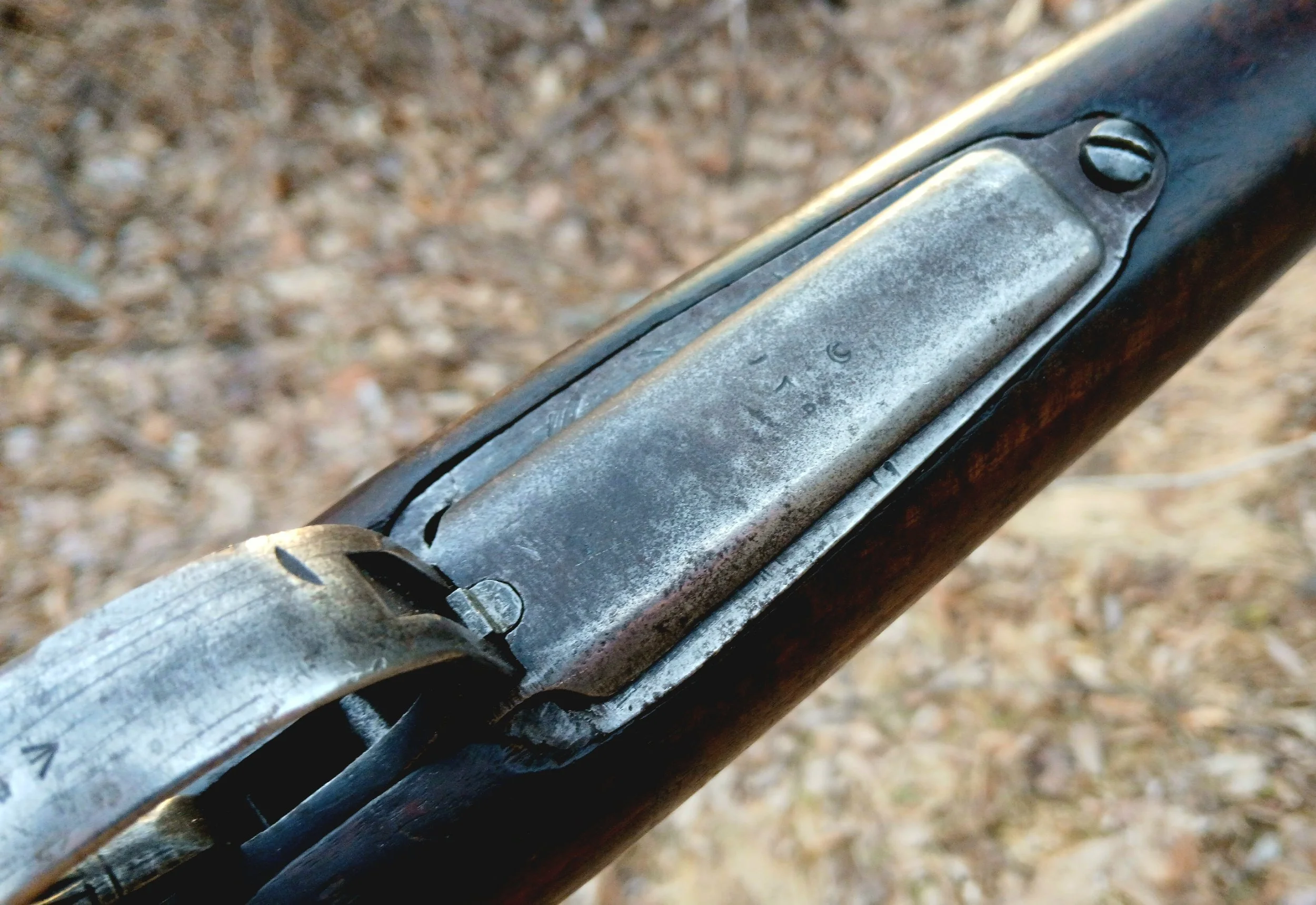
The floorplate appears to be a modified M1893 Mauser type, still bearing Ottoman markings. Another British broad arrow can be seen on the underside of the trigger guard.
The detachable ten round magazine of the Lee Enfield has also been deleted here, replaced with a crude Mauser style internal box and feed lips, with a capacity of five cartridges. The floorplate and follower are recycled from earlier Mausers, and appear (in the author’s opinion) to be taken from Ottoman M1893 rifles. The floorplate is modified to fit, and is retained by a heavily modified Enfield magazine catch.
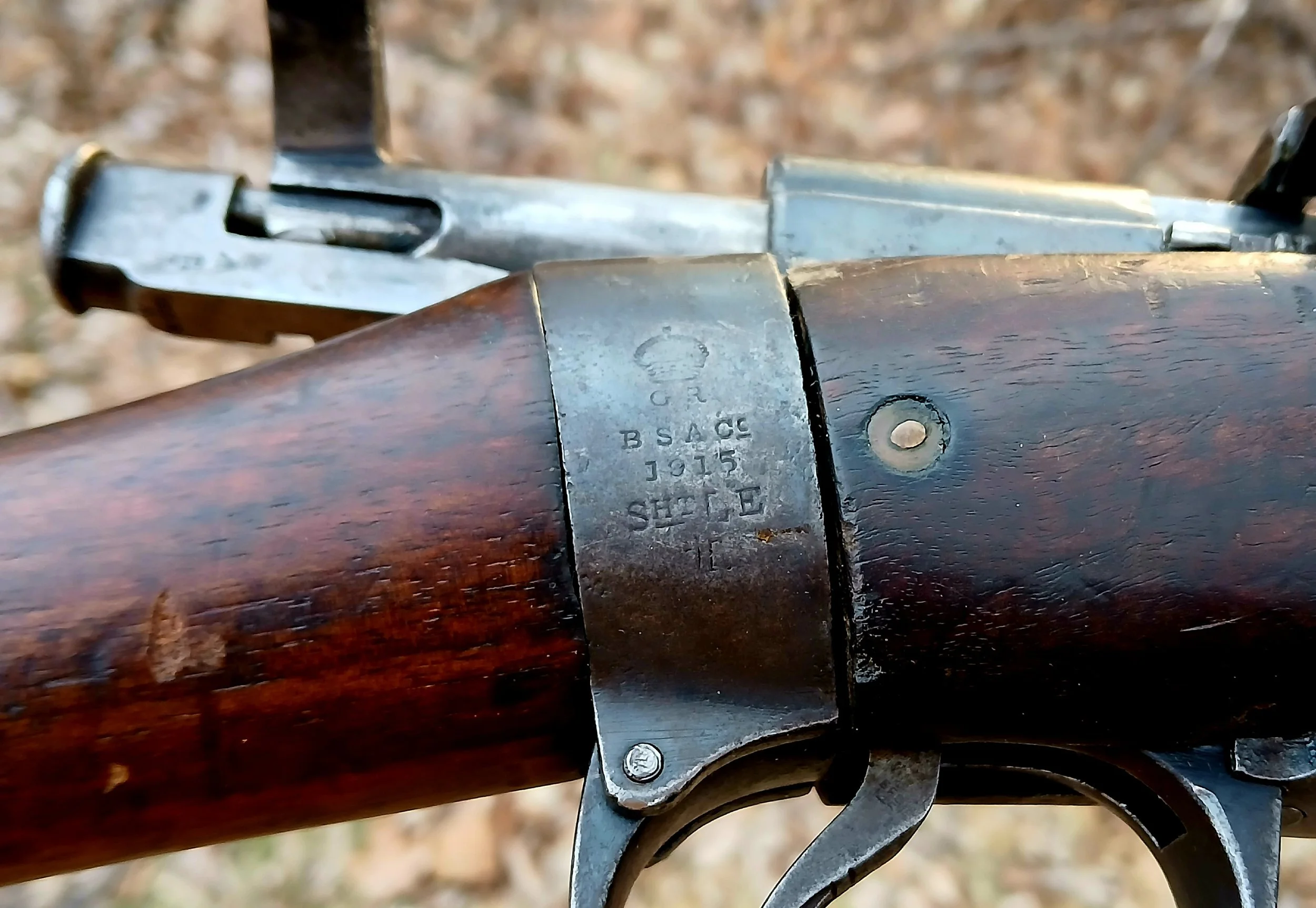
The rifle’s original manufacturer’s markings and British property stamps still exist unmolested
The buttstock of the rifle is unaltered from its original state, and often retains British or Empire unit markings as well as its sling swivel and cleaning kit compartment. The forestock is a proprietary component, based on the Mauser pattern but inletted for the Enfield action as well as having modified Mauser type bands, which on this example are also retained by pins as well as screws.
This Example
The example in the collection was originally manufactured by the Birmingham Small Arms Company in early 1915, and retains its identifying markings and British Crown stamp on the stock collar. It also retains its British unit markings, identifying this rifle as being issued to the 6th (Service) Battalion of the Lincolnshire Regiment, being accepted in February of 1915 as rifle number 241.
This unit had been raised late in 1914, and after completion of training and equipping they were sent into action at Gallipoli, landing at Suvla Bay in August of 1915. The remained there until December, and subsequently were deployed to Egypt until they were sent to France in July of 1916. Thus, although it is possible that it was taken elsewhere, statistically it is most likely that this rifle was captured by the Ottomans at Suvla Bay.
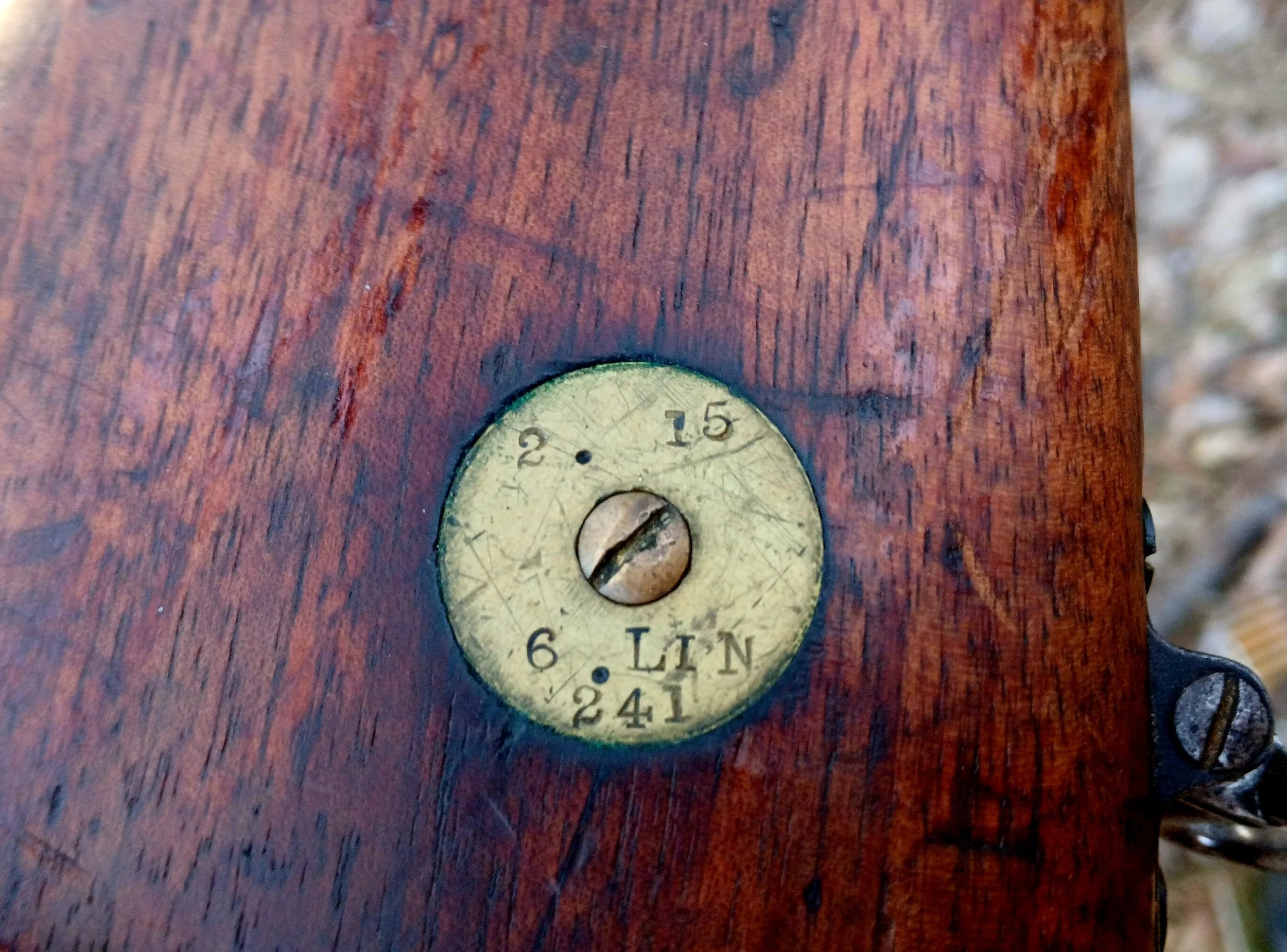
The original British unit markings on the stock disk, reading: 2. 15 (month and year of acceptance) 6. LIN (battalion and regiment) 241 (rifle number)
In Turkish hands, the rifle was altered to its present condition by the government arsenal at Ankara in 1936. It is in generally good condition, and has been test fired by the author with lower charge 7.92×57mm ammunition, and found to cycle and function well. It has with it a bayonet that is likewise a modified British Pattern 1907 model, altered by the Turks to the universal 1938 pattern. This bayonet is compatible with all Turkish Mauser variants, but is a fitting companion to the rifle.
Opinions
The fact of the matter in regards to this rifle is that it was never intended to be a frontline service rifle, but rather a conversion of captured stocks into a rear line weapon. As a result, its performance is less of a concern than with a weapon intended to be utilized by line infantry, and the fact that it is at least functional is the primary metric by which to judge it. The author has never fired this rifle for serious accuracy testing, and can only report that it does indeed function and is acceptable when compared to the standard M1938.
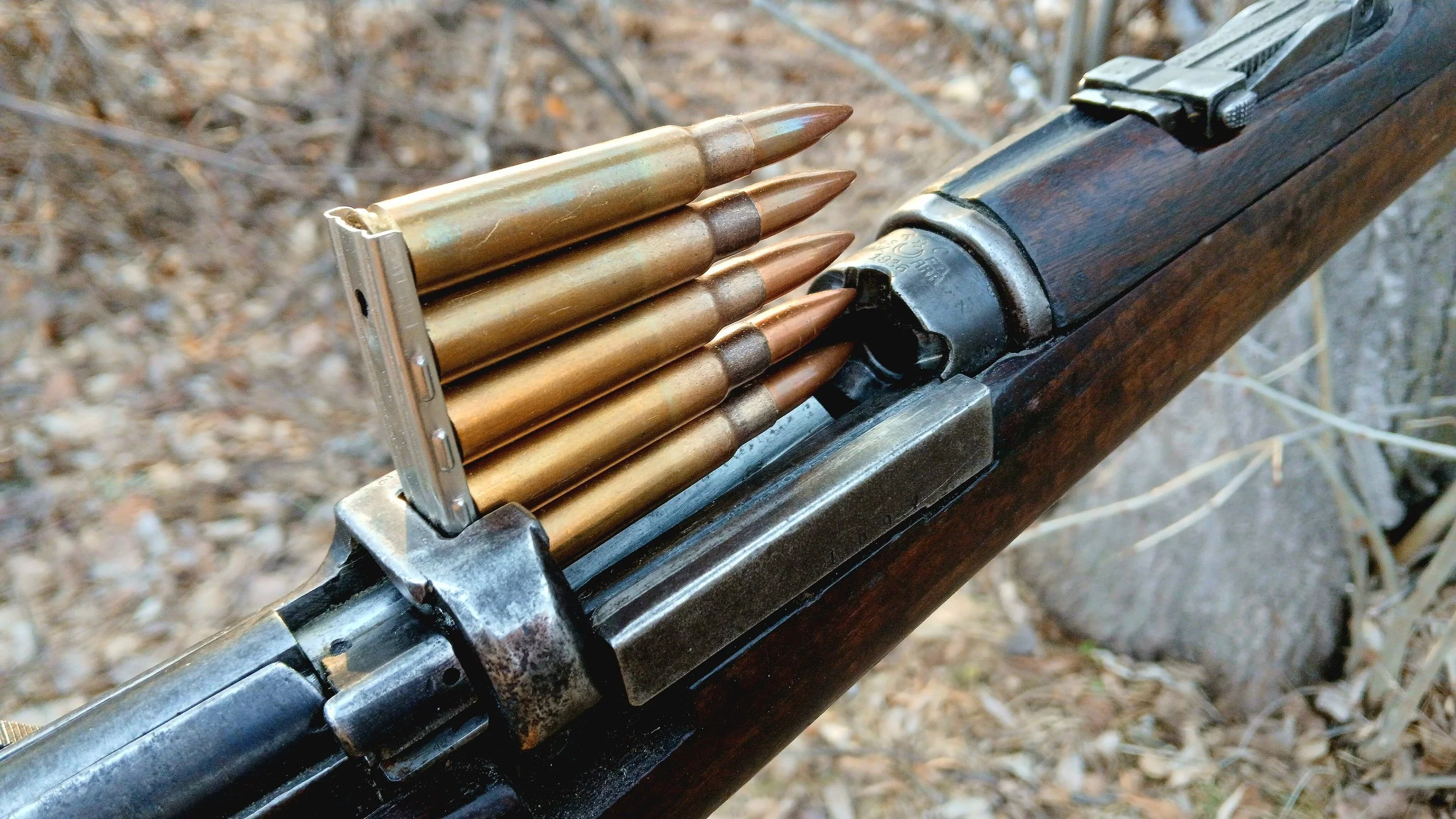
Loading the rifle with a charger of 7.92×57mm cartridges. Note the altered bridge and the notched in the receiver for the longer cartridges
As a collector’s piece, the “Enfauser” is an extremely fascinating subtype of both Enfield and Mauser, and its relative rarity make it a fine addition to a collection. The ability to trace its service as closely as one can via its unit markings and capture is likewise extremely uncommon with martial firearms, with more precise story to tell about an often overlooked theater of the Great War.
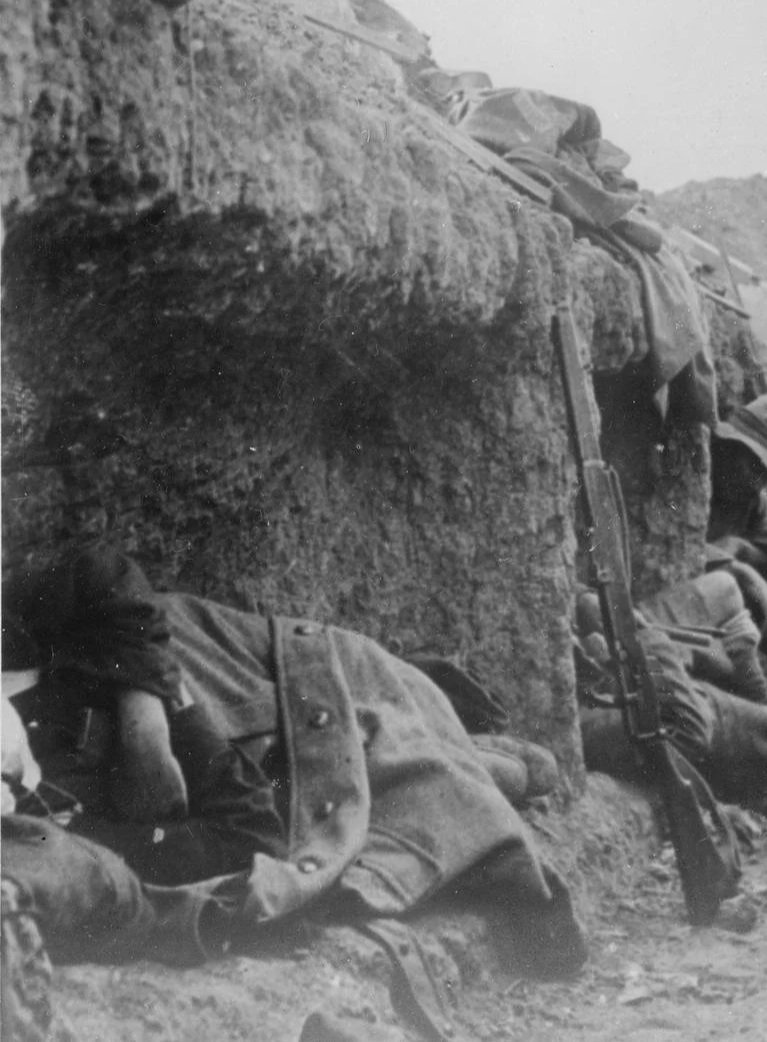
A soldier rests in a trench at Suvla Bay, SMLE rifles ready nearby
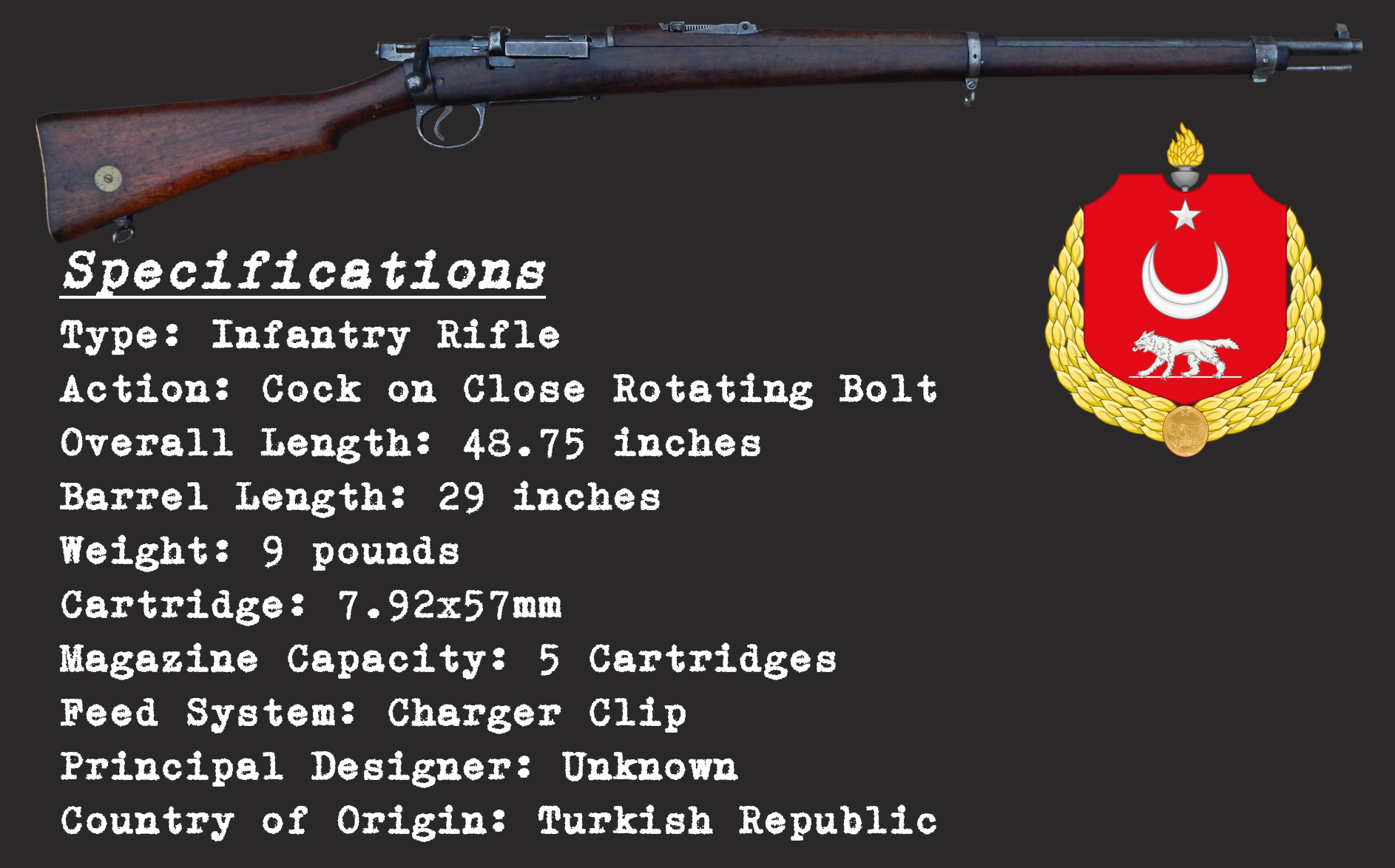
Observed Values and Frequency
Updated: April, 2026
AVERAGE VALUE (USD): $UNKOWN
FREQUENCY: Very Rare
COLLECTOR’S NOTES: Extremely rare in the United States, estimated from several hundred to several dozen by various sources.
Not recommended for firing due to questionable conversion strength and proprietary parts.