Lee Enfield #5 Mk1
Developed for use by British paratroops at the close of the Second World War, the No5 would go on to win fame in Malaya before being retired due to accuracy issues and the adoption of self loading rifles.
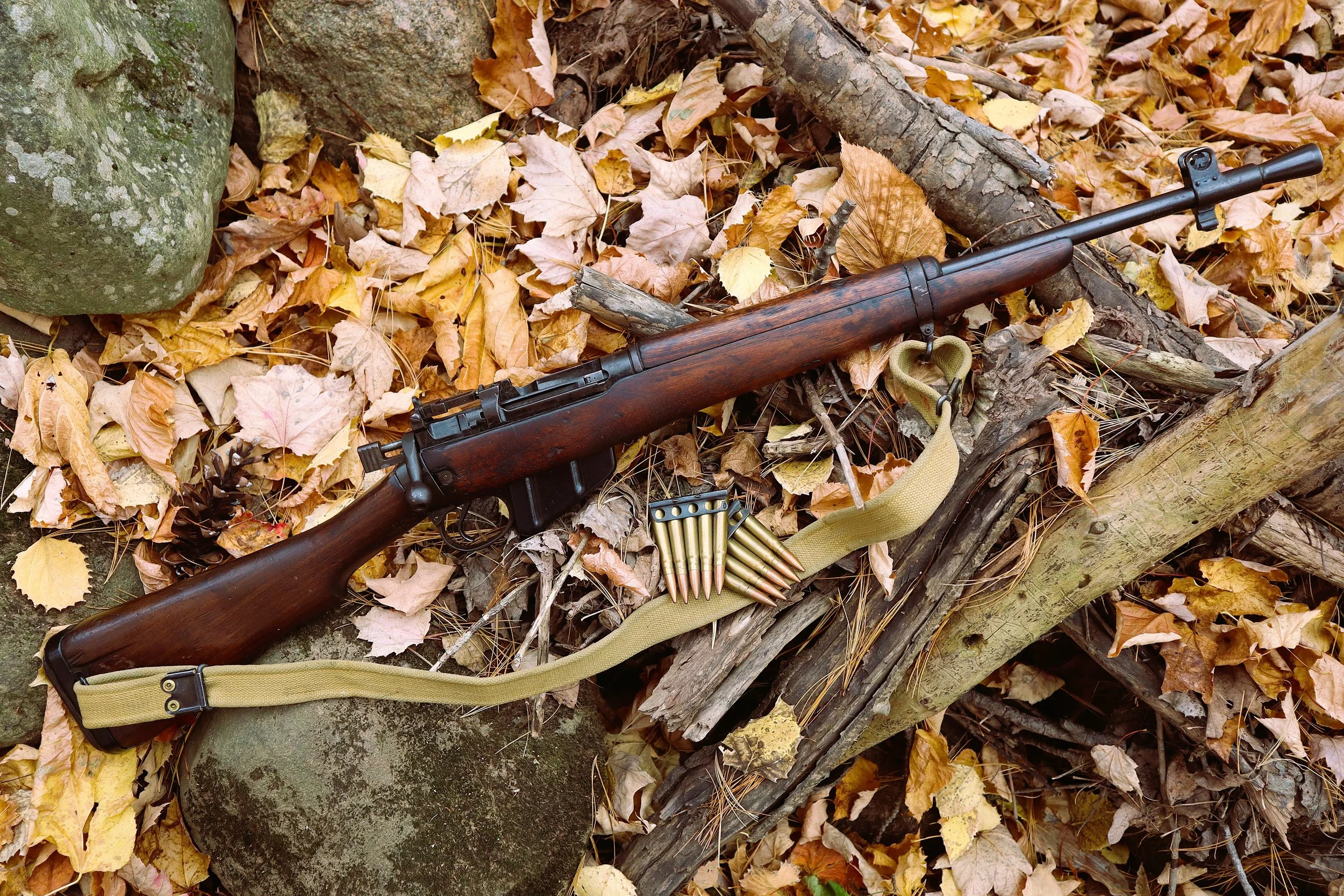
The History
While the British had adopted a modernized version of the Lee Enfield at the start of the Second World War in the form of the No4 Mk1, military leaders still felt a need for a shorter, handier weapon for issue to airborne troops and specialists. The need for a lightweight weapon for jungle fighting was also identified after the opening of the Pacific War in 1941. This would lead to a development program culminating in 1944, with a shortened and substantially lightened No4 variant. This would see its first action in small numbers during the disastrous Operation Market Garden in the fall of 1944, and later by some British troops during the 1945 operations to liberate the Netherlands, Denmark and Norway in the final days of the European War.
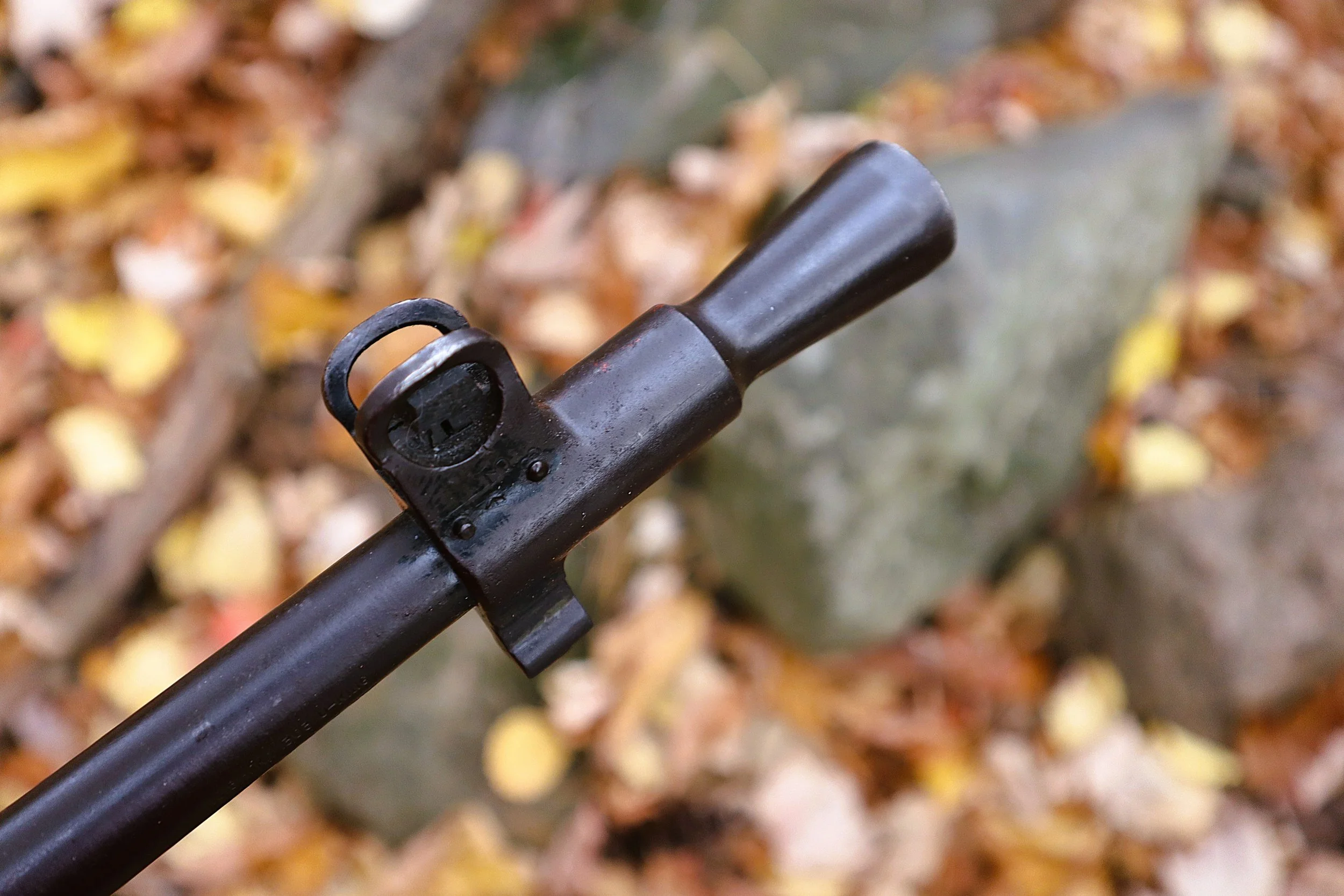
The front sight incorporates a conical flashider as well as the bayonet lug in addition to the classic Enfield “ears”
Overall combat deployment in the Second World War was minor at best, with issuance only really picking up after the end of the conflict. Its association with jungle warfare would actually come from the Malayan Emergency starting in 1948. Seemingly annoited as a general replacement for the No4 Mk1, it would instead be derailed by a number of factors, both literal and political.
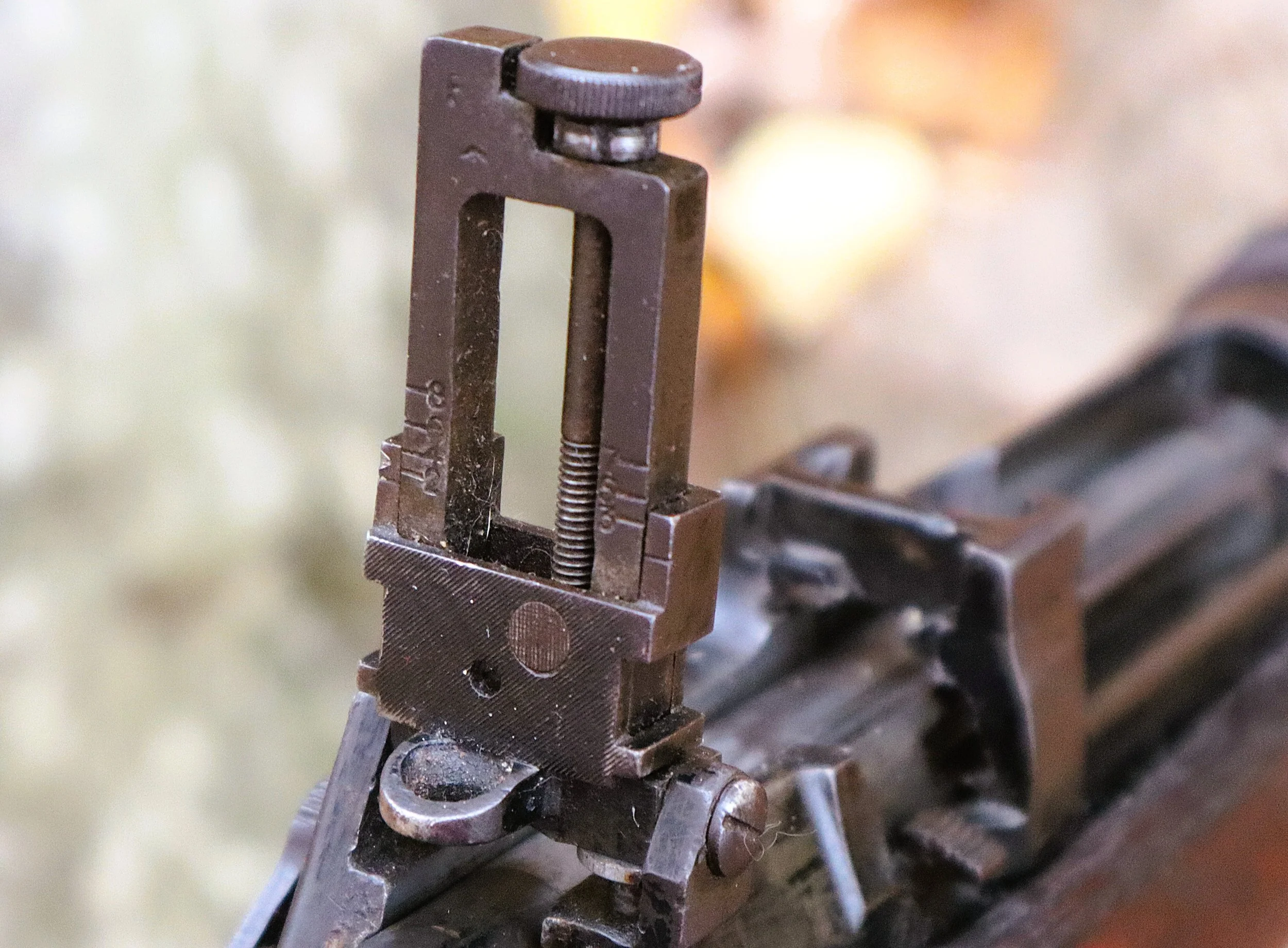
The rear sight is essentially the same as the early/late pattern No4, although on the No5 it is only graduated to 800 yards
As the 1950s wore on, most nations began to look toward autoloading rifles, including Britain. Although some domestic design and even prototyping had been occuring, the favored contender was the Belgian FN FAL rifle, which would eventually be adopted into British Service as the L1A1 SLR in 1954. The advancing technology was not kind to the bolt action No5, which although less than a decade old was mechanically dated, with its mechanism going back to the 1880s. Another major complaint was the “wandering zero”, with rifles being noted to have inconsitent accuracy. Testing was performed to determine the cause of the issue and correct it, but in the end with the new SLR coming into service it was deemed a moot point, and the carbines were simply removed from service.
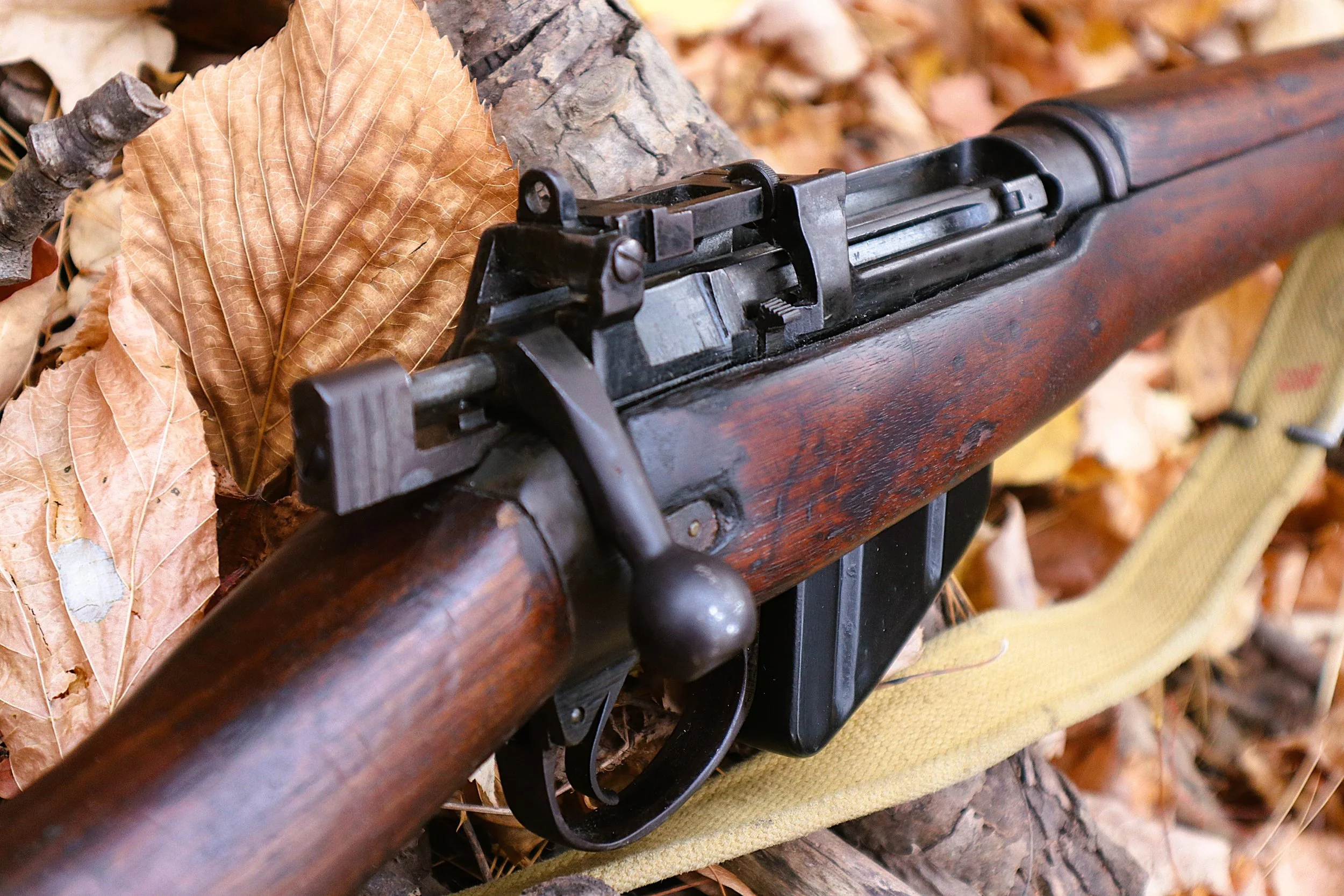
The action of the No5 is the same as the No4, although with numerous lightening cuts.
The Design
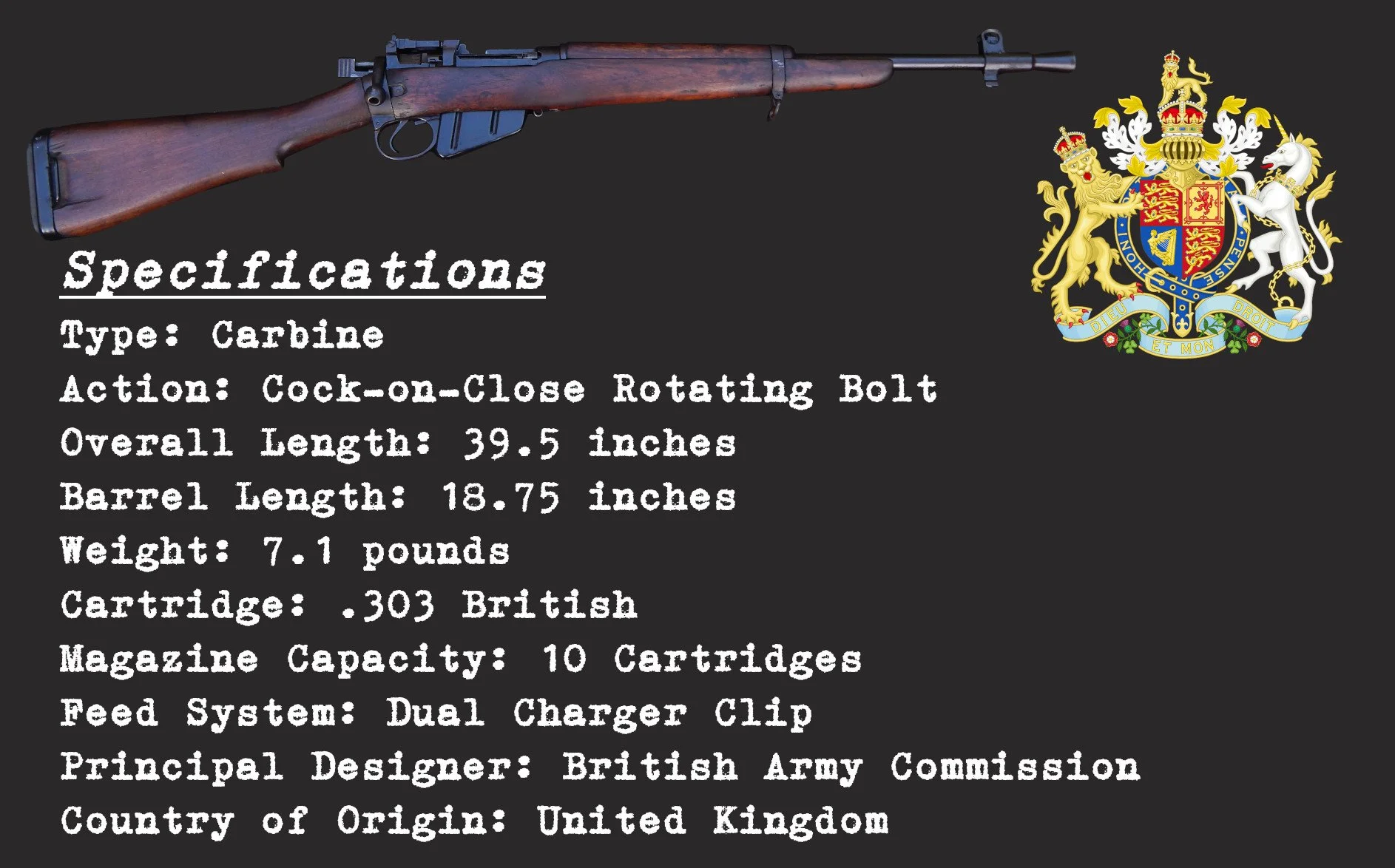
Mechanically, the No5 Mk1 is essentially a No4 Lee Enfield paired with a shortened barrel, flash hider assembly and with various lightening cuts. The by now standard Enfield sight protector is pinned in place, and is a single part including the large conical flash hider that is arguably the most distinctive feature of the rifle. The forestock and handguard have been shortened in a manner reminiscent of common civilian sporters, with some being simply rounded off while others were fitted with a metal endcap. The handguard terminates just forward of the single barrel band.
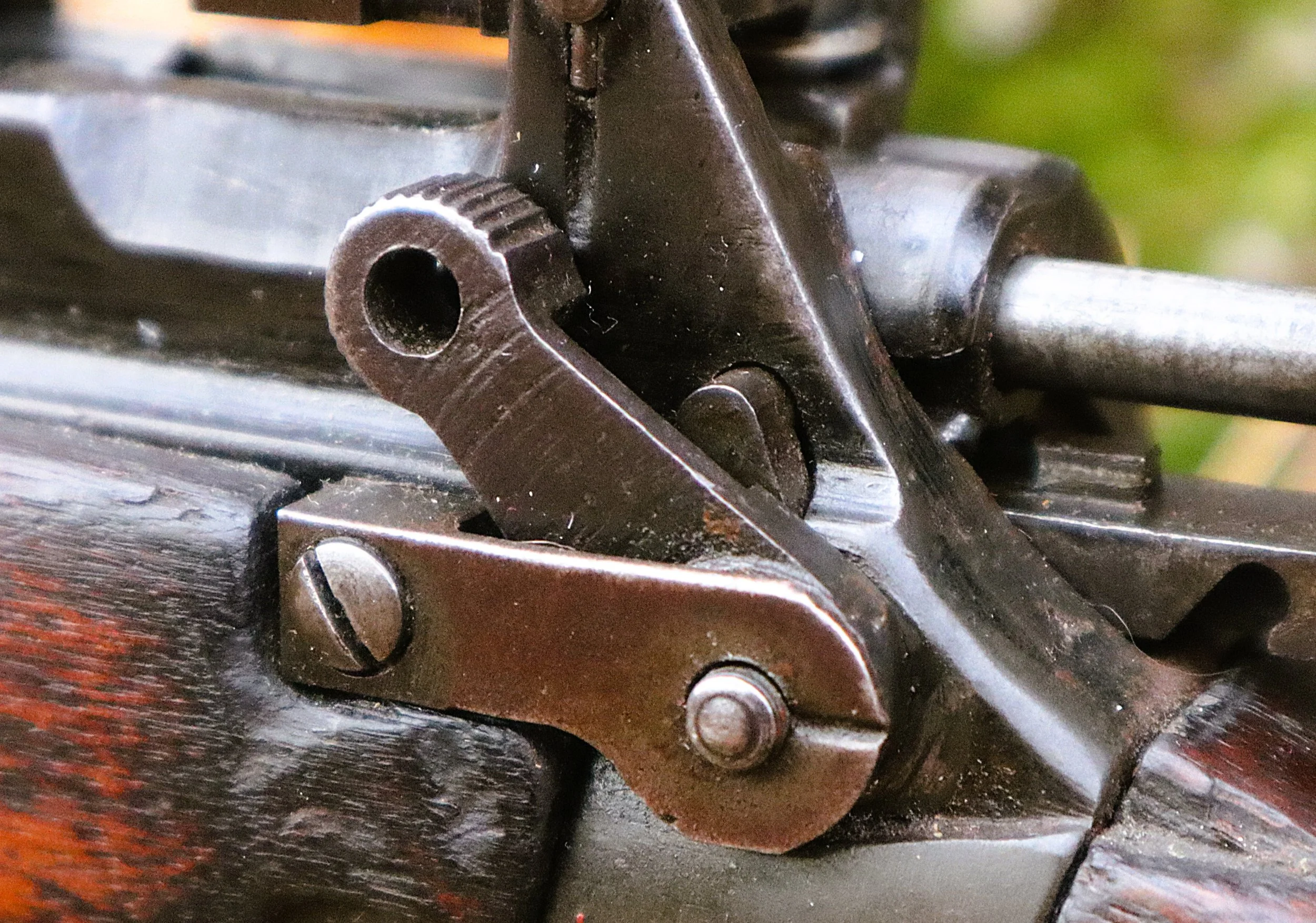
The safety is again identical to the No4, and when engaged locks the action. It can be engaged from the cocked or uncocked position.
The butt of the rifle is notably different, with a cupped steel buttplate replacing the brass or zinc of the No4. The assembly also includes a side mounted sling swivelm with a matching inlet on the stock. The most distinctive feature is the rubber buttplate, intended to absorb the harsher recoil of the weapon.
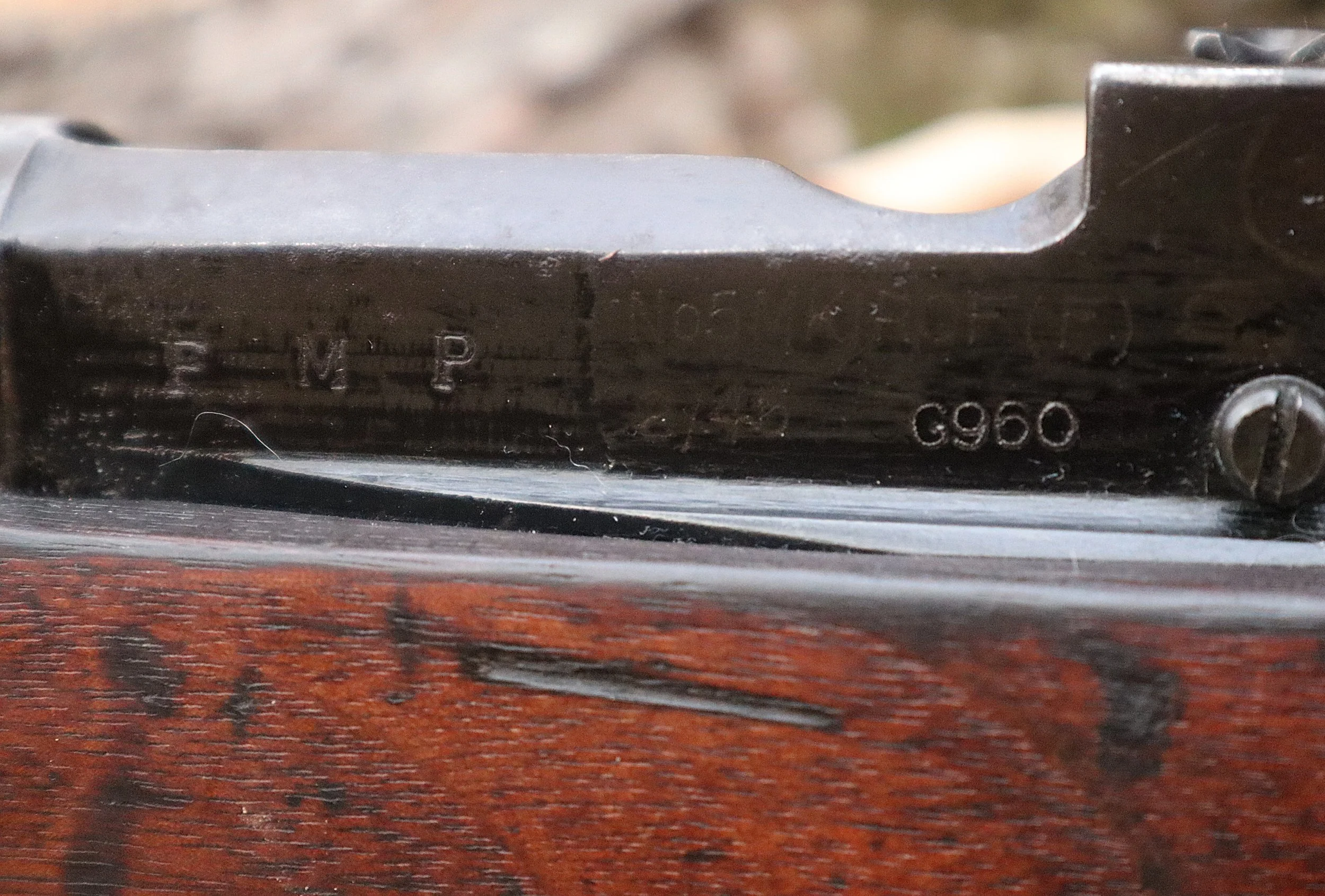
The markings are located on the receiver wall, identifying the model, arsenal, month and year of production and serial number. In addition, the later Malaysian Police “FMP” stamp is also located here
Lastly, a number of cuts were made to eliminate metal and lower the weight of the weapon. Most notably, the barrel was fluted at the chamber, the receiver wall was shortened behind the charger bridge, the bolt knob was hollowed out and several cuts were made under the stock line on the receiver. These managed to shave a significant amount of weight from the original No4 design, but are often pointed to as the culprit for the wandering zero issue, as they may allow the barrel and action to flex.
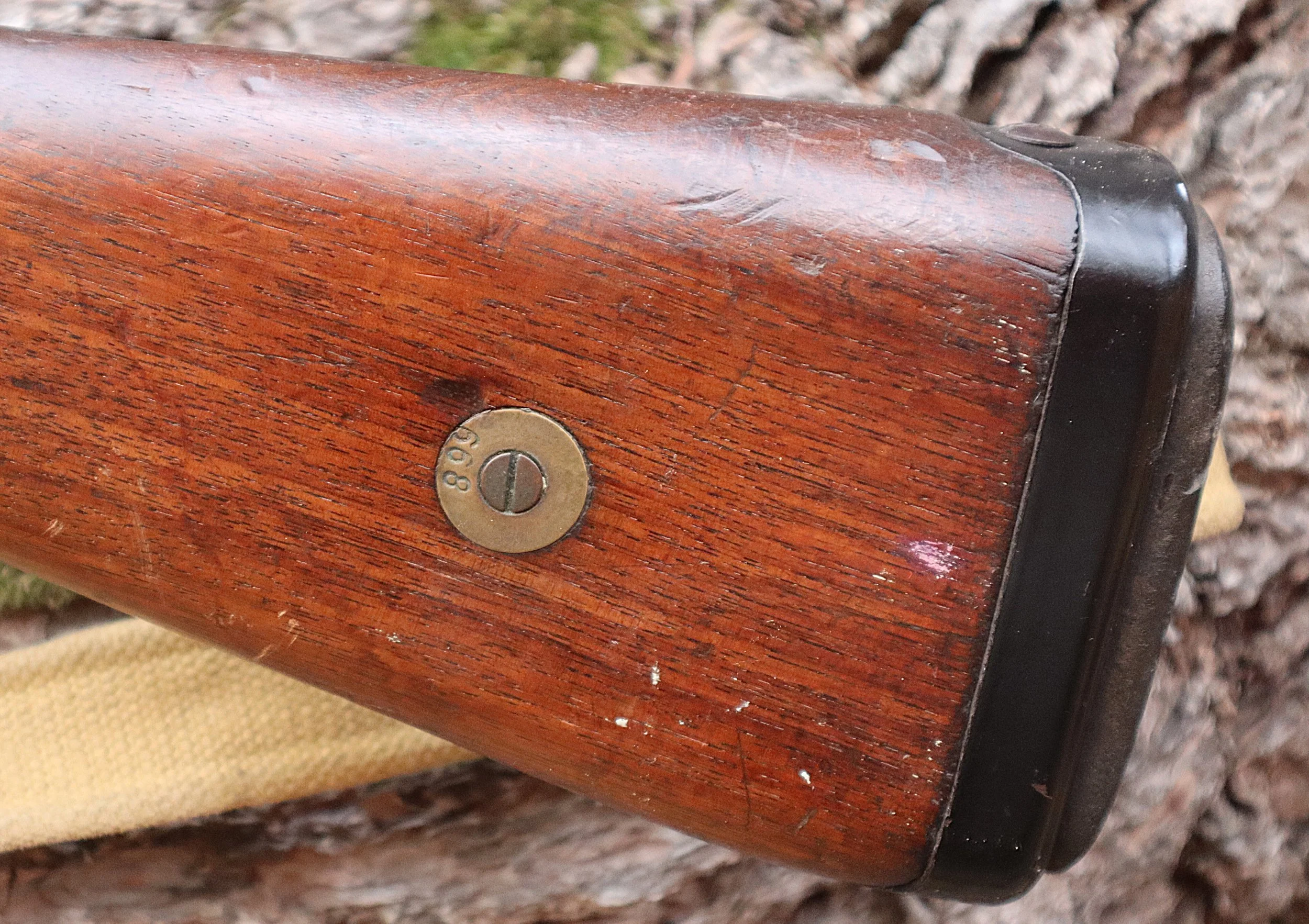
The left hand side of the buttstock on this example features a small brass marker disk, most likely installed by the Malaysians
This Example
The example in the reference collection was produced by Birmingham Small Arms in February of 1945, Possibly seeing some service at the very end of the Second World War. It is in fair overall condition, and is marked on the receiver for the Federal Malaysian police, suggesting that it likely served in the Emergency there in the 1950s, being passed on to local police forces after the L1A1 SLR supplanted it. A brass unit marking disk was added at around this point as well.
General condition is good, although some fittings are loose due to age, while the front band has notable metal loss due to old corrosion that was cleaned and reblued during an arsenal repair.
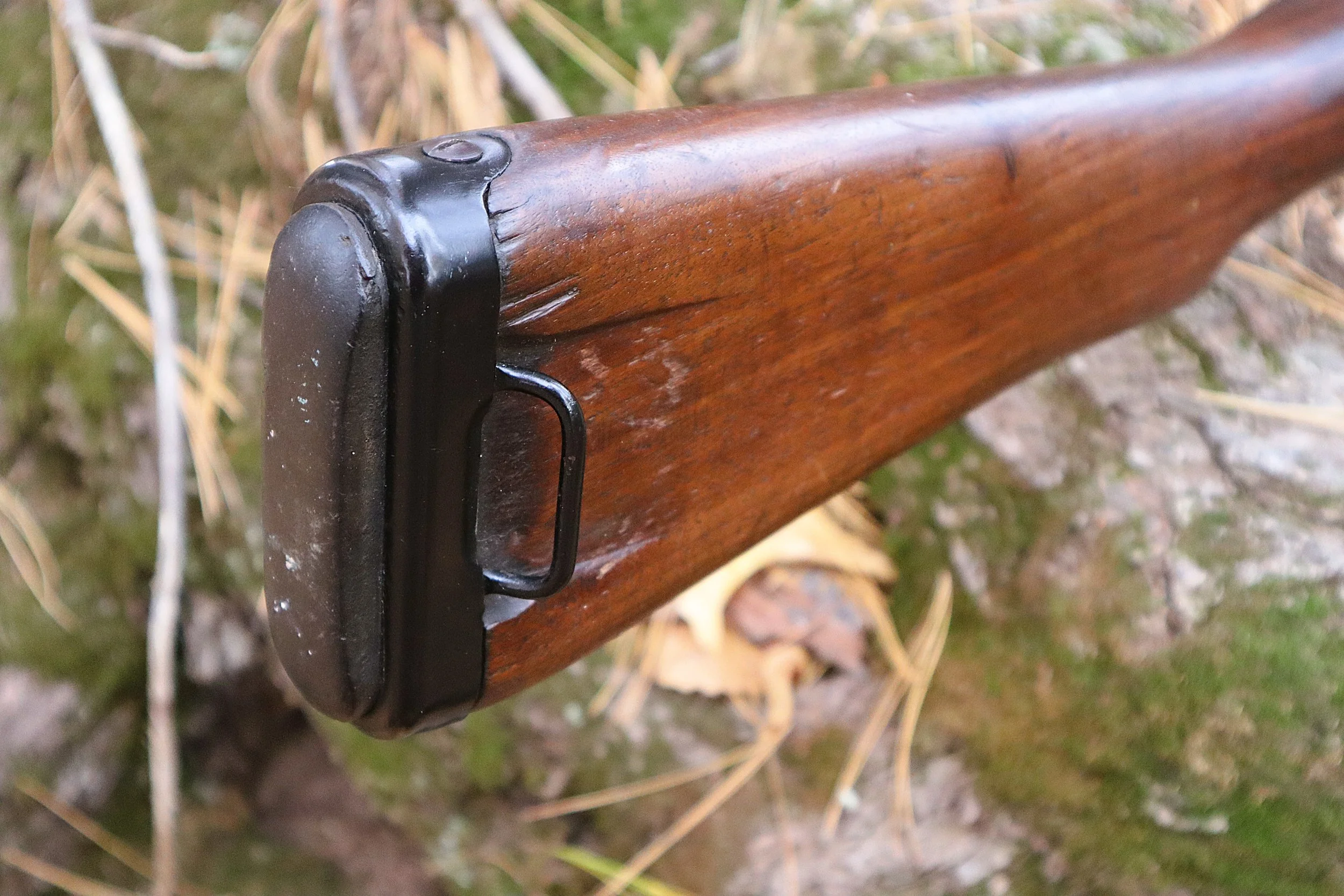
The buttplate of the No5 with its distinctive rubber recoil pad, as well as the side mounted sling loop
Opinions
The Jungle Carbine is an interesting firearm that holds a worthy place in any collection. Compared to other designs of the period it holds little in the way of innovation, but it does accomplish exactly what it was designed to do, that being to create a shorter, lighter variant of the No4 Lee Enfield. The numerous lightening cuts manage exactly that, while the flash hider and buttstock provide a distinctive and attractive appearance. The rubber buttplate on this example, as on most by this point, has become nearly rock hard, and as a result is not only useless as a shock absorber, but indeed increases felt recoil due to providing a smaller surface area. In summation, the No5 Mk1 was an interesting if flawed design, and regardless of its problems it was doomed to early replacement due to the advances of autoloading technology in the post war era.
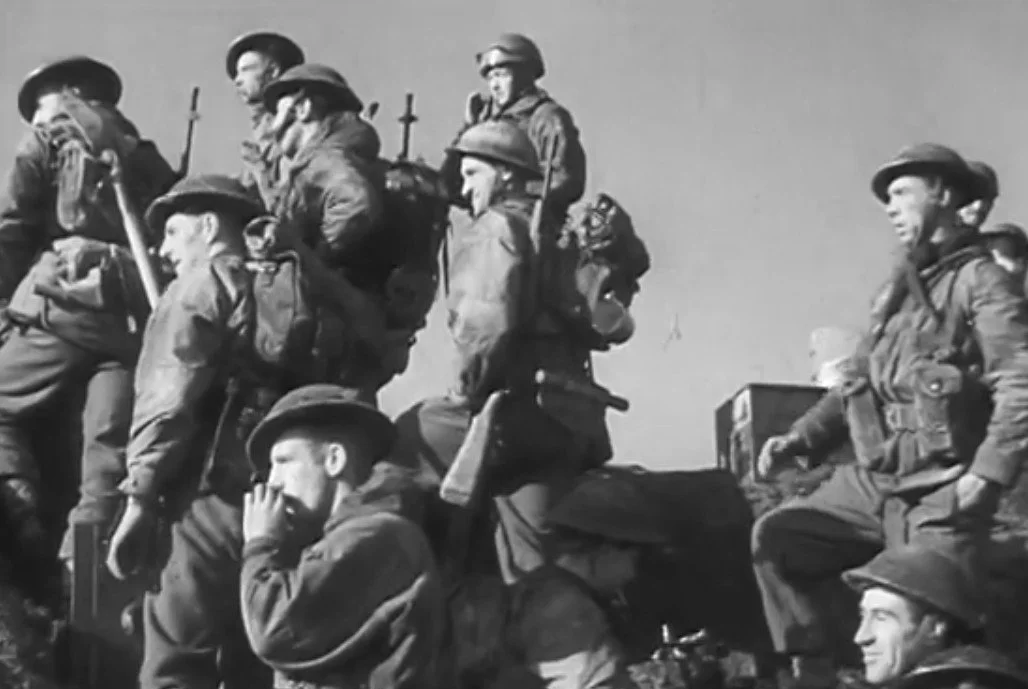
British troops armed with No5 Mk1 carbines in Holland in the closing phase of the Second World War
Observed Values and Frequency
Updated: October, 2026
AVERAGE VALUE (USD): $800
FREQUENCY: Uncommon
COLLECTOR’S NOTES: Commonly faked, originals are easy to distinguish due to their model designation and lightened No4 receivers. Rifles with wartime dates command a slight premium.