Crossing the Rhine
Chapter 46
“You see that black line on the map. If you can seize that your name will go down in history.”
7-27 March, 1945
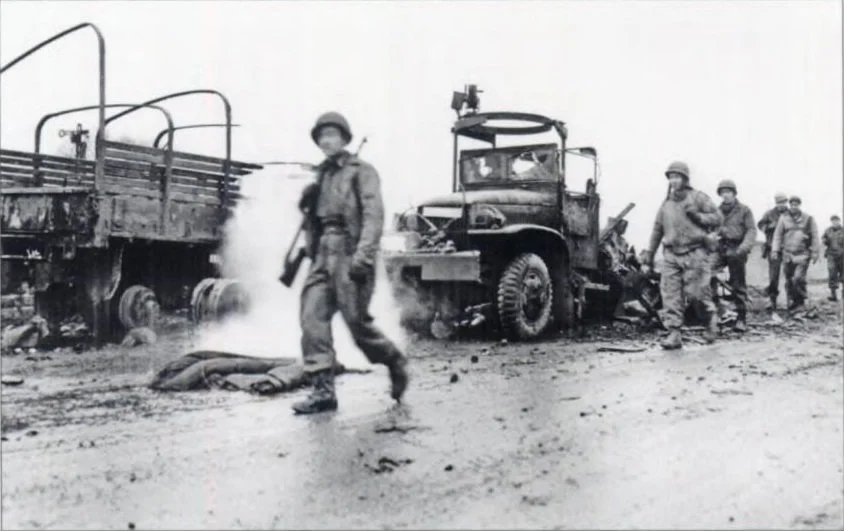
American soldiers advance on the Rhine past vehicles destroyed by German artillery
As the Spring of 1945 came about Hitler’s Reich was teetering on the edge of the abyss. The Soviet Red Army had overrun most of Poland and East Prussia and were now poised almost at the gates of Berlin, while in the west the Anglo-American armies were massing along the Rhine, probing for a point to cross the last major natural obstacle before the German heartland. Thus far, the Germans had been successful in destroying bridges as the Allies advanced, but there remained grave concerns about what would happen when the crossing inevitably took place.
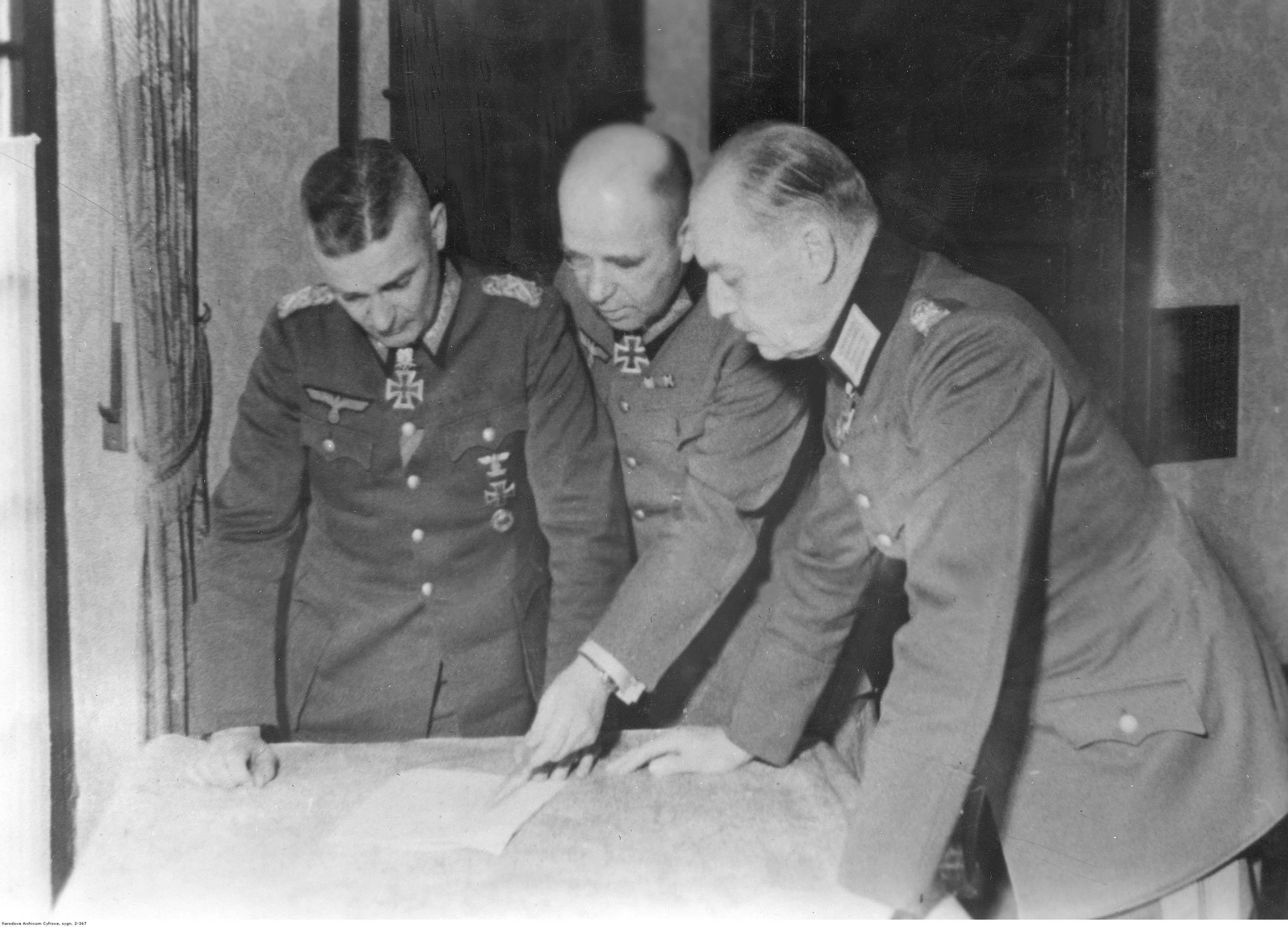
Field Marshals von Rundstedt and Model consult maps in headquarters
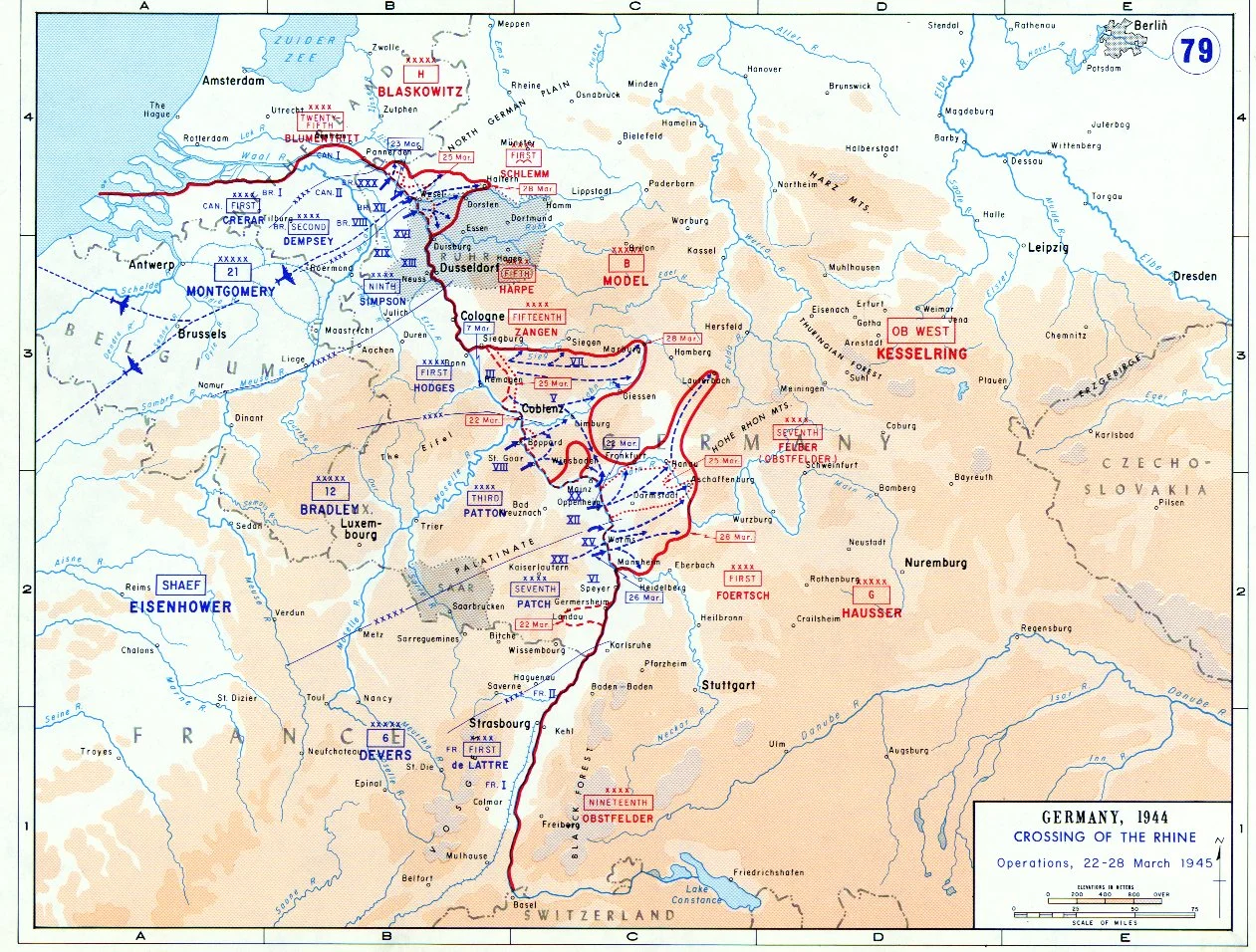
The bridge over the Rhine in Cologne had been destroyed as American troops pushed into the city, with the bridge just to the south at Bonn sharing the same fate shortly after. Believing that no intact bridges would be located, the Allies were making plans for a large scale bridging and amphibious operation spearheaded by Montgomery and the British, designated Operation Plunder. The main drive was to take place near Wesel, while Patton’s US 3rd Army crossed farther south around Mainz. Supporting the assault would be the largest airborne operation yet undertaken: Operation Varsity would see 16,000 Allied paratroopers dropping east of the river.
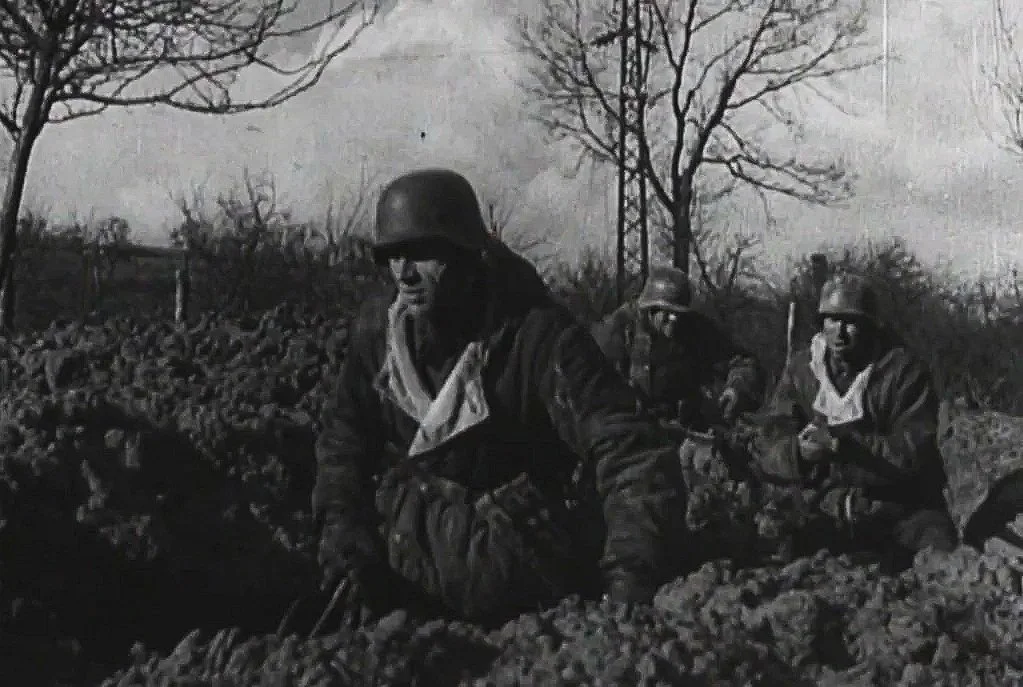
German soldiers along the Rhine front in the spring of 1945
Along that east bank, the battered Wehrmacht was attempting to consolidate its dwindling forces. The withdrawals across the river in the aftermath of the Ardennes Offensive had seen significant casualties, but by March the Germans had pulled the majority of their forces across the river, consolidating their line and bracing for the coming assault. But behind the breastworks of the Rhine lay nothing but open country. The Western Allies were now poised to force the door to the heartland of the Reich, and this grim reality was not lost on the men in the trenches and foxholes.
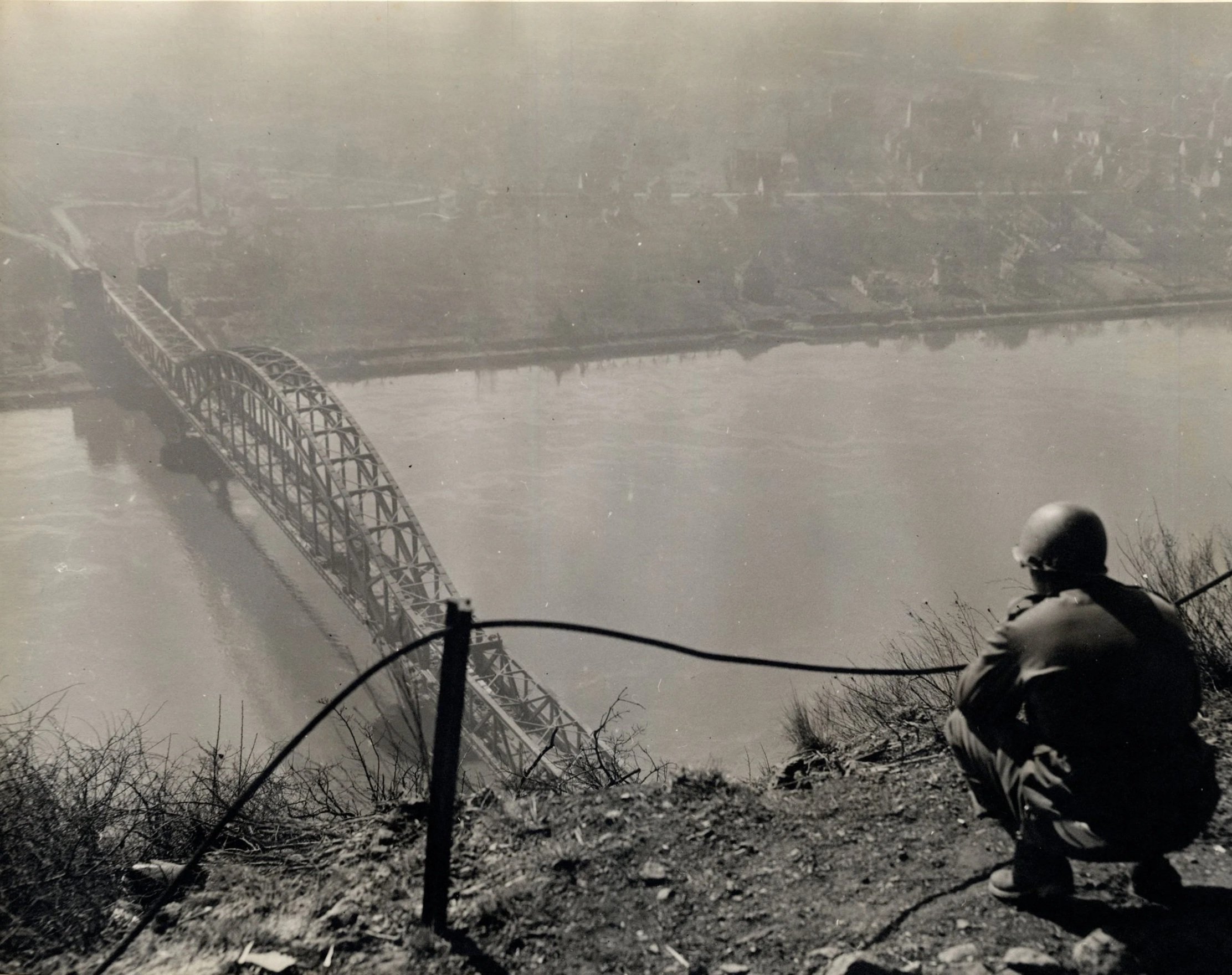
An American soldier observes the intact Ludendorff Bridge at Remagen
On the morning of 7 March, 1945, elements of the US 9th Armored Division continued their sweep south from Bonn, approaching the town of Remagen when they were greeted by the sight of a railroad bridge still spanning the river from between two sets of almost medieval looking stone towers. This was the Ludendorff Bridge, a 1,066 foot long dual track railway arch structure built by Russian POWs in the last war. In March of 1945 it was being used by retreating German troops in the face of the advancing Americans, and although wired for demolition had not yet been destroyed.
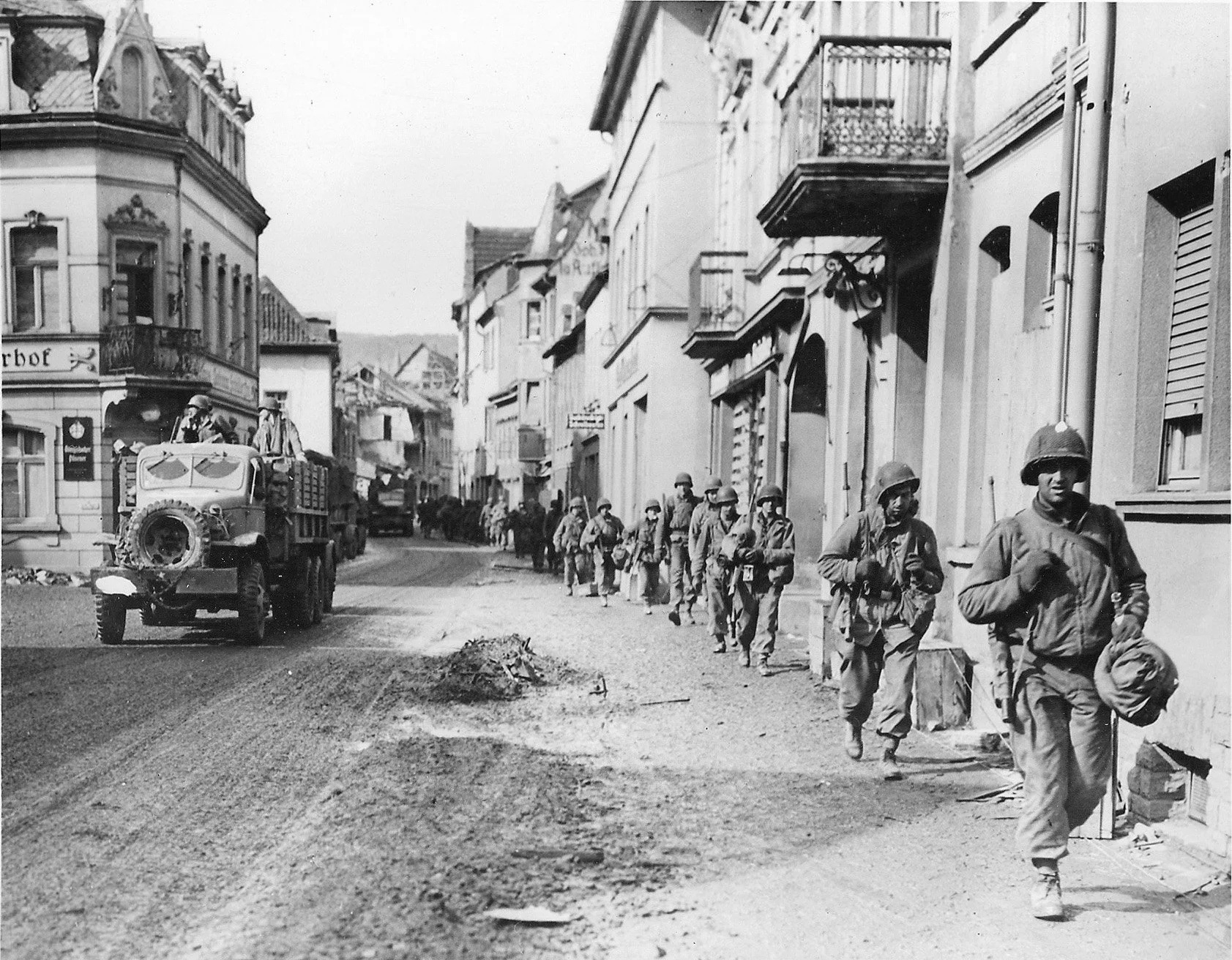
American troops enter Remagen
Command reshuffles had slowed the German response at the bridge, and the prepared charges had been removed to prevent an accidental detonation as had occurred earlier at another Rhine Bridge. In addition, charges available were not the typical military grade types, but weaker industrial grade, leading to concerns as the first burst of gunfire were heard along the bridge approaches. Breaking out of the treeline a mile from the bridge, the Americans began to move quickly toward it, supported by new M26 Pershing heavy tanks, while the Germans attempted to withdraw their forces across the Ludendorff Bridge.
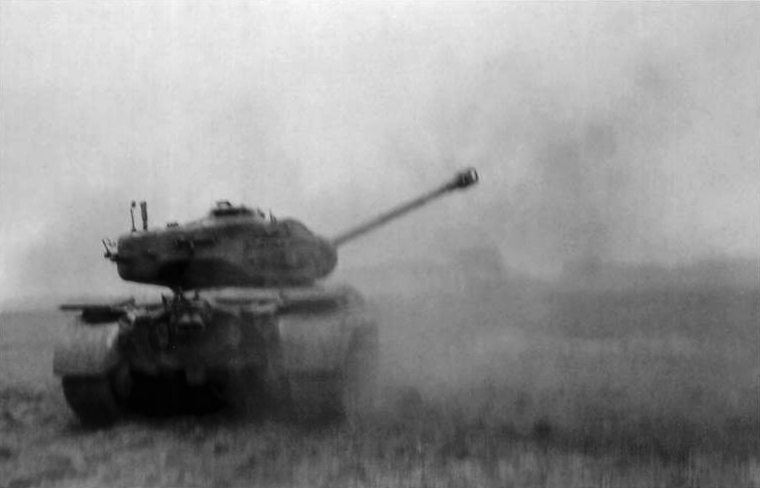
An M26 Pershing heavy tank fires at German positions across the Rhine at Remagen
As the American tanks made for the earthen ramp approaching the bridge a cratering charge was detonated, stopping the advance and buying the Germans time. The tanks began to shell German positions on the east bank, joined by mortars and light artillery, and the German commander gave orders to blow the bridge. The resulting explosion rattled the structure, but did not collapse it. American infantry rushed the span, combat engineers moving along to cut wires and disarm charges as they did so. Heavy machine gun fire raked the bridge from the eastern towers, but the Americans managed to enter the structures and clear them before expanding a bridgehead and moving into the railway tunnels extending from the bridge.
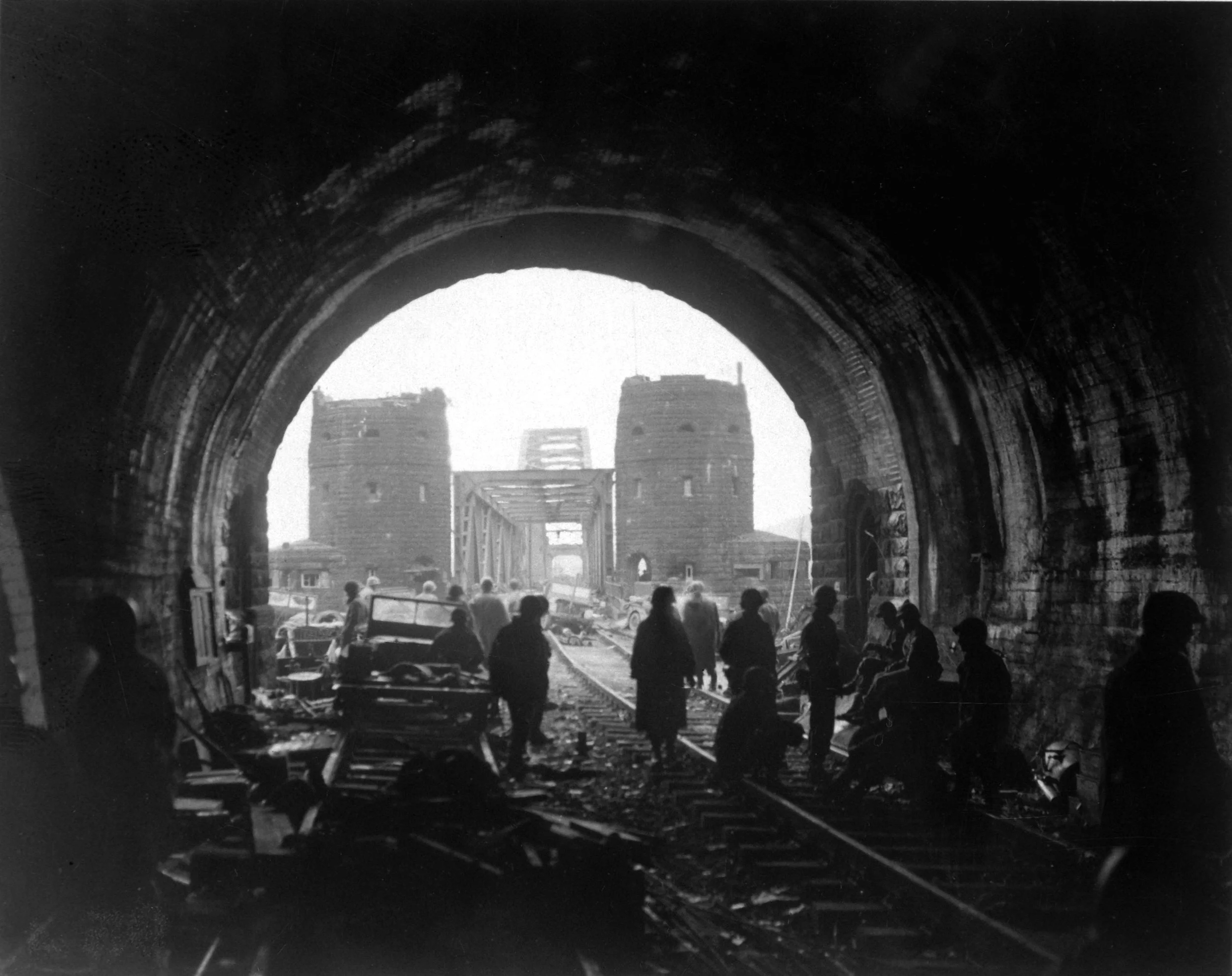
American troops and vehicles in the tunnels at the eastern end of the Ludendorff Bridge
As news of the capture of the Ludendorff Bridge made it back to higher headquarters, additional US units were redirected to reinforce the bridgehead, as engineers feverishly worked to repair and reinforce the structure. German forces in the area attempted to regroup and destroy the bridge, but had no success. General Bradley, for his part, upon hearing of the capture of an intact bridge over the Rhine, ordered his forces to push as much men and materiel to the eastern bank as possible.
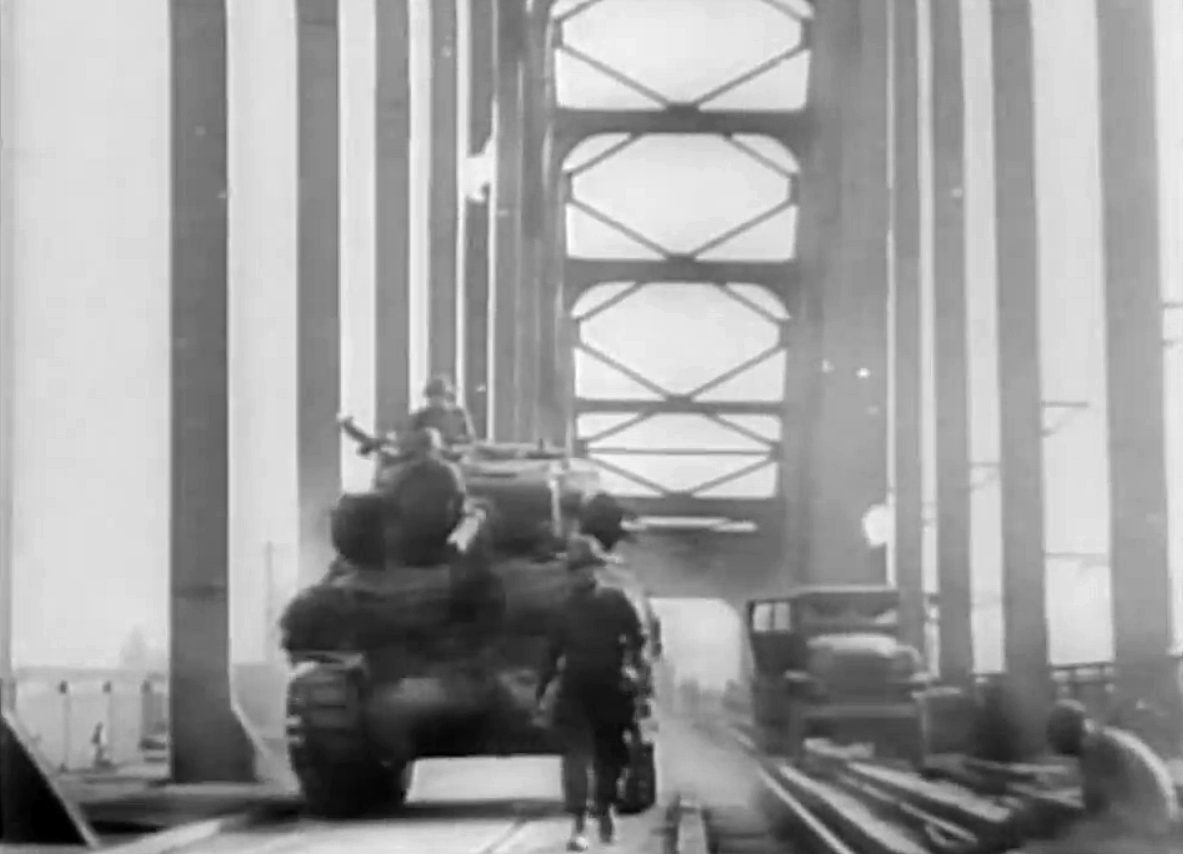
American armor crosses the bridge at Remagen
The loss of the bridge led Hitler to relieve Field Marshal von Rundstedt of command in the west, replacing him with Albert Kesselring. All efforts were concentrated on destroying the bridge and reducing the bridgehead, with artillery batteries set up on the hills of the eastern bank of the Rhine shelling the span continuously, while the remnants of the Luftwaffe attempted to bomb it, including the brand new AR234 jet bombers. Whatever armored assets could be rounded up were directed against the bridgehead, but the tide could not be stemmed.
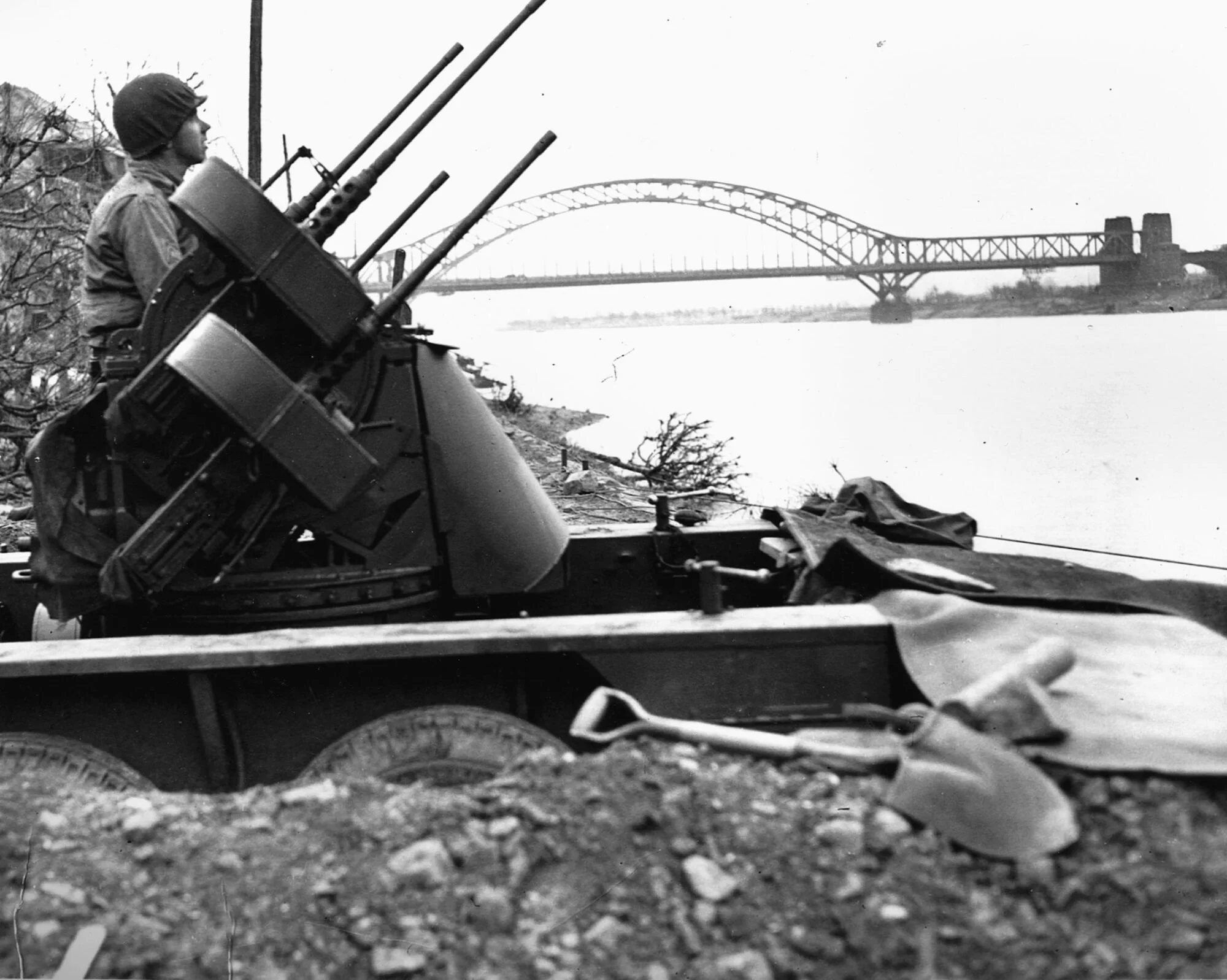
An American AA position defends the Ludendorff Bridge against attacks by the remnants of the Luftwaffe
Ten days after the bridge was captured, having sustained demolition attempts, infantry assaults, artillery, air raids and V2 missiles strikes, the Ludendorff Bridge finally succumbed, collapsing into the Rhine. Despite the loss of the main span, by now an auxiliary pontoon bridge had been erected by US engineers, and the flow of men and materiel, though slowed, continued.
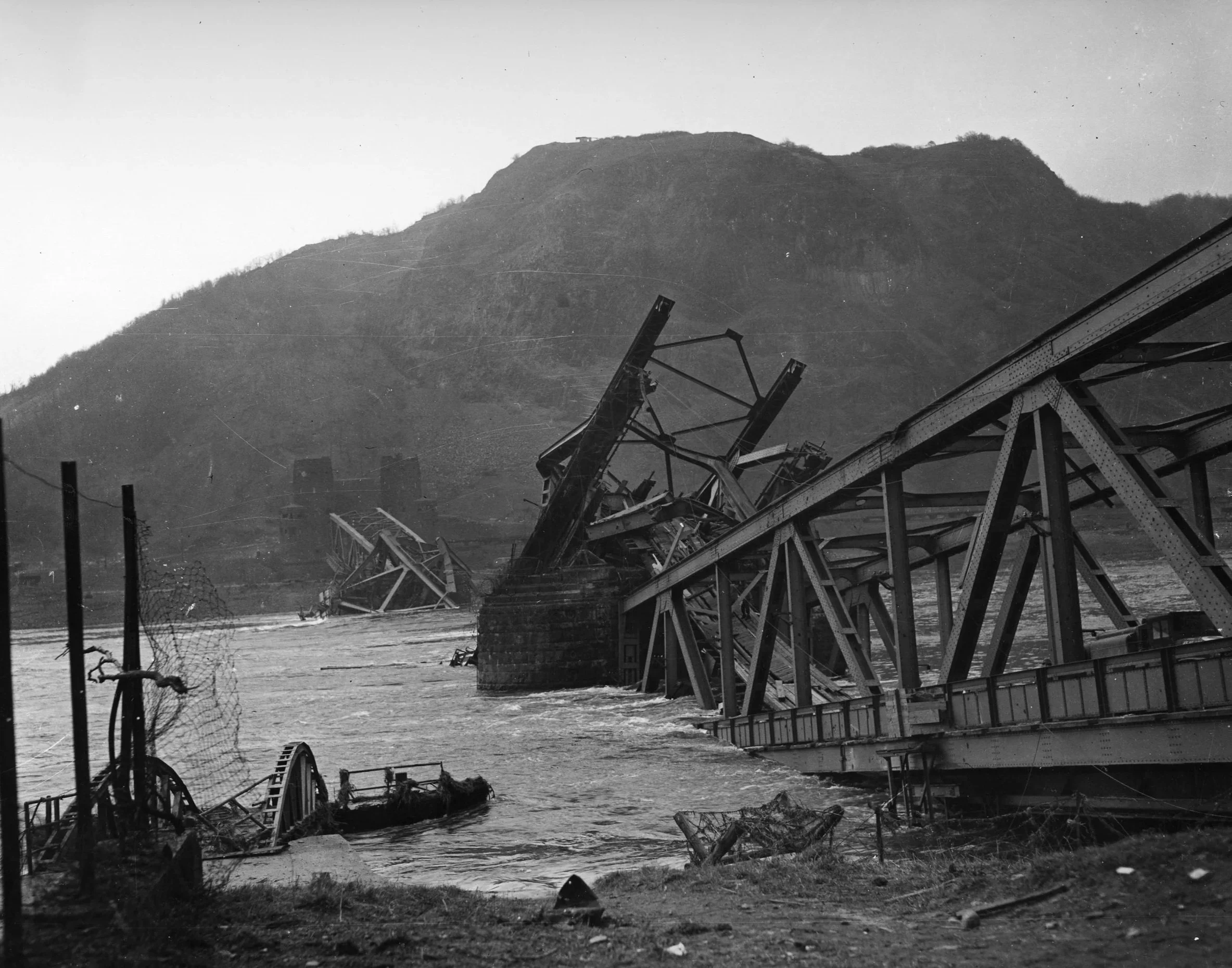
The wreckage of the Ludendorff Bridge after its collapse
On 22 March Patton’s US 3rd Army crossed the Rhine at Mainz overnight, making a surprise crossing an assault boats without a preliminary bombardment. Encountering no notable resistance, by dawn on the 23rd Patton was across in force. This beat his fierce rival, as Monty launched Operation Plunder during the day on 23 March, with a massive preparatory bombardment striking at the German troops positioned along the eastern bank around Wesel. Amphibious crossings took place over that night and the next day, and German resistance in the area quickly stiffened.
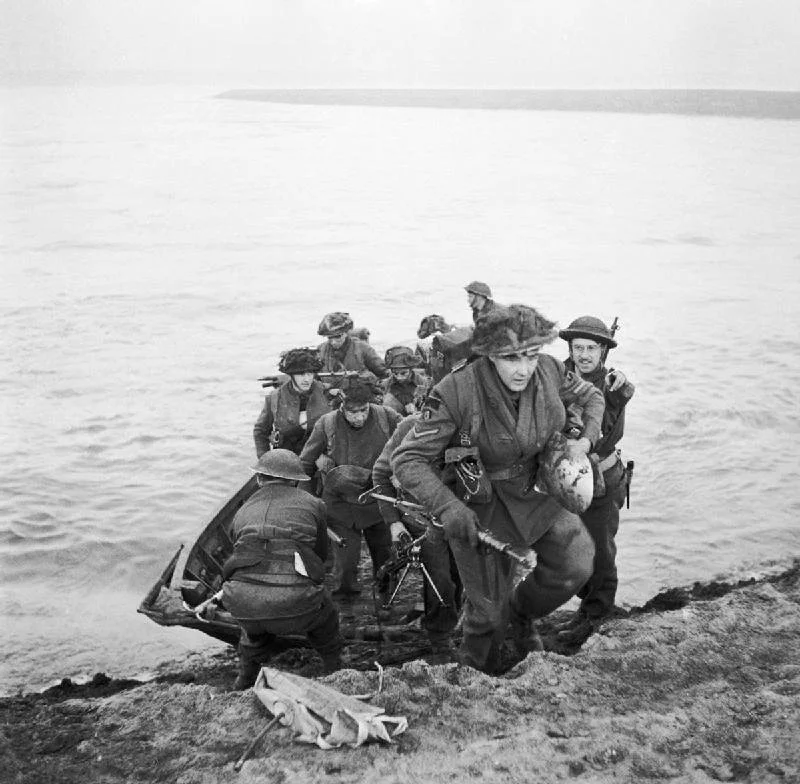
British soldiers climb the east bank of the Rhine from an assault boat
The airborne landings of Operation Varsity saw one British and one American division landed in Diersfordter Forest, encountering resistance but significantly disrupting German attempts to respond to the crossing. Three bridges over the Issel River were captured by the paratroopers as well, preventing the Germans from using the river as a fallback line. Within a week a substantial foothold had been created, with most of the German forces retreating toward the Ruhr.
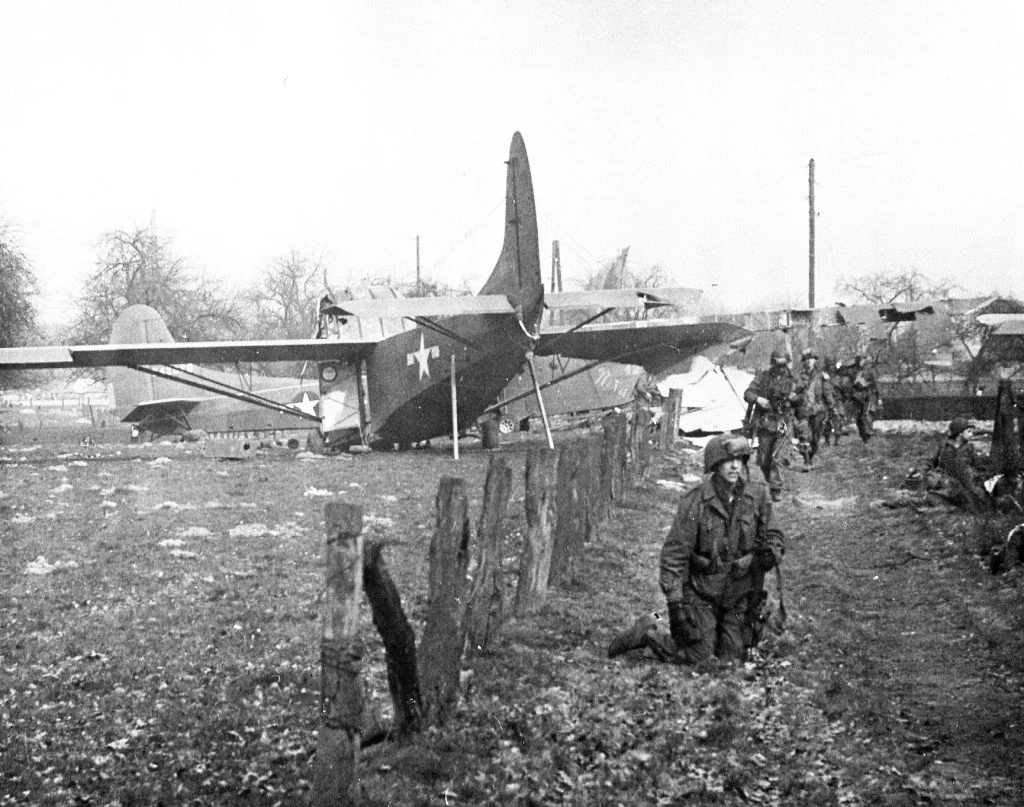
American glider troops land near Wesel during Operation Varsity
By the end of March the Allies had three firm bridgeheads across the Rhine, forcing open the last barrier to the heartland of the Reich. The beleaguered Wehrmacht began to collapse, as the Anglo-American armies moved to finally end the battle on the Western Front.
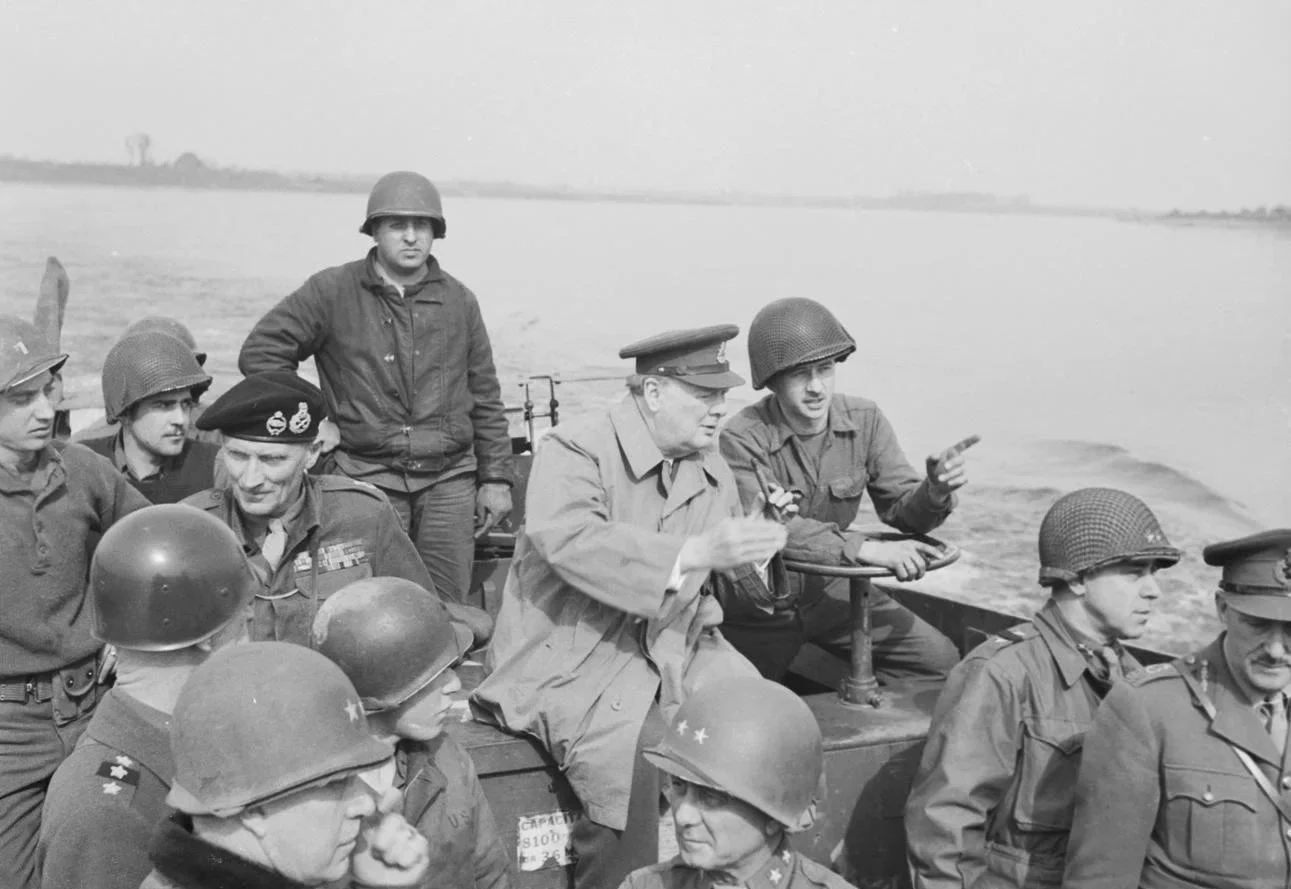
Winston Churchill and Field Marshal Montgomery cross the Rhine near Wesel
The Commanders