The Battle of Iwo Jima
Chapter 52
“At first it came as a ragged rattle of machine-gun bullets, growing gradually louder and fiercer until at last all the pent-up fury of a hundred hurricanes seemed to be breaking upon the heads of the Americans.”
19 February - 26 March, 1945
While the battle for Luzon raged, Admiral Nimitz was shifting his eyes northward toward Japan itself. Although the Philippines were not yet secure, the Japanese forces there no longer posed a direct threat to the island hopping campaign. With this information in mind, and with plans to make the final steps to isolate the Home Islands the Americans set their sights on the Volcano Islands. The main target for this thrust, designated Operation Detachment, was the island of Iwo Jima, home to a Japanese fighter base that was harassing B29 raids launching from the Marianas.
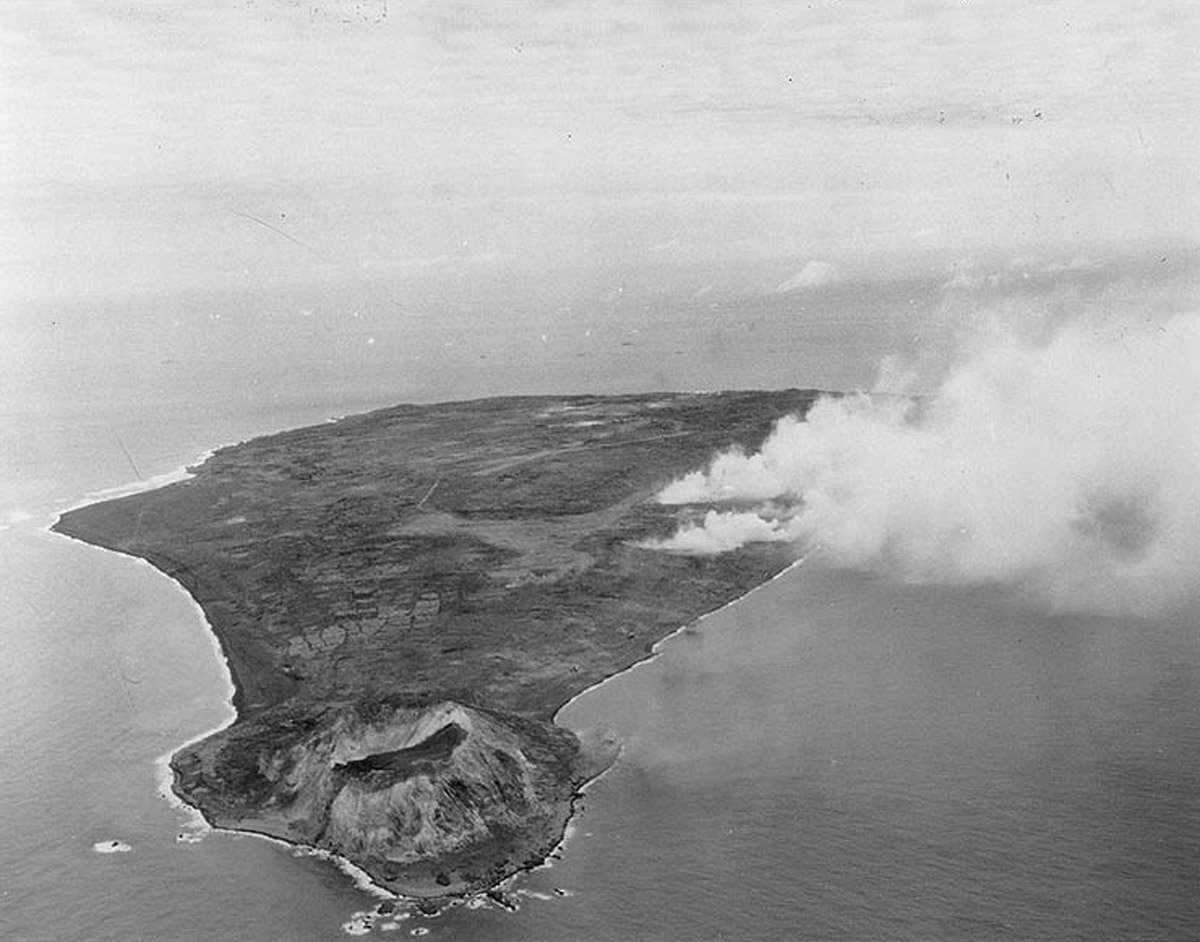
Iwo Jima during the preliminary bombardment, with Mount Suribachi in the foreground
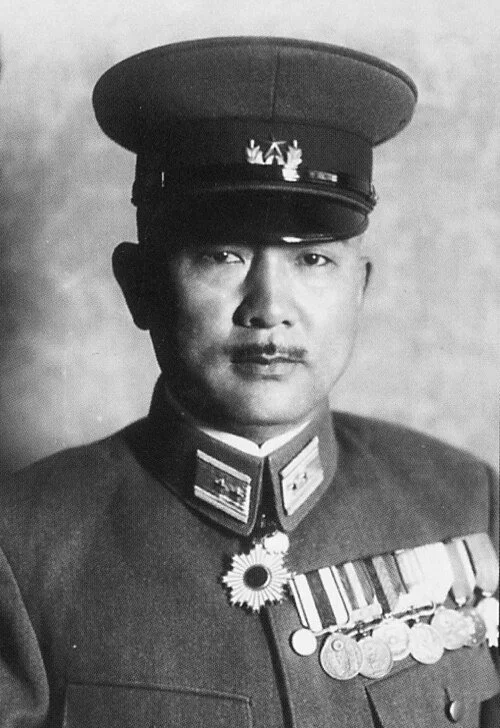
The Japanese, for their part, had been increasing the garrison of the island throughout late 1944, who considered the Volcano Islands to be the best replacement for the Marianas in the defense perimeter of the Home Islands. Lt. General Tadamichi Kuribayashi had taken command of the defense forces the previous summer, and had since been busy digging fortifications, intending to meet an invasion with a drawn out battle of attrition, grinding down the Americans in order to stall the attack on Japan proper.
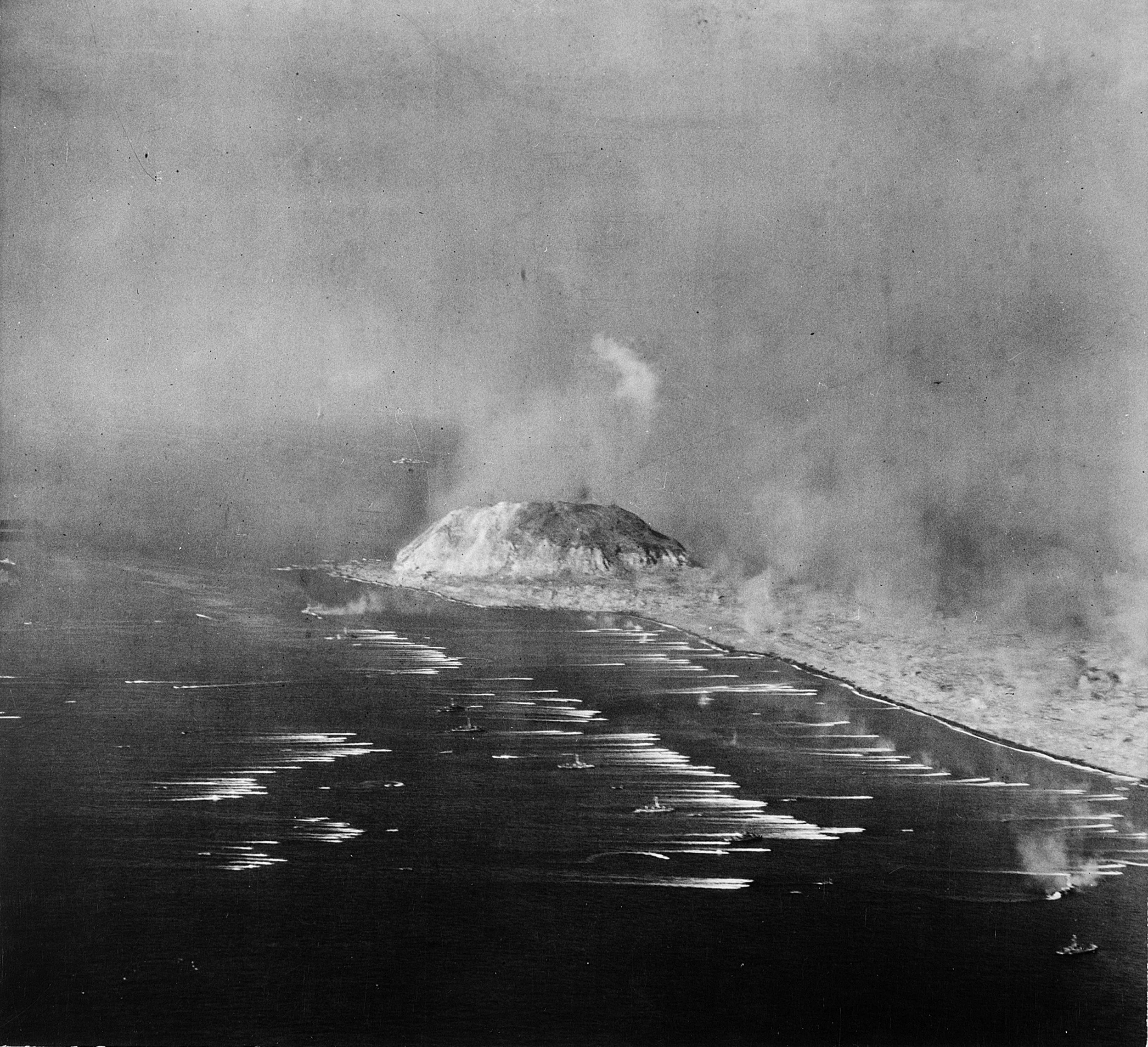
Landing craft heading for Iwo Jima
The US fleet arrived in strength at Iwo Jima on 16 February, encountering no substantial resistance from the decimated Imperial Navy as they commenced a preliminary bombardment of the island. Poor weather and effective counterfire from Japanese shore batteries prevented much effective fire over the next three days, with less than 13 hours of firing over the entire period. Additionally, the majority of available carrier planes were tasked with strikes against the main Japanese island of Honshu rather than ground support for the invasion of Iwo Jima.
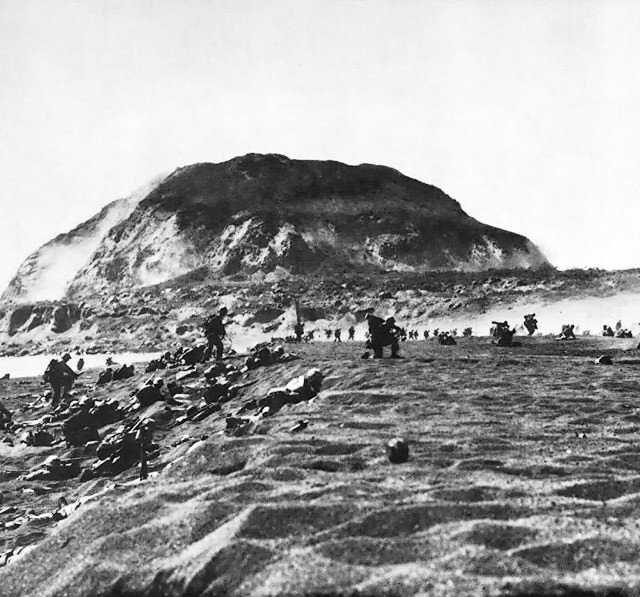
Marines land in the shadow of Mount Suribachi
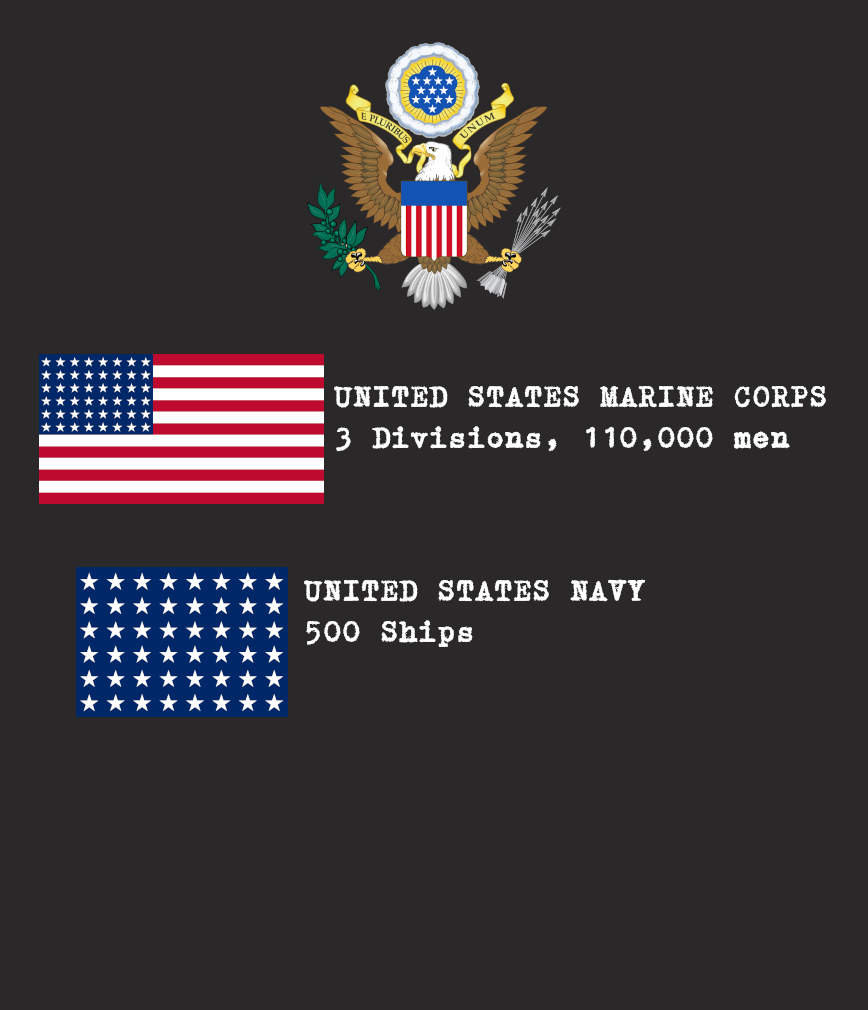
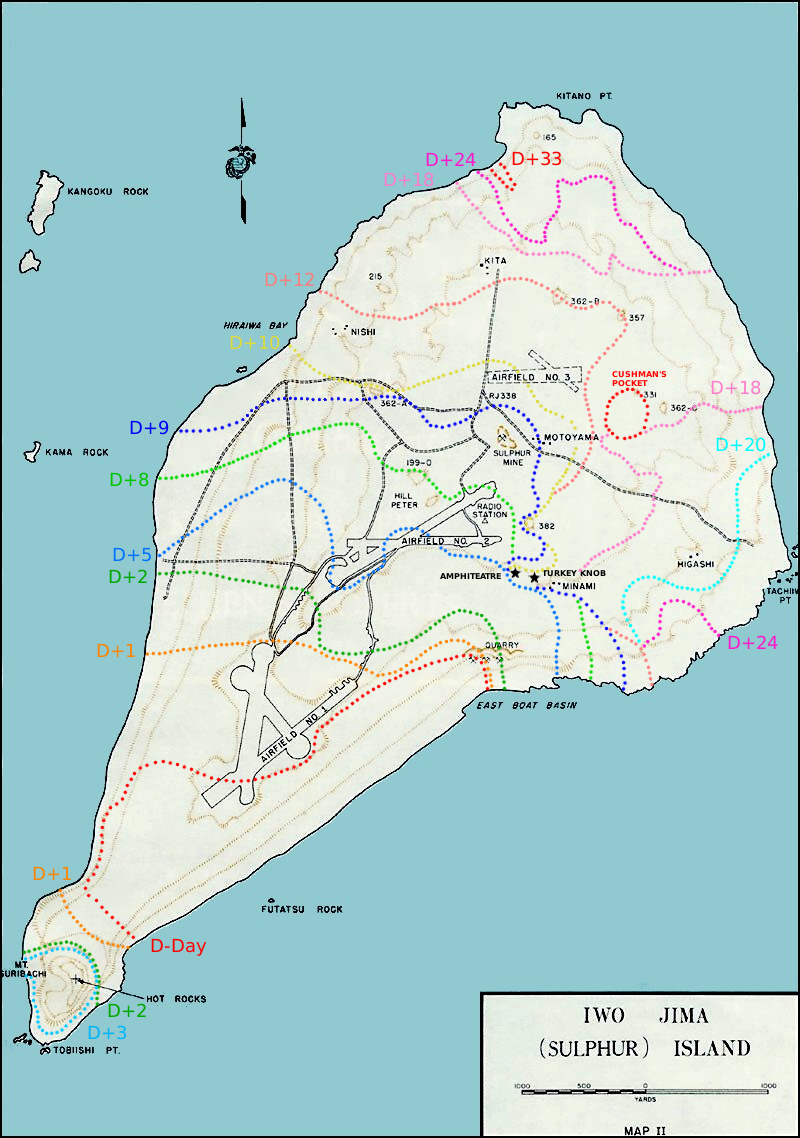
Two divisions of US Marines began their landings on 19 February, and for the first hour their was no response from the Japanese defenders. The Marines and their equipment began to cluster on the black volcanic sand of the beaches, and an hour after the first Marines had come ashore a barrage of artillery struck the massed men, joined by rifle and machine gun fire from concealed positions. Heavy guns emplaced within the towering Mount Suribachi, the tallest point on the island fired down on the beaches before being quickly retracted to protect them from counterfire. The ashen black sand proved extremely difficult to move in, as well as preventing the digging of foxholes for cover, and casualties were severe.
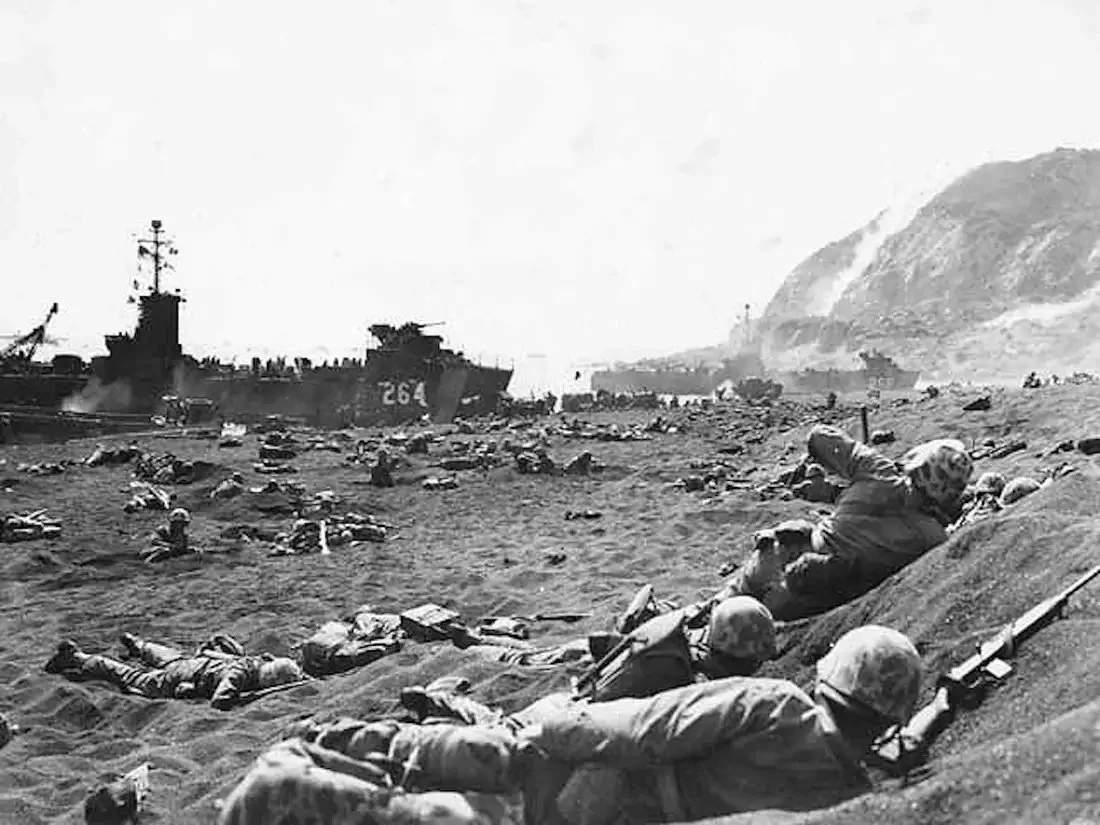
Marines on the beaches of Iwo Jima
Slowly pushing off the beaches with naval gunfire and close air support, the Marines abandoned their tracked vehicles as they bogged down, advancing on foot. The eventual arrival of Seabees with dozers allowed the construction of roads, the Construction Battalion men braving vicious fire on their exposed machines. The 5th Marines moved to reach the western shore of the island, isolating Mt. Suribachi from the rest of the defenders, while th 4th Marines drove inland toward the two Japanese airfields near the island center, with many becoming stranded in a large valley exposed to murderous Japanese fire. As night fell the fighting ebbed somewhat, but the banzai charge that the Americans expected did not come: General Kuribayashi had realized the wastefulness of such actions, and had forbidden them.
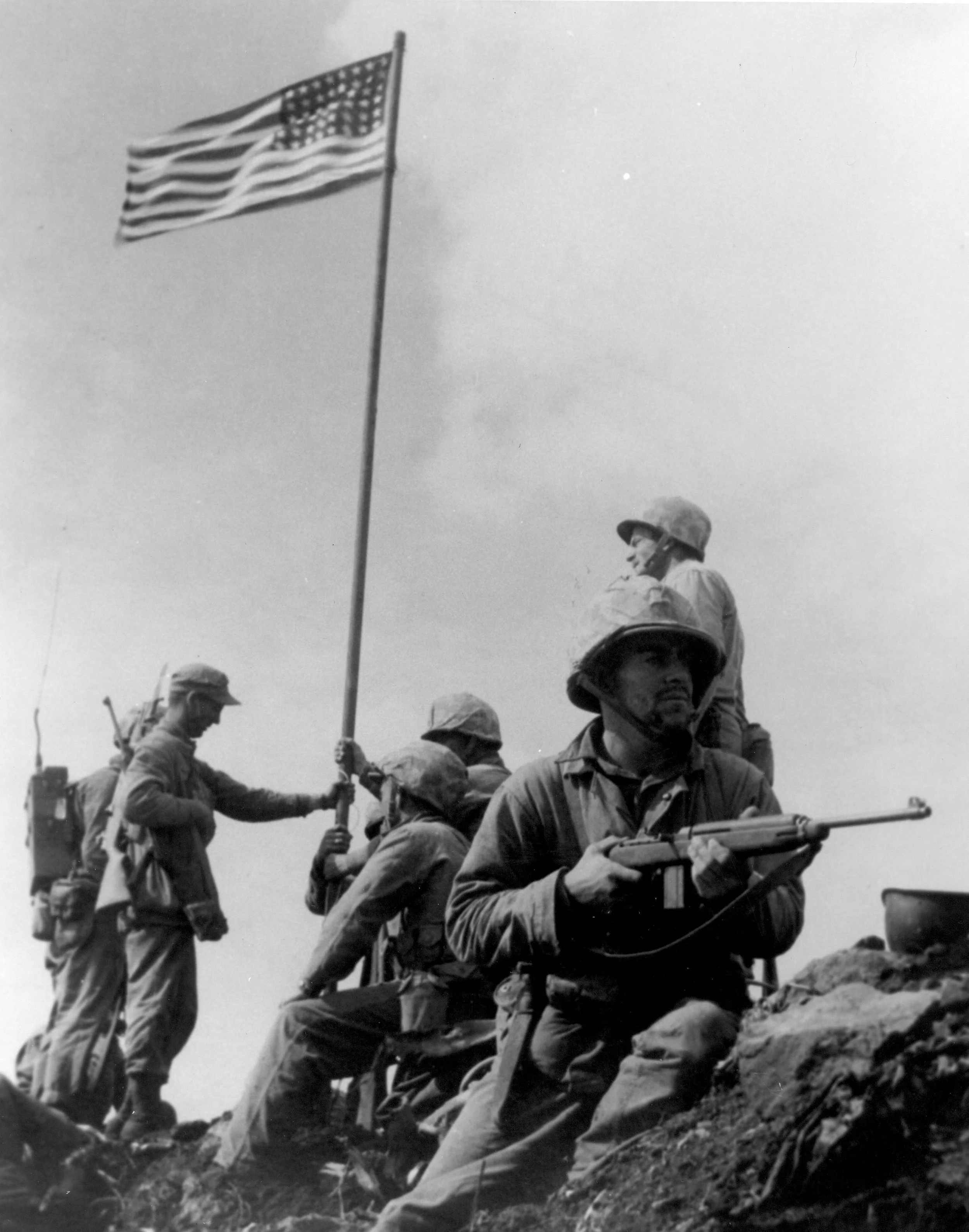
The first flag raised atop Mount Suribachi
The second day of battle dawned with the 5th Marine Division commencing its assault up the slopes of Suribachi while the 4th Marine Division, joined now by the 3rd Marine Division and some detached elements of the 5th continued to push inland. The battle was terrible, with rifle teams standing aside to allow grenadiers and flamethrowers to burn the Japanese out of their bunkers and caves. The push to the summit of Mount Suribachi culminated on 23 February, as Marines finally made it to the relatively flat land atop the volcano. Locating a piece of pipe in the wreckage, the Marines affixed the US flag and raised it over the peak, eliciting cheers from Marines below and celebratory blasts of naval ship’s whistles.
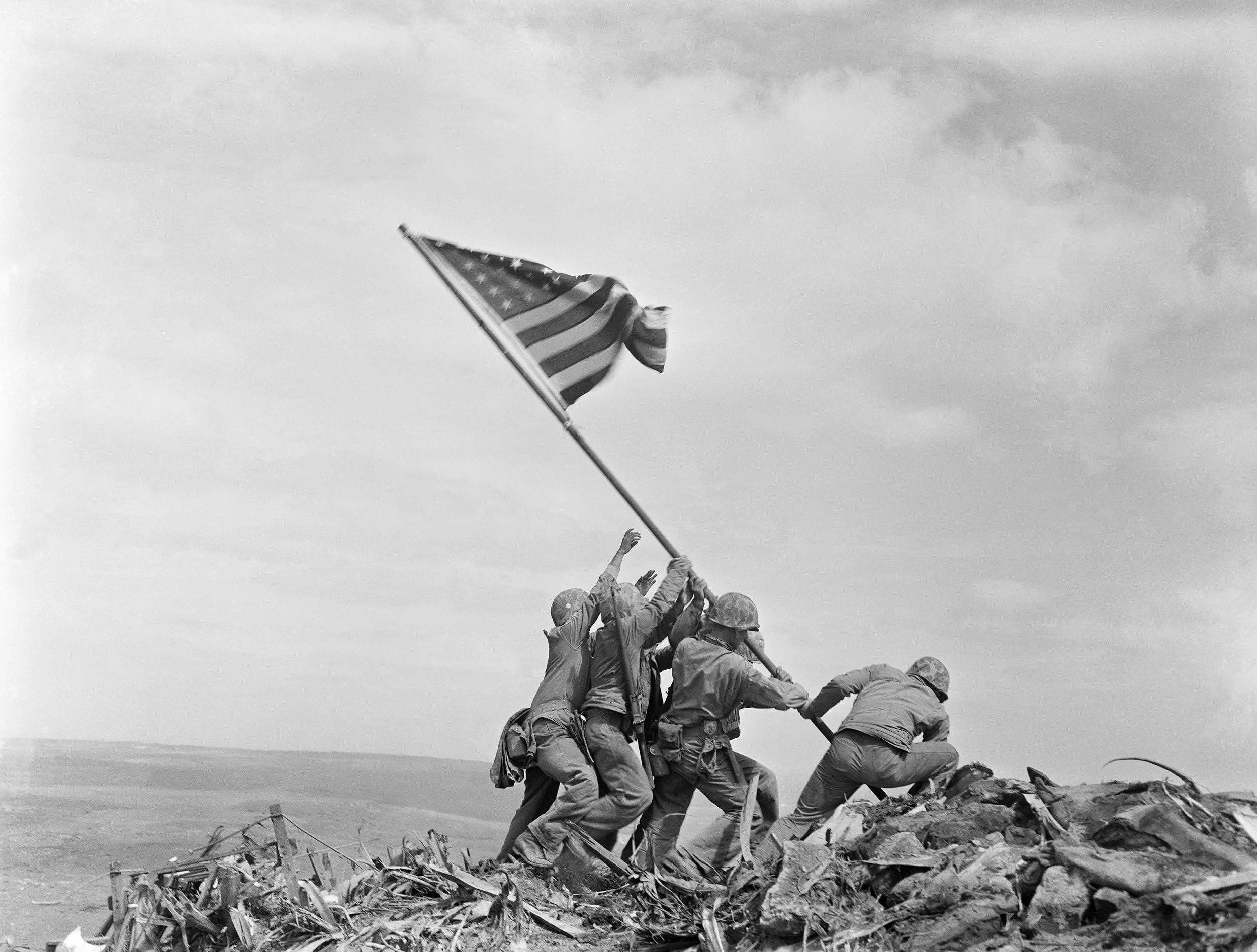
“Raising the Flag on Iwo Jima” - one of the most iconic images in American history
A brief dispute arose between Secretary of the Navy James Forrestal, who had just landed to observe the battle, and the Marine officers in the field when the Secretary ordered that the flag be brought to him. In response a larger flag was located and raised over the summit, with cameraman Joe Rosenthal snapping what would become the single most iconic image of the American experience of the Second World War, which would in turn be printed on newspapers across the nation, bringing a boost to morale for the war-weary populace at home.
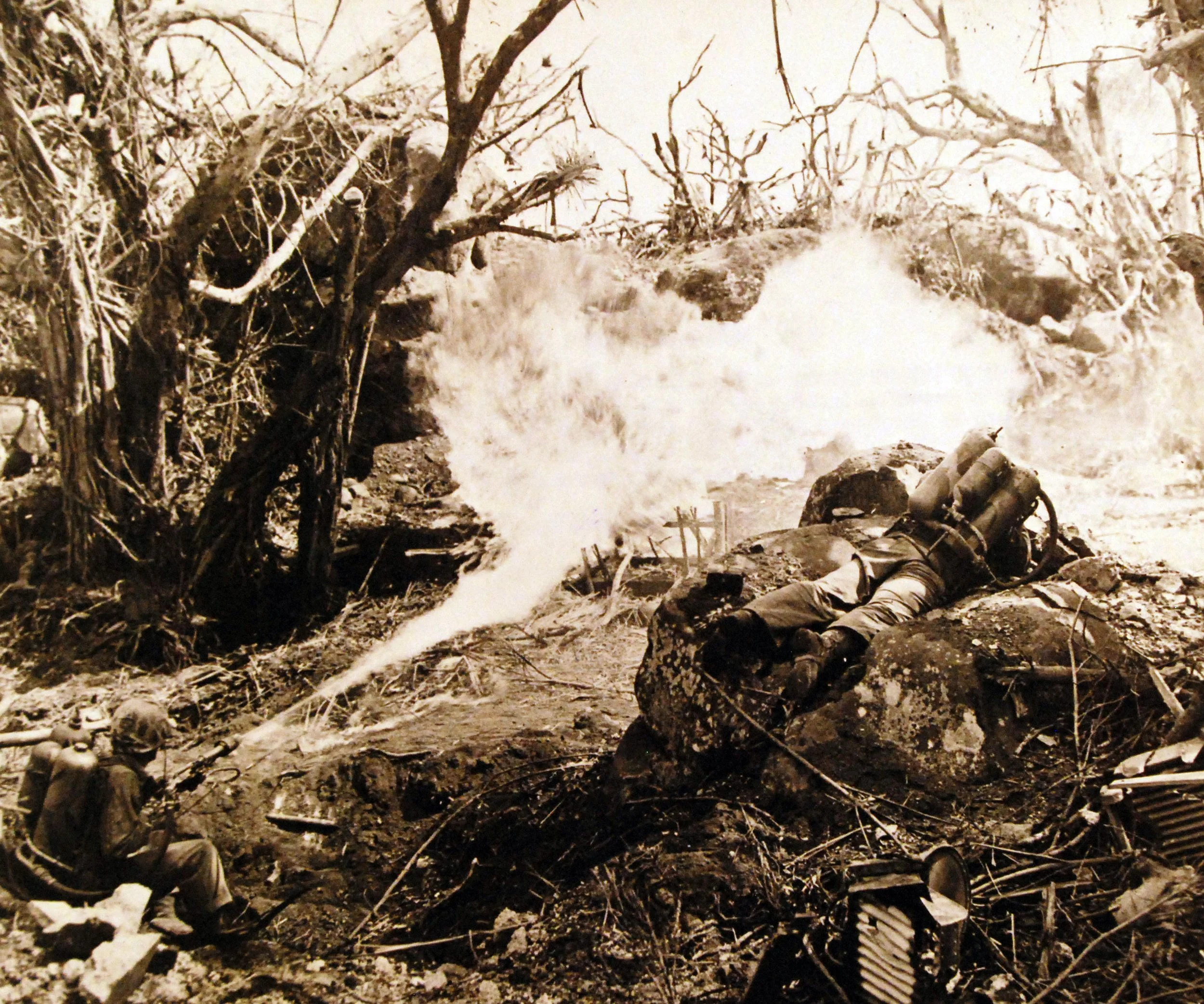
Marine flame throwers in action
Despite the iconic photo, the fight for Iwo Jima was not yet over. Three of the six Marines in the famous photograph would be killed in action during the coming battle, as the Marines cleared the airfields and pressed Kuribayashi’s men farther north. The craggy, rocky terrain was a boon to the defenders. The strongest point of the defense was the Motoyama Plateau, also known to the Americans as the Turkey Knob. Protecting the second airfield, this position was riddled with tunnels much like Suribachi, and as positions were overrun the Japanese would return through their tunnels to flank the Marines. Casualties continued to mount, but with changing tactics the Americans were gaining ground. Attacking at night without their customary bombardment, the Americans overran the Turkey Knob on 28 February, later holding against Japanese counterattacks.
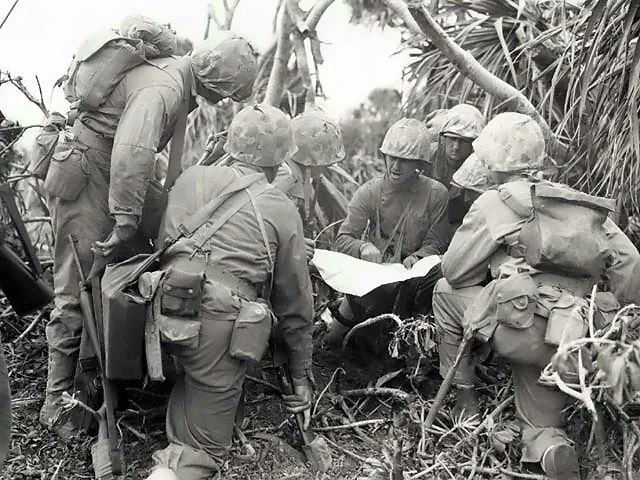
Marines are briefed in field on Iwo Jima
The second airfield was in American hands on 4 March, and four days later the desperate Japanese defenders finally made the banzai charge expected weeks earlier. Storming the American lines, ninety Marines were killed and 250 more wounded. Nearly a thousand IJA soldiers were killed in the onslaught. The island was declared secured on 14 March, but in reality the last strongholds of Kuribayashi’s garrison remained, with the Marines slowly clearing each position, or simply sealing them by collapsing entrances. The last 300 defenders made a final charge on the American lines on the night of 25 March, and were destroyed by the perimeter defenders of the captured airfield. Some isolated units would continue guerilla operations to the end of the war, but organized resistance ceased at this point.
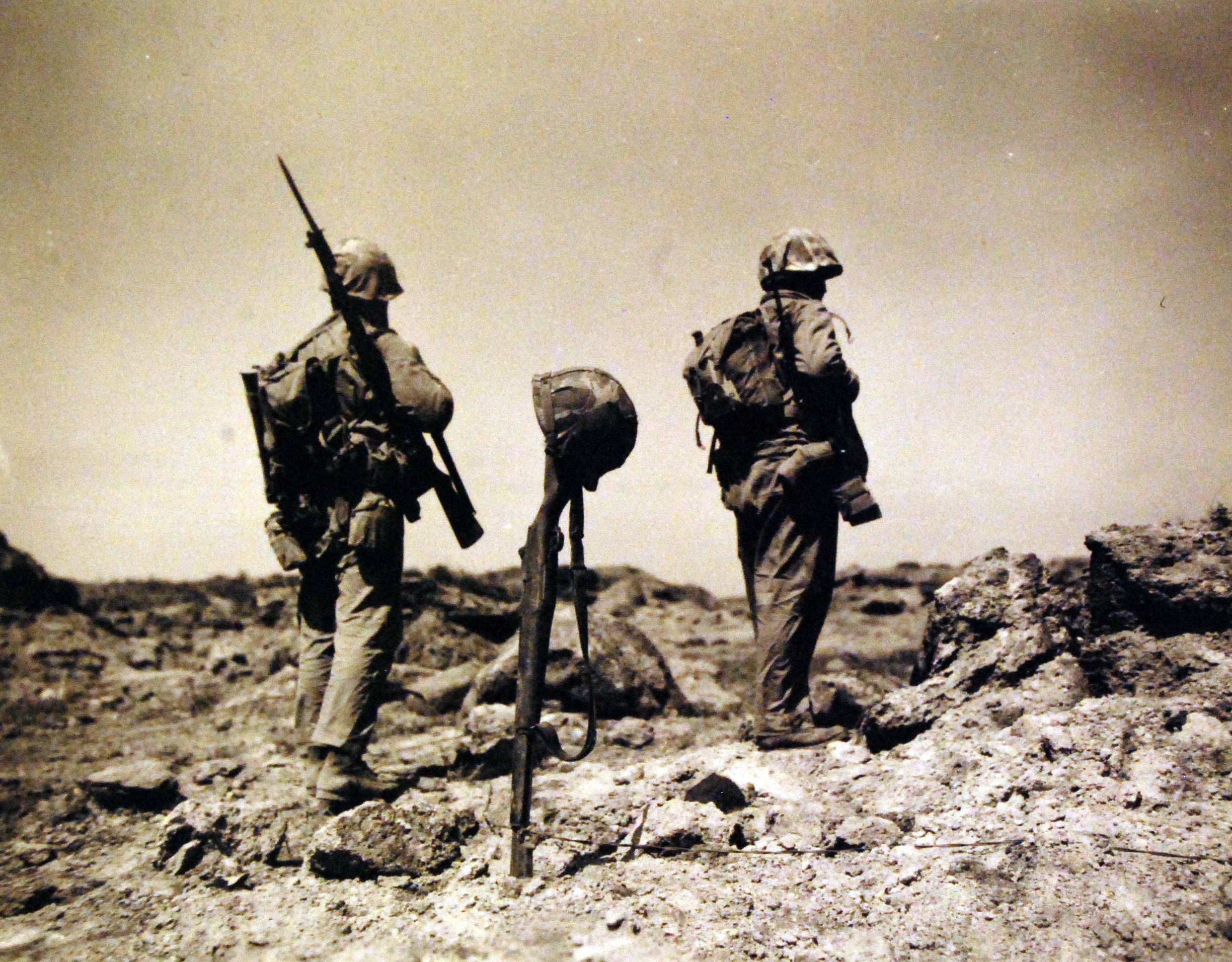
Marines stand near a Battlefield Cross marking a fallen comrade
The island was again declared secure, now for the last time, on the morning of 26 March. The first USAAF B29 bomber had made an emergency landing at the southern airfield on 4 March, but in the end the airfields would be of little use. Almost 7,000 Americans died in the Battle of Iwo Jima, and two escort carriers and one fleet carrier were badly damaged in kamikaze attacks on 21 February. The Japanese garrison of nearly 21,000 was annihilated nearly to the last man. The battle remains controversial to this day for its necessity, although the iconic image remains one of the most famous in American history, and later would serve as the basis of the US Marine Memorial in Washington, DC.
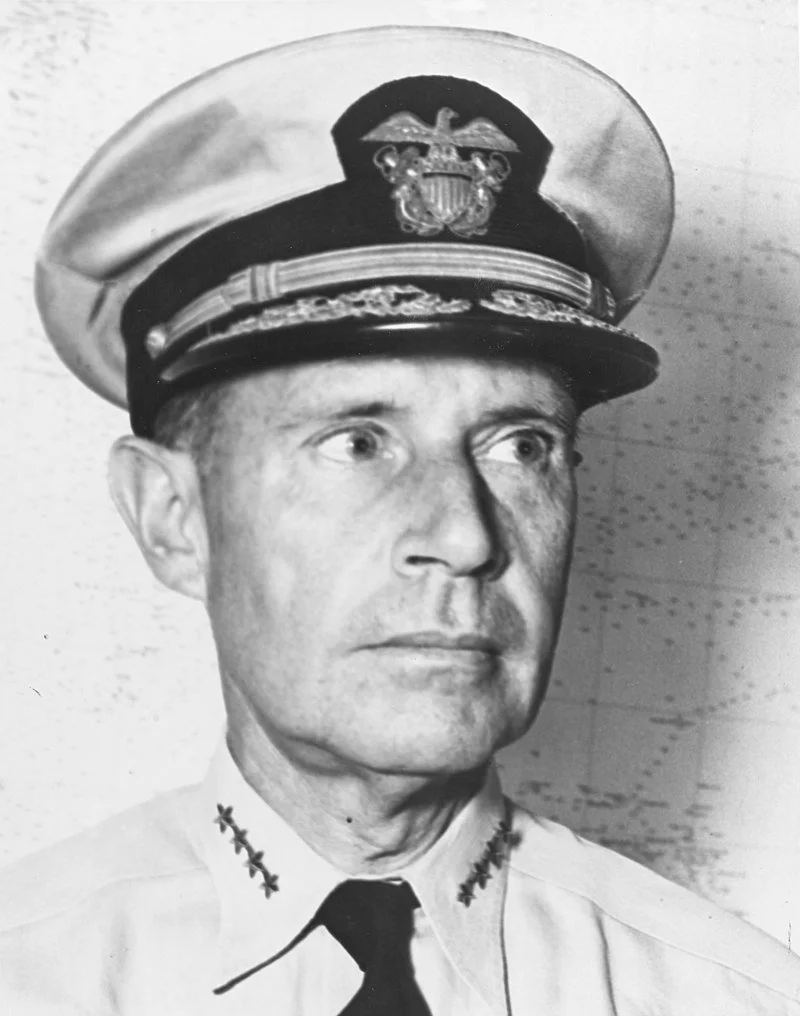
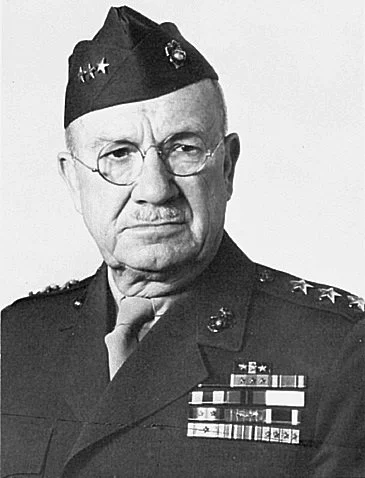
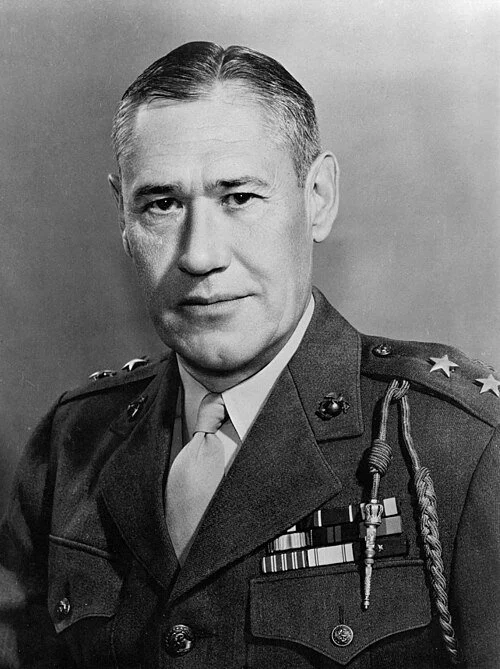
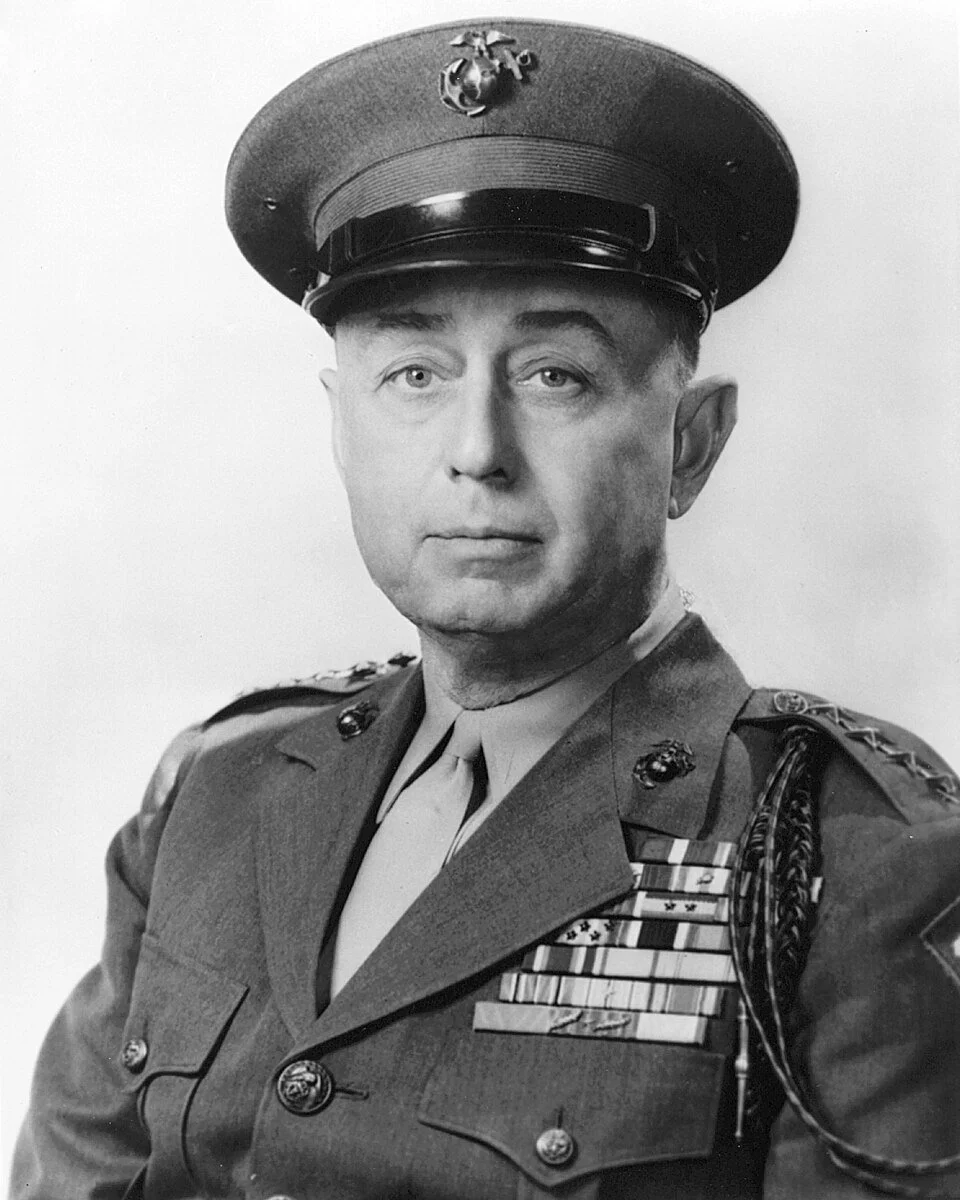
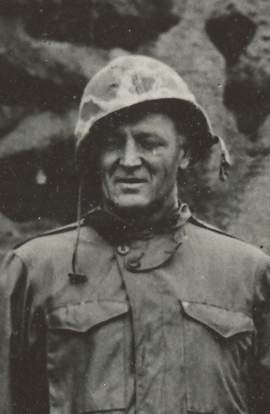
The Leaders