The Battle of Manila
Chapter 45
“The Americans will come, but you will not see them.”
3 February - 3 March, 1945
Following the American landings at Lingayen Gulf in January of 1945 the Japanese were rapidly pushed inland, and while the overall commander of the defense of the archipelago intended to make a stand in the north around Baguio, the Philippine capitol of Manila would see some of the most horrific fighting of the campaign. Hailed before the war as the “Pearl of the Orient”, and the crown jewel of the US Philippine Islands, the city was a far cry from the jungles and villages that had marked most of the US Army’s fighting in the Pacific thus far.
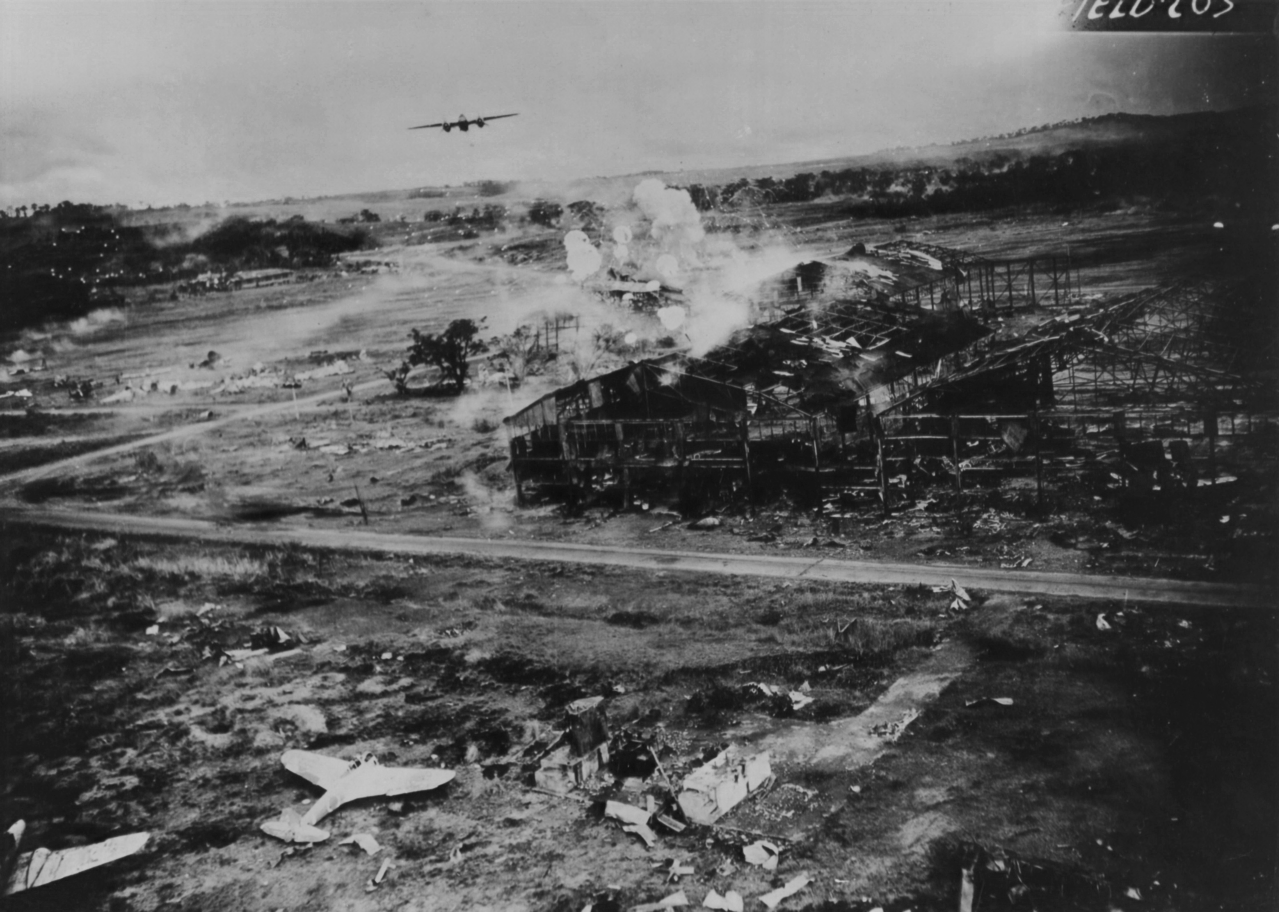
An American plane attacks Japanese aircraft at Clark Field
Back in the dark days immediately following Pearl Harbor the city had been abandoned by MacArthur’s US Army Forces in the Far East (USAFFE) without resistance, hoping to spare the population the horrors of modern war. As a result, Manila had been occupied by the Imperial Japanese Army just after New Year’s Day 1942, marking the first major American city to fall to a foreign army since Washington had been taken by the British in 1812.
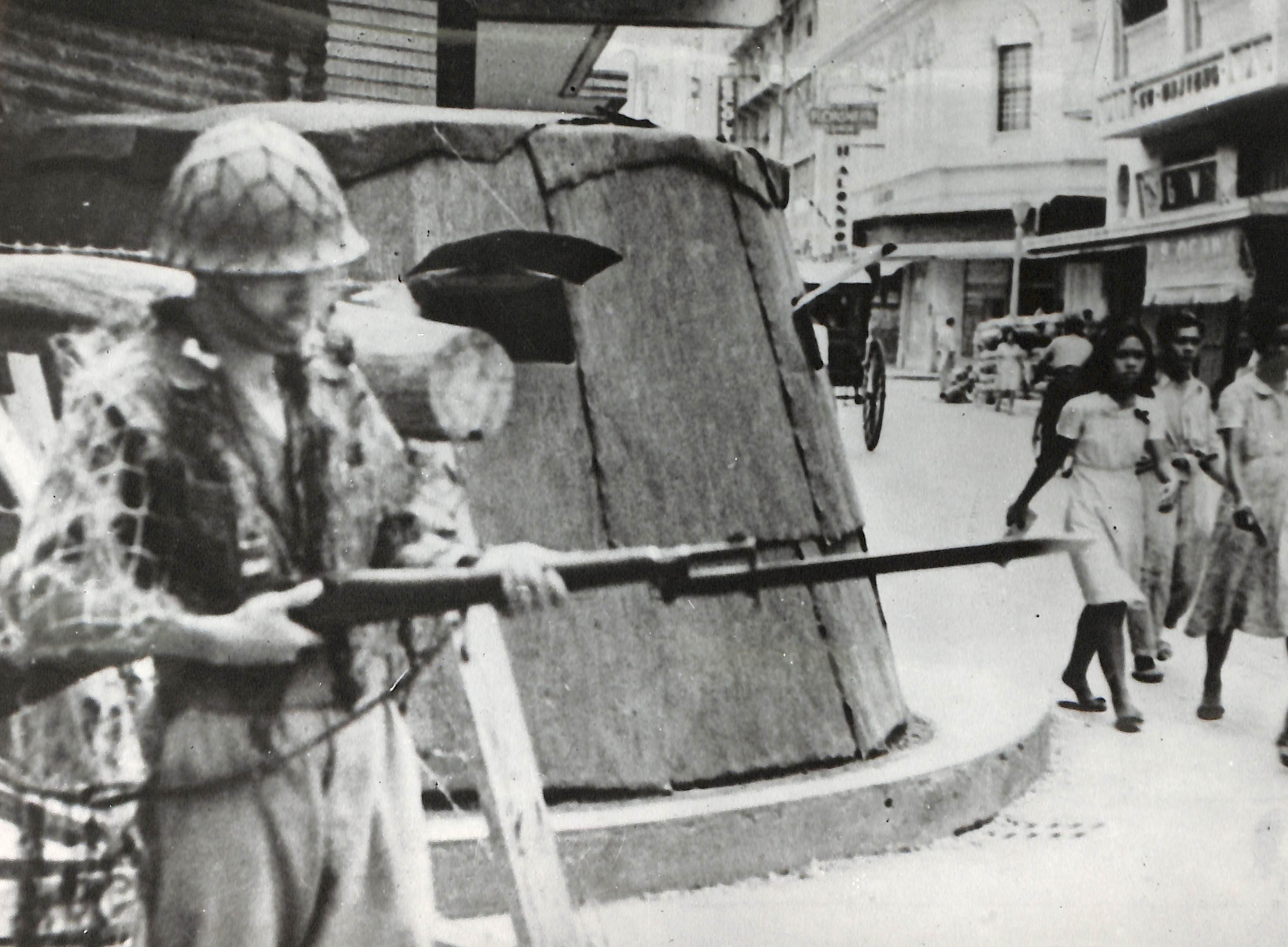
A Japanese sentry in Manila, armed with a captured US M1903 rifle
Since that dark day when the Stars and Stripes were torn down from the High Commissioner’s Residence the city had been subjected to a harsh occupation. Japanese soldiers readily abused civilians on the streets, ranging from open handed slaps to full on beatings. The most unfortunate were those taken to the old Spanish citadel in the walled city (known as the Intramuros), Fort Santiago, turned into a prison and interrogation center by the feared Kempeitei. the Japanese secret police.
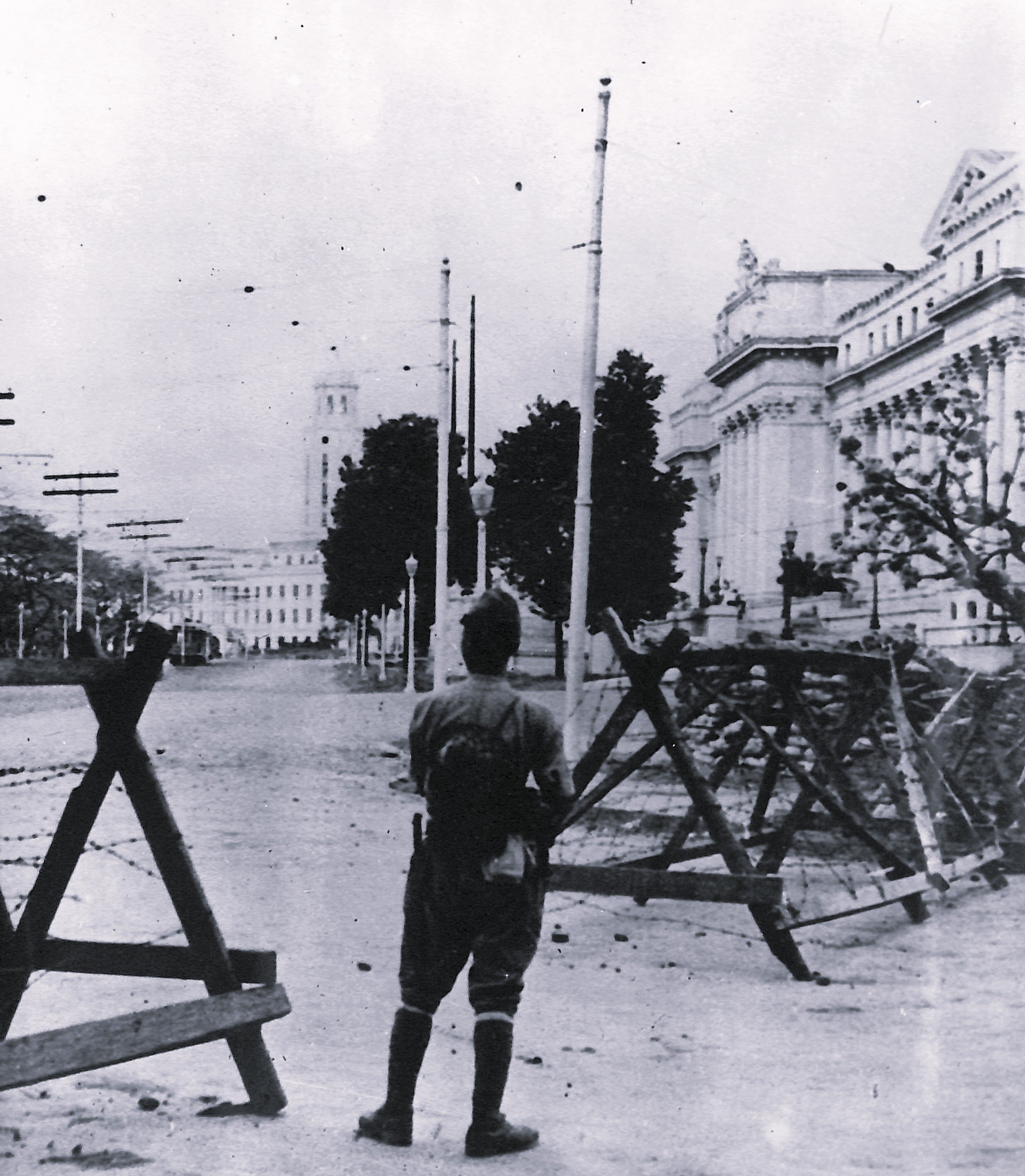
A Japanese soldier manning a checkpoint near the Legislature Building in Manila, looking toward the City Hall
As the war dragged on, the conditions within the city had deteriorated with the fortunes of the Japanese Empire. Shortages of nearly every type of goods were prevalent, and reprisals for guerilla actions were commonplace. With the landings at Lingayen Gulf in January of 1945 most could see that liberation was at hand, but it remained to be seen what the Japanese would do. The puppet government of Jose Laurel was evacuated to Baguio, and was followed by General Yamashita and his headquarters shortly afterward. The intention of the theater commander was to abandon the city as the Americans had in 1942 while making a stand in the mountains to the north.
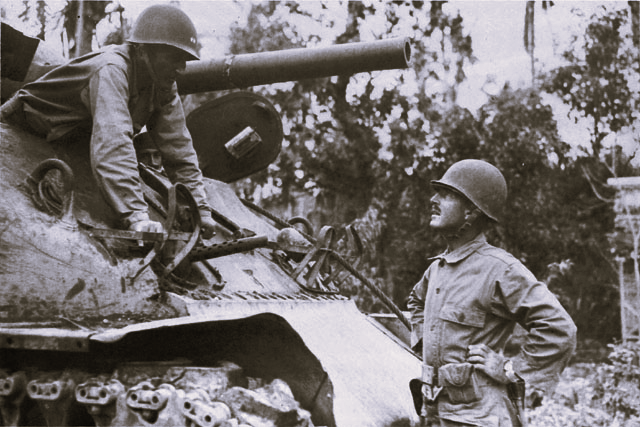
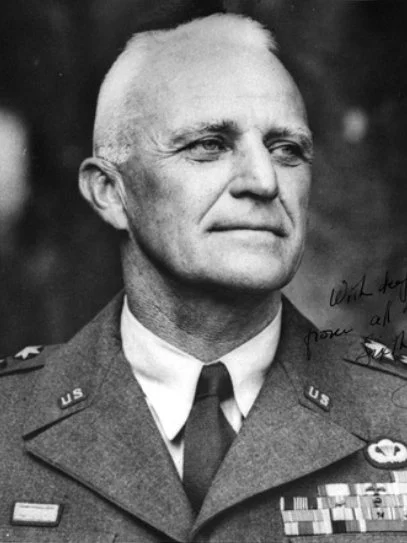
General Verne Mudge, commander of the 1st Cavalry Division confers with the commander of the “Flying Column” dispatched to enter Manila
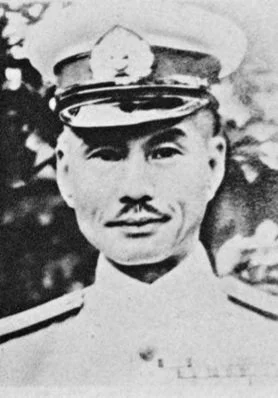
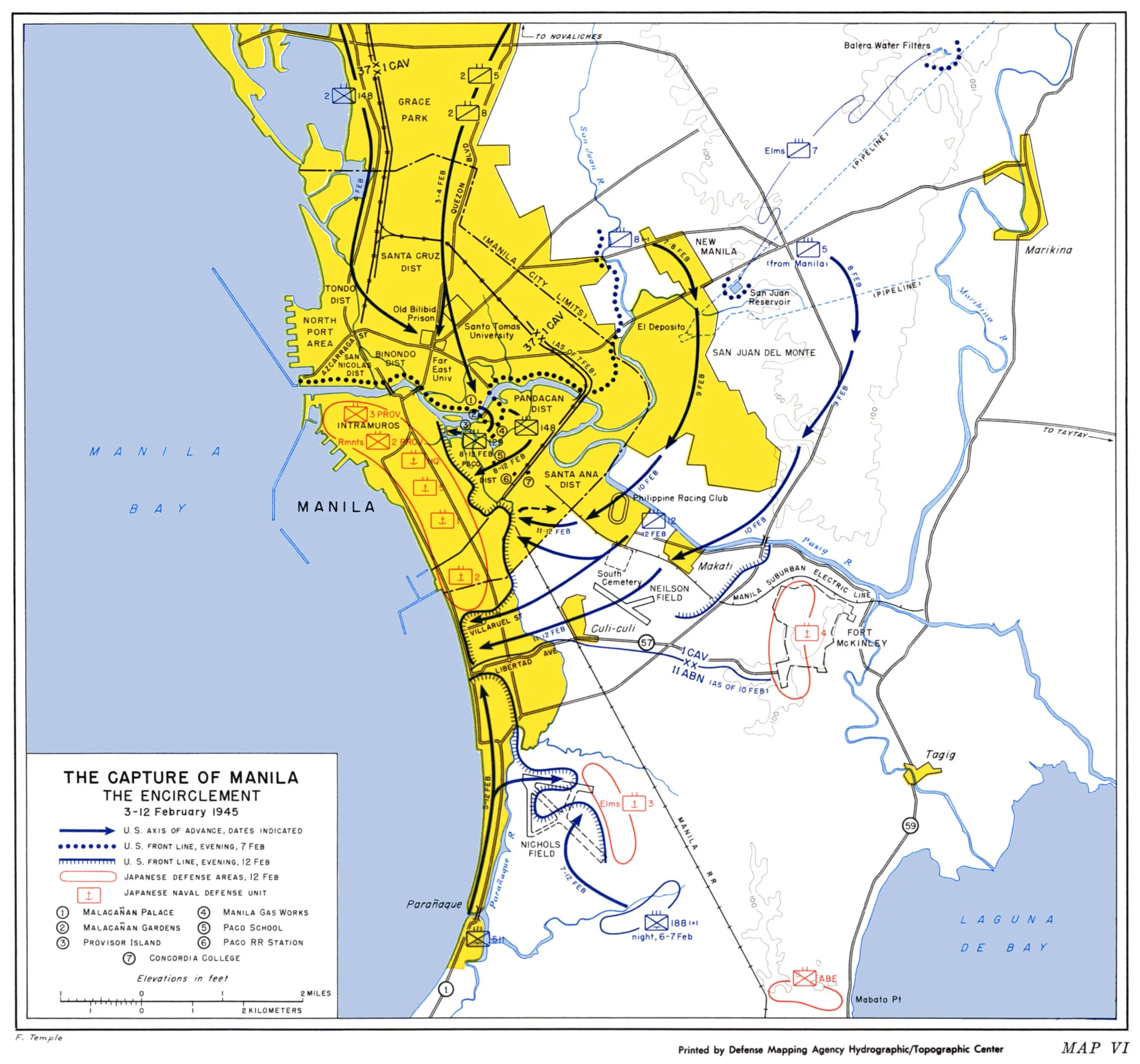
Evacuation of the Imperial Army garrison of the city was underway in late January, with troops attempting to withdraw with all of the available military stores from the city. Despite this, not all Japanese troops were withdrawing. The Imperial Navy garrison, commanded by Rear Admiral Sanji Iwabuchi, was instead preparing to make a stand in the city in defiance of Yamashita’s orders. With a small base security detachment augmented by a significant quantity of sailors and airmen now lacking machines and stranded in the port, Iwabuchi’s command was designated the Manila Naval Defense Force (MNDF), and set about fortifying the city against the advancing Americans.

A Japanese 80mm gun positioned in Manila
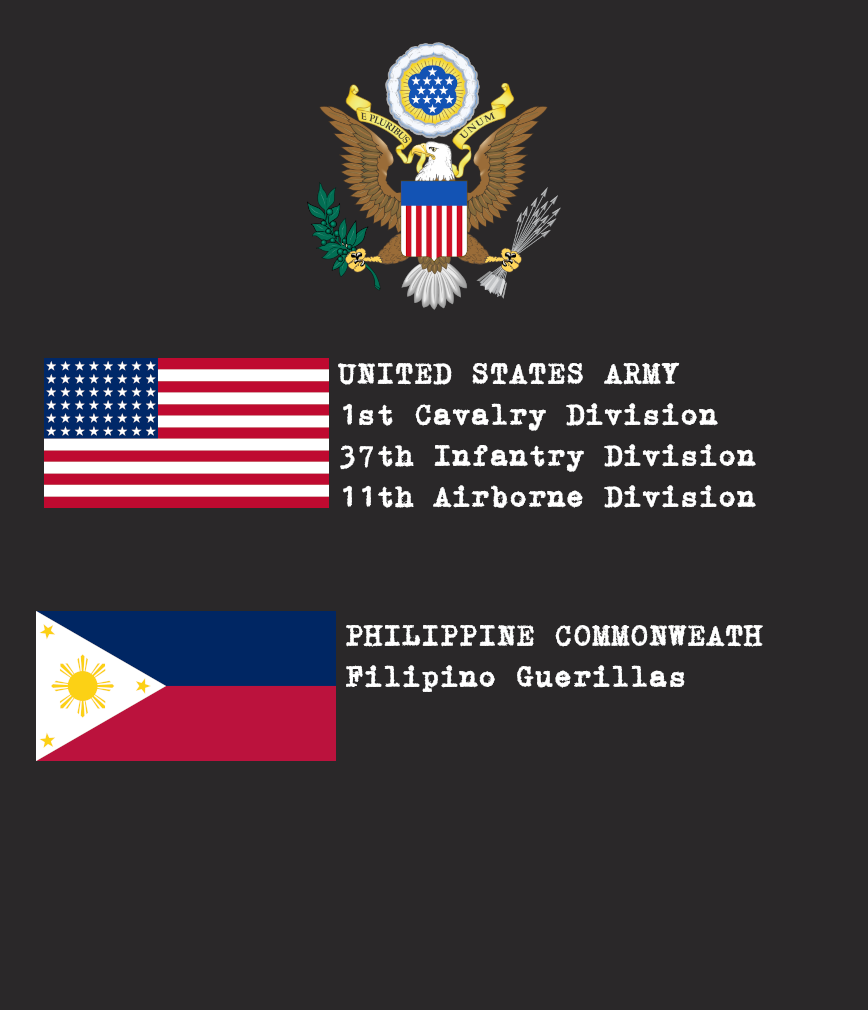
The Americans, for their part, were advancing on the city from both north and south, with XIV Corps under Oscar Griswold moving down from Lingayen Gulf with two divisions (the 1st Cavalry Division and the 37th Infantry), while the 11th Airborne Division landed some of its men to the south at Nasugbu, with the rest of the division dropping on Tagaytay Ridge. Spearheading the drive to the city at the personal urging of MacArthur, elements of the 1st Cavalry formed a flying column to rush into the city on 3 February 1945, with orders to secure the Bilibid Prison (housing POWs from Bataan), the civilian internment camp at Santo Tomas University, the Presidential residence at the Malacañang Palace, and the Legislature Building. Entering the city in the afternoon, the troopers observed the Japanese airfield at Grace Park on fire as they passed the Bonafacio Monument. Passing cheering civilians, the Americans encountered heavy resistance near the Bilibid Prison, and were forced to divert to Santo Tomas.
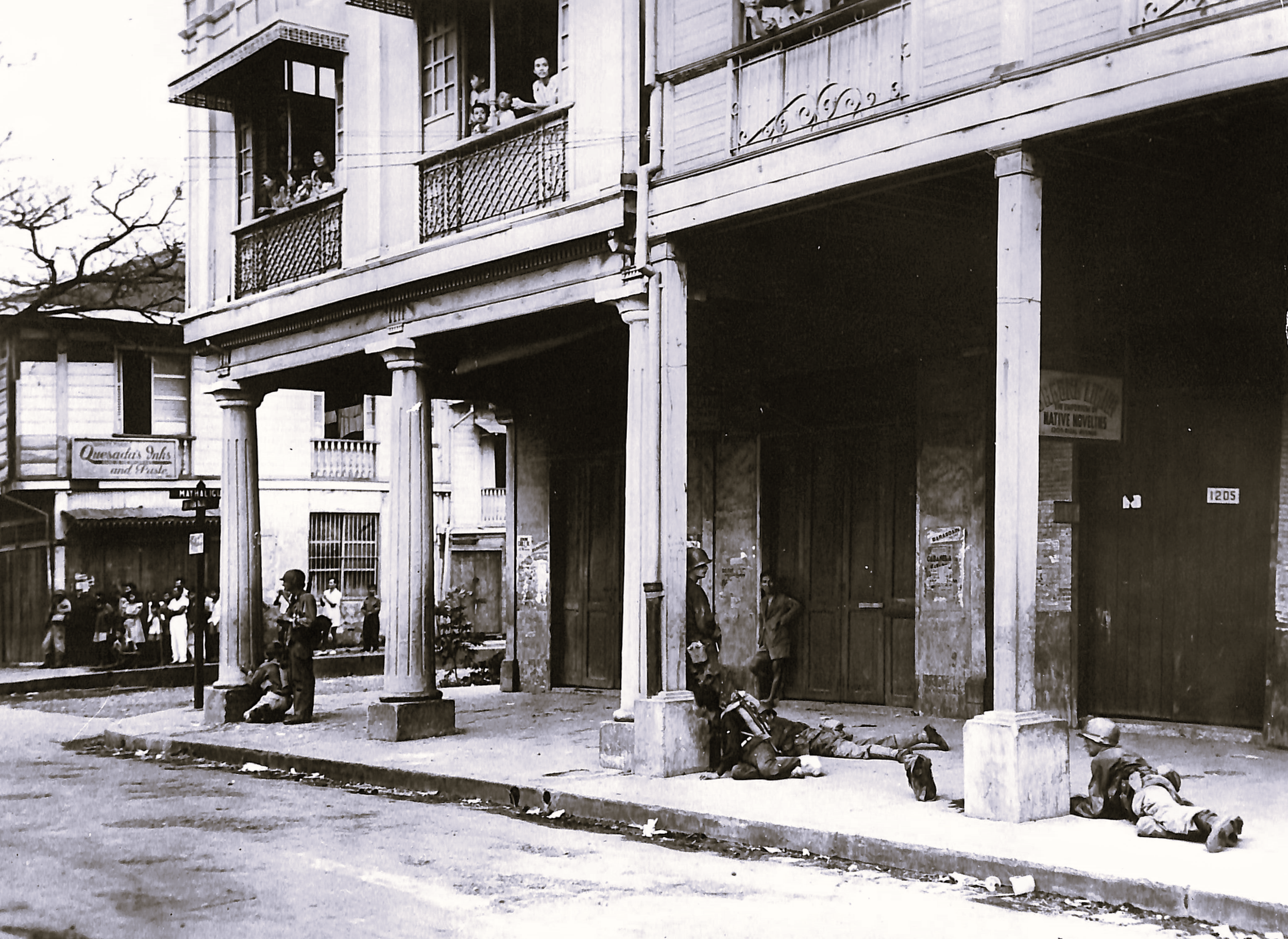
American troops take cover as they encounter Japanese during their entry into Manila. Note the civilian spectators across the street.
Arriving at the school-turned-prison, the gates were rammed by a Sherman tank, and it was ascertained that the guards had taken hostages and retreated to the school education building. It would be two days before the Japanese turned over the building and prisoners to the Americans, on condition that they be allowed to march out in good order. While the standoff had been ongoing, the Americans had secured the Malacañang Palace with no resistance, but had been halted at the Pasig River, as the Japanese had destroyed all bridges over the river, as well as clustered into a strongpoint at the Far Eastern University campus near Bilibid Prison (which the Japanese had abandoned on 4 February).
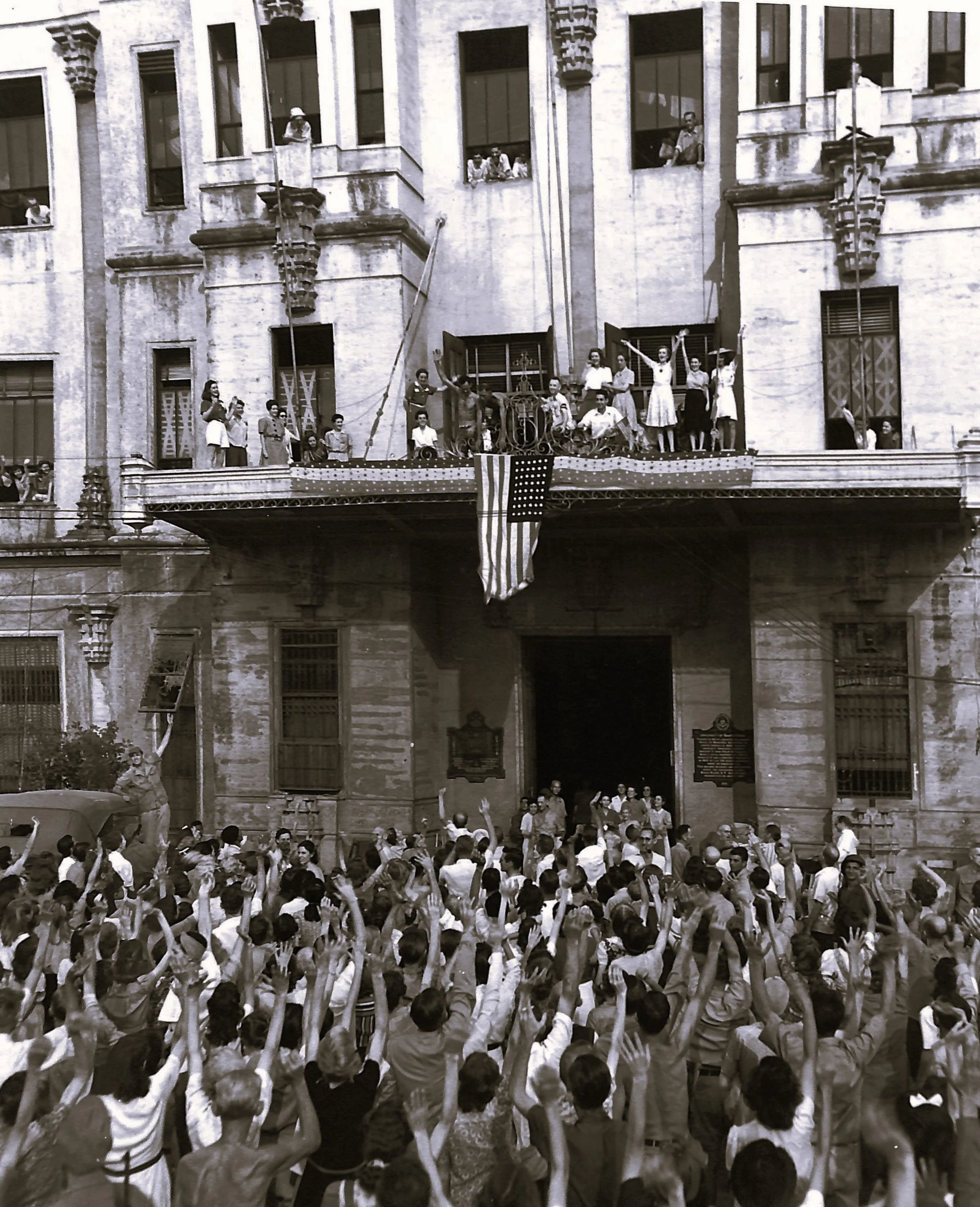
Liberated former internees celebrate as an American flag is flown from Santo Tomas
As this occurred, the Japanese had begun to execute a more sinister aspect of their mission for the defense of the city: the wholesale slaughter of the civilian inhabitants. This began on the northern bank of the Pasig, as Japanese soldiers spread out with aviation fuel along the ritzy Escolta Street before setting the entire area alight, whild civilians clustered into a local elementary school were herded into the nearby Dy Pac Lumber yard and bayonetted en masse before being thrown into the nearby canal.
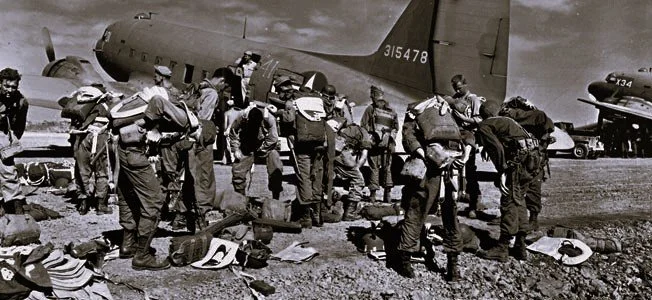
Paratroopers of the 11th Airborne prepare to board their transports
Fanning out through the districts north of the river, the Americans cleared most Japanese strongpoints, although the Far Eastern University would hold out for some time longer. Meanwhile, to the south the 11th Airborne Division was approaching the pre-war USAAF base at Nichols Field, and encountering heavy resistance and dug in Japanese positons. Expecting the main attack to come from the south, Admiral Iwabuchi had concentrated his defenses there, stretching from Manila Bay near Nichols Field eastward toward Fort McKinley and Laguna de Bay with reinforced positions, AA guns and naval guns repurposed for the fight ahead.

A paratroopers of th11th Airborne watches the massive plume of smoke rising from Manila
The battle for Nichols Field was intense, with the lightly equipped paratroopers having great difficulty overcoming the position, with its open runways turned into killzones for Japanese strongpoints. It would not fall until 13 February, with the airborne joining men and tanks of the 1st Cavalry that had flanked around the city to the east in attack Fort McKinley.
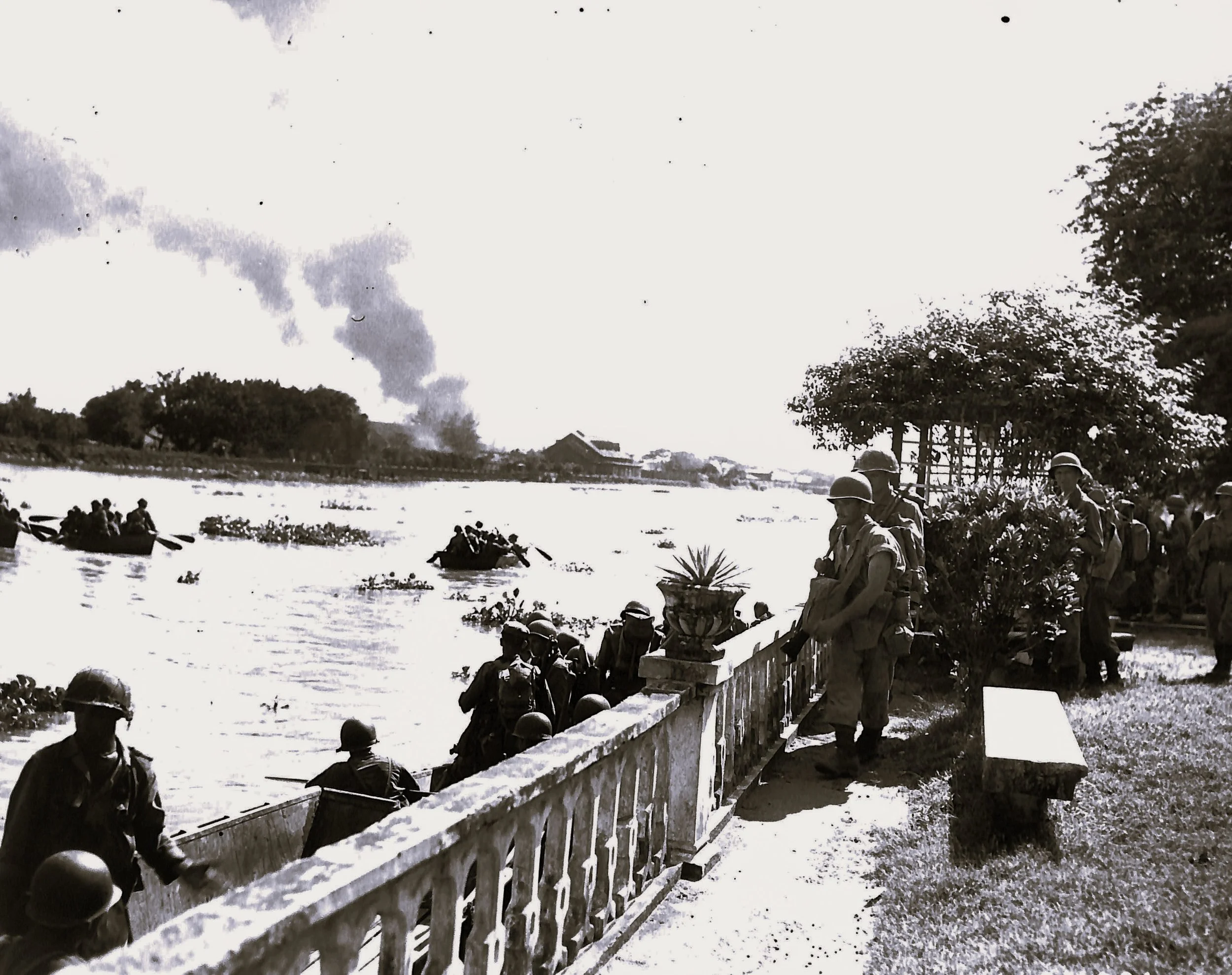
Soldiers of the 37th Infantry Division board assault boats to cross the Pasig
Meanwhile, the 37th Infantry had crossed the Pasig River near the Palace, and were engaged in vicious fighting over the power station on Provisor Island, taking two days of hand to hand combat to finally take the position. Following this, the infantry began to press toward the city center, encountering heavy resistance at the fortress-like Police Headquarters which in turn stalled the advance for several days. This, like many other reinforced concrete government buildings in Manila, had to be reduced by destroying them outright with direct fire from artillery, including massive 240mm howitzers. MacArthur, concerned about damaging the city he intended to make a triumphal parade into, had forbidden the use of American air power in the battle, and as a result an ever intensifying barrage of heavy artillery was tearing apart central Manila by mid February, joining with the devastation being caused by Japanese death squads.
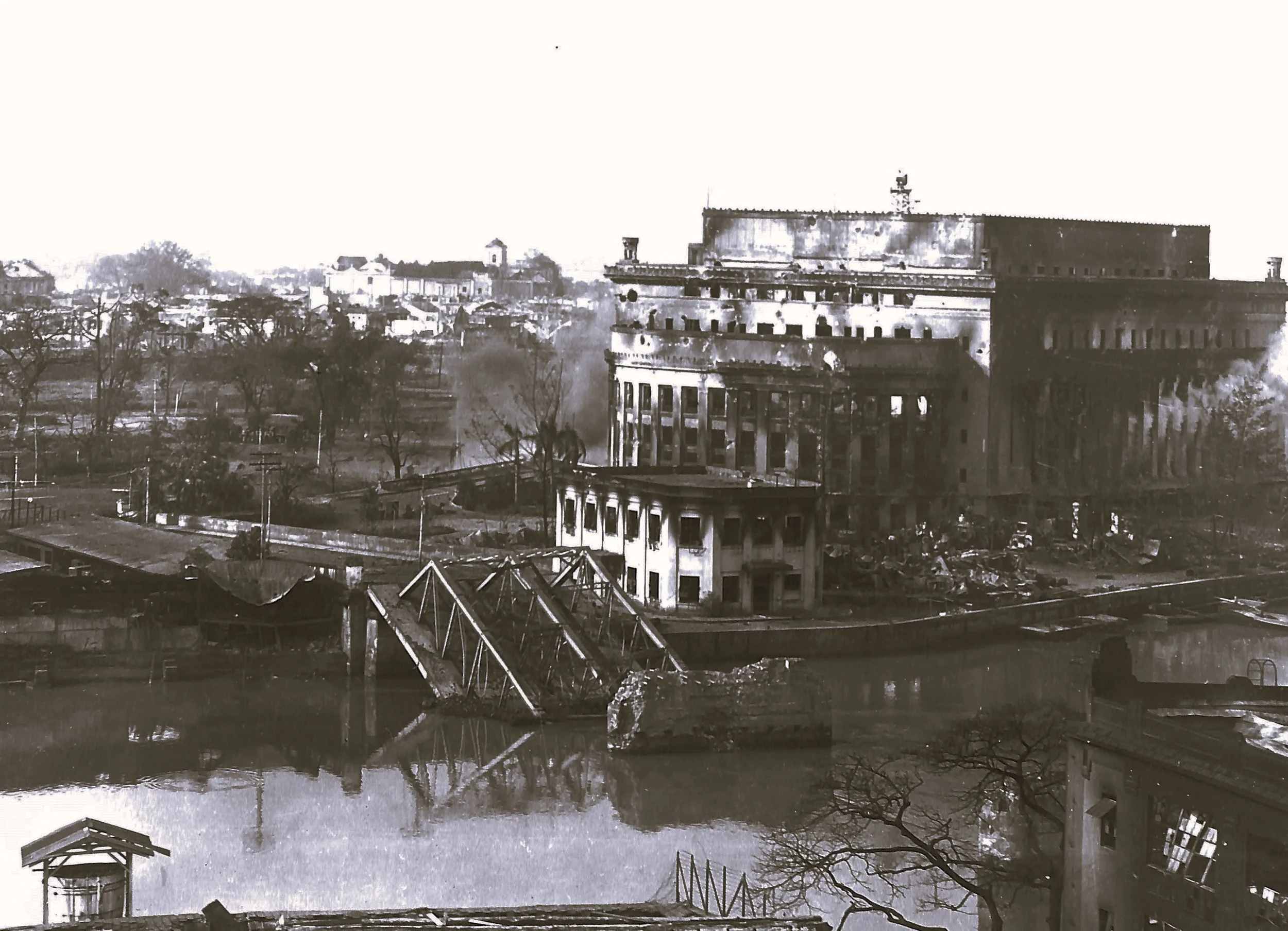
Shells land around the Manila Post Office along the Pasig
These were by this point engaging in wholesale rape and murder of the civilian population. Terrified citizens crowding into churches and schools were slaughtered, with some even being lured in with fake Red Cross signs and promises of food and water. Even nominal allies were not safe, as the German expatriots taking shelter at their club were brutally raped and slaughtered, their building set alight with many trapped within. At the Red Cross office on General Luna Street the Japanese stormed the building, killing staff and patients within with bayonets and gunfire. Actress Corazon Noble was shot while holding her infant daughter, and subsequently bayoneted on the ground. The infant was stabbed through her mother and died.
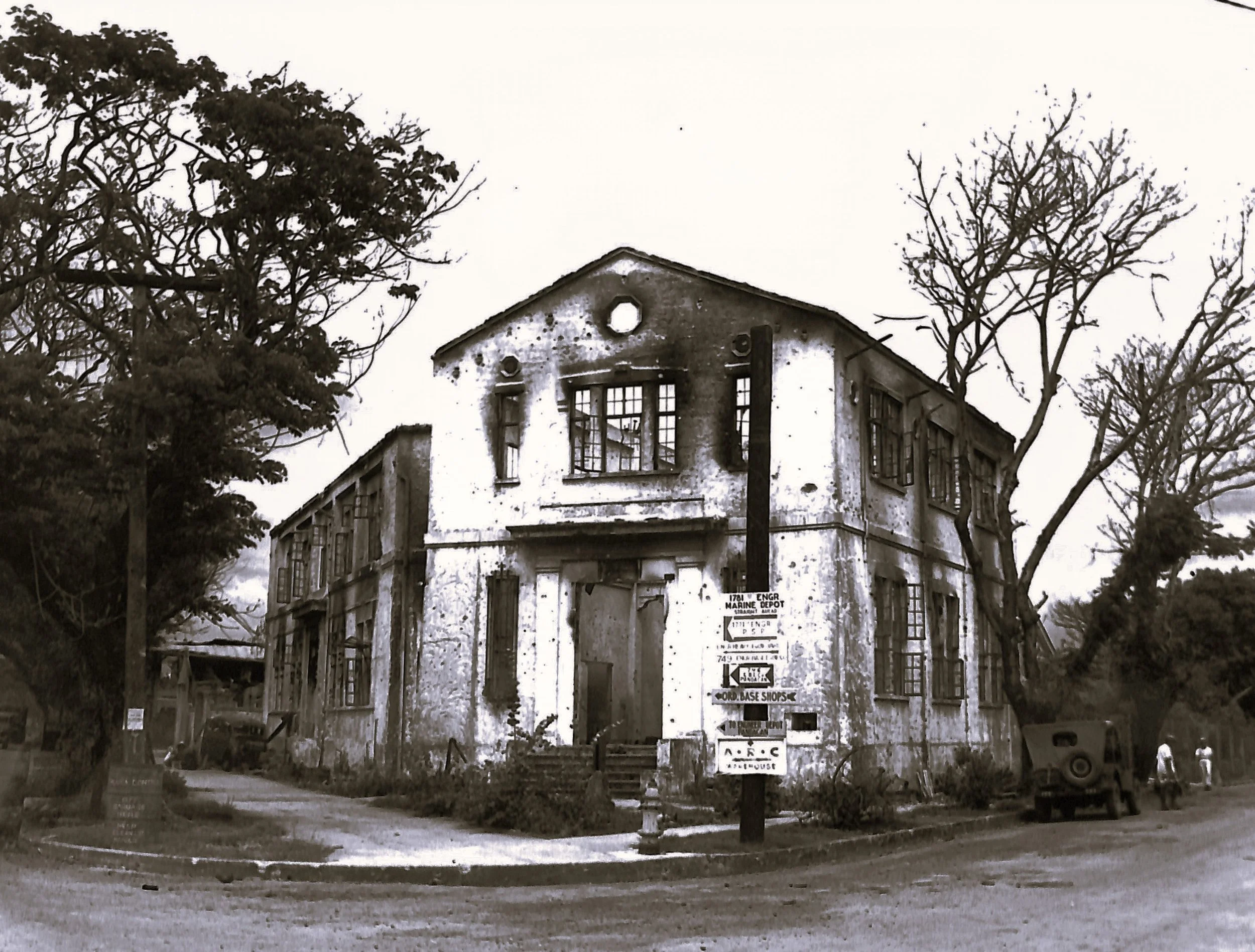
The burnt out Red Cross building
Fort McKinley fell on 17 February, the same day that a counterattack by Imperial Japanese Army forces outside of the city was repelled. While the old base was under siege, other American troops had been pushing northward from Nichols Field, engaging the Japanese at Rizal Stadium with tanks pushing onto the baseball diamonds while infantry cleared dugouts and interior facilities with flamethrowers and bayonets. Another horrific massacre occurred at the adjacent De le Salle University, with the Japanese slaughtering 41 civilian refugees as well as 16 monks sheltering in the sanctuary of the Catholic school.
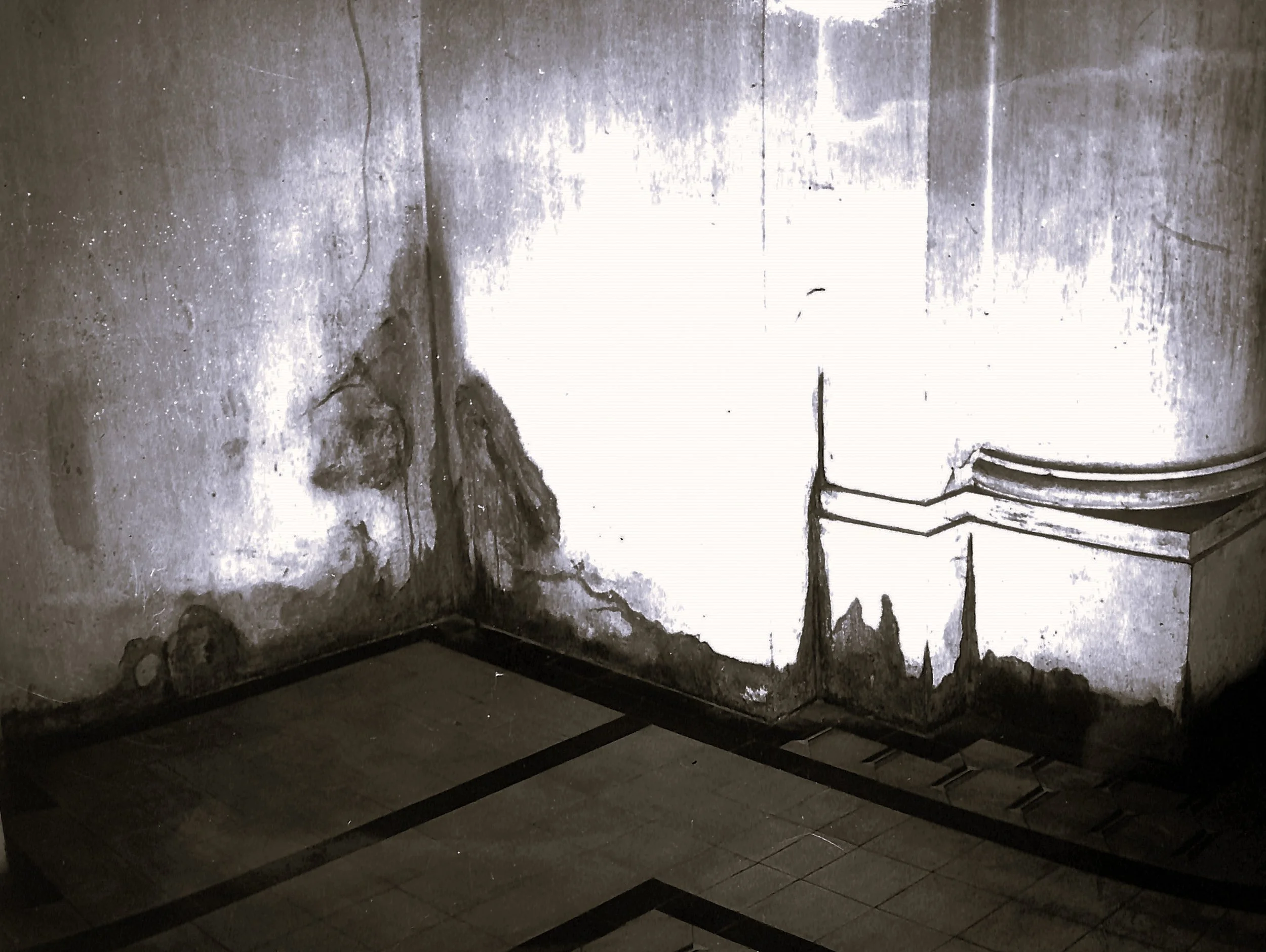
Bloodstains on te walls of De le Salle after the massacre there
After finally clearing the Police Headquarters in the north, the 37th Infantry engaged in further close combat in and around the City Hall and Central Post Office, as the 1st Cavalry began to push up Dewey Boulevard along the Bay to the south. Heavy resistance was encountered at the General Hospital (where Japanese soldiers dawned medical uniforms and used patients as human shields) and at the sprawling University of the Philippines complex, as well as from the High Commissioner’s Residence near the open Luneta park that hosted the government center.
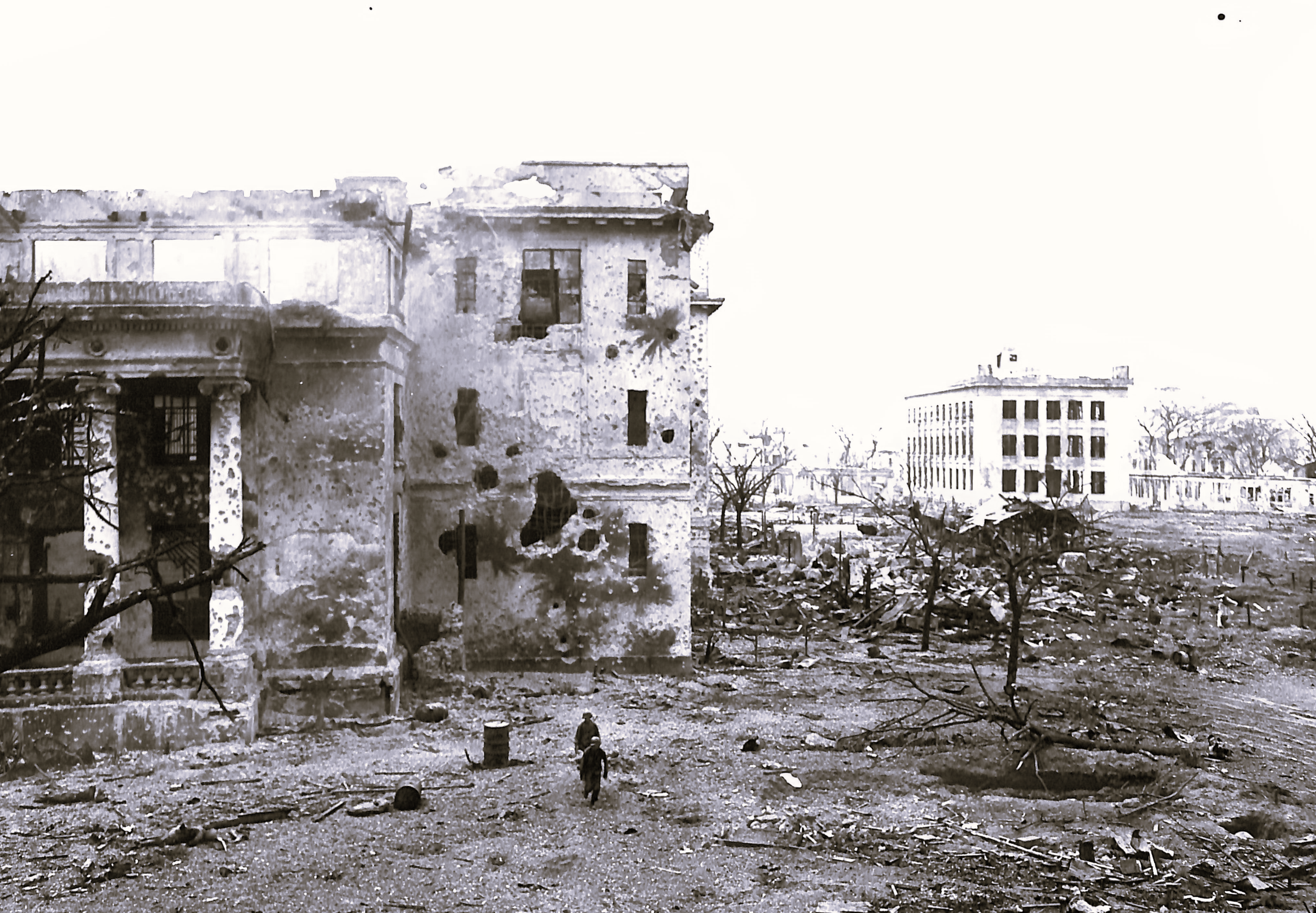
A wounded soldier is evacuated through the blasted ruins of the University of the Philippines
An amphibious operation landed American troops in the old Spanish citadel of Intramuros on 23 February after a massive artillery bombardment. The Americans cleared Fort Santiago with flamethrowers, encountering the underground dungeons stuffed with decomposing bodies of civilians rounded up and interned in the opening days of the battle. Outside the walls, heavy fighting took place as the cavalrymen crossed the Luneta and took the Manila Hotel, former residence of General MacArthur, as well as the port district.
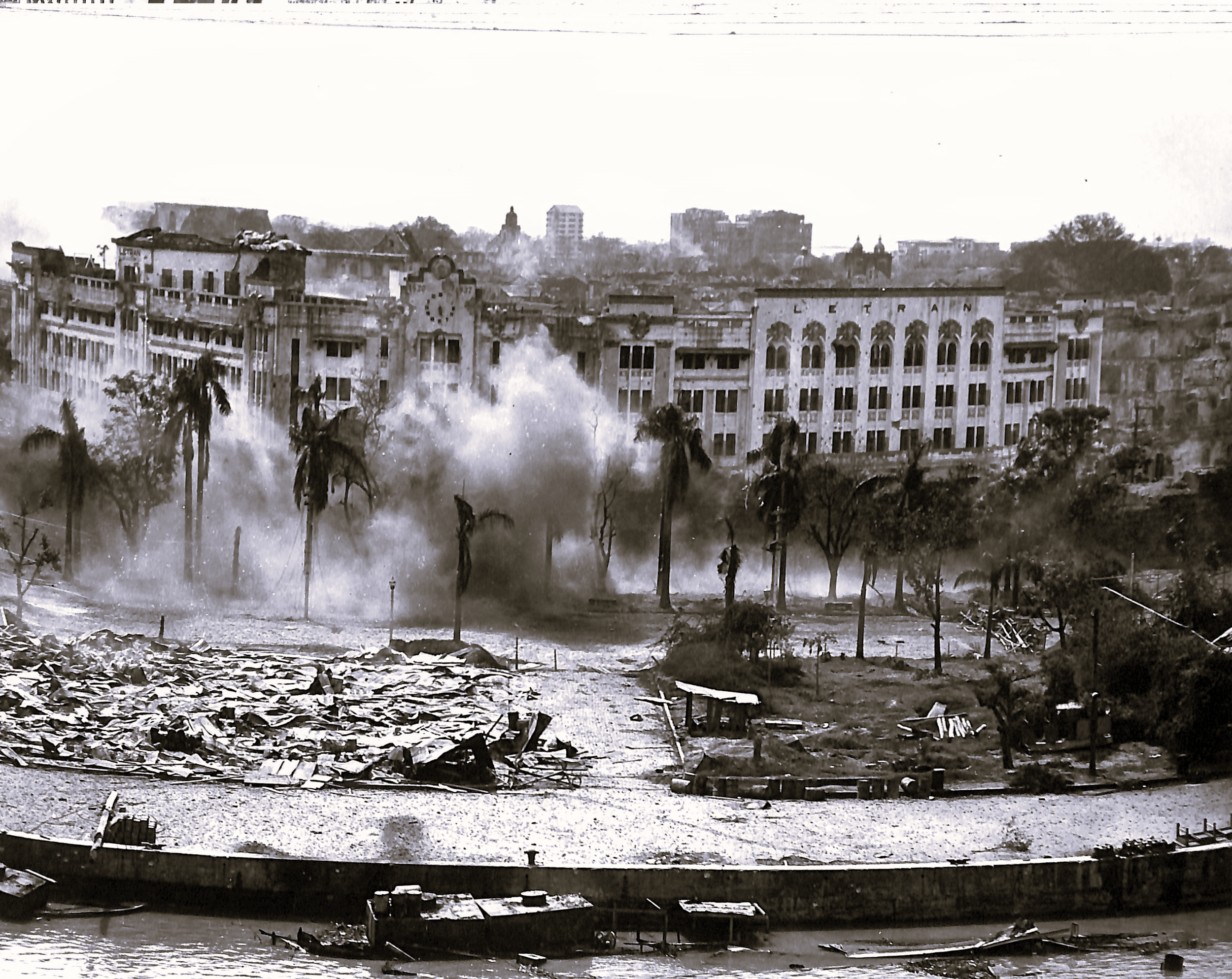
American shells land along the Intramuros wall near the Letran College
The final act of the Battle of Manila took place on the Luneta, as the Japanese had clustered themselves in the government buildings of the park. The first to fall was the Legislature Building, erstwhile capitol of the Commonwealth, followed by the Agriculture Building the following day. The remnants of the MNDF made their final stand in the Finance building, finally being destroyed on 3 March. The Battle of Manila, which MacArthur had declared completed on its third day, was finished after one of the most bloody months of the Second World War.
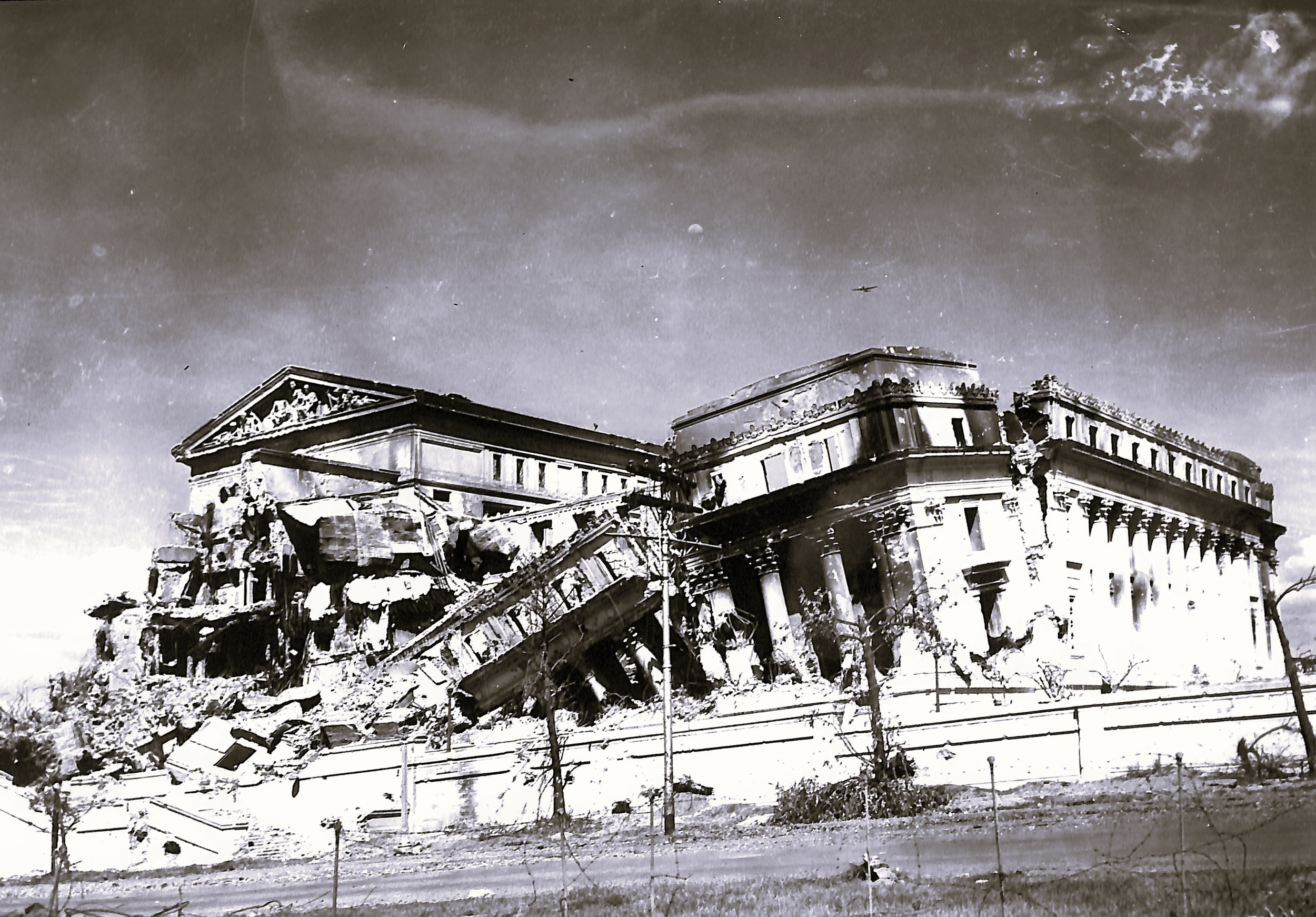
The blasted ruins of the Legislature Building
The death toll of the Battle of Manila was catastrophic. Over 1,000 American soldiers had lost their lives in the brutal urban fight. Of the Manila Naval Defense Force, over 16,000 were killed, with only a handful of prisoners taken. For the civilians, estimates of the death toll rest around 100,000. The Japanese soldiers’ treatment of the Filipinos could only be compared with that of the citizens of Nanking in 1937, with some of the most barbaric acts imaginable perpetrated against them. In addition, the previously nearly intact city of Manila found itself nearly leveled by Japanese fires and the massive American artillery bombardments.
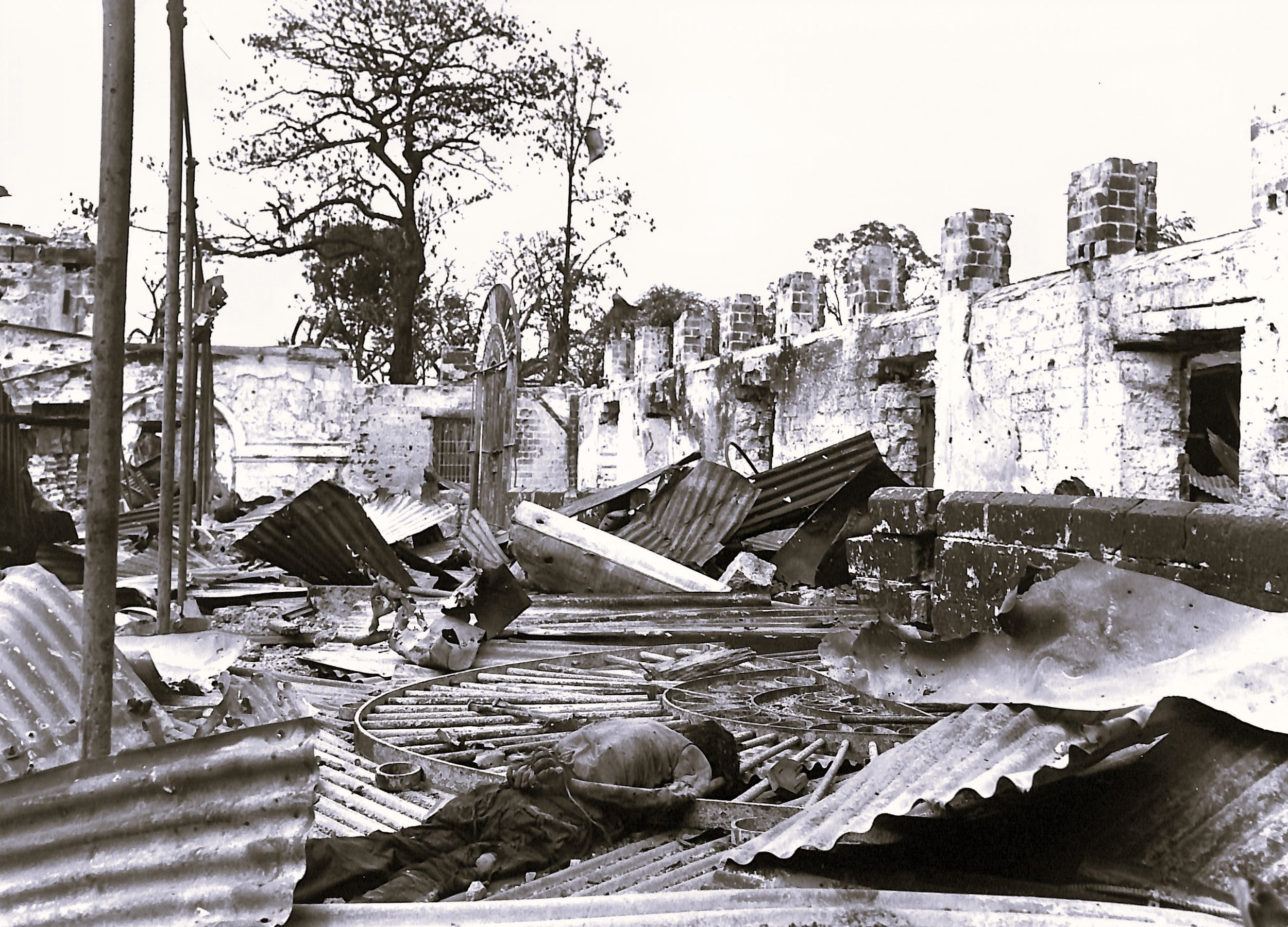
A dead civilian, hands bound behind his back, lies amidst the rubble
While the battle raged on the streets of Manila, nearby additional American troops secured Bataan and Corregidor, site of the last stand of US forces in 1942. The fighting on the island was brief but brutal, ending with the Stars and Stripes once again flying from the staff atop the Malinta Hill, with General MacArthur returning to the site of his earlier flight for the propaganda cameras.
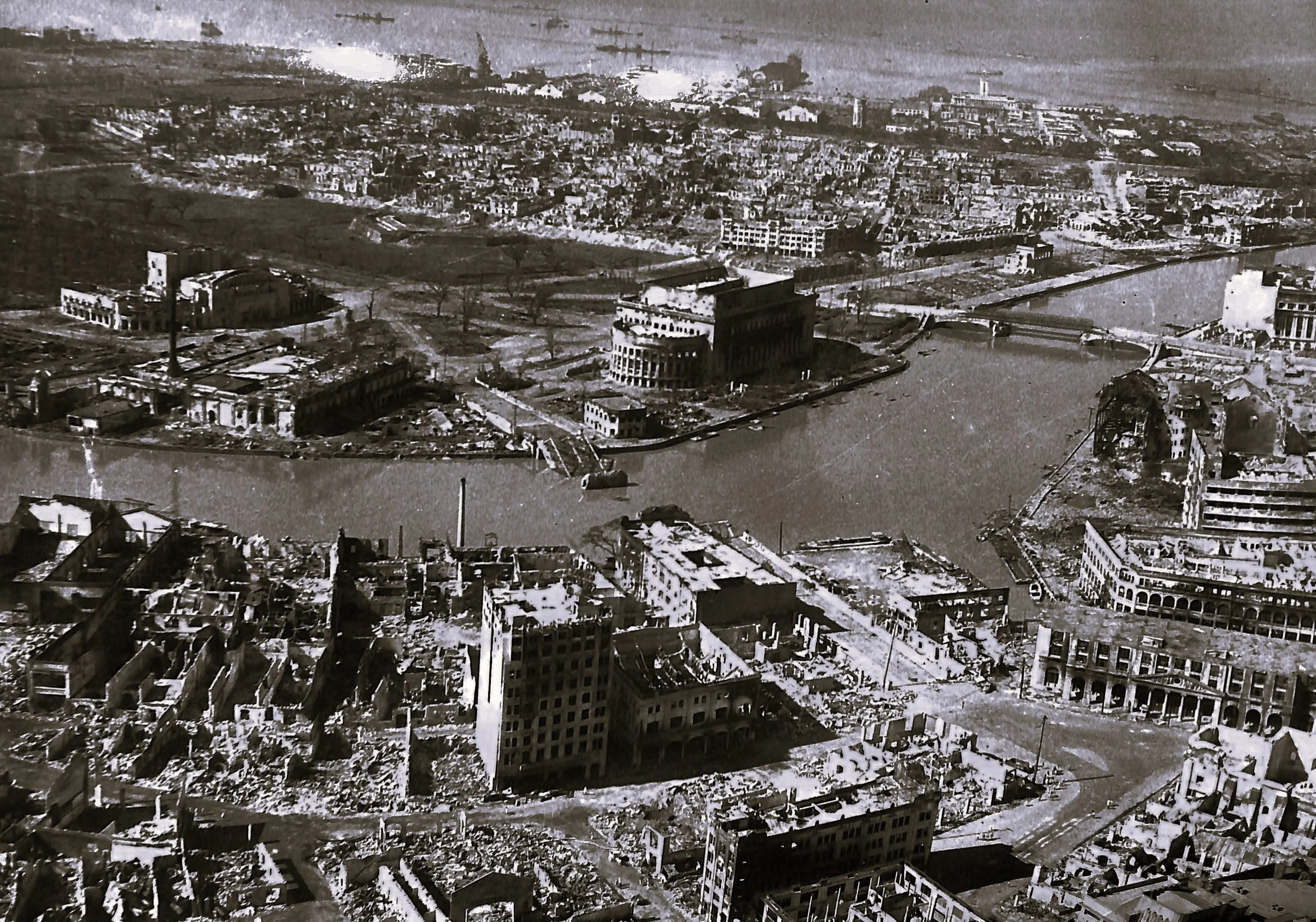
The blasted ruins of Manila after the battle
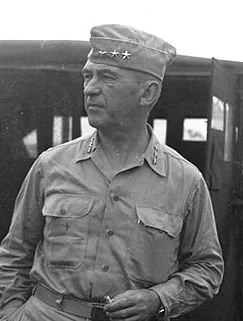
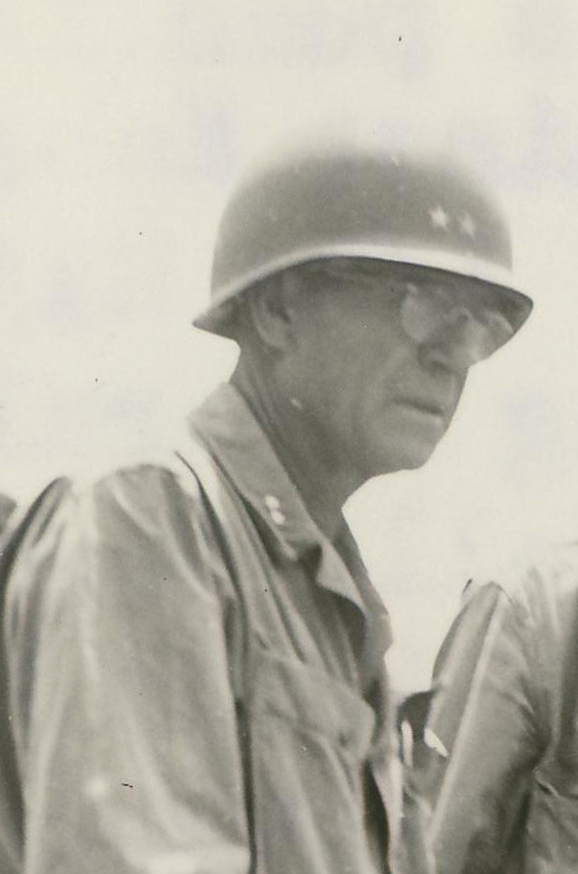
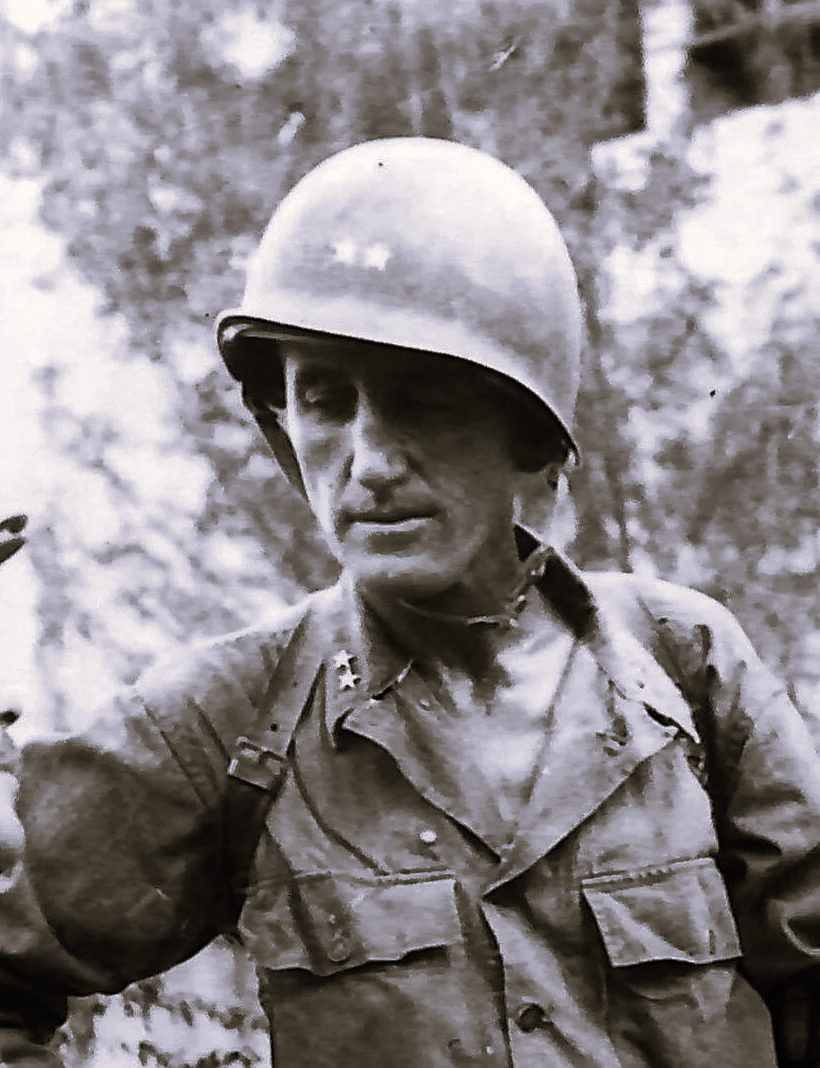
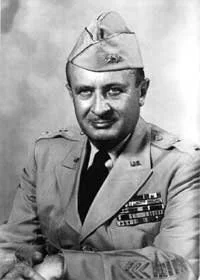
The Commanders